



Custom Baseball Cap Overview
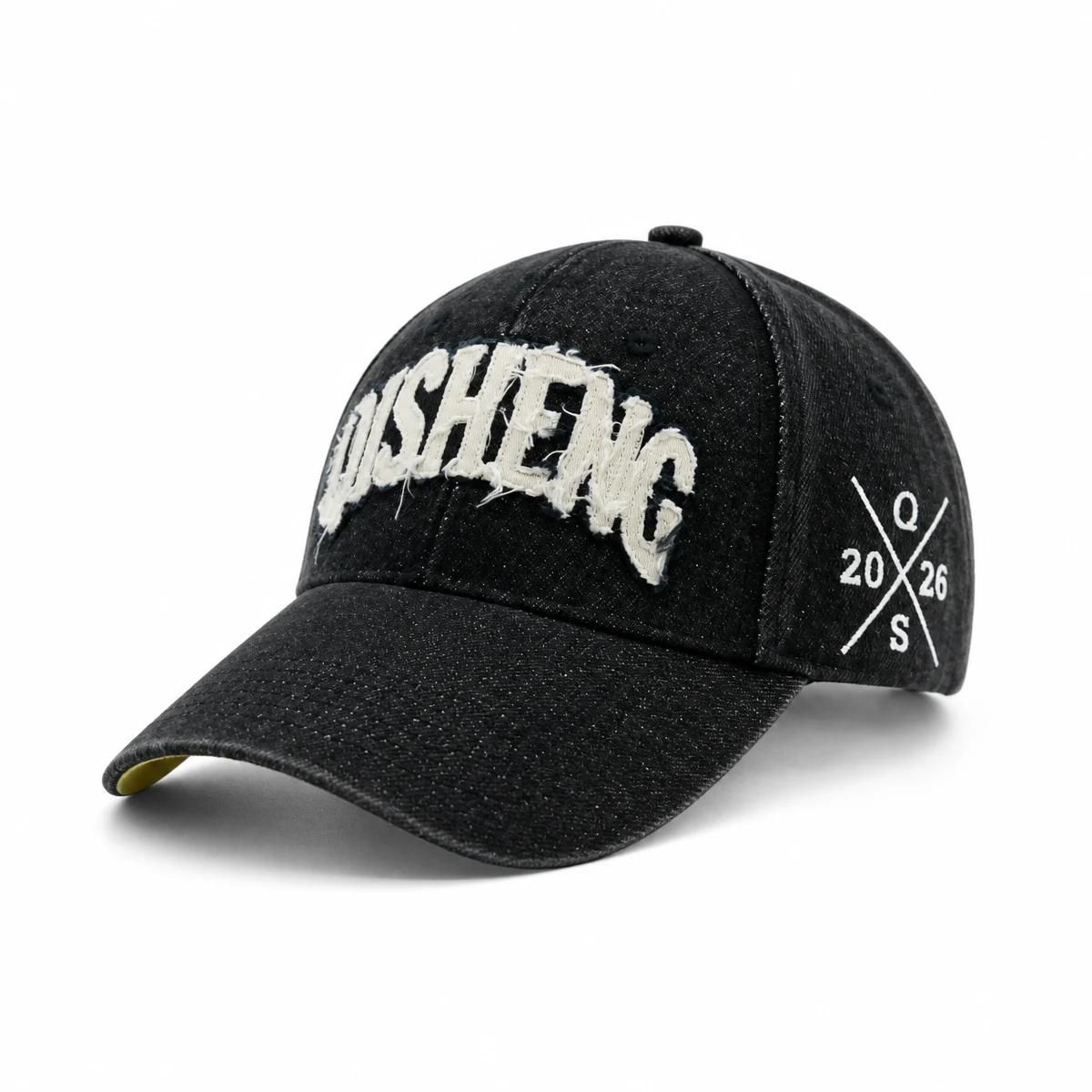
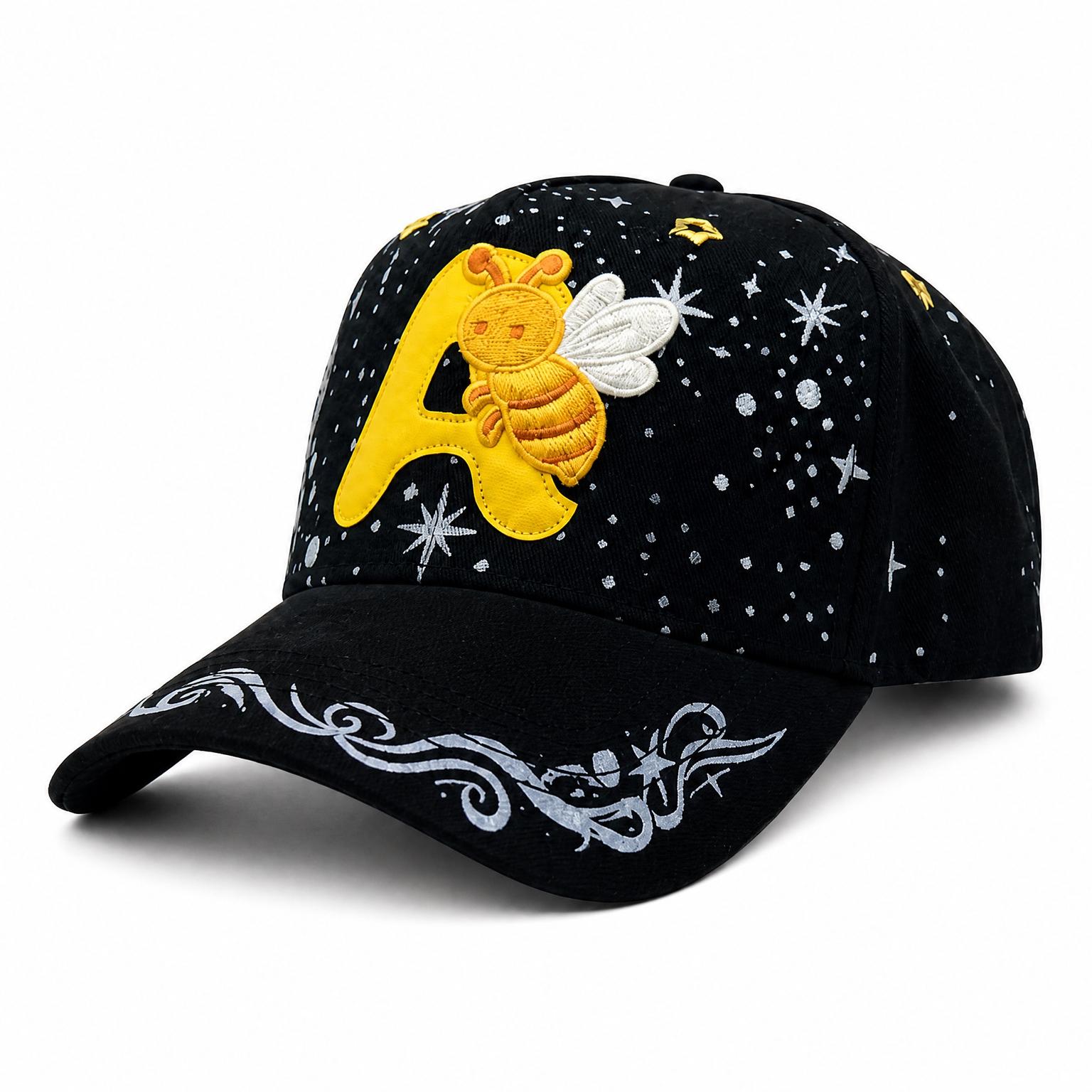
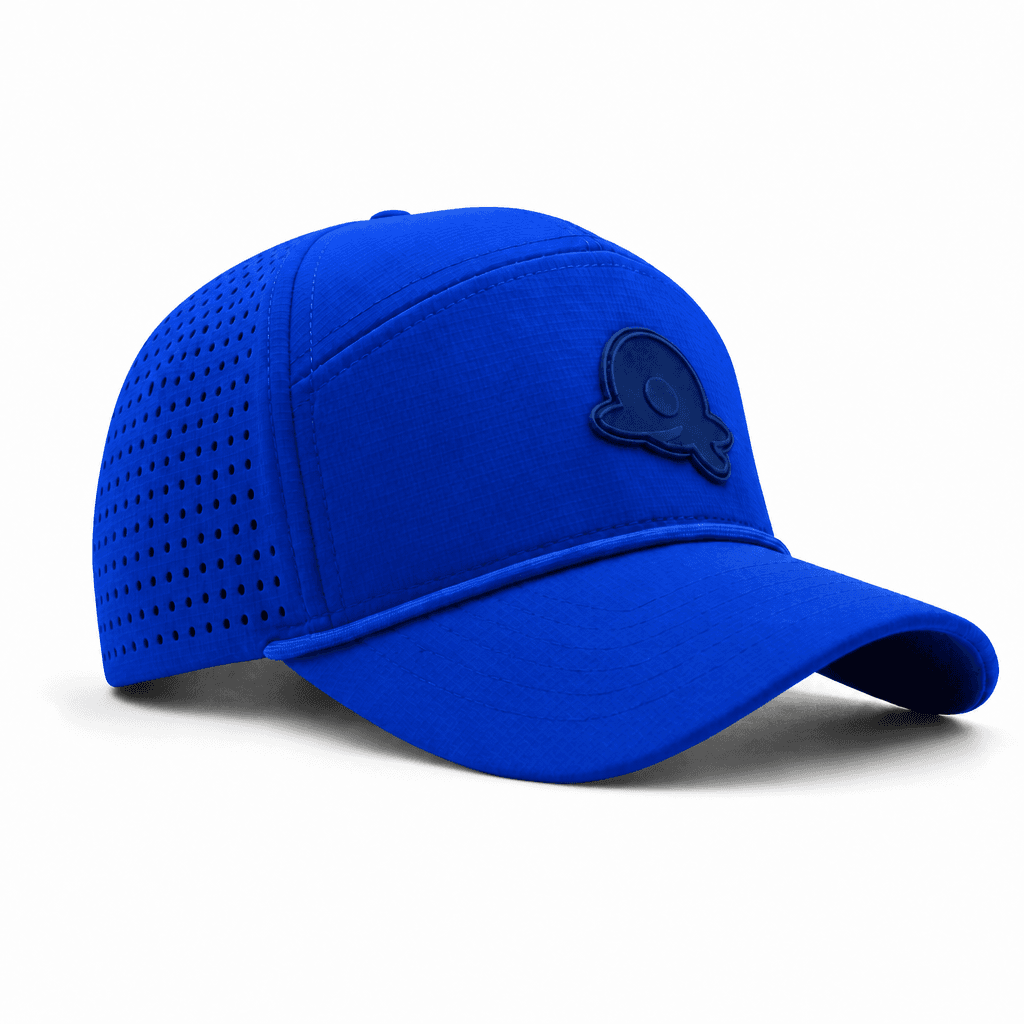
A custom baseball cap solves a simple buyer problem: how to turn a practical piece of headwear into a visible brand surface. It gives shade on sunny days, adds structure to a casual outfit, and carries logos where people actually notice them—on the front crown, along the brim, and even on the side panels. The sample shown here points to a black curved-brim cap with bold embroidery, making it suitable for branded merch, teamwear, retail streetwear, and event giveaways.
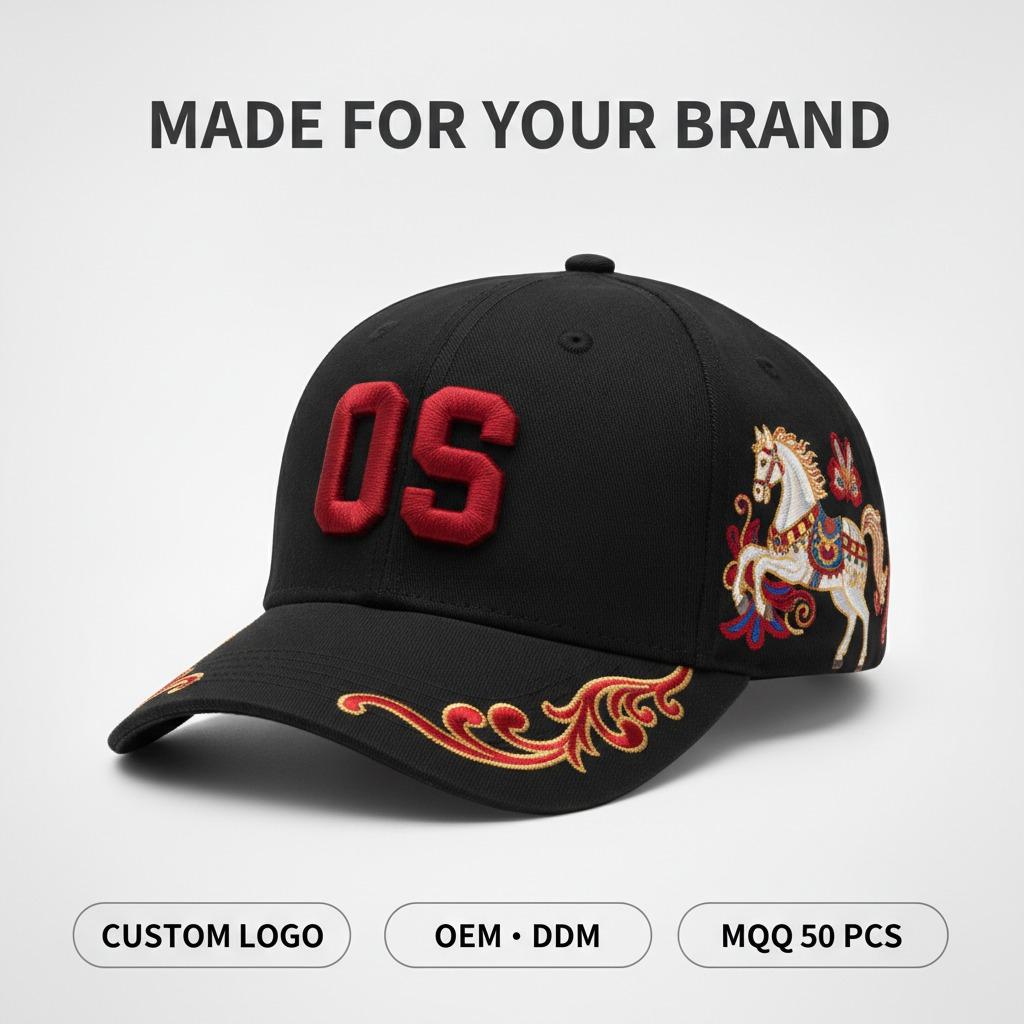
Visually, the cap combines a matte black woven body with high-contrast threadwork in red, gold, white, and hints of blue. The front uses raised 3D puff embroidery, which creates a sculpted, dimensional look that stands out more than flat stitching. That makes the cap useful for buyers who want their logo or monogram to feel premium without moving away from a practical everyday silhouette.
Product Reference and Key Visual Features
This baseball cap appears to use a structured crown and a curved brim. The front panel carries a large embroidered monogram, while additional graphics are placed on the side and brim. The composition suggests a custom embroidery program rather than a plain stock cap, with multiple decoration zones used to build visual identity from different angles.
Visible characteristics
Black woven fabric body
Curved visor for sun shading and classic cap shape
Structured front crown for a firmer profile
Raised 3D embroidery on the front panel
Decorative embroidery or appliqué on the side and brim
Top button visible at the crown
Some construction details are not fully visible, so it is better to treat the exact panel count, closure type, and back style as configurable rather than fixed. For procurement, that means the cap should be discussed as a customizable platform, not a single locked specification.
Materials and Finish Options
The visible callout indicates cotton twill, which is a common choice for a custom baseball cap because it has a clean woven surface and holds embroidery well. Cotton twill is often selected for its familiar hand feel and matte appearance, especially in black or other solid colors where logo contrast matters. The sample finish looks smooth and dense, giving the embroidery a stable base.
Depending on the project, buyers may also consider similar woven materials used in cap production, such as polyester blends or other fashion headwear fabrics. Final material selection usually depends on the intended use: retail fashion, corporate gifting, sports club merchandise, or promotional distribution. Finish options may include matte or slightly brushed textures, but any exact fiber composition should be confirmed before ordering.
Manufacturing Process
This type of cap is typically produced through cut-and-sew cap manufacturing, followed by machine embroidery and logo application. The front emblem in the sample appears to use 3D puff embroidery, a method that adds foam or similar backing under the stitches to build height. That technique is often used for monograms, initials, and bold brand marks because it creates a strong outline and tactile depth.
Other graphics on the side and brim may be flat embroidery or stitched appliqué. In practical production terms, that means the cap is not only assembled as headwear but also treated as a decorated branding item. Good file preparation matters here: stitch density, thread path, and logo placement all affect how the final cap reads at a glance.
Applications for Buyers
A custom baseball cap fits a wide range of use cases. For brand owners, it works as wearable merchandising that extends logo visibility beyond packaging and digital media. For sports clubs and fan groups, it becomes a recognizable uniform piece. For fashion labels, it can anchor a private-label accessory line with a streetwear edge.
Common applications include corporate branding, promotional campaigns, commemorative events, retail fashion drops, resale collections, and club or team merchandise. Because the silhouette is familiar, buyers can introduce a custom design without requiring customers to learn a new product format.
Customization Guidance
When developing a custom baseball cap, start with the front decoration. Decide whether the logo should be flat embroidery, 3D puff embroidery, or a mix of both. Then confirm the placement on the brim and side panel, since extra locations can make the cap more distinctive but also require careful layout balancing.
Other customization points typically include colorway, fabric selection, closure style, size range, and label treatment. Since some of these details are not visible in the sample, they should be confirmed during sampling. Buyers who care most about retail presentation may prioritize structured shape and rich embroidery. Buyers focused on event giveaways may prefer a simpler build that keeps production straightforward.
Quality Control Considerations
For embroidered headwear, quality control usually focuses on stitch clarity, logo alignment, seam consistency, brim shape, and the stability of the crown structure. With a multi-decoration cap like this one, it is important to inspect whether the front monogram sits cleanly and whether side and brim motifs are positioned evenly. Thread tension and edge finishing matter as well, especially where embroidery meets the curved surface of the visor.
Buyers should also review sample photos or physical samples for color accuracy. Black fabric can make thread color look different under various lighting conditions, so red, gold, white, and blue accents should be checked against the intended brand palette.
How to Choose the Right Cap for Your Project
If your goal is everyday branding, choose a design that balances comfort, readability, and durability. If you are building a streetwear or retail line, a more decorative custom baseball cap with raised embroidery and side artwork may create stronger shelf appeal. For giveaways, simplicity can help control cost and keep production efficient. The best choice depends on how the cap will be worn, displayed, and distributed.
It also helps to clarify order volume, artwork complexity, and the level of customization needed before moving to production. The sample notes indicate OEM/ODM support and a MOQ of 50 pieces, which may suit smaller branded runs or launch collections, though buyers should confirm project terms directly.
Request a Custom Quote
If you are sourcing a custom baseball cap for branding, retail, or event use, share your logo files, preferred cap color, decoration locations, and target quantity. A clear brief helps convert a concept into a production-ready sample faster. Send your artwork and specifications to start a quotation and sample discussion.