

Laser Cut Mesh Back Trucker Hats: Technical Specifications and Bulk Manufacturing
Sourcing commercial headwear requires balancing structural durability, ventilation, and brand display surfaces. Procuring a laser cut mesh back trucker hat wholesale solves common supply challenges associated with traditional plastic snapbacks and coarse wire mesh, which often suffer from seam abrasion, brittle cracking under UV exposure, and limited panel flexibility. By substituting rough poly-mesh netting with precision-perforated solid synthetic textiles, these modern athletic caps deliver steady ventilation across the crown while maintaining a uniform, premium tactile finish suitable for performance sportswear and retail private labels.

Crown Architecture and Perforation Engineering
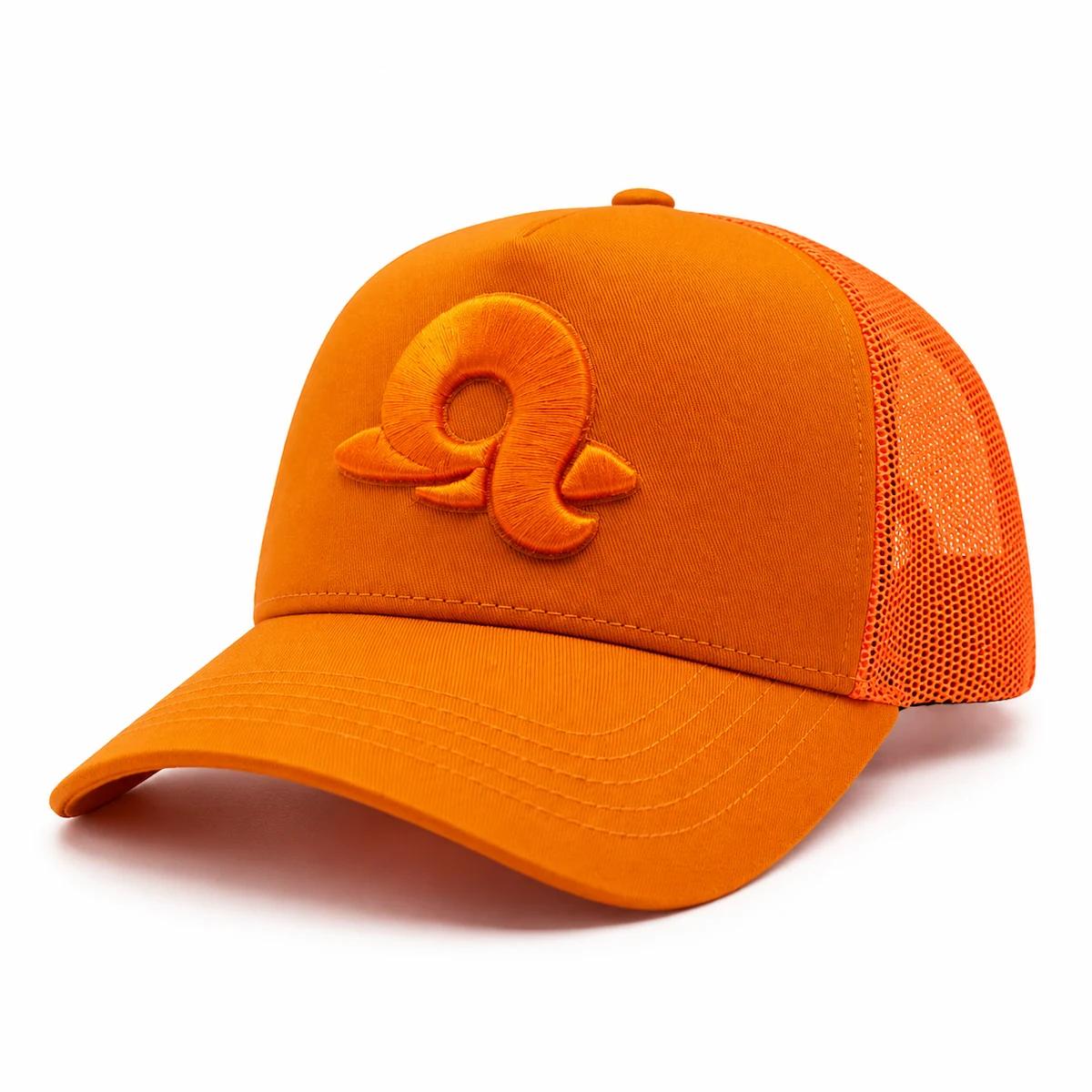
Unlike standard trucker styles that assemble knit mesh to woven front panels, wholesale laser cut trucker hats typically feature continuous or panel-matched woven synthetic yardage. The crown utilizes a multi-panel structured architecture reinforced by buckram backing in the front quadrants to maintain its upright silhouette and support substantial front branding.
The core ventilation mechanism relies on targeted micro-openings cut directly into the side and rear crown panels. Using industrial laser ablation or specialized textile die punching, regular arrays of perforations are machined across the fabric. In synthetic textiles such as polyester or nylon blends, laser cutting yields a distinct advantage: the focused thermal beam melts the cut perimeter instantaneously, fusing the filament ends to prevent fraying and edge unraveling during repeated washing or stretching. When evaluating a breathable mesh trucker hat wholesale program, buyers can specify perforation patterns ranging from standard circular grids to custom geometric arrays, keeping structural perimeter margins intact to prevent seam tearing under tension.
Materials, Brim Form, and Front Embellishment
While precise textile compositions depend on buyer tech packs, most shells in this category employ smooth-faced, lightweight woven textiles in high-density weave patterns. The visual profile provides a matte, low-friction exterior that contrasts cleanly with high-relief embellishments.
- Visor Construction: Pre-shaped curved visor featuring a core of extruded composite or polyboard, secured with multiple parallel rows of edge-reinforcing topstitching. This multi-row stitching anchors the shell fabric to the substrate, preventing blistering, delamination, and warping in humid operating conditions.
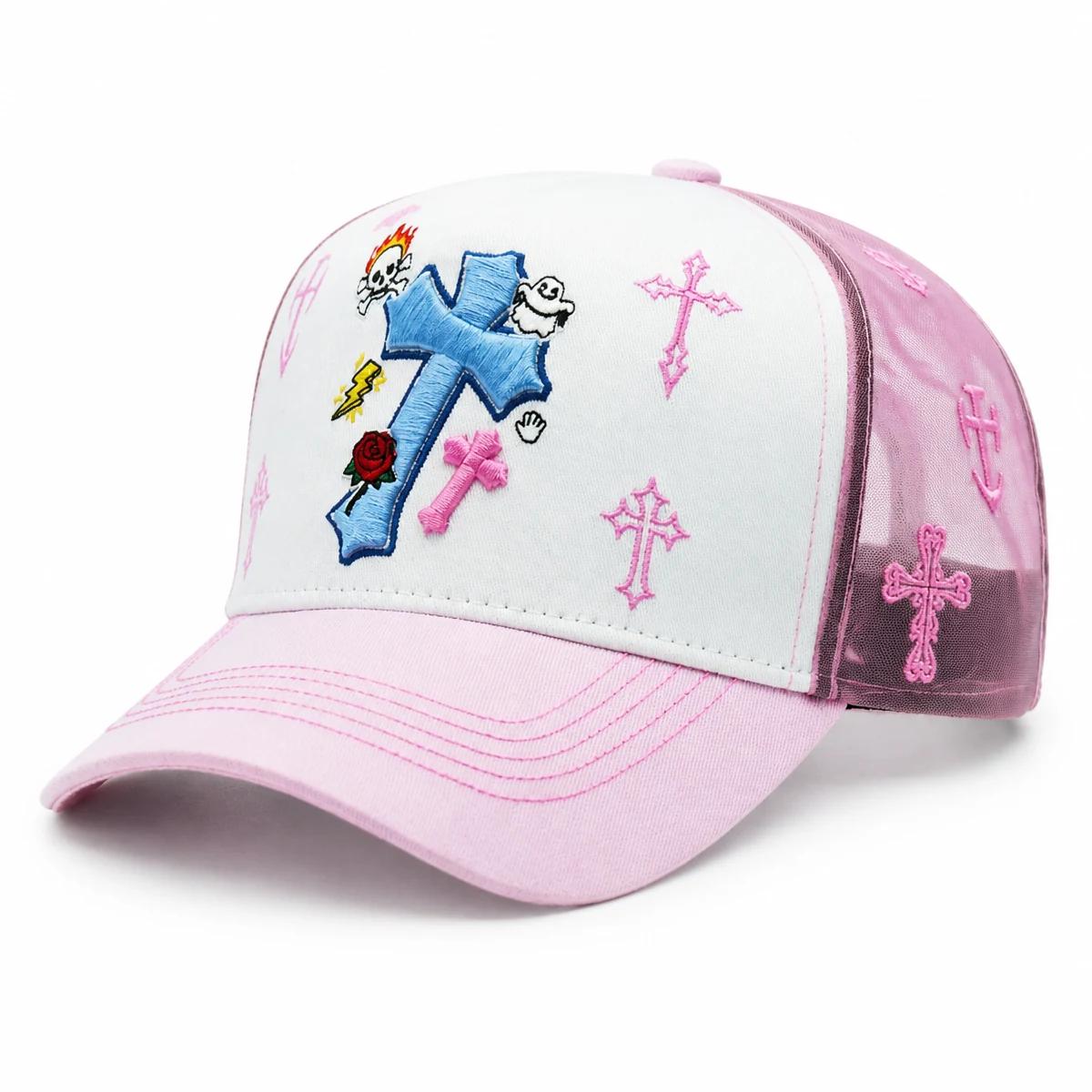
- Front Decoration: The structured front buckram supports dimensional insignia, including high-density heat-welded silicone, sonic-welded TPU appliqués, or direct 3D embroidery. Because the front panels lack perforations, graphic resolution remains uninterrupted by ventilation holes.
- Crown Hardware: A fabric-wrapped button secures the central panel apex, complemented by embroidered or laser-vented eyelets in the front panels for balanced pressure equalization across the headwear.
Manufacturing Steps and Assembly Precision
Fabrication begins with automated fabric feeding and optical alignment. For custom laser cut trucker hats, panel blanks are digitally mapped to nest perforation zones safely inside panel margins, preventing holes from entering seam allowances. After perforation processing, panels advance to cut-and-sew sub-assembly.
Structural assembly links the front laminated panels to the ventilated rear quarter panels using lockstitch or chain-stitch seamers. Internal seams are covered with branded or plain bias tape to eliminate exposed thread edges against the wearer\'s scalp. The pre-formed visor assembly is joined to the crown baseline, followed by insertion of the interior sweatband. Buyers configuring a laser cut snapback trucker hat typically choose between traditional plastic pin-and-hole closures, low-profile hook-and-loop adjusters, or self-fabric strapbacks matched to the crown textile.
Quality Control Benchmarks for Bulk Sourcing
Procuring laser cut trucker hats in bulk requires distinct inspection protocols due to the combination of thermal cut edges and stitched tension points:
- Hole Perimeter Integrity: Perforations must be free of thermal charring, yellowing, or stiff dross around the hole perimeter. Melted edges must be smooth to prevent hair pulling or skin irritation.
- Seam Margin Clearance: Perforated arrays should maintain a predetermined border clearance (typically 10 to 15 mm) away from seamlines, sweatband stitching, and the apex button to prevent pull-out under stress.
- Symmetry and Alignment: Multi-row brim stitching must exhibit consistent spacing without thread tension anomalies, skipped stitches, or directional runout relative to the visor edge.
- Buckram Adhesion: Front-panel structural backings must be fully laminated without air pockets, bubbling, or crease degradation after handling.
Commercial Applications and Buyer Procurement Considerations
As corporate merchandise, teamwear, and athleisure brands upgrade their catalogs from traditional promo caps, wholesale mesh trucker caps engineered with perforated textiles have become standard across outdoor sports, tournament golf, endurance running events, and casual retail streetwear. Their tailored look transitions effectively between active athletic contexts and casual settings.
When working with a specialized mesh back trucker hat supplier, procurement teams should clearly define technical deliverables in their technical specification packs. Clarify base fiber content (e.g., poly-spandex versus 100% nylon), closure hardware configurations, target head circumferences, sweatband inner batting options, and packing criteria. Specifying standard pantone-matched yardage and requesting pre-production cut-panel proofs ensures that front-panel embroidery and laser cut densities align with aerodynamic and structural requirements prior to full-run manufacturing.