

Why buyers still ask for an OEM beanies manufacturer
An OEM beanies manufacturer is usually not the first supplier a sourcing team calls for, but it is often the one that solves the hardest part of cold-weather merchandising: turning a simple knit cap into a product that looks on-brand, feels consistent across a large order, and lands at the right price point. For retailers, apparel labels, and promotional buyers, beanies are deceptively technical. The shape is simple; the execution is not.
That is especially true when the brief calls for custom beanies with a specific silhouette, a front patch, a particular rib knit texture, or a color that has to sit cleanly in a winter collection. The market has no shortage of knit caps, yet the gap between a sample that photographs well and a production run that holds its shape is where many programs go sideways. This article looks at what matters when sourcing knitted headwear, what to inspect in a supplier, and where the common mistakes usually show up.
What the product tells you at a glance
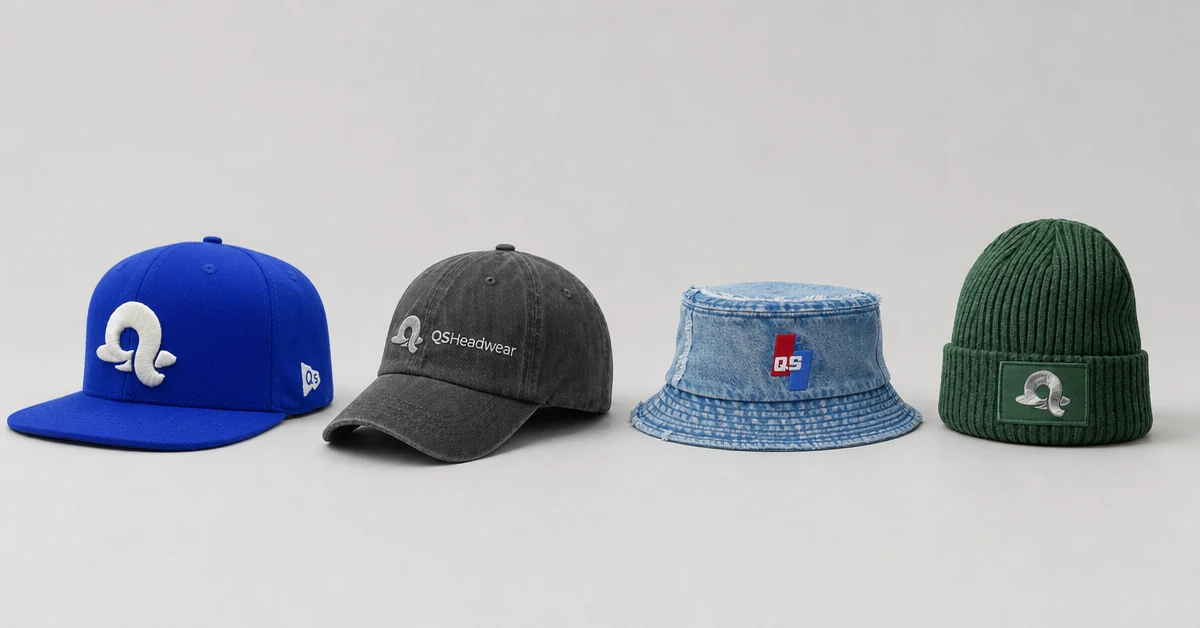
The beanie shown here is a ribbed knit, cuffed winter cap in a dark green tone with a soft matte finish. The knit structure is vertical and close-fitting, with a rounded crown and a wide folded cuff. A rectangular front patch sits centered on the cuff, carrying embroidered logo detail in silver or white thread on a matching green base. It reads like a retail-ready streetwear piece, but it could also sit comfortably in a promotional or team-merch program.
That combination matters because it signals a few practical production decisions. Rib knitting gives the surface more stretch and visual depth than a flat stockinette knit. The cuff gives a clean branding zone and also helps with sizing tolerance. The patch creates a more premium, controlled look than a direct print on soft knit fabric. None of that is exotic, but it is the kind of construction that separates a commodity cap from a product line item that can carry a brand story.
What OEM actually means in beanie sourcing
In headwear, OEM usually means the factory produces the beanie to the buyer’s specifications rather than simply selling a standard stock style. That can include the knit structure, color, cuff width, logo placement, finishing method, label details, packaging, and sometimes even the yarn or hand-feel target if the project is developed deeply enough.
For buyers, the useful question is not whether a supplier says “OEM” on the website. The question is how much of the product they can genuinely control in-house or through tightly managed partners. With custom beanies, that control affects not just appearance, but consistency from sample to repeat order. A supplier can be perfectly capable of making a sample and still be a weak choice if the production process is not stable.
Key takeaways buyers should keep in mind
Before getting lost in artwork files and color approvals, it helps to zoom out. A good OEM beanies manufacturer should give you three things: repeatable construction, visible branding flexibility, and enough capacity to handle a commercial order without turning every purchase order into a delay.
In the supplied notes, the manufacturer claims OEM/ODM and full customization of materials, colors, logos, and designs, plus a monthly capacity of 120,000–150,000 pieces, 15 years of industry experience, and more than 100 workers. Those are the sorts of figures a sourcing team would want to verify during qualification, but they do point to a factory that is positioned for scale rather than one-off sampling only.
How ribbed knit beanies are typically built
Ribbed knit beanies are popular because the texture gives them a little structure while still allowing the cap to sit close to the head. That matters in winter accessories, where buyers usually want a product that feels neat rather than sloppy. A cuffed construction also gives the cap a more deliberate silhouette and creates space for branding without crowding the crown.
From a manufacturing point of view, the exact fabric composition is unknown here and should not be assumed. It may be a blended yarn, acrylic-based, wool-blend, or something else depending on the buyer brief. The important part is that the yarn choice changes not only warmth and hand-feel, but also stretch recovery, pilling behavior, and how sharply the rib structure reads after wear. Buyers often focus on color first, then regret not asking about recovery and softness until after the first wash test.
Branding methods that work well on knit headwear
The visible front patch suggests a common and practical approach: build the hat cleanly, then apply branding through embroidery or an appliqué patch. This keeps the front mark legible and gives more control over contrast than trying to print directly onto knit texture. On ribbed beanies, that is often the safer route because the surface is uneven and can distort fine graphics.
For brands comparing suppliers, the choice usually comes down to a few factors: whether the logo must look premium or casual, how detailed the mark is, whether the artwork needs a textured effect, and how much the buyer wants to protect the surface of the knit from direct decoration. A patch is not automatically better than embroidery, but it is often easier to scale cleanly.
Where OEM and ODM split in practical terms
There is a real difference between OEM and ODM even though the terms get blurred in market listings. OEM is more buyer-driven: the brand comes with a design intent, and the factory builds to spec. ODM is more factory-driven: the supplier offers a base style that can be adjusted. For beanies, that difference may be as small as a change in cuff depth, logo treatment, or yarn color, but it still affects development time and control.
If you are building a streetwear collection, OEM is often the better fit because the details need to align with the rest of the line. If you are buying for a promotional campaign with a short calendar and a tighter budget, ODM-style modification can be more efficient. The right answer depends less on ideology and more on how much design ownership the buyer actually needs.
Selection criteria that matter more than brochures
When evaluating an OEM beanies manufacturer, look past the photography and ask how the factory handles the unglamorous parts of the job. Can they keep cuff proportions consistent? Do they show stitch density or knit texture clearly in samples? Can they match color across repeat orders? Do they understand logo placement on a folded cuff so the front mark sits centered rather than drifting after wear?
Capacity matters too, but not in isolation. A factory with 120,000–150,000 monthly pieces may still be a poor fit if communication is slow or if their sampling loop is messy. Conversely, a smaller operation may be ideal for a niche brand if the product is detail-heavy and the buyer values hands-on development. Capacity tells you volume potential; process tells you whether that volume will be usable.
Questions worth asking before you place an order
Ask what parts of customization are handled in-house and which are outsourced. Ask for photo evidence of previous ribbed knit or cuffed styles, not just generic headwear. Ask whether the supplier can support logo patch development, and whether the patch method is woven, embroidered, or printed. The current product only shows a sewn-on rectangular patch with embroidered-looking detail; it does not tell you the full construction, so do not assume more than the image supports.
It is also sensible to ask how the supplier handles pre-production approval. In knitwear, a small misread in color or logo positioning can change the entire feel of the product. A rushed approval process is one of the fastest ways to turn a decent sample into a disappointing shipment.
Common mistakes in beanie sourcing
The biggest mistake is treating a beanie as a simple blank item. It is not. Even a basic cuffed winter cap has multiple variables: yarn behavior, rib structure, crown shaping, cuff fold, logo attachment, and final hand-feel. If any one of those is off, the piece can look cheap in retail lighting even if it passed a casual sample review.
Another common error is choosing decoration before structure. Buyers sometimes lock in a logo method before deciding whether the knit surface can support it cleanly. That can force a compromise later, especially on darker colors or textured ribbing. A third mistake is underestimating how small color shifts affect seasonal collections. Dark green, for example, can lean sporty, heritage, military-inspired, or premium depending on the yarn and finish. That is useful, but it has to be intentional.
What this kind of supplier is best suited for
A factory offering OEM and ODM knit headwear with stated large-scale capacity is generally well suited to retail streetwear collections, winter accessories programs, and branded merchandise projects where consistency matters across many units. The product notes suggest a manufacturer that can support custom logos, materials, and colors, which is useful for brands that want beanies to feel like part of the line rather than an afterthought.
That said, buyers should still match the factory to the program. If your project requires highly specialized fiber content, unusual lining, or performance features, you need to confirm whether those are within the factory’s actual development scope. The visible product here is a straightforward ribbed cuff beanie with patch branding. That is a strong starting point, but not proof of every possible variation.
Buyer advice for moving from sample to order
Start with the sample, but do not stop there. Ask for confirmation of knit structure, logo placement, and color references in writing. If the patch matters to your brand image, request close-up images or a physical strike-off before approving the main run. The difference between an acceptable patch and a sharp one can be small on paper and obvious in hand.
If you are sourcing custom beanies for a launch window, build in time for at least one correction round. Even experienced factories benefit from a clear approval chain. A fast order with vague instructions is usually slower than a careful order with specific references. That is a boring lesson, but it saves money.
FAQ
Can this type of beanie work for promotional use?
Yes. A cuffed rib knit beanie with a front patch is one of the more practical formats for branded giveaways because it balances visibility with wearability.
Is rib knit better than a flat knit for all projects?
Not always. Rib knit often feels more substantial and flexible, but the best choice depends on the desired look, target price, and fit profile.
Should buyers insist on exact composition details?
Yes, especially if softness, warmth, or pilling resistance matters. The visible product does not reveal the exact fiber content, so that information should come from the supplier, not guesswork.
Next step for sourcing teams
If you are evaluating an OEM beanies manufacturer for a winter program, start by requesting details on customization options, sample development, and production capacity, then compare those answers against the actual beanie construction you want to sell. The product shown here suggests a factory that understands branded knit headwear: ribbed structure, cuffed fit, and patch-based logo placement. That is a useful base, provided the supplier can back it up with clear communication and repeatable output.
For buyers, the real decision is not whether to order a beanie. It is whether to source from a partner who can make a simple winter cap look intentional at retail scale. That is where the value of a capable OEM partner shows up.