



For apparel brands, collegiate programs, and retail merchandisers, sourcing a Royal Blue Snapback Hat that maintains precise crown geometry without seam puckering or embroidery distortion is a persistent procurement challenge. Many off-the-shelf blanks suffer from limp front buckram, uneven panel tensions, or poor thread density that causes detailed artwork to sink into the fabric weave. This structured six-panel reference addresses those structural pain points by integrating high-density front reinforcement with elevated decoration methods, delivering a consistent profile built specifically for private-label streetwear programs and branded distribution.
Structural Anatomy and Component Overview
This headwear silhouette utilizes a classic six-panel crown build joined at a center apex and anchored by a color-matched fabric-wrapped top button. The front two panels feature structured interlining that preserves the vertical rise and upright stance typical of an Urban Style Snapback, preventing collapse during transit, storage, or shelf display.
Stitched ventilation eyelets are situated on each panel to support airflow through the crown. The visor is engineered with a flat profile, reinforced by an internal stiffener to resist downward curling or lateral warping, making it a reliable Flat Brim Snapback Hat configuration. Multiple rows of tonal perimeter stitching secure the visor edge, ensuring mechanical durability at the crown-attachment junction.
Decoration Architecture: Dimensional Embroidery and Badging
Front Panel High-Density Relief
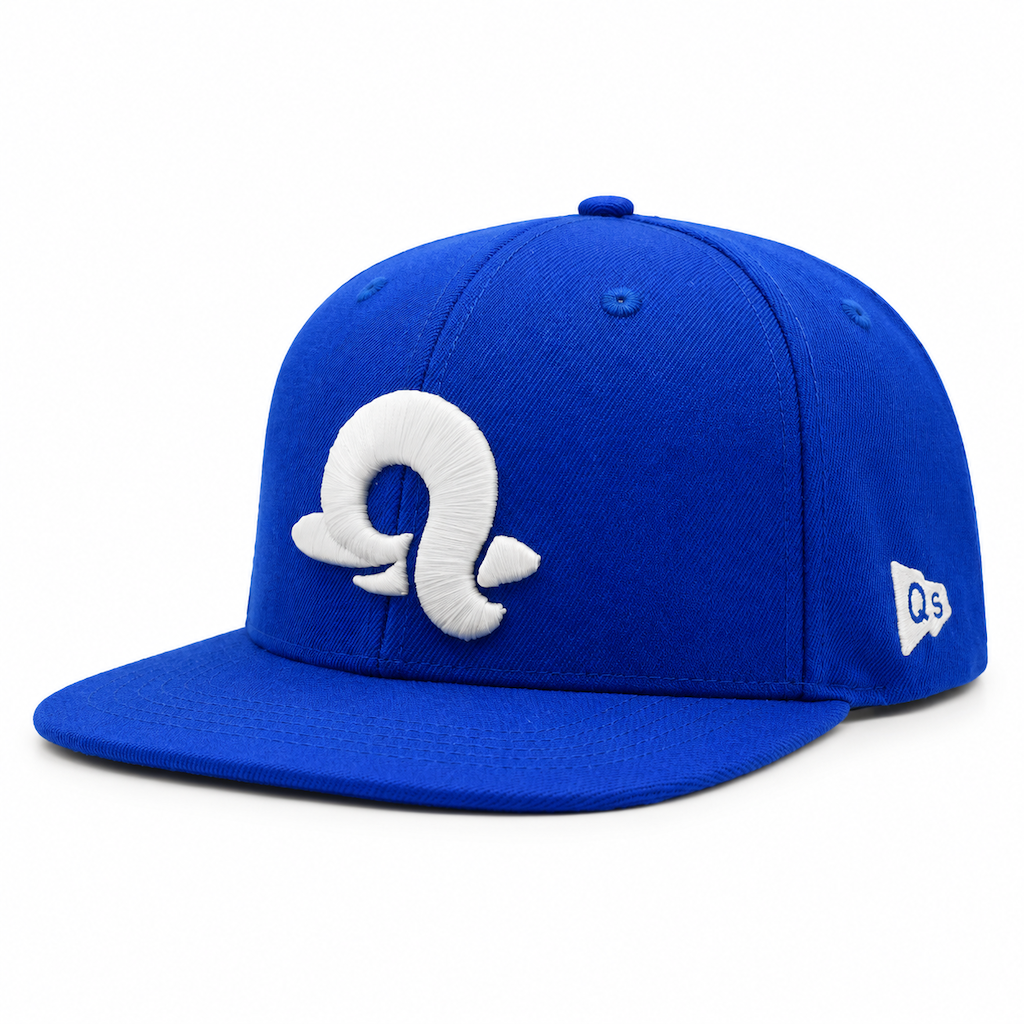
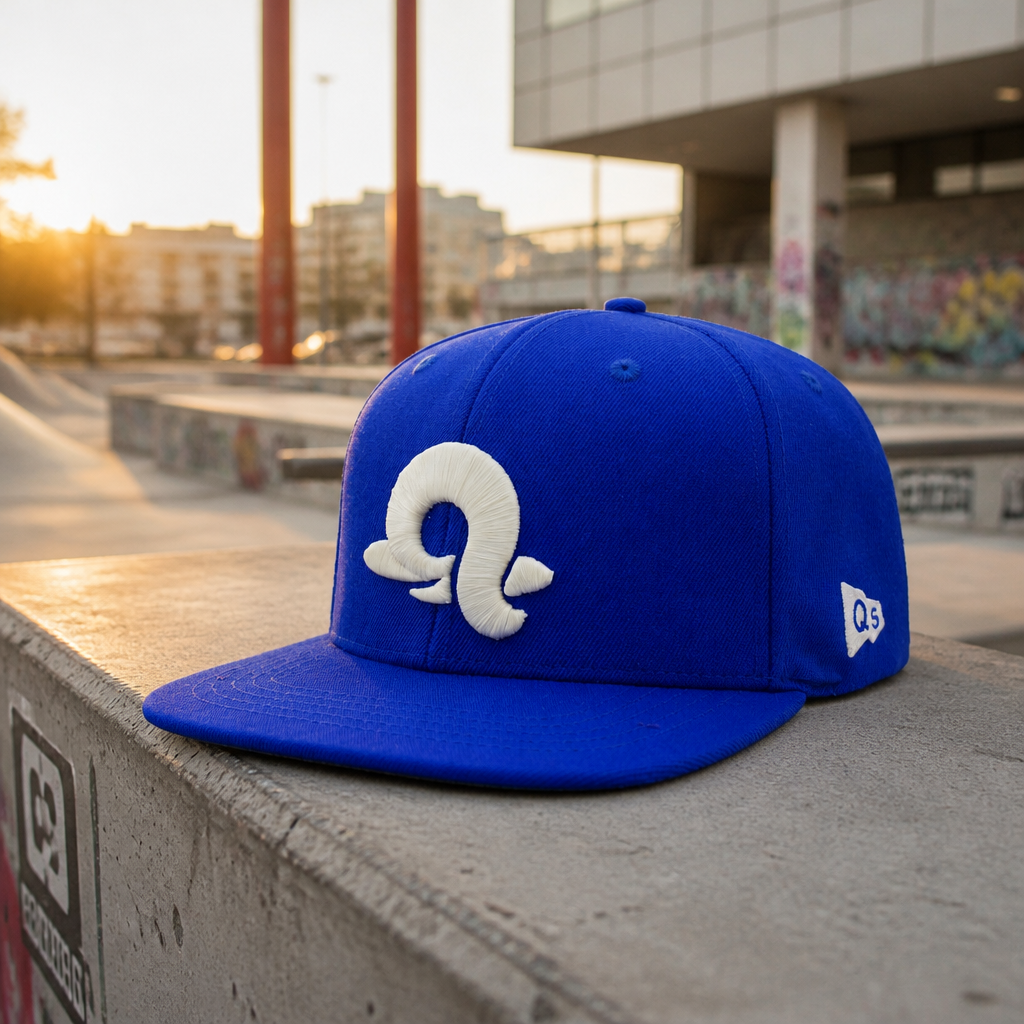
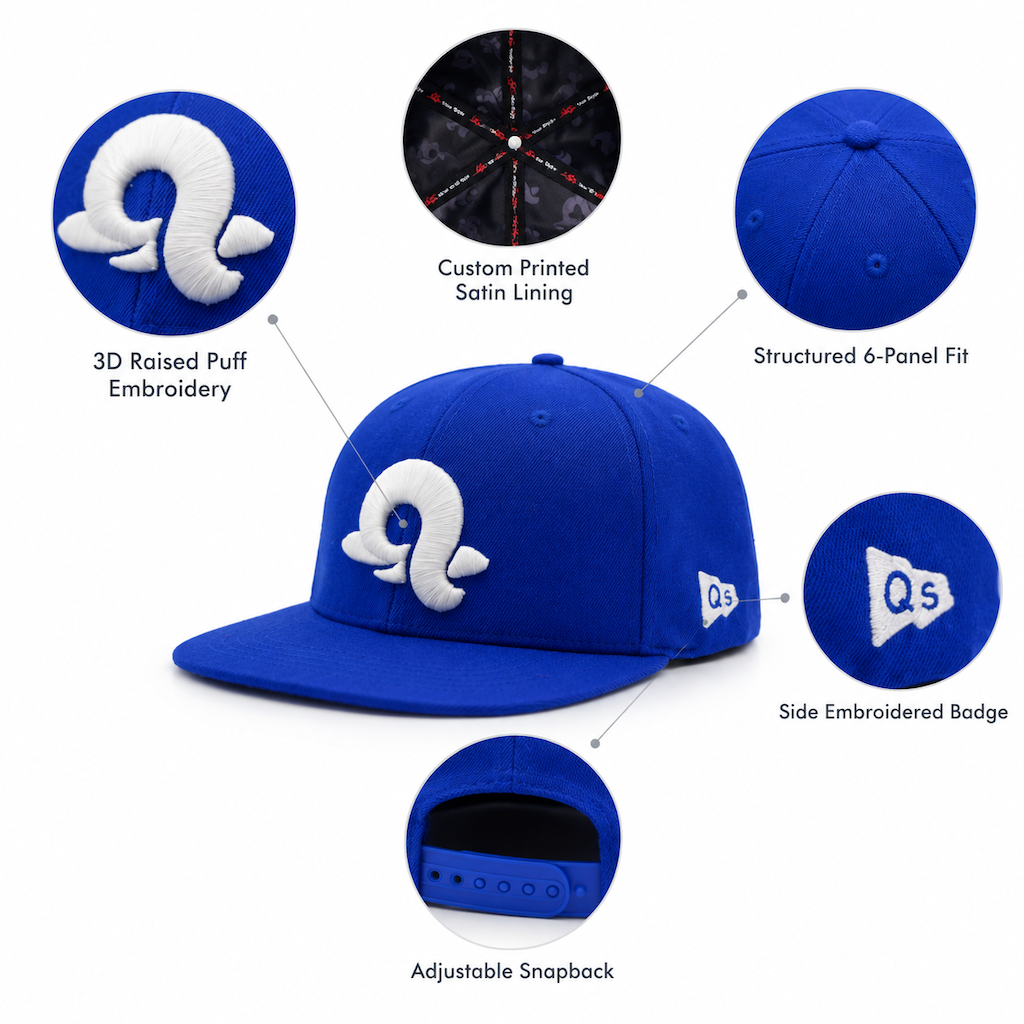
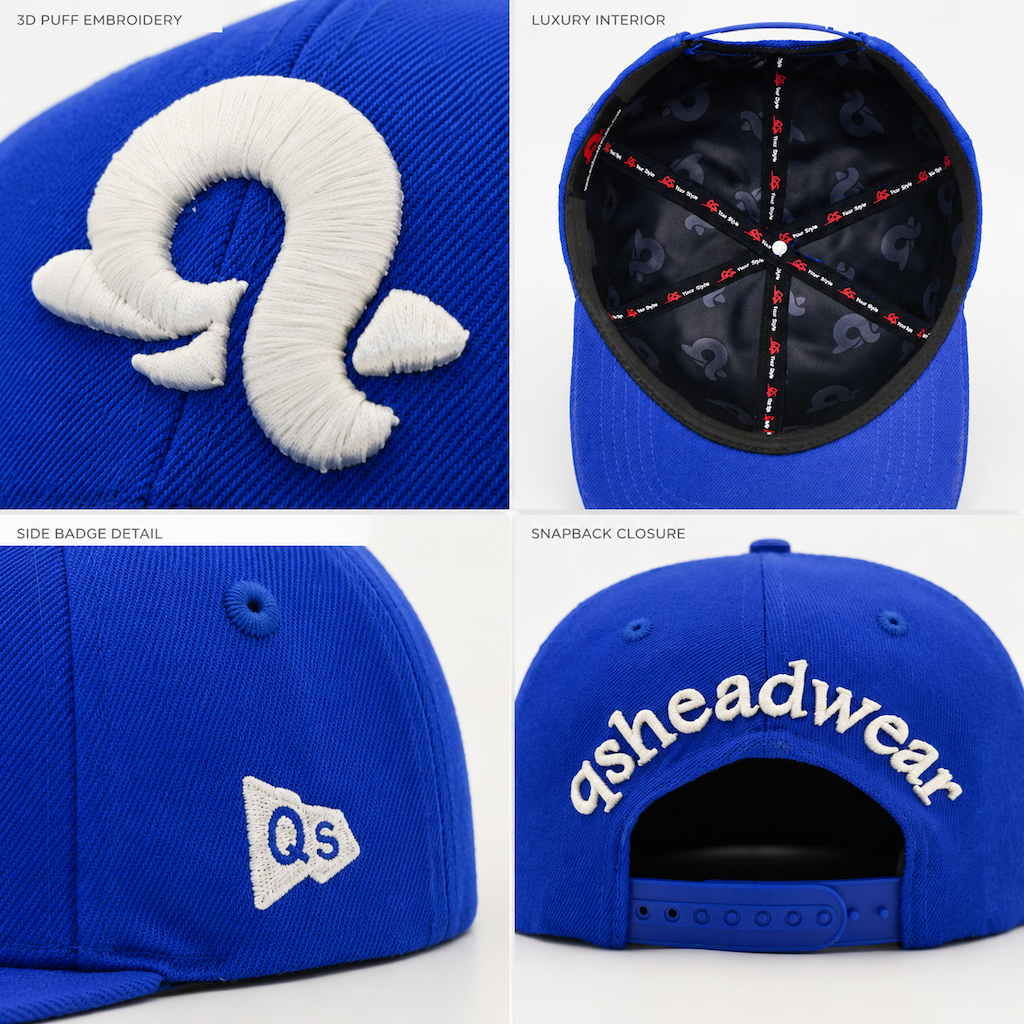
The centerpiece of this model is the dimensional white graphic rendered as a 3D Puff Embroidery Cap design. The application utilizes a dense satin stitch laid over an underlying structural foam base, generating a raised, tactile relief with clean, vertical edge definitions. This technique isolates the artwork from the crown fabric, preventing tension pull across the center seam and ensuring that high-contrast white thread retains its brightness against the deep royal blue base.
Secondary Branding and Trims
Complementing the primary graphic, the left panel features a flat embroidered pennant patch secured along the seamline. This secondary placement demonstrates the flexibility required for a Personalized Embroidered Cap, allowing brands to apply supplementary identifiers, collection codes, or licensing flags without altering the front embroidery program. When developing a 3D Embroidered Snapback, managing stitch pull-compensation in the digitizing phase prevents distortion across intersecting crown panels.
Interior Finishing and Closure Systems
While exterior aesthetics define visual appeal, interior execution determines wearability and long-term durability. This build incorporates premium internal appointments uncommon in standard commercial blanks:
- Printed Satin Lining: The entire interior crown cavity is lined with a smooth, black patterned satin fabric, finished with contrast red linear accents. This layer reduces direct friction against hair while serving as prime real estate for custom pattern printing.
- Taped Seams: Interior panel joints are bound with custom printed seam tape, concealing raw structural edges and eliminating thread unraveling.
- Moisture Band: A black fabric sweatband lines the interior base, joined cleanly with the lower crown perimeter to ensure a soft contact interface.
- Rear Closure: A color-matched, dual-row plastic strap makes this an Adjustable Snapback Cap suitable for broad demographic sizing without the inventory complexities of fitted sizing runs.
Material Characteristics and Palette Consistency
The crown and brim are constructed from a tightly woven twill fabric characterized by a defined diagonal rib and a low-glare matte surface finish. While exact fiber ratios (such as acrylic, wool blend, or cotton twill) can be adapted based on production specifications, the royal blue dye lot exhibits uniform saturation across all cut panels, the top button, and the visor wrap. This color discipline prevents the common factory defect where brim fabric lots clash slightly with crown materials. For programs requiring a unified look, this Royal Blue Flat Brim Hat serves as a baseline standard for multi-color merchandise rollouts.
Manufacturing Steps and Quality Control Benchmarks
Fabrication begins with precision panel die-cutting. Front panels undergo computerized embroidery prior to full crown assembly to allow clear hoop clearance and even thread tensioning during the 3D embroidery process. Once embroidery is completed, the panels are stitched sequentially with reinforced seam margins.
Visor stiffeners are sandwiched between twill cuts, joined via multi-needle automated stitching, and mated to the assembled crown. The printed satin lining is assembled separately and drop-lined into the crown interior before the perimeter sweatband is bound. Key quality inspection checkpoints include checking for foam residue along the 3D embroidery perimeter, confirming dimensional symmetry of the Flat Bill Snapback visor relative to the center seam, and verifying snap closure retention strength.
Application Scenarios and Sourcing Guidelines
Because of its rigid structure and prominent decoration zones, this profile is suited for:
- Streetwear and skate retail collections requiring a traditional Hip Hop Snapback Hat profile.
- Esports, collegiate, and athletic merchandise lines seeking high-impact mascot embroidery.
- Event merchandise and private-label programs that need a Premium Snapback Cap with custom interior branding.
When preparing tech packs for an Embroidered Snapback Cap run, buyers should provide vectorized artwork specifying exact millimeter heights for 3D foam elements, interior lining artwork in continuous repeat formats, and pantone codes to match snap closures and fabric dyes precisely. Specifying a structured 3D Embroidery Hat build ensures your final product maintains its intended volume and branding impact throughout the retail lifecycle.