



Engineered Lifestyle Headwear: The Modern 5-Panel Cap Architecture
Retail apparel brands frequently encounter fit inconsistency and coarse interior finishing when sourcing commercial headwear. Sourcing a refined 5-panel cap or an artisanal strapback baseball silhouette resolves these merchandising hurdles by merging adaptable closure hardware with precise cut-and-sew panel geometry. When private-label brands build accessory collections, the crown must rest comfortably against varying head profiles without puckering, while the interior seams demand clean, irritation-free coverage that withstands daily handling.
Product Overview: Two-Tone Strapback Construction
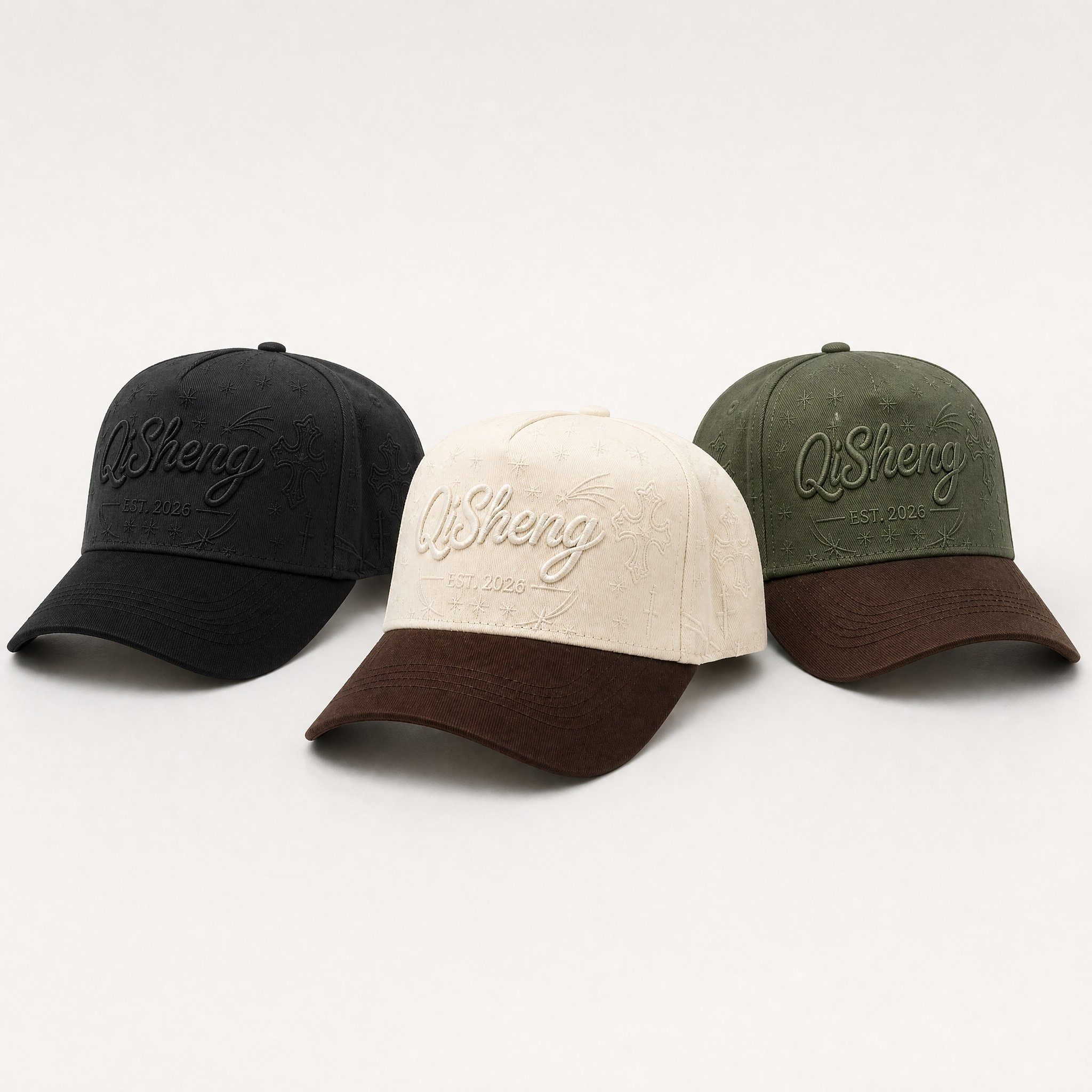
This lifestyle headwear reference illustrates a classic low-profile aesthetic characterized by a striking two-tone palette. The crown is built from an off-white, cream-hued woven fabric featuring a distinct diagonal twill texture, suggesting a durable cotton or cotton-blend structure. Contrasting sharply against the pale crown, the curved brim is cloaked in rich, dark brown textile, anchored by parallel rows of tonal topstitching across the underside. Beneath the shell, dark brown bias seam tape radiates outwards from the center apex button, concealing raw cut edges and framing subtle tone-on-tone embroidered star motifs that disperse across the crown panels. An adjustable self-fabric strap fitted with an antique-brass-finish metal slide buckle completes the rear opening, delivering a classic alternative to conventional plastic closures.
Key Specifications and Structural Observations
Drawing directly from physical inspection, the hat balances decorative nuance with traditional manufacturing details:
- Crown Assembly: Multi-panel cut-and-sew construction. The panels display a soft, pliable hand feel from the interior view; without visible rigid front buckram, the structure appears unstructured or lightly structured, though internal stiffeners cannot be definitively confirmed without destructive testing.
- Visor Profile: Pre-curved stiffened brim featuring dark brown textile on both upper and lower surfaces, stabilized by multiple concentric rows of high-density edge topstitching.
- Seam Reinforcement: Center-outward radial panel seams sealed with dark brown woven taping, anchored at the crown apex by a covered fastener.
- Ventilation: Pierced ventilation eyelets positioned on crown sections to encourage airflow, rendered with dense boundary reinforcement (visual inspection leaves thread-embroidered versus metal-grommet backing unconfirmed).
- Retention System: Tailored fabric strap sliding through a metallic clamp-style buckle, allowing micro-adjustments across diverse head sizes.
- Interior Labeling: Discreet black woven brand label inserted directly into the seam margin adjacent to the rear arch.
Materials, Hardware, and Finish Options
The exterior shell relies on woven twill, a reliable foundation across production runs for any 5-panel baseball cap or curved-visor style. Twill weaves offer surface resistance to surface abrasion while catching ambient light along the diagonal ribs. The contrast underbrim minimizes glare while introducing an intentional design accent.
The antique-brass hardware adds vintage character. Unlike molded snapback pegs that limit sizing increments, a metal slide buckle secures the fabric lead with friction tension, ensuring a tailored fit. For brands exploring variations on a classic 5-panel hat, this hardware pairing bridges the divide between utilitarian skatewear and heritage casualwear.
Manufacturing Workflow in Apparel Production
Producing headwear of this caliber involves staged cut-and-sew operations. Automated fabric cutting tables slice crown wedges and peak foundations from woven bolts. If tonal embroidery is specified, individual panels undergo embroidery frame placement prior to crown assembly, ensuring stitch clusters remain flat and clean across seams.
Panels are joined on multi-needle lockstitch machines, immediately followed by the binding station where contrasting seam tape is folder-fed and topstitched over raw interior allowances. Meanwhile, the visor core is inserted into its fabric pocket, closed, and guided through multi-needle perimeter guides to generate uniform stitch spacing. Partnering with a dedicated 5-panel cap factory ensures these diverse operations—from panel assembly to eyelet punching and slide-buckle crimping—align without registration errors or seam puckering.
Application Scenarios and Target Markets
Because this design avoids overt safety features, moisture baffles, or high-visibility accents, it is specifically configured for retail consumer markets, street-fashion capsules, outdoor lifestyle lines, and elevated promotional merchandising. Its subtle embroidery and neutral cream-and-brown palette allow easy coordination with casual seasonal apparel, making it a reliable standard for retail display shelves or brand lifestyle lookbooks.
Quality Control and Factory Inspection Checkpoints
When monitoring factory output, quality assurance personnel should focus on the interior and mechanical elements that dictate garment longevity:
- Seam Tape Tension: Taping must be applied with even differential feed; excess tension creates puckers on the outside face, while insufficient tension causes tape edges to ripple.
- Topstitch Alignment: The curved brim rows must maintain parallel spacing without run-offs or skipped stitches around the perimeter arc.
- Hardware Operation: The slide buckle must grasp the fabric strap securely without tearing the woven edge or binding during adjustment cycles.
- Embroidery Cleanliness: Interior embroidery tails should be neatly clipped to prevent loose threads from catching on hair or tangling in the interior seam joins.
Customization Guidance for Commercial Programs
When developing a custom 5-panel cap or companion strapback program, tech packs should explicitly detail fabric weight (such as standard cotton twill versus heavy canvas), panel backing requirements (unstructured for relaxed drape, or buckram-fused for upright volume), and hardware surface treatments. Buyers can adjust the underbrim colorway, specify metal eyelet plating, or request specialized placement for front-panel woven labels. Providing exact artwork files for tonal or contrast embroidery allows the factory to digitize correct stitch densities without compromising panel drape.
Buyer Decision Factors
Procurement teams evaluating strapback designs against standard plastic-snap models should assess brand positioning and target demographics. While plastic snap closures offer rapid manufacturing speed, slide-buckle strapbacks provide an upscale tactile feel suitable for contemporary retail price tiers. Evaluating stitch density, fabric hand-feel, and hardware weight during prototype reviews ensures the final production run matches brand expectations.
Request Specifications and Development Support
Whether you are refining an existing collection or launching a new custom 5-panel cap series, our manufacturing specialists provide end-to-end support for cut-and-sew headwear. Contact our technical team today to review fabric swatches, closure hardware finishes, and embroidery sampling timelines tailored to your production schedule.