


The custom hat manufacturing process is a chain of decisions, physical operations and evidence. A buyer may think the work starts when fabric is cut, but the largest preventable delays often begin earlier: an unclear brim reference, artwork that has not been adapted to a curved panel, or a packing plan that does not protect the approved shape. Mapping each stage makes handoffs visible and gives the buyer a clear release point.
This guide is for B2B buyers who need a practical overview of development and bulk production. Exact machinery, staffing and timing vary by style, material, decoration, order size and destination. Use the map as a briefing tool, then request an order-specific schedule.
Custom hat manufacturing process starts with a production-ready brief
The first handoff should identify the intended wearer, use case, silhouette, crown, panels, brim, closure, fabric, decoration, labels, packing and quantity by color. Add measurements and a physical or visual reference. If a choice is still open, mark it as open rather than letting the factory guess and bury the assumption in a sample.
Separate creative intent from acceptance criteria. “Relaxed,” “premium” or “clean” can guide design, but the production file also needs dimensions, color references, stitch or print limits and photographs of approved details. A concise question list lets the supplier confirm feasibility before components are ordered.
${table(['Stage', 'Buyer decision', 'Factory output', 'Release evidence'], [ ['Brief review', 'Scope, use case and open choices', 'Feasibility notes and questions', 'Confirmed specification'], ['Pattern and base', 'Fit, profile and component priorities', 'Pattern or base sample', 'Measured and worn approval'], ['Decoration setup', 'Method, size, colors and location', 'Digitized or adapted artwork', 'Actual-size decoration sample'], ['Bulk preparation', 'Quantity, labels and pack-out', 'Material and production plan', 'Approved BOM and release record'], ['Production and QC', 'Tolerances and defect rules', 'In-process and final evidence', 'Inspection report and carton record'], ])}For the custom hat manufacturing process, release should be a named event. Before release, changes can be evaluated as development decisions. After release, a change may affect purchased material, unused components, labor and delivery. Put the date, sample ID, artwork revision and approver beside the release.
Pattern and material decisions control later operations
The pattern translates the buyer's idea into panels, seam lengths, crown depth, brim relationship and closure placement. Fabric behavior matters: a structured twill, soft cotton, mesh, corduroy or knit will respond differently at the same measurement. Confirm grain, stretch direction, nap, color and usable width before cutting a large run.
Keep a physical swatch with the approved sample and note the supplier or lot reference. A digital color chip can support communication but cannot show hand feel, thickness or recovery. When a material substitution is necessary, recheck the pattern, decoration and care route rather than approving it as an invisible change.
The QSHeadwear product collection can help the team select a starting silhouette. The final custom hat manufacturing process must still be tied to the chosen fabric, construction and decoration, not the category image.
Sampling is a sequence of questions
A first sample can answer whether the interpretation is close. A second sample may prove fit, brim, closure and material. A decorated sample shows whether the logo survives the panel curve and whether backing or patch thickness changes comfort. A packed sample shows whether the product reaches the warehouse in the approved presentation.
Consolidate buyer comments into one numbered list. “Make it better” does not tell the factory which variable to change. Refer to landmarks, photographs, measurements and revision IDs. If the buyer changes fit and decoration at the same time, keep the prior sample available so the team can identify which revision solved or created the issue.
Cutting and preparation need traceability
Before cutting, verify fabric, color, quantity, direction and defect handling. Record which pattern revision is used and how components are bundled. Panel mixing across lots can create visible shade or hand-feel differences, so the production plan should state when a color or material lot changes.
Preparation also includes closures, eyelets, sweatbands, labels, thread, patches and packing components. Count critical components and keep a shortage or substitution log. A complete hat cannot be finished reliably when a small branded trim is treated as an afterthought.
Keep the custom hat manufacturing process map beside that component list so a shortage has a visible owner, decision date and effect on the production release.
Sewing turns specifications into a physical product
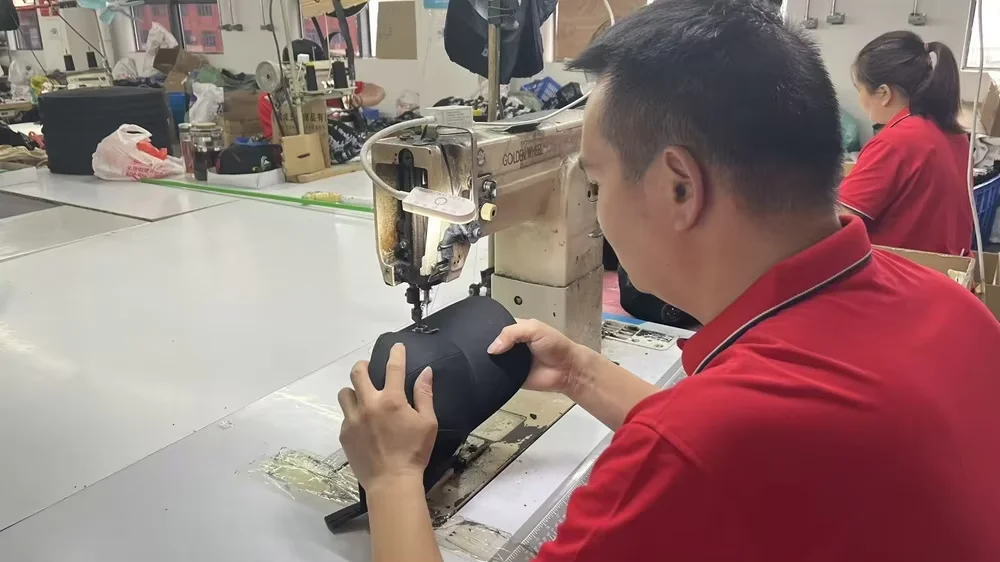
Assembly order affects crown symmetry, seam appearance, brim position and closure alignment. Ask for a first-off or line-start review on a complete cap, not only a loose panel. Check the inside as well as the outside: raw edges, backing, seam tape and sweatband placement influence comfort and perceived quality.
Use an in-process checklist for dimensions and appearance. It should identify the most likely defects for the construction, such as panel mismatch, skipped stitches, puckering, crooked brim, loose hardware or incorrect closure setting. A final random check cannot reconstruct a problem that was never recorded at the line.
Decoration requires its own approval
Embroidery, patches, prints, transfers and reflective details each have different artwork and material limits. Approve the finished size, thread or ink colors, backing, edge, location and inside feel. Review the actual decoration on the complete cap, because a flat artwork file cannot show distortion on a curved panel.
When the logo needs simplification, retain the original and production adaptation together. That record protects the brand team from approving one version on screen and receiving another version in bulk without a documented decision.
${table(['Control point', 'What to review', 'Typical evidence'], [ ['Artwork intake', 'Vector file, colors, dimensions and locations', 'Artwork revision and marked placement'], ['Setup proof', 'Digitizing, screen, transfer or patch adaptation', 'Actual-size proof or first decoration'], ['Complete sample', 'Appearance, comfort and inside finish', 'Front, side, back and inside photographs'], ['Line-start check', 'Decoration on the first production pieces', 'Signed sample and defect notes'], ['Final lot review', 'Position, color, workmanship and care effects', 'Inspection images and report'], ])}Quality and packing close the loop
The custom hat manufacturing process should carry the approved sample into final inspection. Define measurements, appearance, decoration position, closure operation, labels, count and packing. If acceptance sampling is used, ISO 2859-1 can support the terminology; it does not select cap-specific tolerances.
Run a complete pack-out using final bags, tags, separators, carton marks and the intended stack or fold. Check units from different carton positions after a realistic rest period. Packaging is part of the manufacturing result because compression, heat and movement can change the presentation approved at the factory.
Ask QSHeadwear for an order-specific map
Review the QSHeadwear OEM/ODM service to decide whether the project needs a buyer-led specification or a proposed base. Include the style, materials, decoration, quantities, destination and required date. Ask where the company expects approval and what evidence will be returned at each gate.
The company profile provides supplier context. Use the contact page to send the brief and ask for a schedule that separates sampling, material preparation, bulk production, inspection and shipping. For custom hat manufacturing process planning, those stages are more useful than one unqualified lead-time number.
Keep the production passport for the next order
Archive the final sample, pattern or BOM, material and color references, artwork revisions, label and care files, approved tolerances, inspection report, pack-out photographs and shipment record. Add any approved deviation with its scope. A reorder should be able to start from evidence rather than a chain of informal messages.
A controlled custom hat manufacturing process gives the buyer more visibility without pretending that every cap is identical. Define the release, preserve the handoffs and check the physical product at the points where it can change.
${faq('Custom hat process questions', [ ['What is the first step in custom hat production?', 'Start with a complete brief covering wearer, silhouette, materials, decoration, quantity, packaging, destination and the decisions still open.'], ['How many samples are normally useful?', 'Separate interpretation or base selection, construction and fit, complete decoration, and pack-out or receiving review.'], ['Why is a physical material swatch important?', 'It shows hand feel, thickness, stretch, surface and color behavior that a screen image cannot prove.'], ['When should bulk production be released?', 'Release after the sample, artwork, materials, labels, quantities, packing and acceptance criteria are approved by a named owner.'], ['What happens if a material is substituted?', 'Recheck fit, pattern, decoration, care and any claim that depends on the original material; document the new reference.'], ['Should decoration be approved on a flat file?', 'No. Approve an actual-size decoration on the complete cap and review inside comfort where relevant.'], ['What does an in-process inspection catch?', 'It can catch assembly, symmetry, stitch, hardware, brim and decoration issues before a whole lot is finished.'], ['Does ISO 2859-1 set cap tolerances?', 'No. It supports sampling language; the buyer and supplier must define product-specific dimensions and defects.'], ['Why test packing before shipment?', 'Compression, heat and movement can alter shape or decoration, so the complete pack-out should be checked before release.'], ['What should I send QSHeadwear?', 'Send the specification, references, artwork, material choices, quantities, packaging, destination, timeline and the evidence you expect at each stage.'], ])}