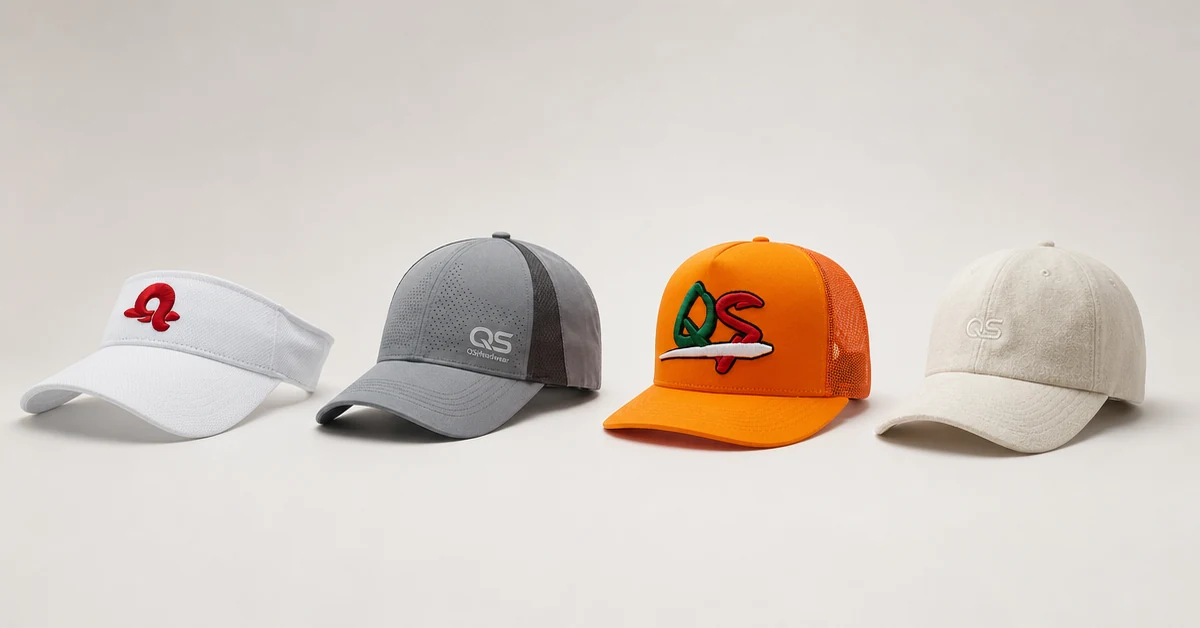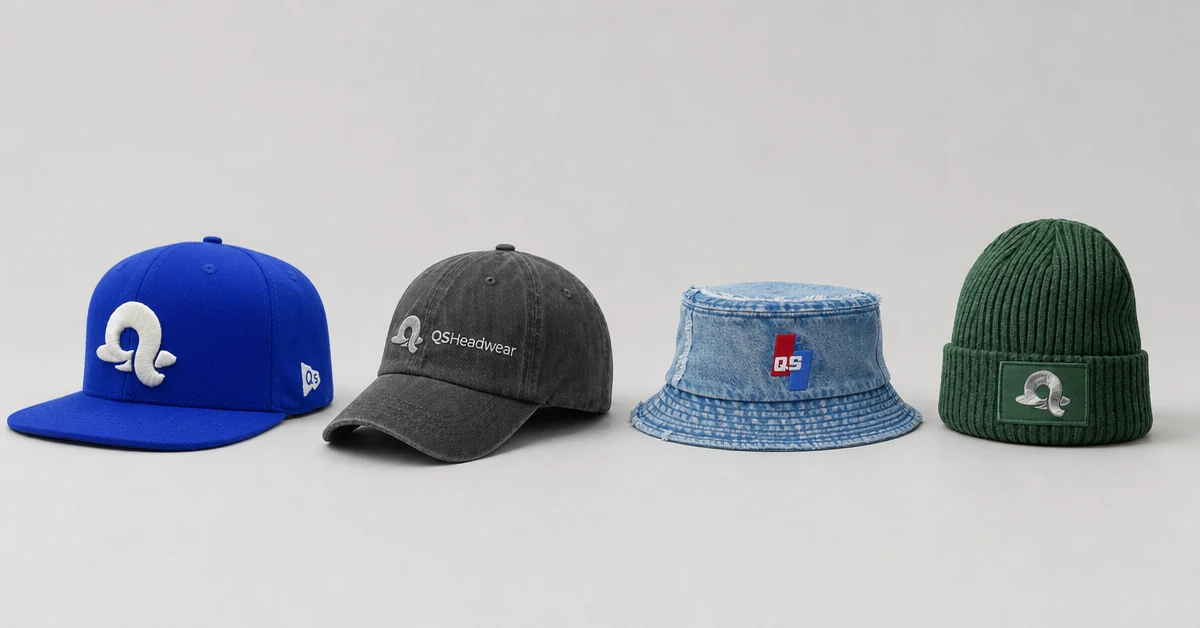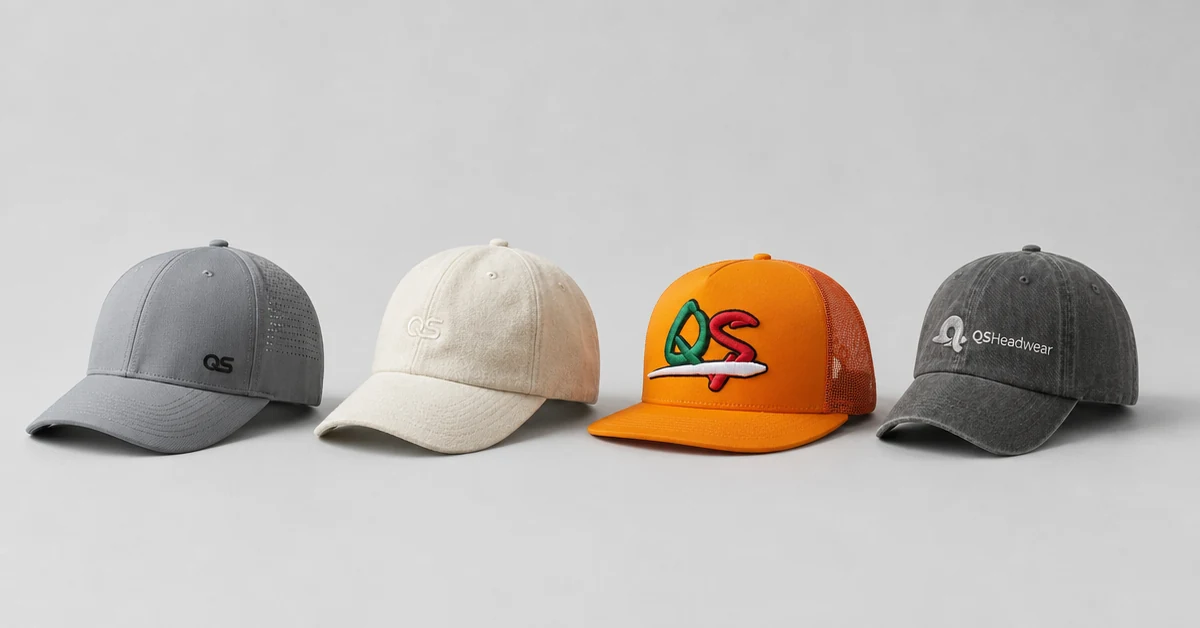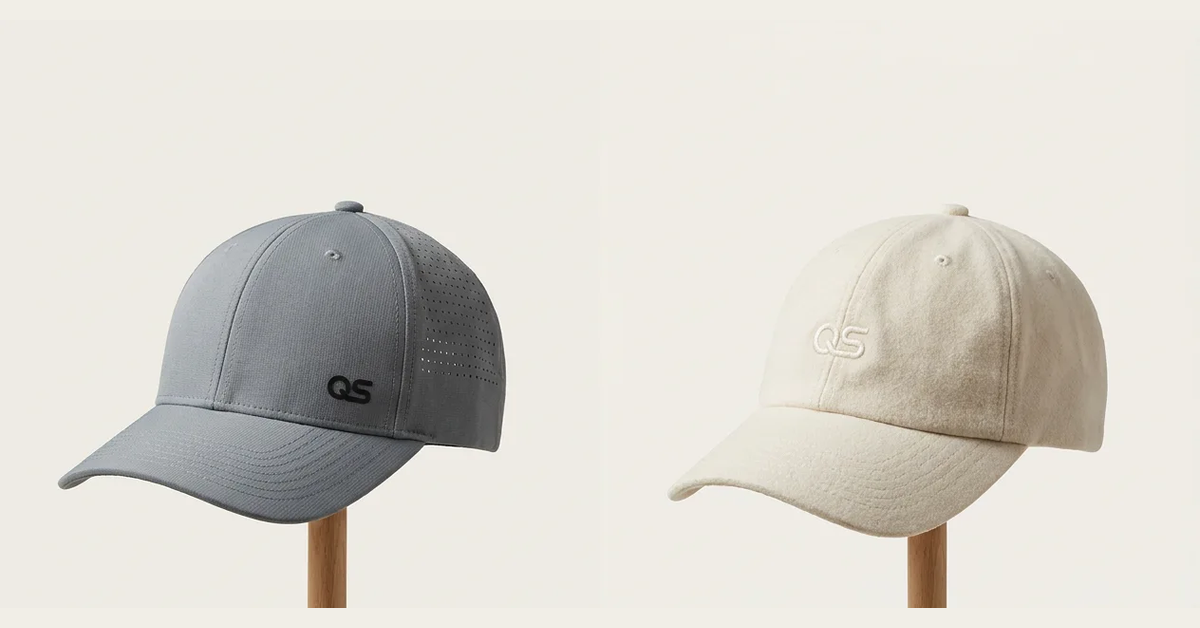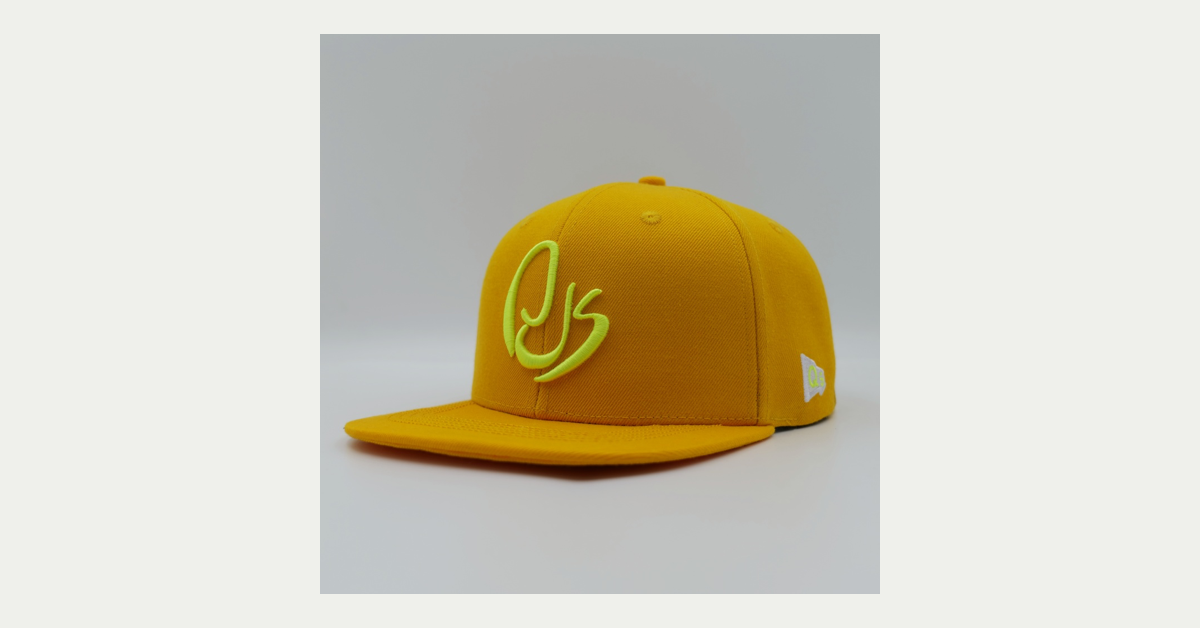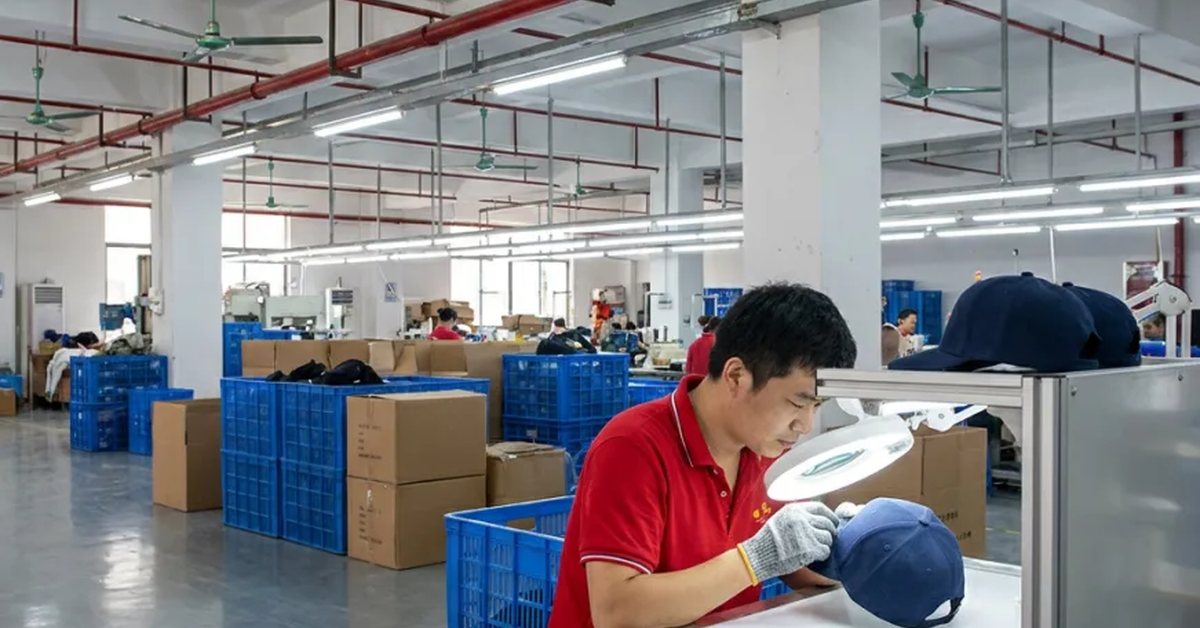


Fabric is the decision buyers spend the least time on and regret the most. A cap silhouette can be chosen from a catalogue in five minutes, but the fabric determines how the cap holds its shape, how embroidery sits on it, how it survives washing, what it costs and what price it can command at retail. Two caps in identical patterns made from different cloth are not variations of one product. They are different products.
This guide covers the materials used most often in headwear manufacturing, what each one does well, and where each one causes trouble. If the silhouette itself is still open, resolve that first with our guide to choosing the right cap style, because crown structure and fabric weight have to be decided together.
Cotton Twill: The Default, and Why It Earned That
Cotton twill is the baseline fabric for structured caps, and it holds that position because it does most things adequately and one thing exceptionally. The diagonal weave gives it body, it takes embroidery cleanly, it dyes to consistent colour and it costs less than nearly every alternative.
The weight is where the specification actually lives. Lighter twill drapes and suits unstructured crowns. Heavier twill stands up on its own and gives a structured six-panel its crisp profile. Ask for the fabric weight in grams per square metre rather than accepting "standard", because standard varies between factories and a difference of fifty grams changes how the finished cap reads.
Where Cotton Twill Struggles
Twill absorbs moisture and holds it, which rules it out for genuine athletic use. It also wrinkles, and heavily saturated dark shades can crock onto lighter fabrics before the first wash. Neither is a defect. They are properties, and they only become problems when the fabric was specified for the wrong application.
Washed Cotton and Denim: Softness With a Trade-Off
Garment washing breaks down the fabric's stiffness and produces the soft, lived-in hand that defines the dad hat category. It also introduces variability, because a wash process is chemical and mechanical rather than purely mechanical.
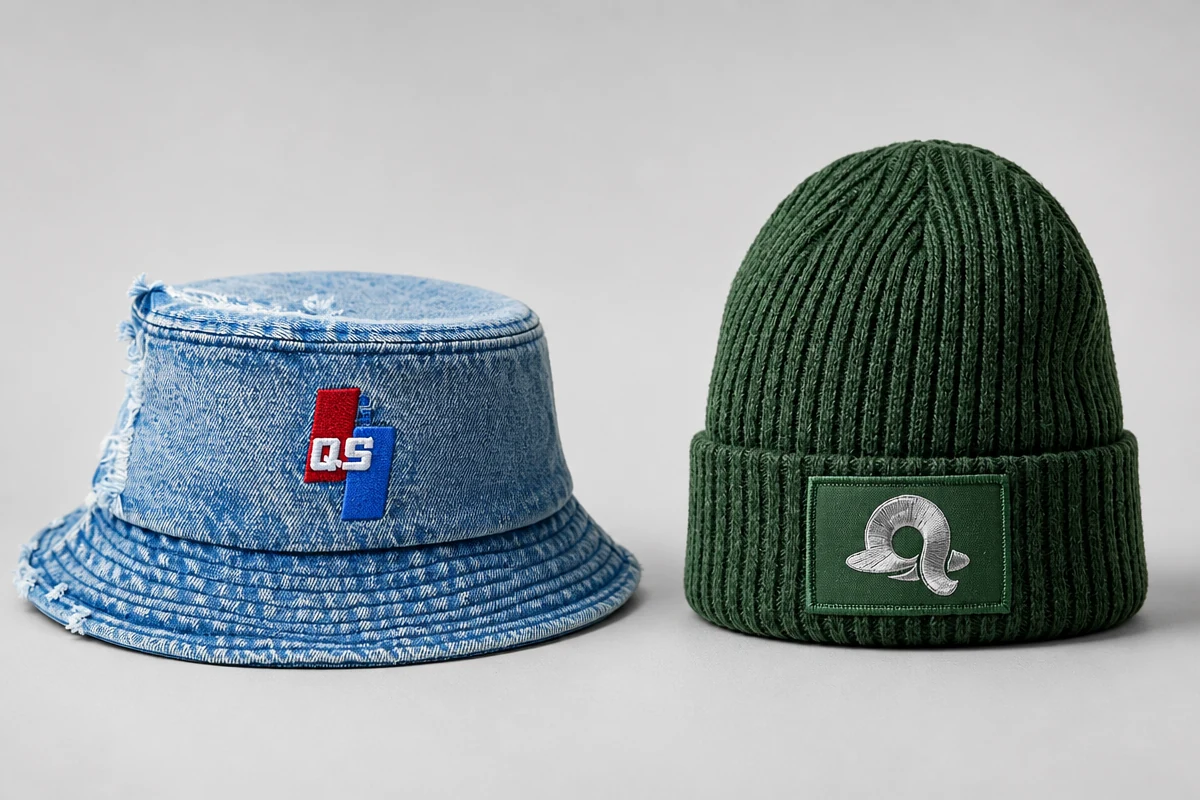
Denim behaves similarly with an added complication: indigo fades, and fading is exactly what the customer wants. That means the approved sample represents a starting condition rather than a permanent state. Brands buying denim bucket hats should understand which stage of the fade they are approving.
Controlling Wash Variation
The commercial risk with any washed fabric is batch-to-batch drift. Stone wash, enzyme wash and acid wash all produce a range rather than a single outcome, and a workforce or a retail shelf receiving caps from two batches will notice a mismatch that the factory considers within tolerance.
QSHeadwear's vintage and washed caps line addresses this with colour fading calibration for batch uniformity and reinforced stitching to hold durability after washing — a reminder that a heavily processed cap needs construction decisions the wash itself does not provide. Ask explicitly how the factory measures wash consistency, and keep a sealed reference sample.
Corduroy: Texture as a Price Lever
Corduroy has moved from seasonal novelty to a staple of premium casual headwear, and the reason is commercial rather than technical. The ribbed pile catches light in a way flat fabric cannot, so a corduroy cap photographs as more expensive than a twill cap in the same shape and colour. That perception gap is usually worth more than the fabric cost difference.
Wale Count Changes the Product
Wale count describes ribs per inch. Wide-wale corduroy reads bold, retro and casual. Fine-wale reads restrained and closer to a suiting fabric. Specify the wale count numerically, because "corduroy" alone covers products that look nothing alike.
Embroidery on corduroy needs planning. The pile has depth, so fine detail can sink into it and small text loses definition. Dense flat embroidery or a patch generally works better than delicate stitching. The premium fabrics range covers how corduroy, wool blends and suede behave under decoration, which matters if your logo has thin strokes.
Wool and Wool Blends: Structure and Season
Wool blends occupy the premium end of woven headwear. Wool holds shape well, has natural loft that gives panels a substantial feel, and reads immediately as a cold-weather product. Blending with synthetic fibre improves durability and reduces cost while keeping most of the hand.
The constraints are practical. Wool is warmer than most buyers account for, which limits its selling window. It also requires more careful washing than cotton, and care labelling needs to reflect that honestly rather than optimistically.
Technical Synthetics: Function Over Feel
Polyester and nylon blends exist in headwear for performance reasons. They move moisture rather than absorbing it, they dry quickly, they resist UV degradation better than cotton and they hold colour through repeated washing.
They also feel different, and some buyers dislike that until they see the product in use. The trade-off is worth making whenever the cap will be worn during activity, which is why sports and performance caps are built around technical fabric with laser perforation and moisture-wicking sweatbands rather than around cotton with vents added afterwards.
Decoration Needs More Care
Lightweight synthetics pucker under dense embroidery more readily than twill, and perforated panels cannot carry stitching across the perforated zone. Plan artwork around the fabric. Heat transfer, sublimation and small patches all avoid the problem entirely.
Knitted Fabric: A Different Manufacturing Route
Beanies are not caps made from stretchy cloth. They are knitted to shape on different machinery, with different lead times and a different vocabulary. Yarn weight, gauge, rib structure and cuff depth replace panel count and crown height as the specification points.
This matters for planning as much as for product. Custom knitted beanies develop on a longer timeline than woven caps, so a brand running both categories on one calendar will find the knit programme is the one that slips.
Recycled and Organic Options
Recycled polyester behaves almost identically to virgin polyester in a cap shell, which makes technical categories the easiest place to introduce recycled content without changing how the product performs. Recycled cotton is more constrained, because the recycling process shortens fibres and blending with virgin fibre is usually necessary to hold strength.
Certification Is Not Optional If You Advertise It
A recycled claim requires third-party verification and chain-of-custody documentation. The Global Recycled Standard is the reference most buyers name, and it contains a threshold worth knowing before you plan your labelling: GRS can be used as a business-to-business tool for products with at least 20% recycled content, but consumer-facing labelling requires at least 50%. A brand that builds packaging around a recycled claim without checking that figure has a problem it will discover late.
For chemical safety the common reference remains OEKO-TEX STANDARD 100, which tests every component of a textile article against a list of harmful substances. Our eco-friendly headwear range covers the sustainable material options available, and the practical advice is unchanged: specify certification at the first sample round, because retrofitting a claim onto an approved product is rarely possible.
Matching Fabric to Application
Rather than choosing a fabric you like, work backwards from how the cap will be used. Daily uniform wear demands durability and colour consistency across reorders. Event giveaways prioritise appearance and unit cost over longevity. Retail fashion product needs to justify its price on the shelf, which is where texture earns its keep. Athletic use makes moisture management non-negotiable.
Test the Fabric, Not the Swatch
A swatch tells you about hand and colour. It does not tell you how the fabric behaves once cut, fused, stitched into a crown and worn. Order a sample in the actual fabric with the actual decoration, then wash it. Sampling runs three to five business days once specifications are confirmed, which is a small investment against the cost of discovering a fabric problem after bulk approval.
Ask What the Fabric Costs in Production, Not Just Per Metre
Fabric price per metre is the visible number. The hidden numbers are cutting waste on directional fabrics such as corduroy, slower sewing on thick or delicate materials, and higher reject rates on anything that shows needle marks. A fabric that is marginally cheaper per metre can be more expensive per finished cap.
Frequently Asked Questions
What fabric weight should we specify for a structured cap?
Ask for grams per square metre rather than a descriptive term, and match it to the crown you want. Heavier cloth supports a crisp structured profile; lighter cloth suits soft, unstructured crowns. Confirm the weight on the approved sample.
Can we embroider a detailed logo on corduroy?
Fine detail can sink into the pile and lose definition. Dense flat embroidery, a woven patch or a leather patch generally reproduces better on corduroy than delicate small-scale stitching.
Is recycled polyester noticeably different from virgin polyester?
In a cap shell, generally not. This is why technical categories are usually the easiest place to introduce recycled content without changing the wearer's experience of the product.
How do we keep washed fabric consistent between orders?
Retain a sealed reference sample, cite it in every reorder and ask how the factory calibrates fading between batches. Wash processes produce a range, so consistency has to be managed deliberately rather than assumed.