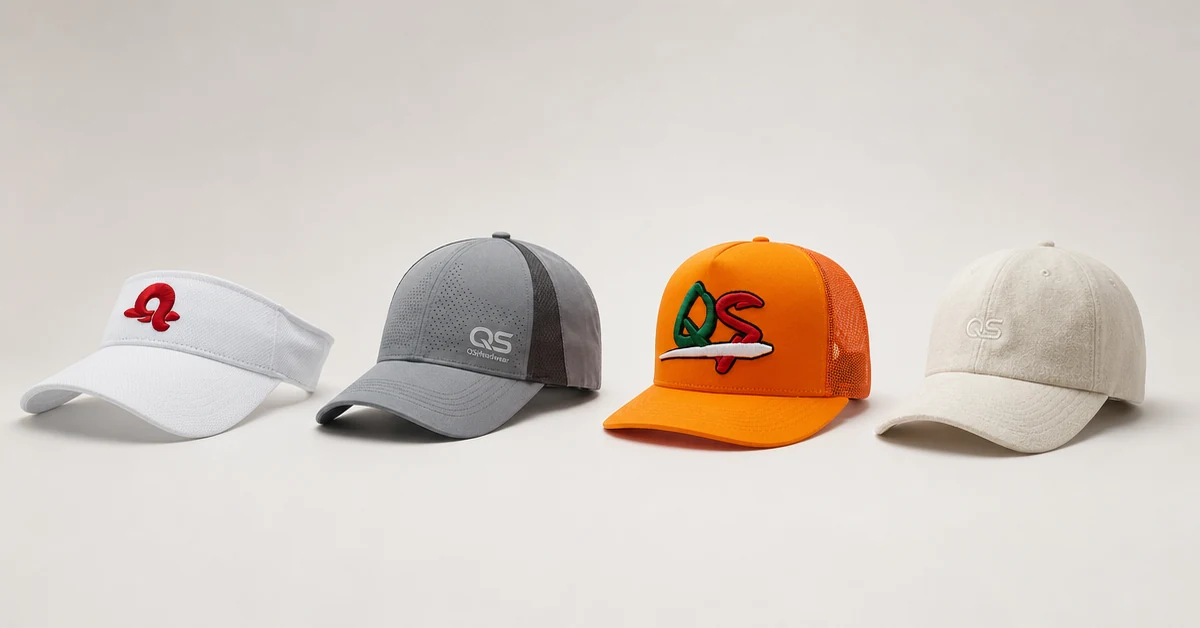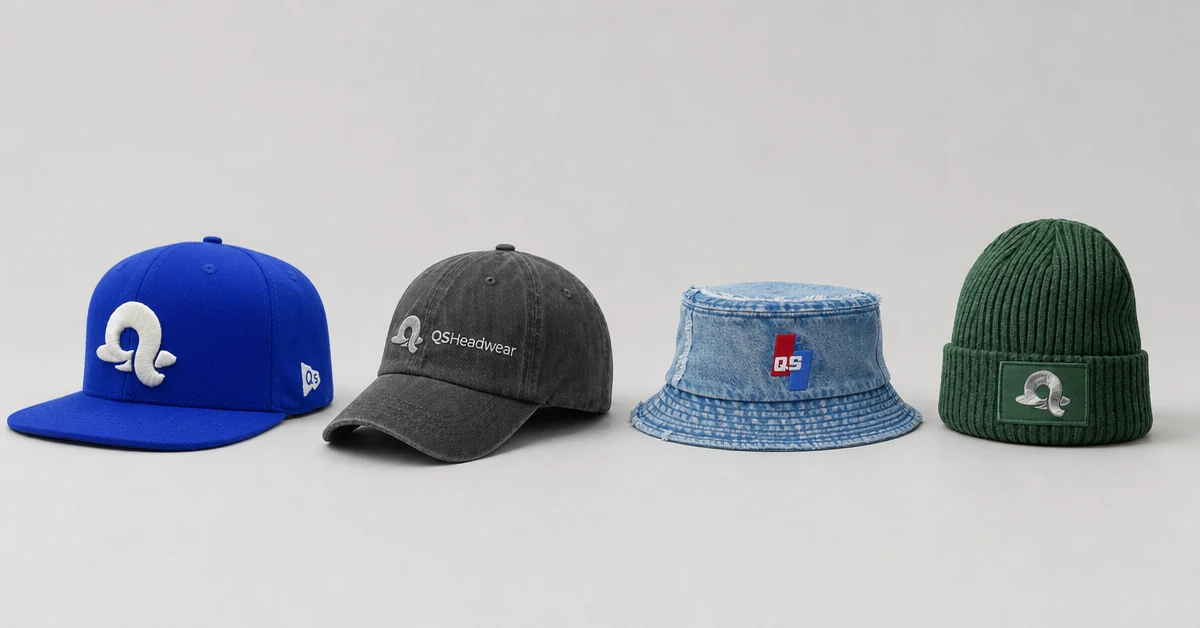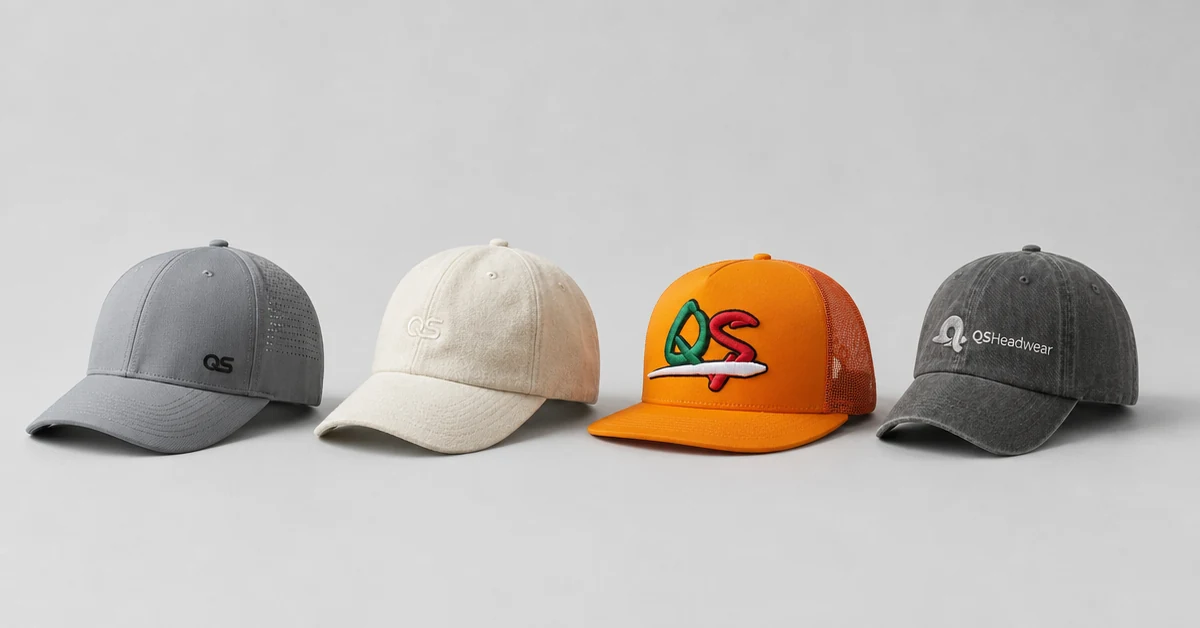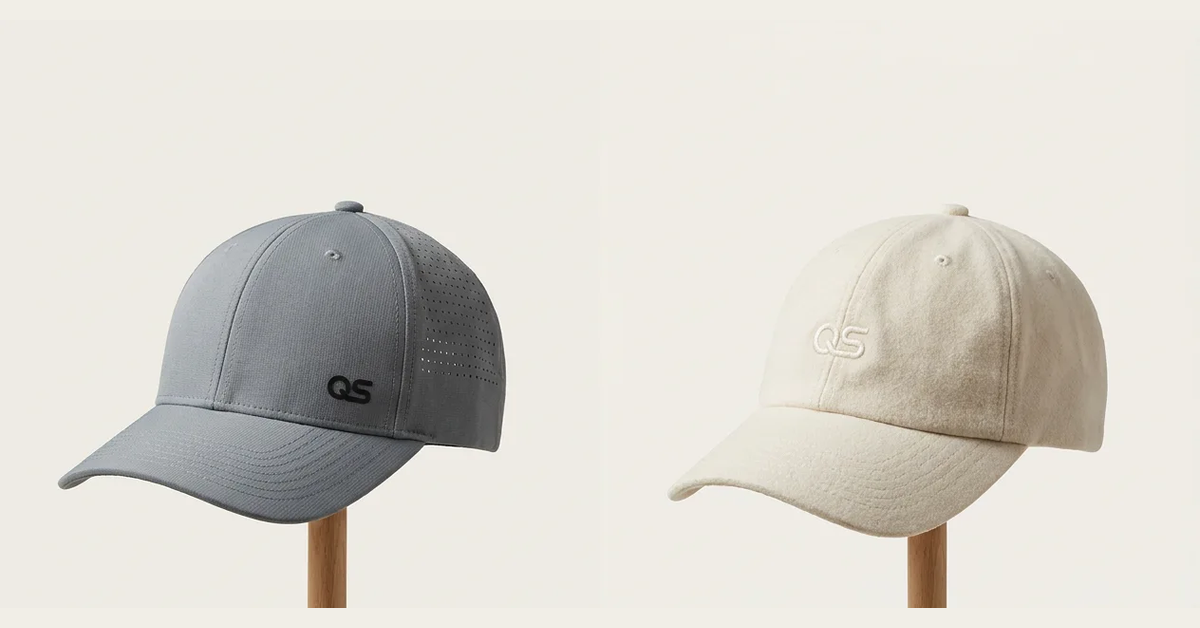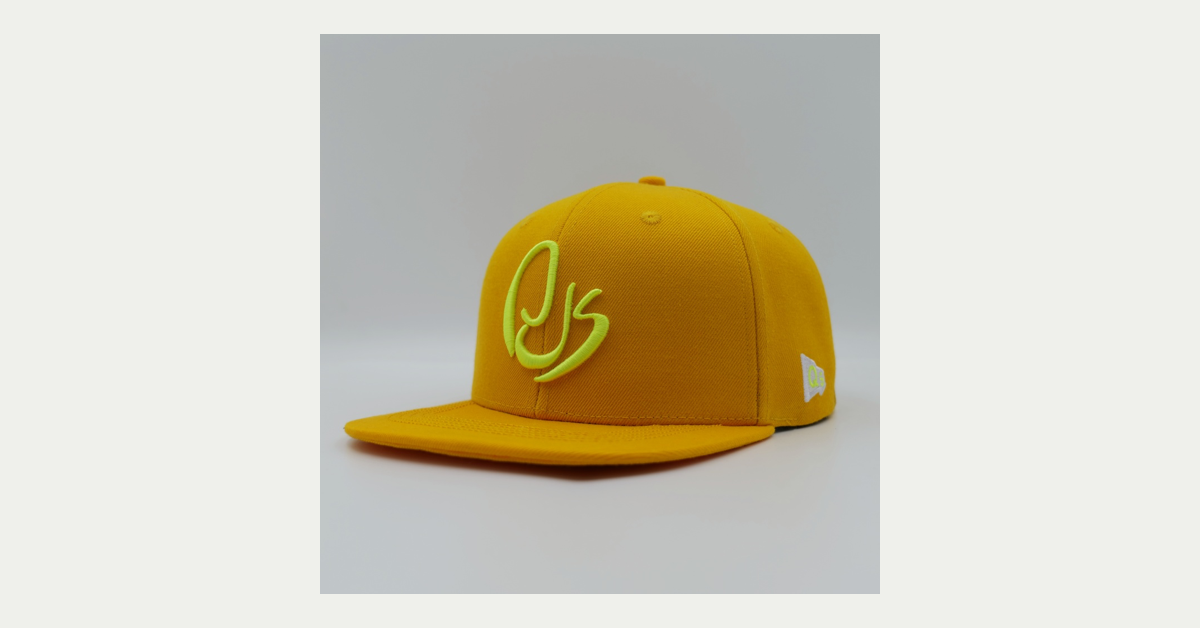


A custom 6 panel caps manufacturer works with a familiar silhouette whose quality depends on details most buyers never see in a rendering. Six crown pieces must meet cleanly at the top, hold a balanced front profile, align with the brim and remain symmetrical after decoration, pressing and packing.

This construction review is for fashion brands, sports programs, retailers and corporate buyers deciding whether a six-panel block fits their audience and how to specify it for repeat production.
Start by Looking Down From the Top
The top view reveals whether panel widths, seam paths and the center button converge evenly. A cap can look acceptable from the front while one side carries more volume or a seam twists toward the brim. Request front, side, rear and top photographs during sampling, then compare them on a wearer rather than only on a table.
Six Panels Do Not Create One Universal Fit
Panel count describes construction, not a standardized crown. A six-panel cap can be low, mid or high profile; structured or relaxed; shallow or deep; fitted or adjustable. Define the intended wearing position, head-size range, crown height, circumference and side profile. Reference photos should support measurements, not replace them.
The Crown Geometry Card
| Geometry point | What it changes | Approval evidence |
|---|---|---|
| Front panel width | Logo area and front-face proportion | Flat measurement and front photo |
| Crown height | Depth, ear clearance and perceived profile | Side measurement and wear test |
| Panel curvature | How closely the crown follows the head | Pattern reference and worn views |
| Top convergence | Symmetry around the center button | Top-view photograph |
| Rear opening | Adjustment range and rear shape | Closure dimensions and fit range |
| Brim junction | Front balance and seam alignment | Center-line and side-view check |
What a Custom 6 Panel Caps Manufacturer Changes Between Profiles
A low-profile cap may use less crown height and a softer front, while a high-profile style needs greater vertical volume and often more support. Changing only crown height can distort the side seam or make the brim look undersized. A capable custom 6 panel caps manufacturer should explain how front, side and rear pattern pieces work together.
If the brand already owns a successful sample, measure and photograph that reference before development. Ask which features can be matched and which require a new block.
Choose Structured or Unstructured With the Fabric
Front support, often achieved with compatible internal material, helps a cap keep a crisp merchandising shape and carry dense decoration. An unstructured crown creates a softer, more relaxed fit but can collapse on shelf and show puckering more easily. The shell fabric, backing and sweatband should be approved as one system.
Heavy twill, wool blends, corduroy and lightweight performance fabrics do not behave the same way around curved seams. Approve the actual fabric on the intended crown block.
Fit Lives at the Sweatband and Rear Opening
Finished internal circumference is only one part of fit. Crown depth, oval shape, sweatband thickness, seam bulk and closure placement influence pressure and stability. Test several wearers across the planned range and record objective measurements separately from comments such as “too shallow” or “presses at the temple.”
Place Artwork Around Curvature and Seams
| Decoration location | Six-panel constraint | Buyer control |
|---|---|---|
| Front center | The center seam may divide artwork or affect backing | Set seam relationship and finished size |
| Front offset | Panel curvature can rotate the logo visually | Approve on-wear placement |
| Side panel | Eyelets and seam clearance reduce usable space | Measure the true decoration zone |
| Rear | Closure and opening interrupt the surface | Approve rear view with labels |
| Across panels | Sewing tolerance can break continuous lines | Define critical match points |
| Underbrim | Curvature changes print appearance | Approve the formed brim, not flat artwork |
Dense embroidery can pull lightweight panels inward or create visible backing. Patches add stiffness and need edge control on the curved front. A physical sample should show actual thread, patch or print on production-equivalent material.
The Three-View Sample Approval
- Front view: check logo level, panel balance, brim centering and crown width.
- Side view: check crown depth, profile, brim angle and closure position.
- Top view: check seam convergence, panel symmetry and center-button alignment.
- Inside view: check sweatband, seam taping, labels and backing.
- On-wear review: check pressure, ear clearance and movement.
- Pack-out review: check whether the approved shape survives the intended carton method.
Consolidate corrections into one marked approval file. Separate messages and unversioned images create avoidable interpretation risk.
Diagnose the Cap, Not Just the Defect
| Visible issue | Likely area to investigate | Corrective direction |
|---|---|---|
| Crown leans | Panel cutting, seam balance or pressing | Check pattern orientation and assembly |
| Top button sits off-center | Uneven seam convergence | Review panel widths and top joining |
| Brim looks rotated | Center marking or crown-to-brim alignment | Add alignment checkpoints |
| Front puckers | Decoration tension, backing or light fabric | Balance stitch density and support |
| Cap feels shallow | Crown height, sweatband or wearing position | Revise the measurable fit system |
| Side panels bulge | Pattern curvature or excessive volume | Correct the panel shape, not only pressing |
Write Bulk Quality Criteria Around Symmetry
Inspect crown height, circumference, panel balance, top convergence, brim alignment, closure function, decoration position, shade, seams, labels and packing. Use reference photographs for the accepted front, side and top profiles. QSHeadwear describes incoming, pre-production, in-line and final AQL 2.5 checks; request an order-level inspection plan tied to the approved crown measurements.
Protect the Block for Future Colorways
Retain the pattern version, measurement chart, fabric and backing references, brim construction, sweatband, closure, decoration files, labels, packing and approved sample. A new color should not silently trigger a new fabric weight, finish or support material. Require approval for any substitution that may change the crown.
Send a Six-Panel Development Brief
Include the intended profile, structure, head-size range, crown measurements, fabric, brim, closure, artwork, labels, quantity by color, packing and market. Identify any reference cap and whether the priority is fit replication, a new silhouette or efficient use of an existing block.
Review Six-Panel Options With QSHeadwear
Explore QSHeadwear cap styles, review the custom pattern and sample process and check factory information. Send measurements, reference images, fabric, artwork, quantities and delivery needs through the contact page to consult a custom 6 panel caps manufacturer.
Six-Panel Cap Development: Buyer Questions Answered
1. What should a six-panel cap tech pack include?
Include crown profile, measurements, panel construction, brim, closure, fabric, support, sweatband, decoration, labels, packing and tolerances.
2. Are all six-panel caps the same shape?
No. Panel count does not standardize profile, depth, structure, fit or brim geometry.
3. What is the difference between structured and unstructured six-panel caps?
Structured caps use front support for a crisper crown; unstructured caps create a softer profile and different decoration behavior.
4. Can a logo cross the front center seam?
It can, but seam position, artwork detail, backing and stitch behavior must be approved on a physical sample.
5. How should six-panel fit be tested?
Use multiple wearers, written circumference and crown measurements, and front, side and top views.
6. What affects six-panel cap MOQ?
Fabric, colors, new pattern work, closure, decoration, labels, packaging and quantity split can affect production minimums.
7. Why can the brim look off-center?
Crown center marking, seam balance, brim attachment or pressing can shift the apparent alignment.
8. What should a top-view inspection check?
Check panel symmetry, seam convergence, eyelet balance and center-button position.
9. How should bulk symmetry be controlled?
Use written measurements, alignment checkpoints and approved front, side and top reference images.
10. What should be saved for reorders?
A custom 6 panel caps manufacturer should retain the pattern, measurements, fabric, support, brim, closure, decoration, labels, packing and approval sample.