

Custom adventure hats should be selected for the whole trip, not only the moment someone takes a photograph. A broad brim may provide useful coverage while standing still yet interfere with a backpack or a hood. A compact cap may pack neatly but leave more of the ears and neck exposed. Start by naming the real route and the equipment the wearer will use.
This is a buyer's development worksheet for adult lifestyle and outdoor headwear. It is not a specification for climbing helmets, protective equipment or certified sun-protection products. The comparisons are proposed sample checks, not claims that QSHeadwear has tested a particular design under the conditions described.
Before the trail: what has to fit inside the bag?
Decide whether the hat is carried on the head, clipped to luggage or packed inside a day bag. Those are different storage conditions. If packability is important, request a sample of the finished brim construction and agree how it may be folded. Do not call a hat crushable simply because its fabric is soft.
Pack it with the equipment that represents the intended trip, then unpack and examine crown shape, brim recovery and decoration. Record the storage method and duration. Keep the same method when comparing alternatives; a carefully placed sample should not be compared with another that was compressed under a heavy bottle.
At the trailhead: coverage and visibility compete
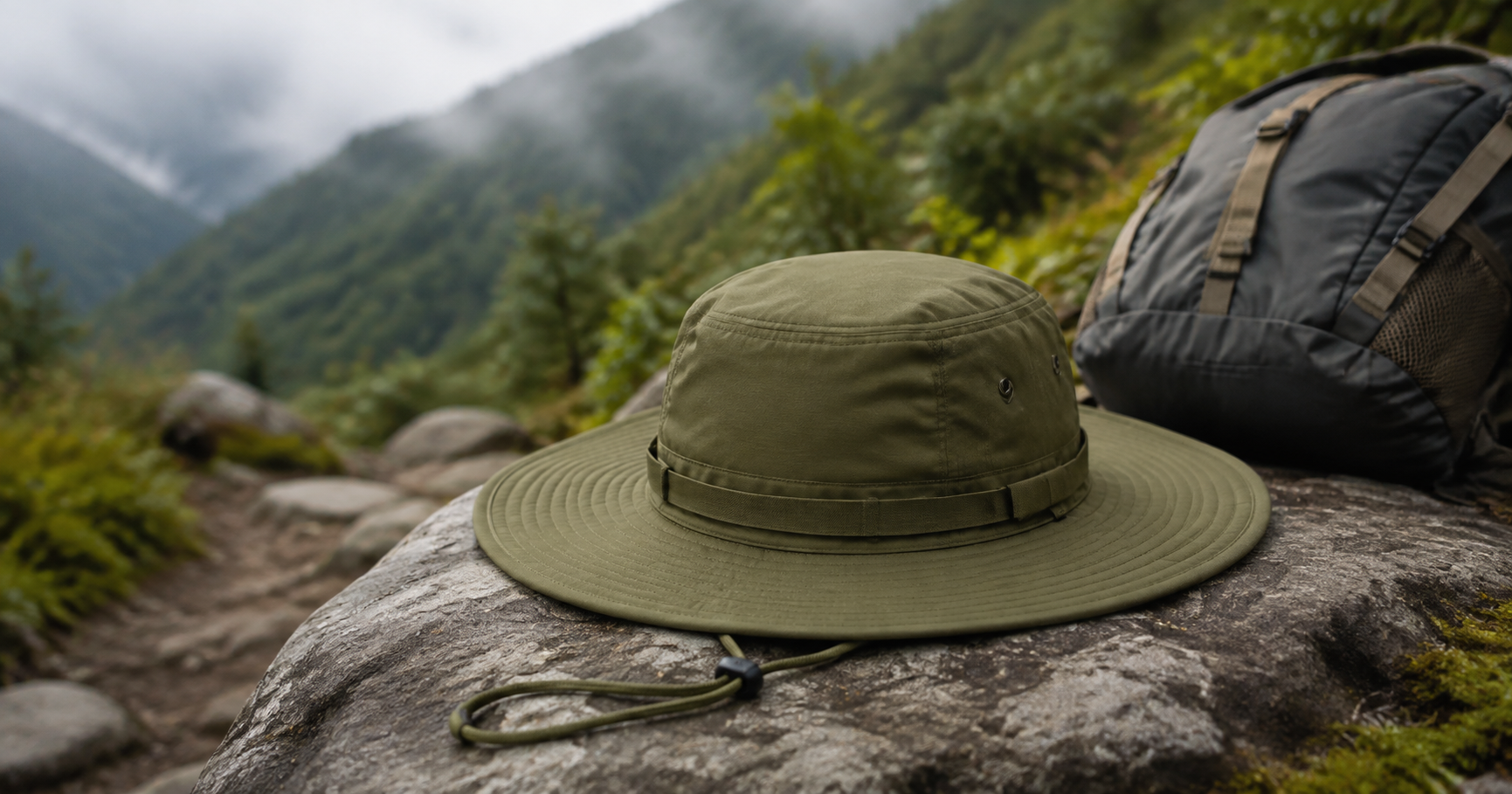
A broad brim, a bucket silhouette and a front-brim cap offer different coverage patterns. Ask the target adult wearers to look upward, downward and sideways while wearing each candidate. Check whether the brim blocks their view or contacts other equipment. A fitting photograph from the front will miss some of those interactions.
When selecting custom adventure hats, separate the preference for visible coverage from a quantified UV-protection claim. A fabric or finished-product rating requires appropriate evidence for its scope. The hat's silhouette alone does not establish a UPF value, and an attractive outdoor photograph is not a test report.
| Design input | Record before sampling | Observe on the sample |
|---|---|---|
| Intended adult wearer | Fit range and hair or headwear considerations | Comfort and adjustment without excessive pressure |
| Brim | Length, width, construction and packing intent | View clearance, stability and recovery |
| Crown | Depth, fabric and ventilation preference | Fit with the intended hood and pack |
| Retention | Whether a cord or other solution is needed | Comfort, loose parts and snag considerations |
| Decoration | Dimensions, technique and position | Contact with hood, pack or skin |
On the climb: wear the backpack before approving the hat
A brim can contact the top of a loaded backpack when the wearer looks up. Test the intended pack height, shoulder adjustment and hat together. If the rear brim is the problem, reducing every dimension of the hat may remove useful front coverage without addressing the interaction precisely.
Use a simple fitting sheet: wearer reference, pack configuration, movement and observed contact. Record whether the hat moves, the brim bends or the wearer repeatedly adjusts it. Treat a recurring adjustment as a design question. Do not describe a sample as comfortable based only on how it feels without the rest of the equipment.
When the hood goes up
Check the candidate under the kind of rain hood the target audience is likely to use. Look for pressure on the crown, contact at the brim edge and difficulty turning the head. A structured cap and a soft bucket style can create very different interactions. The purpose is to choose a compatible combination, not declare one universally better.
For custom adventure hats, a decoration that looks modest on its own may become noticeable under a close-fitting hood. Test the complete badge or embroidery, including inside backing. If the sample has only a paper logo mockup, it cannot answer that question. Request a production-like decoration before signing off this stage.
During a damp break: distinguish drying from waterproofing
Ask the supplier what performance claim, if any, is supported for the proposed material. Water repellency, resistance to penetration and drying behavior are different subjects. Do not use them interchangeably in the product copy. A fabric swatch result may also have a narrower scope than a claim about the finished hat with seams and eyelets.
For development comparisons, apply an agreed wetting and drying procedure to each candidate under the same conditions. Record water exposure, environment and the criterion for dry. If a formal quick-dry claim will appear in marketing, obtain suitable testing rather than converting an informal observation into a performance guarantee.
At an exposed section: retention must be deliberate
A drawcord or chin cord changes how a hat is handled. Discuss adjustability, attachment and whether loose parts could catch on equipment. Test usability with the intended adult wearers and examine the cord route inside the hat. This article does not specify safe release forces or claim that a particular cord is suitable for every activity.
If the intended use involves machinery, climbing equipment or another specialized risk, seek product-specific assessment before choosing retention details. Lifestyle custom adventure hats should not inherit protective claims from the clothing or equipment worn beside them. State what the product is for and what it is not for.
Compare custom adventure hats against one itinerary
Keep the route fixed while changing the hat. Otherwise the broad-brim candidate may be judged on a shaded picnic and the cap on a long exposed walk. Use the same pack, hood, duration and review questions. The result can be a practical tradeoff table rather than a contest with an invented universal winner.
| Candidate | Reason to consider it | Question to resolve |
|---|---|---|
| Soft bucket style | All-around brim and potentially compact storage | Does the brim recover and remain clear of the eyes? |
| Front-brim cap | A familiar fit and less rear-brim interaction | Is the coverage appropriate for the intended use? |
| Broad-brim outdoor style | More surrounding coverage | Does it work with the pack, hood and retention design? |
Material and workmanship need a route-specific review
Record composition, fabric reference, sweatband, eyelets, seams, brim insert and closure or cord components. A lightweight material does not automatically establish breathability or durability. Ask which performance evidence is available and inspect the finished construction. Pay attention to the surfaces that touch the forehead and the parts repeatedly handled during adjustment.
QSHeadwear describes custom brim, sweatband, closure, material and decoration options in its OEM/ODM offering. Use those options to create a specific proposal. Confirm feasibility for your chosen outdoor silhouette instead of treating a menu of components as proof that every combination is already validated.
Cost the version that passed the checks
Once the sample works, ask for a quotation tied to its actual construction. Include decoration, labels, retention components, packing and any testing. Request minimums by style and color, not just an order-wide minimum. A component added late to custom adventure hats can change price, sourcing time and the approval work required.
Agree a calendar that includes material sourcing, sample review, any formal testing, bulk production and delivery. Capacity and lead time should be confirmed for the specific design. Keep buffer for a failed hood or pack check; accepting an unsuitable brim to preserve a launch date can leave the brand with a product that does not suit its stated use.
Release the lot with the itinerary still attached
Keep the approved hat and its specification with the development notes. For production inspection, define measurable checks and unacceptable defects rather than asking every inspector to repeat a trek. Relevant checks can include dimensions, attachment quality, component function, decoration and packing. The sample trials explain the decisions that those inspections preserve.
ISO 2859-1 provides a lot acceptance-sampling framework, not an outdoor performance certification. Agree the inspection plan and product-specific criteria. For care wording, consult GINETEX's textile care information alongside the evidence for the complete construction.
Brief QSHeadwear on custom adventure hats for your trip
Review the headwear products and factory information. Then request a route-specific sample discussion with the expected wearer, itinerary, pack and hood constraints, material preference, logo, quantities and destination. Custom adventure hats become easier to evaluate when each design choice has a real use behind it.
Questions an outdoor buyer should settle before ordering
Does a wide brim establish a UPF rating?
No. A quantified claim needs appropriate evidence for the material or product scope being claimed.
What is a useful first packability check?
Use the intended storage method, then inspect crown, brim and decoration after the agreed storage period.
Why test with a loaded pack?
Pack height and adjustment can change contact with the rear brim during head movement.
Can a rain hood change the fit?
Yes. Test the chosen hat and hood together, including the final decoration and backing.
Are water-repellent and waterproof interchangeable?
No. Ask what was tested and avoid extending a narrow material result to a broader product claim.
Should every design have a chin cord?
No. Choose retention around the intended activity and assess its attachment, usability and snag implications.
Can a soft hat be called crushable?
Only if the complete construction supports the stated packing claim; soft fabric alone is insufficient.
What should accompany a sample request?
Send fit, brim, material, equipment interactions, decoration, quantities, destination and intended use.
What does the factory need for a repeat order?
Provide the approved sample, bill of materials, dimensions, component references, artwork and inspection criteria.
Is this a protective-equipment buying guide?
No. These are development considerations for adult lifestyle and outdoor headwear, not certified protective equipment.