

A custom distressed hats manufacturer needs more than a photograph labeled vintage. The buyer must distinguish intentional wear from an unacceptable defect: where abrasion may appear, how much fraying is permitted, which seams must remain intact and what shade range belongs in the collection. The goal is controlled variation, not identical damage copied onto every cap.
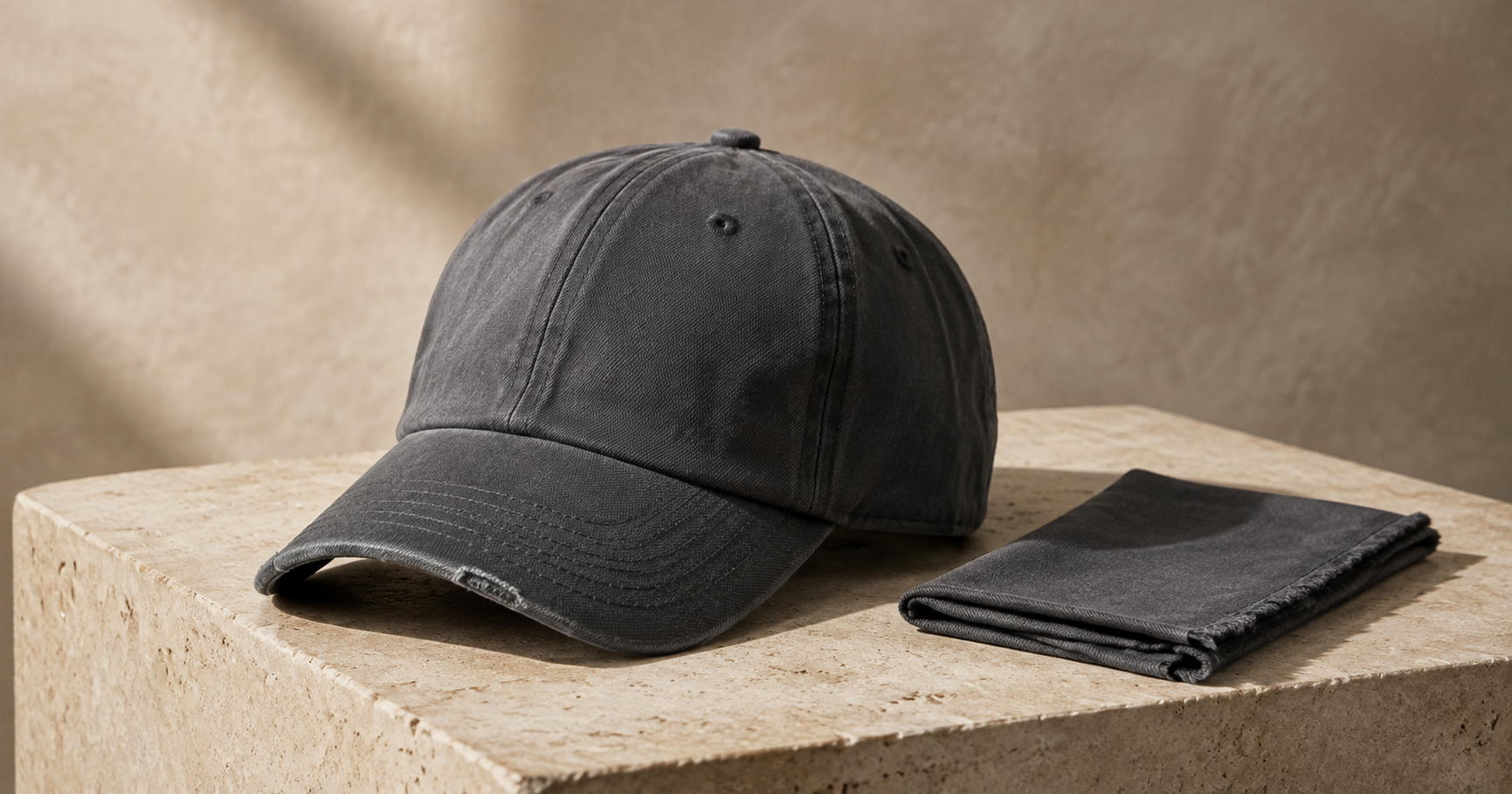
This specification format is for fashion brands and adult promotional collections that deliberately want a worn appearance. It is not a protective-headwear specification. If a program requires uniform, pristine surfaces, deliberate distressing may be the wrong finish regardless of how attractive one sample looks.
Start with a map of places that must not be damaged
Mark protected areas before marking decorative damage. These may include the sweatband attachment, closure anchoring, structural seams, the area around an eyelet and the edge retaining the brim insert. The buyer and manufacturer should agree these zones on the actual cap pattern. A decorative concept must not silently weaken a functional connection.
Then identify the surfaces available for controlled wear. A brushed brim edge, a faded panel and a deliberately frayed patch perimeter are separate treatments. Show them with annotated photographs or drawings and assign each a name. Avoid a single instruction that tells a finishing team to make the whole cap look older.
The appearance specification has three layers
Separate color, texture and openings. Color covers the base shade and accepted fading. Texture covers abrasion, raised fibers and surface character. Openings cover intentional cuts or exposed underlying material, if the design includes them. The third layer requires especially clear limits and a check that it does not interfere with cap construction.
| Specification layer | Buyer input | Evidence needed |
|---|---|---|
| Shade range | Physical light, target and dark references | Finished caps under consistent lighting |
| Abrasion zones | Named locations and permitted spread | Close-ups and an overall cap view |
| Fray appearance | Length and density limits agreed on samples | Boundary samples showing acceptable variation |
| Protected construction | Seams, hardware and brim-retention exclusions | Inside and outside inspection views |
| After-care appearance | Proposed care route and allowed change | Comparison before and after that route |
The numbers belong in the order-specific brief, not in a generic article. Ask the factory which limits can be repeated with the proposed material and process. If the suggested zone is too close to a structural seam, change the design before ordering a large sample set.
Material is part of the finish, not just its background
Different fabrics can respond differently to abrasion and washing. Ask for the proposed composition, weight, construction and finishing route. Keep a sample of the starting fabric as well as the finished cap. Without both, it becomes difficult to tell whether a changed result came from a new fabric lot or a changed finishing process.
A custom distressed hats manufacturer should explain what is feasible on your base rather than promise a photograph can be reproduced on any fabric. Distressing a twill surface, a raised-pile material or a lightweight fabric may require different development decisions. Do not transfer an approved effect from one surface to another without a new sample.
Choose an effect family before a severity level
The label distressed can hide several very different products. A washed cap may have color character with no deliberate holes. A lightly abraded brim may remain neat enough for a restrained collection. A heavily frayed design is more visually distinctive but needs tighter decisions about functional boundaries and ongoing change during use.
| Effect family | Main visual signal | Approval question |
|---|---|---|
| Washed appearance | Shade and surface character | Is the accepted color range clear? |
| Localized abrasion | Wear in specific areas | Does the effect stay inside the permitted zone? |
| Controlled fraying | Visible loose fibers at selected edges | How much is intentional, and how is further change assessed? |
| Mixed treatment | More than one effect on the same cap | Can the process sequence repeat the combined result? |
Ask a custom distressed hats manufacturer for a range
Ask for several finished examples from the proposed route. Review them together before naming the approved center and limits. The lightest and most worn acceptable pieces may be more useful to an inspector than the most photogenic sample. Do not treat three photographs of the same hat as three production examples.
When discussing variation with a custom distressed hats manufacturer, separate variation you welcome from variation you cannot sell. Slightly different abrasion patterns may fit the design; damage reaching the closure anchor does not. Retain representative physical samples and state which characteristics each one controls.
The logo can age differently from the cap
A new-looking badge on a heavily worn cap can be an intentional contrast or a mismatch. Decide which before sampling. Ask whether decoration is applied before or after the finish and how that sequence affects the thread, patch edges and cap shade. Changing the sequence later may change the appearance even if the artwork stays the same.
Keep placement measurements tied to stable construction points. A frayed edge is not a reliable measuring origin if its appearance varies. Check any inside backing after finishing and make sure the brand mark remains readable. The intended aged look should not hide missing or damaged logo elements.
Write the reject examples in ordinary language
Examples might include abrasion outside the approved zone, a damaged functional seam, excessive exposed insert, an unreadable logo or shade outside the approved range. These are proposed defect categories; the exact definitions belong in the supplier agreement. Include photographs that show why a piece is rejected rather than simply attaching a red cross.
ISO 2859-1 addresses acceptance sampling for lot inspection. It does not define intentional damage in a fashion cap. Before a custom distressed hats manufacturer starts bulk work, agree the product-specific defect list, sampling arrangements and what happens when a lot fails the agreed criteria.
Test the appearance that the customer will actually receive
Review a finished, decorated and packed sample rather than stopping at a fresh finishing-room photograph. Open the pack and check whether loose fibers, dust or transfer affect the presentation. Ask what cleaning and final inspection steps are appropriate after the distressing route. A deliberate worn effect is not permission to ship unwanted residue.
Repeat the agreed care procedure and inspect the boundaries again. Look for unacceptable expansion of fraying, changes around attachment points and altered decoration. Consult GINETEX care-labelling information when preparing care communication; symbols communicate care, but they do not establish that this particular cap has passed a test.
Cost and timing follow the number of controlled variables
A simple wash and a mixed treatment with hand-finished areas are not the same quotation. Ask which processes, sample rounds, inspections and packing steps are included. Confirm whether color splits or multiple severity levels create additional minimums. Do not assume a rougher-looking cap is cheaper to produce because its appearance is less uniform.
Ask the custom distressed hats manufacturer to reserve time for boundary samples and final appearance approval. A calendar that allows only one ideal sample leaves no room to establish the production range. Confirm material availability and the point after which a finish change would affect delivery.
Use OEM and ODM support without blurring ownership
QSHeadwear's OEM/ODM service page describes work from buyer specifications, style development and specialized washing. Ask the team to assess your proposed distressing separately; a washing capability does not automatically confirm every cutting, abrasion or fraying process shown in an inspiration photograph.
You can bring your own cap reference or explore a base in the product collection. Keep artwork, pattern, finish references and approval dates together. Agree who may authorize changes to damage zones. The person approving a sample should understand both the intended appearance and the areas that remain protected.
Your custom distressed hats manufacturer brief: ready for inspection?
Check the company background and send QSHeadwear your annotated finish reference. Include the cap base, fabric, permitted effects, protected construction, logo sequence, quantity, care expectations and delivery target. Select a custom distressed hats manufacturer by the clarity of the proposed sample evidence, not by a promise of a generic vintage look.
Questions that turn vintage styling into an inspectable order
Is washed the same as distressed?
Not always. Specify whether the design needs color change, abrasion, fraying or a combination.
Should every cap look identical?
Define the permitted range. Controlled variation may be intentional, but functional and branding requirements should remain clear.
Which areas should be protected?
Agree exclusions around structural seams, brim retention, sweatband attachment and closure anchoring on the actual design.
Can a photo replace a physical reference?
Use it for direction, then approve physical boundary samples where shade, texture or fraying matters.
Does the starting fabric matter?
Yes. Keep the composition, construction and fabric reference with the approved finishing samples.
Should the logo be applied before washing?
Ask the manufacturer to compare the process sequence for the chosen cap and decoration.
What makes a reject sample useful?
It shows a specific exceeded boundary and explains the reason in ordinary language.
Can care change the intentional damage?
It may. Inspect the complete cap after the agreed care route and define acceptable change.
Does QSHeadwear support every distressed effect?
Do not assume so. Request feasibility confirmation for the exact material and treatment combination.
What should be retained for repeat orders?
Keep starting material, finished boundary samples, zone maps, decoration sequence, care evidence and inspection criteria.