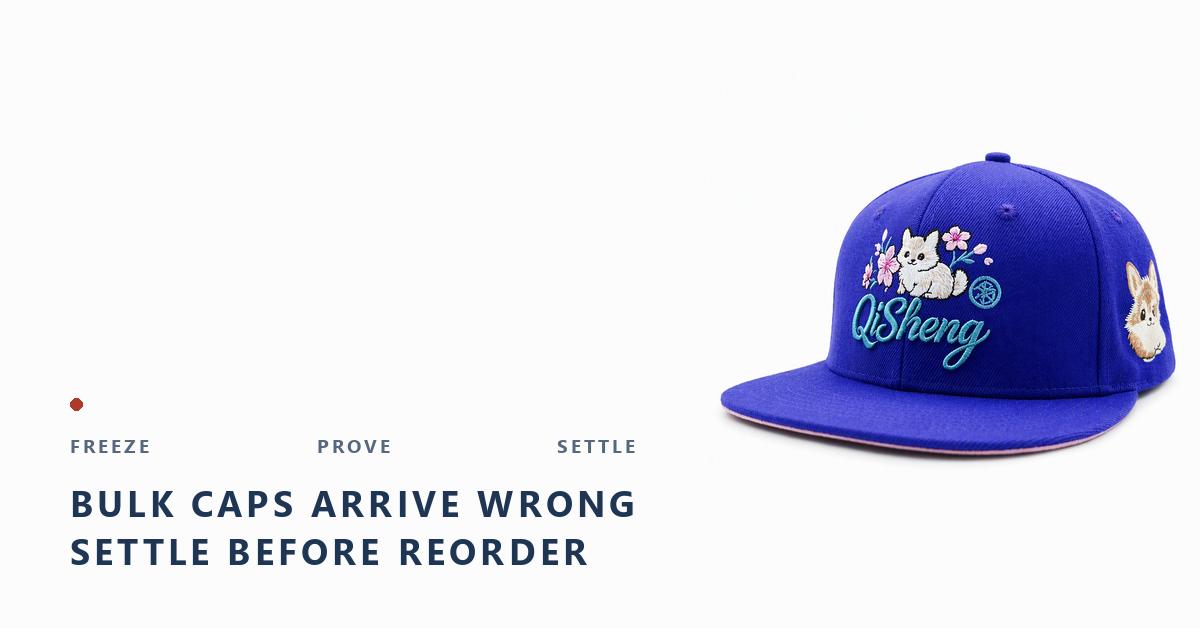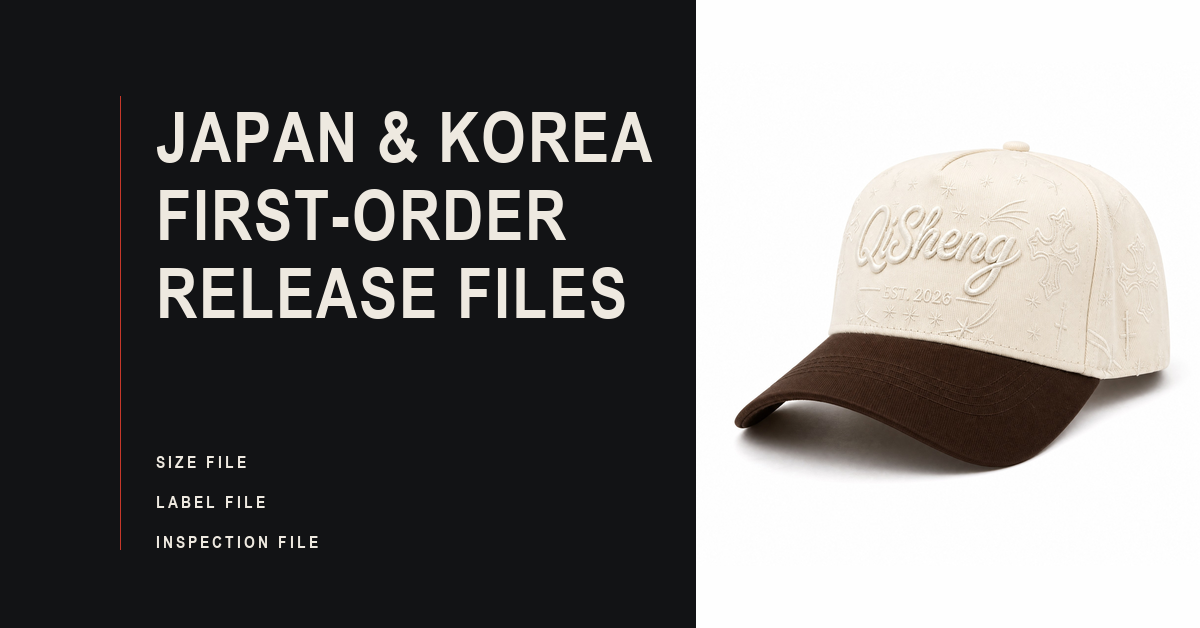


Custom embroidered baseball caps look simple on a product page, but small lettering and fine marks can change dramatically when they are sewn on a curved panel. Stitch density, underlay, thread direction, backing, fabric weight and crown structure all influence legibility. A buyer gets a more consistent result by treating the logo file and the cap body as one production decision.
This guide is for brands, retailers, sports programs and promotional buyers. It covers production choices and quality checks. It does not replace a brand's artwork ownership rules, product testing or market-specific labeling requirements.
Start with the logo's smallest meaningful detail
Before choosing thread colors, identify the smallest letter, gap, counter or line that must remain visible. A logo with a fine outline may need a simplified production version. The original brand master should remain intact, but the factory needs an approved adaptation that shows the final size, stitch method, thread colors and placement.
Ask for a sew-out on the actual fabric or a close equivalent. A flat digital proof cannot show how stitches pull a soft crown, how a structured panel changes the angle or how the backing feels on the inside. Save the sew-out with the artwork revision so future reorders use the same reference.
| Logo variable | What to decide | Why it changes the result | Evidence |
|---|---|---|---|
| Minimum detail | Smallest line, letter or opening | Fine features can close under thread | Marked artwork and sew-out |
| Stitch method | Flat, 3D puff, applique or combination | Each method has different height and edge behavior | Actual-size sample |
| Thread palette | Color references and contrast | Low contrast can reduce readability | Thread card and cap photo |
| Placement | Panel, height, center line and angle | Curvature changes visual balance | Landmark drawing |
| Backing and finish | Backing type, trimming and inside feel | Support affects comfort and puckering | Inside and outside views |
Match the decoration to the baseball-cap construction
A six-panel structured cap offers a different embroidery surface from an unstructured dad-hat body. The front seam, buckram, crown height, brim curve and closure can limit the usable area. Tell the custom embroidered baseball caps supplier the intended fit and silhouette before the decoration is finalized. A logo that is centered on a flat rectangle may sit too high or too close to a seam on a real cap.
For custom embroidered baseball caps, the crown and decoration should be approved as one physical sample.
The QSHeadwear product center shows baseball cap directions and other headwear styles. Use it to select a construction, then request a sample with the intended fabric, crown, brim and closure. The category image does not establish the final decoration area.
Prepare artwork for a machine, not a screen
Supply a clean vector or embroidery-ready file and identify any details that may be simplified. Confirm the intended stitch count, size, thread order, underlay and trim. If a logo includes a gradient or photographic detail, discuss whether a patch, print or applique will preserve the visual better than direct embroidery.
Keep a written decision for every adaptation. “Make it readable” is not enough for a reorder. State which line was widened, which gap was opened or which color was changed. This protects the brand from approving one file while production uses another.
Use a two-sample approval rhythm
First approve the sew-out and cap interpretation. Then approve the complete decorated cap. The first sample allows the team to inspect stitch direction, density, thread contrast, edge and backing. The complete cap shows placement, distortion, comfort, brim relationship and the way the logo reads at normal viewing distance.
Wear the cap or test it on a fit form. Note whether the embroidery creates a hard spot, catches hair or changes the crown's hand. If a washing treatment is planned, test the decoration after the same treatment rather than assuming thread and fabric will respond equally.
That sequence gives a custom embroidered baseball caps buyer a clear answer at each stage instead of relying on one rushed approval.
Legibility depends on contrast and relief
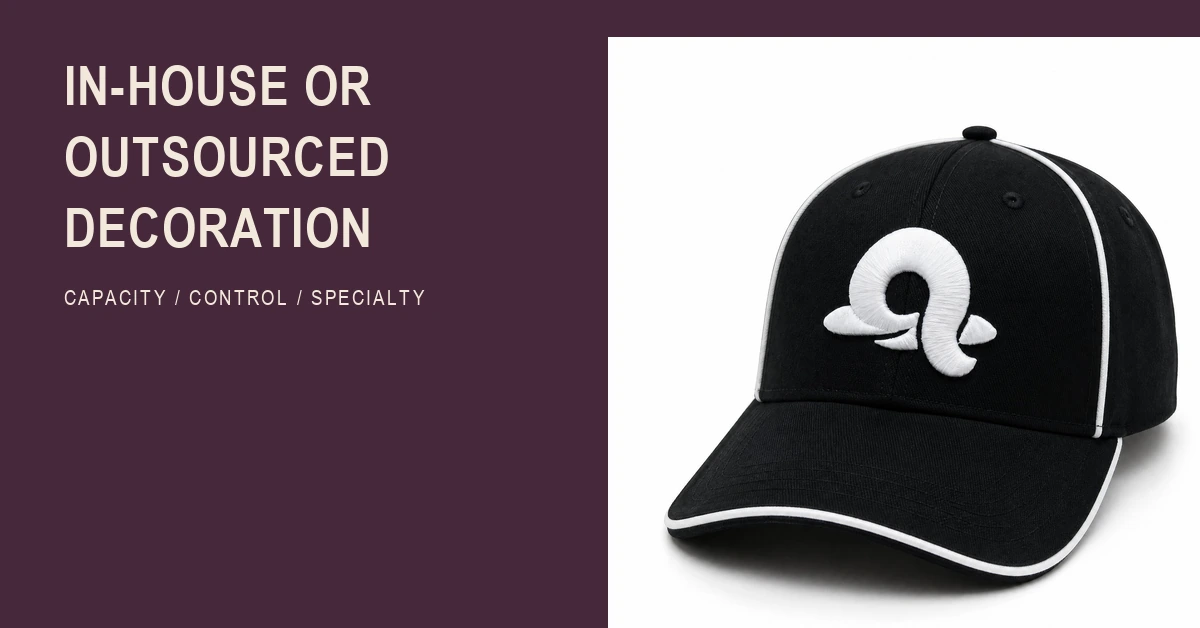
High contrast does not automatically fix a crowded design. A dark thread on a textured dark fabric may disappear even when the color values look close on screen. A 3D puff element can add emphasis but may not suit tiny internal letters. A patch can preserve a detailed mark while changing the silhouette or cost. Compare methods against the brand's use case and price point.
For a collection, keep the logo logic consistent. If one colorway uses a light thread and another uses a dark thread, record the rule rather than making an ad hoc decision at the line.
Check the inside as carefully as the front
Backing, thread tails and trimming affect comfort. Inspect the inside of the crown, the sweatband and the seam near the embroidered area. A clean outside can hide a rough backing or loose thread that becomes obvious during wear. Agree on what is acceptable before production begins.
Set bulk quality gates around likely defects
For custom embroidered baseball caps, common concerns include wrong thread color, logo shift, uneven density, puckering, skipped stitches, incomplete trim, crooked placement, panel mismatch and closure errors. Catch the first decorated pieces before a whole lot is completed. At final inspection, compare units from different cartons and verify the SKU and artwork version.
QSHeadwear describes flat embroidery, high-density 3D embroidery, patches and other decoration options, along with material checks, pre-production approval, in-line monitoring and AQL 2.5 final inspection. Ask which checks will be recorded for your logo. ISO 2859-1 can guide sampling language; it does not decide the acceptable position or stitch quality of your brand mark.
| Inspection point | What to compare | Release question |
|---|---|---|
| Sew-out | Size, thread, density, underlay and small details | Does the approved adaptation read at the intended scale? |
| Complete sample | Placement, crown curvature, brim and inside comfort | Does the finished cap match the brand reference? |
| Line start | First pieces from the production setup | Is the machine repeating the approved method? |
| Inline review | Position, stitch cleanliness, trim and construction | Can a correction be made before the full lot is finished? |
| Final lot | Color, logo, function, count and packing | Can each carton be released against the same standard? |
Price embroidery with the real setup
Ask the supplier to separate digitizing, sew-out, thread, backing, cap body, labels, packing, inspection and freight. Stitch count, number of colors, size, method and quantity can affect cost. A small logo may be inexpensive per piece but still require a setup and approval fee. Compare pilot, launch and reorder quantities on the same decoration specification.
For custom embroidered baseball caps, compare setup cost and stitch method alongside the unit price.
Plan capacity around colorways
Several cap colors can share a logo file while still requiring thread changes, backing adjustments or separate approvals. Ask how the factory will group the run and whether a color or fabric change resets the setup. Put the order sequence in the production calendar so the buyer can see where a late color decision may affect delivery.
OEM and ODM routes for embroidered caps
OEM is appropriate when the brand owns the cap shape and the embroidery file. ODM can help when the buyer needs a proposed cap base, logo placement or decoration combination. QSHeadwear's OEM/ODM information describes production from tech packs, AI/PDF artwork and physical samples, plus concept development and private-label support.
Make the reorder proof easy to find
Keep the approved cap, sew-out, embroidery file, thread references, placement drawing, inside view, washing instruction and inspection record together. Add a note about any approved simplification. The next buyer should be able to tell whether a new sample is a genuine change or a repeat of the same logo system.
The same file lets future custom embroidered baseball caps orders follow the approved logo without reopening every artwork decision.
Ask QSHeadwear for an embroidery review
Send the logo, intended cap style, size, fabric, colors, use case, quantity by color, packaging and deadline. The QSHeadwear contact page is the right place to ask for a sew-out plan and an order-specific quote. The company profile provides context on the Dongguan factory and its embroidery capacity.
Good custom embroidered baseball caps begin with a controlled file and finish with a controlled receiving check. Approve the small detail, the complete cap and the repeatable process in that order.
Custom embroidered baseball caps questions
What artwork file should I send?
Send a clean vector or embroidery-ready file and mark the final size, colors, placement, smallest detail and any brand elements that must not change.
Why is a sew-out necessary?
A sew-out shows stitch density, underlay, thread contrast, edge behavior and small-detail legibility before the logo is placed on every cap.
Can every logo be embroidered at small size?
No. Fine lines, tight gaps and tiny letters may need a documented production adaptation or a different decoration method.
Which baseball-cap construction is easiest to embroider?
It depends on crown structure, buckram, seam position, fabric and logo size. Approve the decoration on the actual selected cap.
What is the difference between flat and 3D embroidery?
Flat embroidery sits within the fabric surface. 3D puff adds raised foam under selected areas and needs enough space and suitable lettering.
Should I check the inside of an embroidered cap?
Yes. Backing, thread tails, trimming and seam contact can affect comfort even when the front looks clean.
How do I prevent logo placement drift?
Use landmarks, a measured placement drawing, an approved complete cap and a line-start check against the same reference.
Does AQL 2.5 define embroidery quality?
No. It supports sampling language. The project still needs logo, workmanship, position, color and construction criteria.
What drives embroidery cost?
Digitizing, stitch count, colors, size, method, backing, quantity, sampling, packaging, inspection and freight can all contribute.
What should I send QSHeadwear?
Send the logo, cap reference, fabric, size, thread colors, decoration preference, quantity by color, packing, destination and timing.