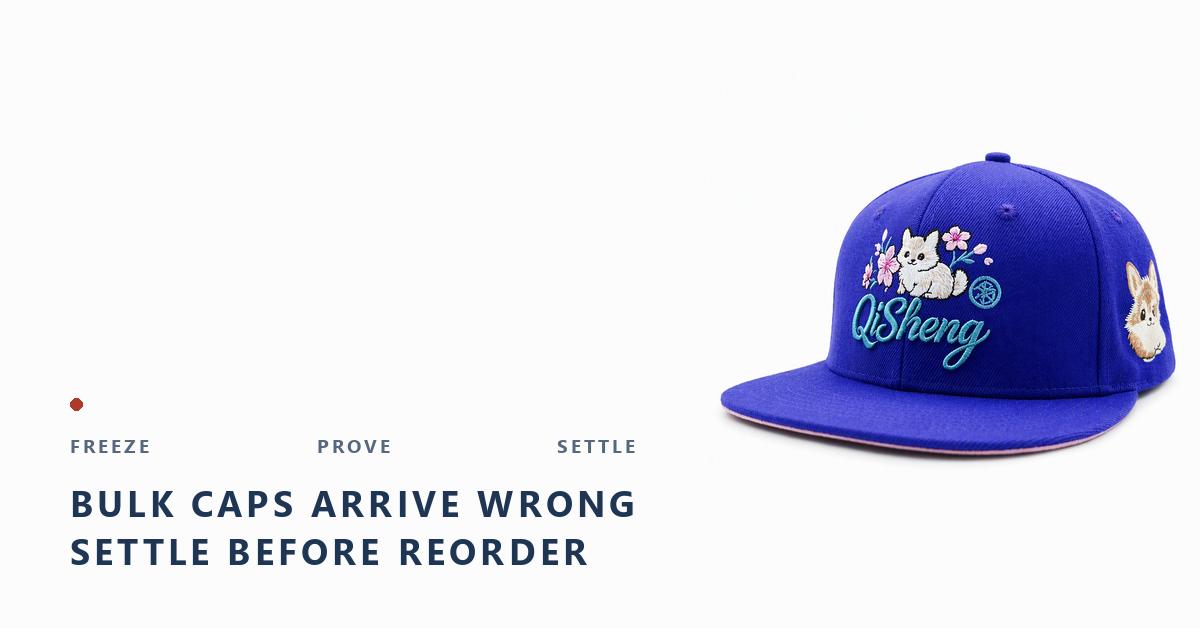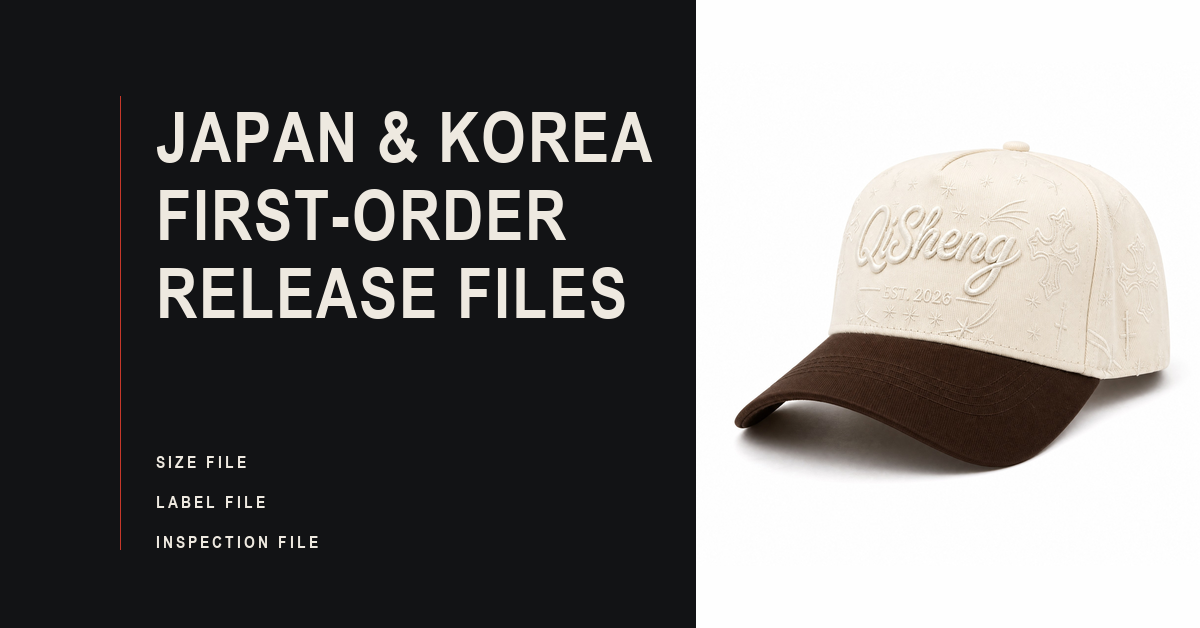


A custom hat manufacturer factory visit should answer one practical question: can this building repeat the product, quantity and delivery promise in your purchase order? A polished showroom cannot answer it. Neither can a general presentation about machine count. The useful evidence sits along the route a real order travels: material receipt, sample control, decoration, cutting, sewing, in-process checks, final inspection, packing and corrective action.
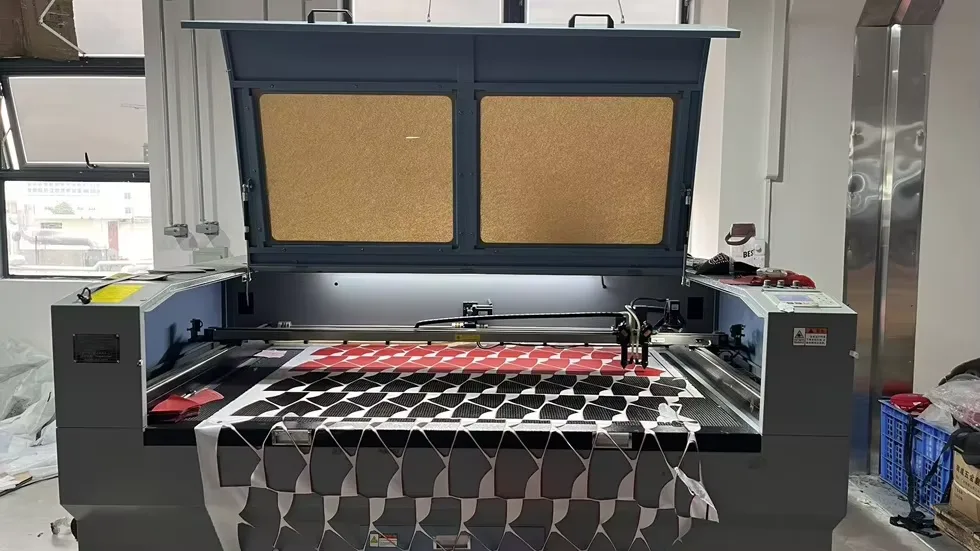
Plan a one-day audit around that flow. Ask the supplier to choose one active order before you arrive, then keep its style number visible all day. At each stop, compare three things: what the specification says, what operators are doing, and what the record says happened. Differences are not automatic failures. Unexplained differences are.
Set the audit thesis before booking travel
Write down why you are visiting. A first-supplier qualification, a capacity review before peak season and an investigation after quality drift need different evidence. Limit the scope to three or four risks that would change your sourcing decision. Examples include subcontracting, embroidery control, fitted-size accuracy, social and safety conditions, or whether a promised monthly output is available to your program.
Send a short agenda, but do not send a script that allows every example to be staged. Ask for an active order, the current production plan and the records used by supervisors. The factory can protect customer names; you need traceable process evidence, not another buyer's commercial data. State these boundaries in the custom hat manufacturer factory visit agenda.
Use a timed route for the custom hat manufacturer factory visit
| Time | Stop | Evidence to request | Decision question |
|---|---|---|---|
| 08:30 | Opening and safety | Site map, emergency routes, attendance and responsibility chart | Can the site operate safely and visibly? |
| 09:00 | Incoming materials | Purchase reference, lot ID, inspection record and quarantine area | Can material identity survive receipt? |
| 10:00 | Sample and document control | Current tech pack, approved sample and revision history | Is production using one approved baseline? |
| 11:00 | Planning and capacity | Line plan, bottleneck schedule and active-order board | Does the delivery promise have a reserved route? |
| 13:30 | Decoration, cutting and sewing | Work ticket, first-piece approval and in-process checks | Do instructions reach the operator? |
| 15:00 | Final quality and packing | Inspection result, hold area, carton record and release authority | Can failed goods be kept out of shipment? |
| 16:30 | Corrective action closeout | One recent issue, root cause, action and effectiveness check | Does the system learn from failure? |
Start with worker safety and management ownership
Before machinery, look at basic control: clear exits, accessible extinguishers, guarded moving parts, lighting, ventilation, marked aisles and usable personal protective equipment where the task requires it. Ask who owns occupational safety and how hazards are reported. The International Labour Organization describes hazard identification, risk assessment and control as core principles of a safe and healthy workplace.
Do not turn a short visit into a claim that the site is fully compliant. Record what you observed, what documents you reviewed and what requires specialist follow-up. A custom hat manufacturer factory visit is a sourcing control, not a substitute for a qualified social, environmental or safety audit.
Trace one roll, yarn lot or trim carton from receipt
Choose a critical material used by the active order. Read its supplier label, internal lot, received quantity and status. Then find the matching incoming-inspection record and the physical storage location. If approved and unapproved material sits together, ask how operators distinguish it. A colored sticker can work, provided the color has a rule and the rule is followed.
Ask what happens after a failed inspection. The strongest answer includes quarantine, disposition authority and quantity reconciliation. "We send it back" is incomplete if nobody can show which units were blocked while the decision was pending.
Compare the sample room with the production floor
The sample room often has the most experienced operators and the clearest files. Bulk has to reproduce that result with normal staffing and production equipment. Compare the approved sample, bill of materials, measurement sheet, artwork file and production work ticket. The revision number should match across all of them.
Ask a production supervisor to explain one critical construction without the merchandiser answering. This is not a memory test. It checks whether knowledge moved from development into the work system. A specification that lives only with the salesperson is not production control.
Test the capacity promise at its bottleneck
Machine count does not equal available capacity. Ask which operation limits the active style: embroidery heads, cutting tables, special sewing machines, washing, finishing or inspection. Review the planned date, actual queue and other orders competing for the same resource. Capacity evidence should show time, not just equipment.
During a custom hat manufacturer factory visit, compare one quoted lead time with the route on the planning board. If artwork approval or material arrival moves, ask how the revised completion date is calculated. A credible planner will name the bottleneck and the next available slot.
Watch first-piece control at decoration and cutting
At embroidery, print or patch application, look for an approved sew-out or strike-off, production file reference, thread or ink specification, placement coordinate and first-piece signoff. At cutting, compare the marker or pattern reference with the current style. Check how fabric shade and direction are controlled.
Choose one finished panel and trace it backward to its work ticket. If the operator made an adjustment, ask where the new setting is recorded. Useful factories allow controlled adjustment; weak systems depend on invisible craft knowledge that disappears on another shift.
Read the line through work in progress
Work in progress reveals whether production is balanced. Large piles before one operation can mean a bottleneck, a quality hold or a batch policy. Ask which. Check that bundles keep style, color, size and material-lot identity. On fitted caps or graded bucket hats, size mixing is a direct commercial risk.
Talk to the line quality inspector about the last defect found. Ask what quantity was contained, who decided the disposition and how the operator received feedback. A board full of quality slogans is less valuable than one recent, traceable response.
Inspect the hold area before the finished-goods area
The hold area tells you how the factory behaves when work is wrong. It should separate affected goods, show a reason, quantity, owner and decision status, and prevent accidental packing. Review one current or recently closed hold. Rejected, reworked, accepted by deviation and scrapped units should reconcile.
Then review final inspection. Confirm the specification and sample used, sampling plan, defect classes, measured points and release authority. If the supplier mentions AQL, ask to see the actual result rather than treating the acronym as proof.
Follow released units into named cartons
At packing, compare the work order, assortment, SKU label, polybag or insert, carton mark and packing list. Select a carton number and verify its contents against the record. Mixed cartons should have an explicit assortment. A final quantity is trustworthy only when released units map to physical cartons.
Ask when weights and dimensions become final and who sends them to the forwarder. This shows whether logistics data comes from the actual pack or an early estimate copied forward.
Score evidence, not hospitality
| Score | Meaning | Evidence standard | Buyer response |
|---|---|---|---|
| 0 | Not demonstrated | No record, contradictory answers or inaccessible process | Treat as an open qualification risk |
| 1 | Described | Process explained but no current example available | Request dated evidence after the visit |
| 2 | Demonstrated once | Current example matches the stated process | Accept provisionally; sample another order later |
| 3 | Systematic | Multiple examples, clear ownership and closed corrective action | Record as a verified control |
| N/A | Outside scope | Reason documented | Do not average it into the score |
Weight high-consequence controls more heavily than presentation. Material identity, revision control, release authority and safety should matter more than meeting-room quality. Keep observations and interpretations in separate columns so colleagues can review the evidence.
Close the day with three lists
Before leaving, read back verified strengths, open evidence requests and corrective actions. Give every open item an owner and date. A custom hat manufacturer factory visit is incomplete when the only output is a photo album. The closeout record should say what changed in the supplier decision, what remains uncertain and what proof will close it.
Do not demand that every action close immediately. A credible root-cause correction may need time. What matters is containment now, a proportionate action plan and an effectiveness check later.
How QSHeadwear hosts a working-floor review
QSHeadwear is Dongguan Qisheng Cap and Bag Co., Ltd. Our 4,000-plus-square-meter operation covers sampling, embroidery, sewing, quality and packing with more than 100 staff. For a buyer visit, we can select an active style, protect the customer's identity and trace its approved sample, material, work route and inspection evidence through the floor.
Sampling normally takes about three to five business days after the specification is clear. Bulk commonly runs fifteen to twenty days, extending to twenty-five or thirty days above 5,000 pieces. Those timings remain estimates until material, decoration and capacity are confirmed for the actual order.
Plan the next custom hat manufacturer factory visit
Send the audit thesis, proposed order type and three highest risks before travel. Ask for one active order and one recently closed corrective action. That is enough to turn the visit from a tour into a sourcing decision.
Review our factory profile, see the OEM and ODM workflow, pair this route with the headwear due-diligence evidence file, or arrange a review through the contact page. The ILO overview of occupational safety and health management systems explains the systems approach to workplace risk, and the OECD garment and footwear due-diligence guidance provides a broader risk-based framework.
Factory visit questions buyers ask
How long should a headwear factory visit take?
One full working day is enough for a focused first review when the scope is defined and one active order is selected in advance. Complex social, environmental or technical audits need qualified specialists and more time. Do not compress the production route into a showroom hour.
Should the factory know the audit questions beforehand?
Share the scope, agenda and records you expect, but keep freedom to sample current examples. Preparation is not a problem; staged evidence is. The goal is to see how the normal system works, not surprise people or collect confidential information from another customer.
Can buyers photograph everything on the floor?
No. Agree photography rules at opening. Customer artwork, worker personal data, security controls and proprietary processes may be restricted. Record document names, revisions and observations when photographs are not allowed, and ask for redacted evidence where needed.
What if some production is subcontracted?
Map the exact process, subcontractor identity, approval method, transport and incoming verification. Subcontracting is not automatically weak, but undisclosed or uncontrolled outsourcing is a risk. Decide whether the external site also needs qualification based on the operation and consequence.
How do we verify the factory is not showing a staged order?
Trace identifiers across material, work tickets, production boards, in-process bundles, inspection and cartons. Ask different roles to explain the same route. A real order leaves connected records and physical quantities; a staged example usually breaks when traced beyond one station.
Which factory area matters most?
The answer depends on the product risk. For dense embroidery, the decoration route may dominate. For fitted caps, pattern grading and size control matter more. Always review incoming materials, revision control, hold segregation and final release because those controls affect almost every style.
Should a buyer interview workers?
Worker interviews for social compliance require appropriate methodology, privacy and qualified auditors. A sourcing visit can ask operators about work instructions and quality feedback without claiming to assess labor conditions. Keep technical process questions separate from confidential worker interviews.
What is a reasonable corrective-action deadline?
Set it by risk and action type. Immediate containment may be required before production continues, while equipment, training or system changes can take longer. Every action needs an owner, due date, evidence and later effectiveness check rather than a universal seven-day deadline.
How should multiple factories be compared?
Use the same scope, evidence definitions and weighted risks. Preserve notes behind each score and mark items not applicable. A total score is useful only when reviewers can see why a control received it and which missing evidence could change the sourcing decision.
What should happen after the visit?
Issue the three-list closeout, receive outstanding evidence, track corrective actions and update the supplier decision. Then verify important controls on the first sample and order. A visit is one evidence point; performance during actual production confirms whether the system works.