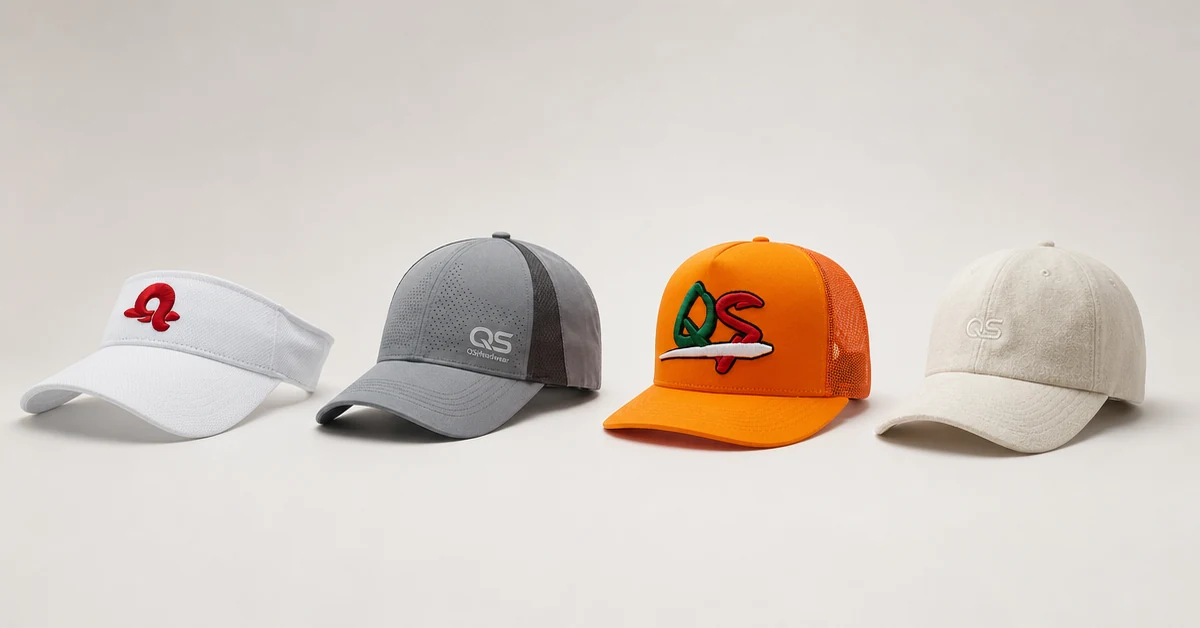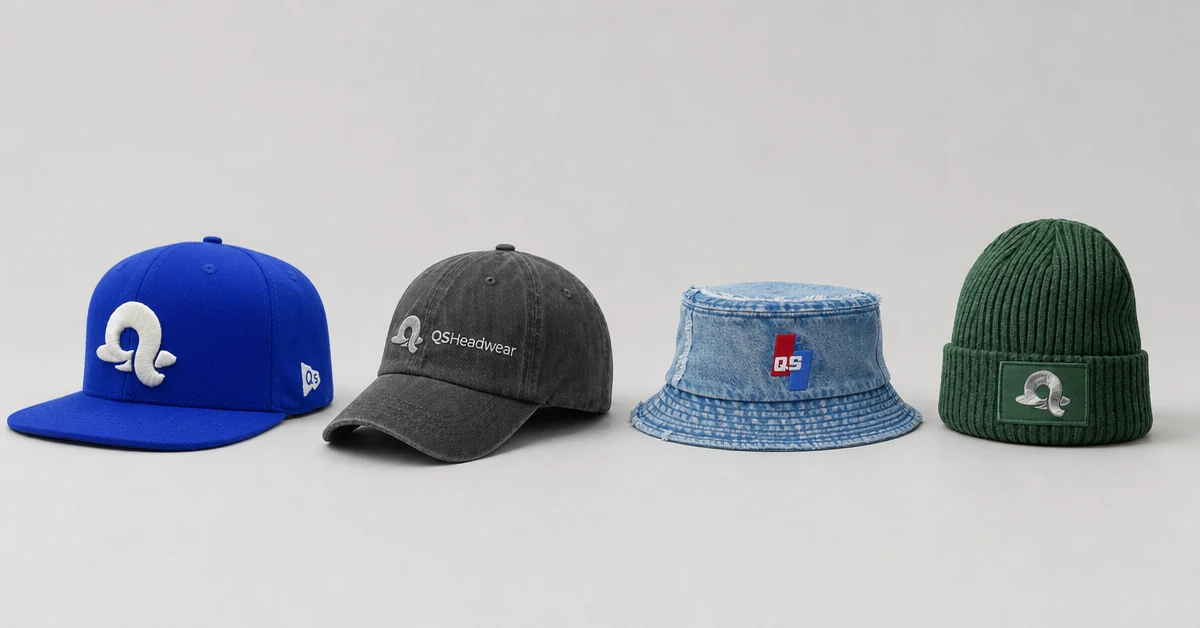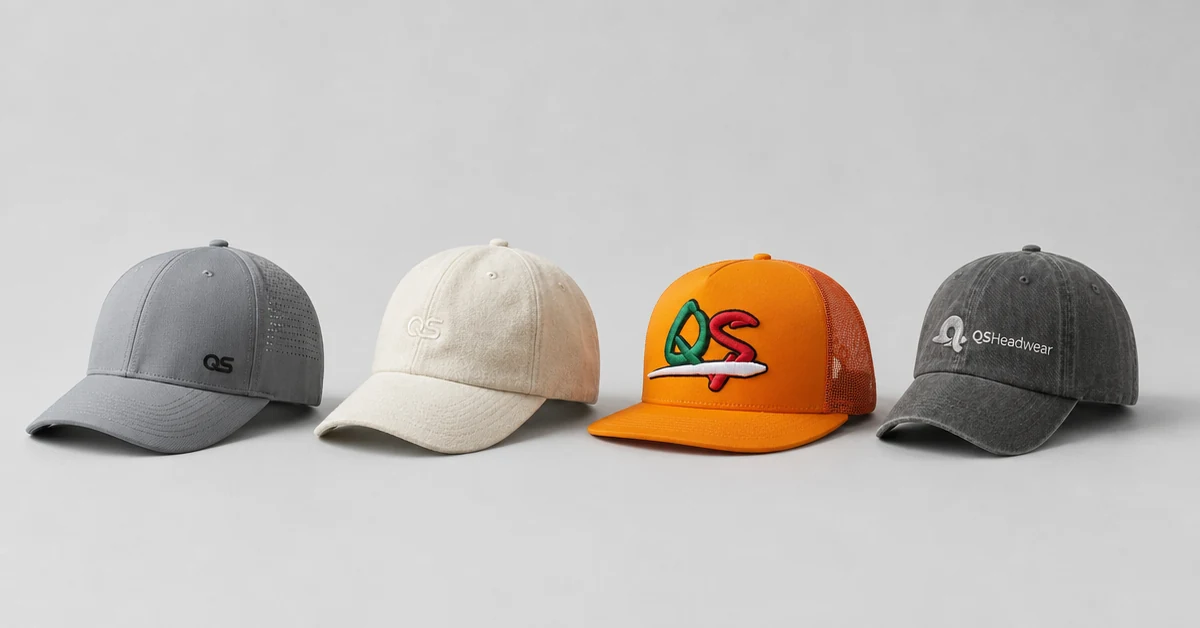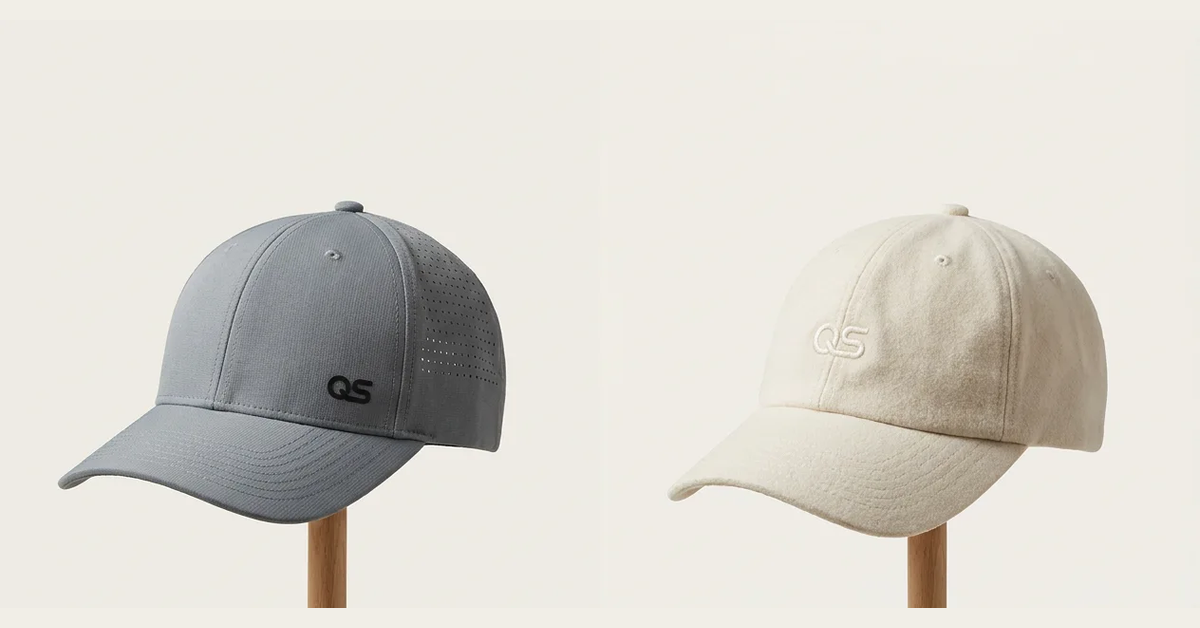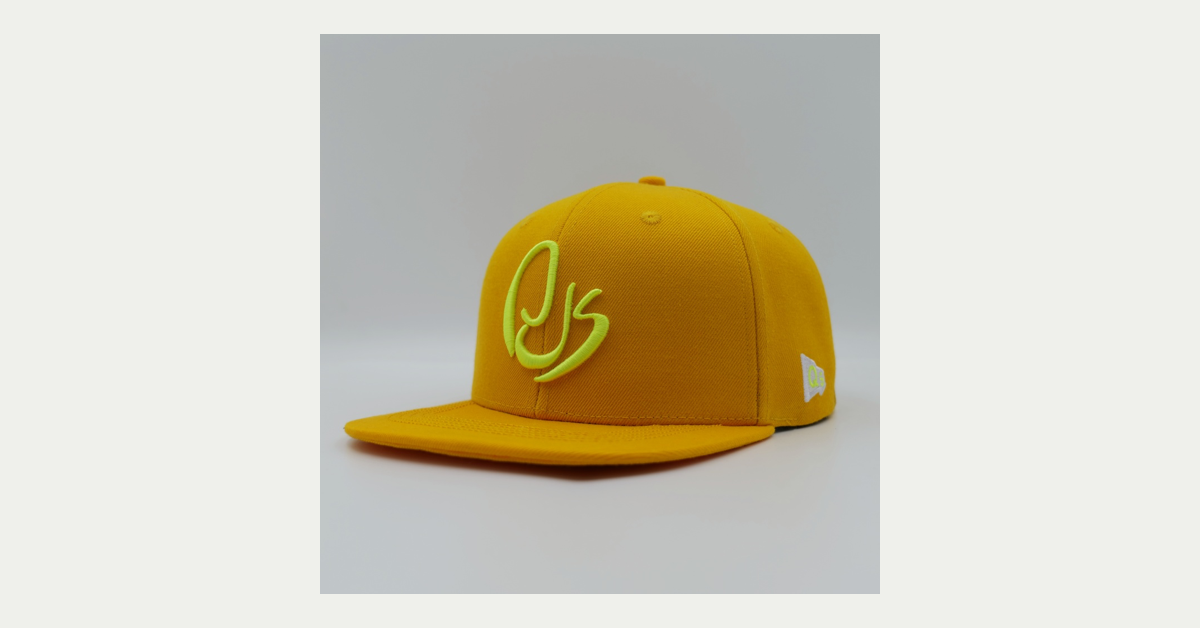


A custom retail headwear supplier is responsible for more than producing an attractive cap. Retail success also depends on assortment roles, target margin, product data, barcodes, labels, carton allocation, delivery windows and the ability to reproduce proven styles without silent changes.
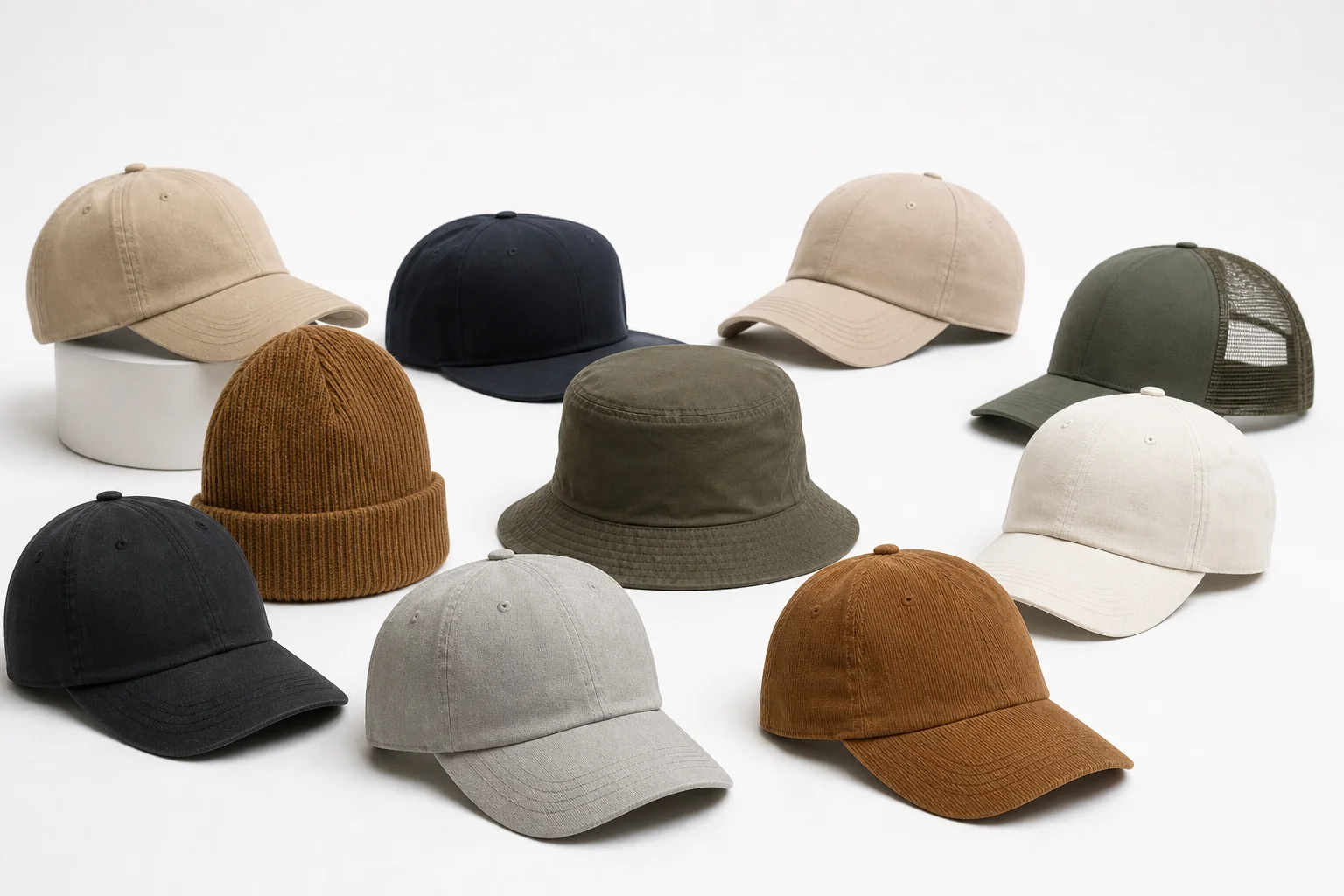
This operating model is for retailers, distributors, multi-brand stores and ecommerce teams building a headwear category or improving replenishment.
The Shelf Question: What Job Does Each SKU Perform?
Assign every style a role before development. A core logo cap creates repeat recognition; a seasonal color connects with a collection; a fashion silhouette tests a trend; an opening-price product attracts first-time buyers; and a premium style supports higher margin. When several SKUs perform the same job, demand is fragmented and the buyer receives less useful sales data.
Build an Assortment With Controlled Contrast
| Assortment role | Product direction | Reorder logic |
|---|---|---|
| Core carryover | Stable fit, fabric and proven colors | Replenish against minimum weeks of stock |
| Seasonal update | Core block with a new color or graphic | Limited reorder window |
| Trend test | Distinct silhouette or finish | Small opening buy with a decision date |
| Entry price | Efficient construction and simple branding | Volume-led if conversion is proven |
| Premium anchor | Elevated fabric, trims or packaging | Margin and sell-through must justify complexity |
This structure allows variety without turning the range into dozens of unrelated development projects.
The Margin Question Comes Before Decoration
Work backward from retail price, wholesale terms if relevant, promotions, duty, freight, fulfillment, returns and desired margin. Then set an allowable landed cost. Request visibility into cap construction, decoration, trims, labels, packaging, inspection and logistics so design choices can be evaluated commercially.
A highly complex decoration may be right for the premium anchor but wrong for the entry-price SKU. Apply cost where customers can perceive it.
Give the Factory a Retail Data Pack
- Style name, SKU and color code.
- Product title and approved description.
- Fiber composition and care information.
- Country-of-origin and market-specific label requirements.
- Barcode type, number and print-quality expectations.
- Hangtag, price-ticket and packaging artwork.
- Carton quantity, assortment and destination mark.
- Product photography or sample references.
Version control matters. A correct cap with the wrong barcode or color code can still create a serious receiving and inventory problem.
How a Custom Retail Headwear Supplier Makes a Style Shelf-Ready
The product should arrive in the form the warehouse or store expects. Define whether caps need crown support, individual polybags, tissue, hangers, size stickers, price tickets or nested packing. Confirm how brim shape is protected and how cartons are limited in weight and volume.
A reliable custom retail headwear supplier should treat labels, scans and carton marks as controlled product attributes rather than last-minute packing details.
Run a Receiving Simulation Before Bulk Ships
- Scan the barcode from the physical retail unit.
- Match SKU, color and product name to the purchase order.
- Open the individual packing without damaging the product.
- Check whether the cap can move directly to shelf or fulfillment.
- Count the carton assortment and verify the carton label.
- Photograph the received condition after normal handling.
- Record any step that requires warehouse rework.
This simple simulation can reveal data, labeling and packing failures that are invisible during a conventional visual sample review.
Plan Cartons Around the Destination
| Destination model | Packing priority | Common control |
|---|---|---|
| Central distribution center | Efficient receiving and allocation | Master carton with accurate SKU counts |
| Direct to stores | Store-ready assortments | Cartons labeled by store and department |
| Ecommerce fulfillment | Individual protection and scan accuracy | Retail unit ready for pick-and-pack |
| Distributor network | Clear multi-language or market data | Country and customer-specific labels |
| Launch event or pop-up | Fast setup and counted packs | Venue allocation and contingency stock |
Inspect What the Customer and Warehouse Will Notice
Product inspection should cover measurements, silhouette, brim, shade, seams, decoration, labels, cleanliness and packing. Retail inspection should add barcode readability, SKU accuracy, price-ticket version, color naming, pack quantity and carton marks. QSHeadwear describes incoming, pre-production, in-line and final AQL 2.5 checks; request an order-specific checklist for both product and data accuracy.
Design the Replenishment File Before Launch
Retain patterns, measurements, material references, color standards, artwork, thread or patch files, trims, labels, barcodes, individual packing, carton assortment and approved samples. Define what must remain unchanged and what may be substituted only after buyer approval.
Lead time should be considered alongside sell-through. Set reorder points using realistic production and transport time, not only current inventory. For seasonal fabric, confirm the last order date and whether material can be reserved.
A Supplier Scorecard for the Second Order
| Score area | Evidence to review | Reorder question |
|---|---|---|
| Product consistency | Measurements, shape, shade and decoration results | Did bulk match the approval sample? |
| Retail accuracy | Barcodes, labels, pack counts and carton marks | Did receiving require rework? |
| Delivery reliability | Milestones, inspection and shipping records | Did goods arrive inside the required window? |
| Communication | Issue logs and approval history | Were decisions documented and escalated early? |
| Continuity | Material and trim availability | Can proven SKUs be reproduced? |
| Commercial result | Sell-through, margin, returns and stockouts | Should quantity or assortment change? |
Keep Newness and Continuity in Balance
Retailers need fresh reasons to buy, but constant reinvention increases sampling cost and operational risk. Preserve a proven crown block, measurement system and core trim library, then introduce controlled changes in color, artwork or material. This creates visible newness while protecting fit and reorder reliability.
Send a Retail-Ready RFQ
Include assortment roles, target retail and landed cost, style and color quantities, selling markets, technical specifications, artwork, barcode data, labels, packing, carton allocations, delivery windows and reorder expectations. This lets a custom retail headwear supplier evaluate the complete program instead of quoting only the cap.
Plan a Retail Headwear Program With QSHeadwear
Explore QSHeadwear product styles, review the OEM/ODM development workflow and verify factory and quality information. Send your assortment, specifications, retail data, quantities, packing and delivery plan through the contact page to discuss a custom retail headwear supplier program.
Retail Headwear Programs: Buyer Questions Answered
1. What should a retail headwear RFQ include?
Include assortment roles, target cost, styles, colors, quantities, markets, specifications, artwork, labels, barcodes, packing, cartons and delivery windows.
2. How many styles should a new assortment contain?
Use enough contrast to serve distinct customer needs, but avoid multiple SKUs that perform the same commercial role.
3. Should retail price be shared with the supplier?
A target price or allowable landed cost helps the development team recommend construction and decoration that fit the margin plan.
4. When should barcode files be approved?
Approve the physical barcode on the final retail unit before bulk packing and verify it against the purchase-order data.
5. What is shelf-ready packing?
It is packaging and labeling that allow a received product to move to store or fulfillment with minimal additional handling.
6. How should cartons be allocated?
Match the distribution model: central warehouse, store, ecommerce, distributor or event, with clear counts and destination marks.
7. What should retail inspection add to product QC?
Add barcode readability, SKU and color accuracy, label versions, pack counts, price tickets and carton marks.
8. How are reorder points set?
Use sell-through, stock on hand, production time, inspection, transport and the cost of stockouts or excess inventory.
9. How can core styles remain consistent?
Lock the cap block, measurements, materials, trims, artwork and packing, and require written approval for substitutions.
10. What should be reviewed after the first order?
A custom retail headwear supplier should be scored on product consistency, retail accuracy, delivery, communication, continuity and commercial results.