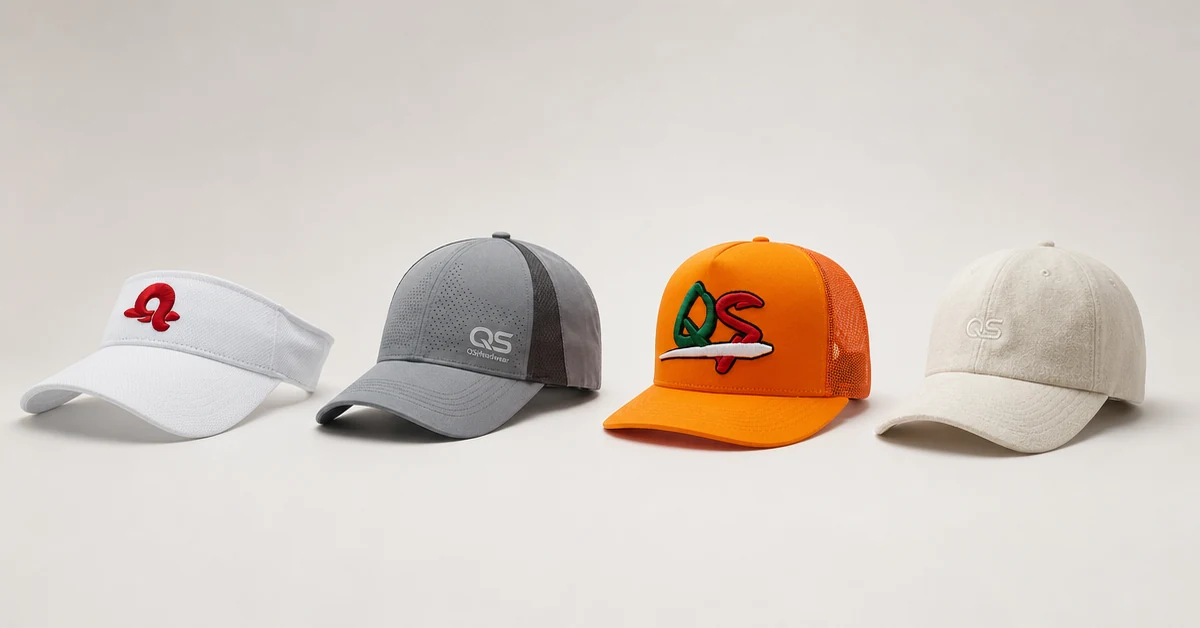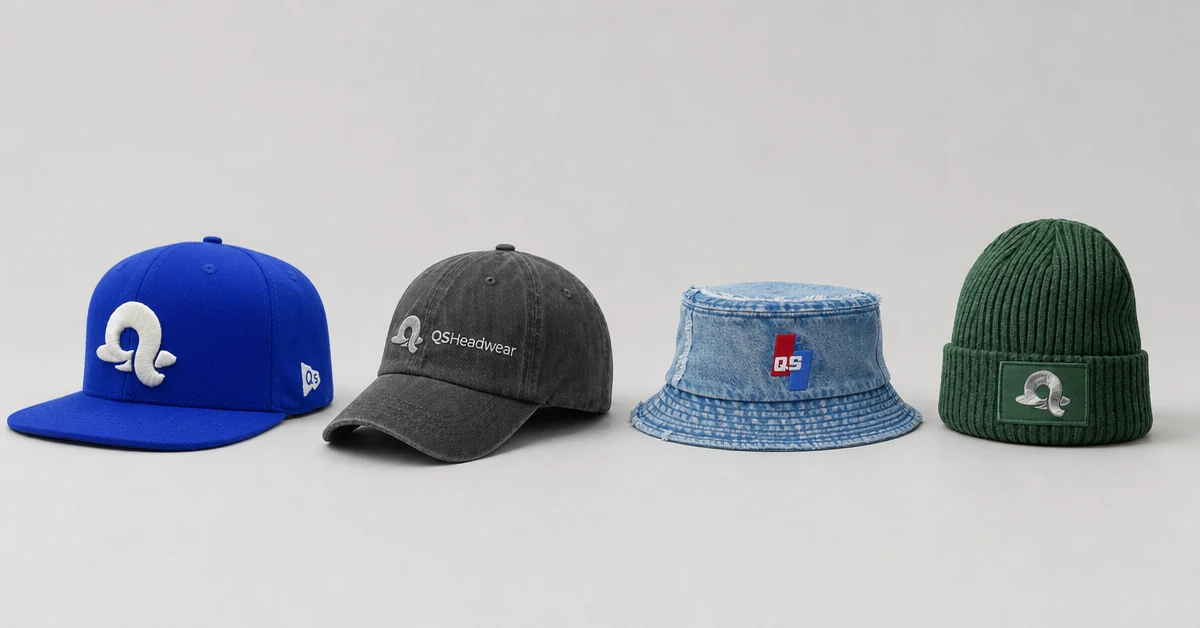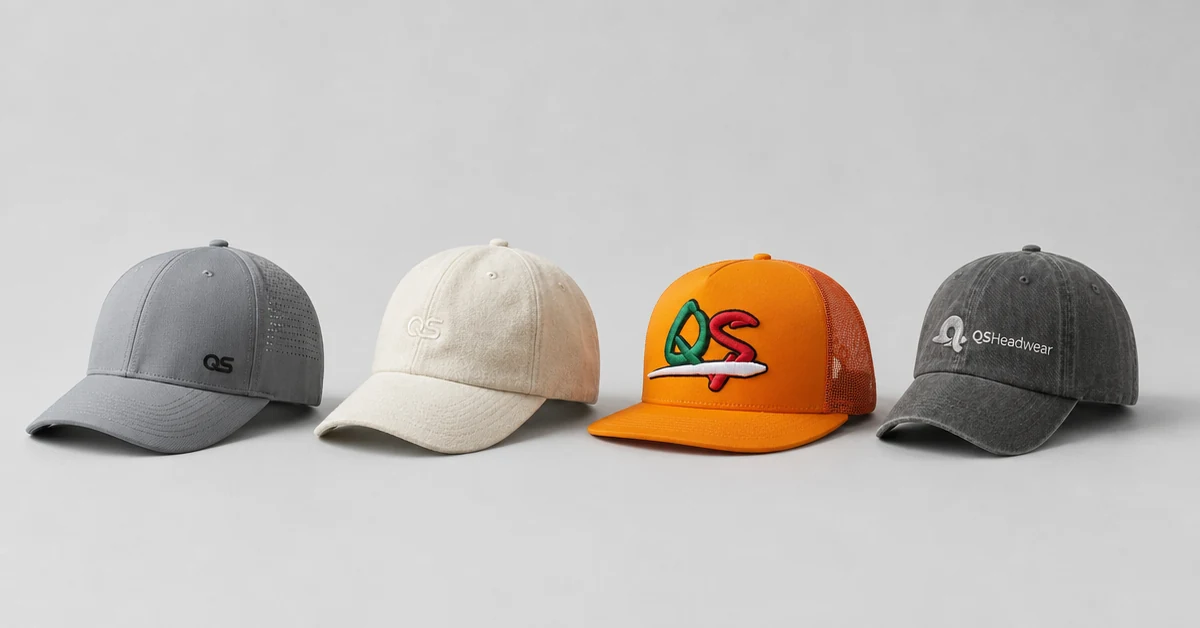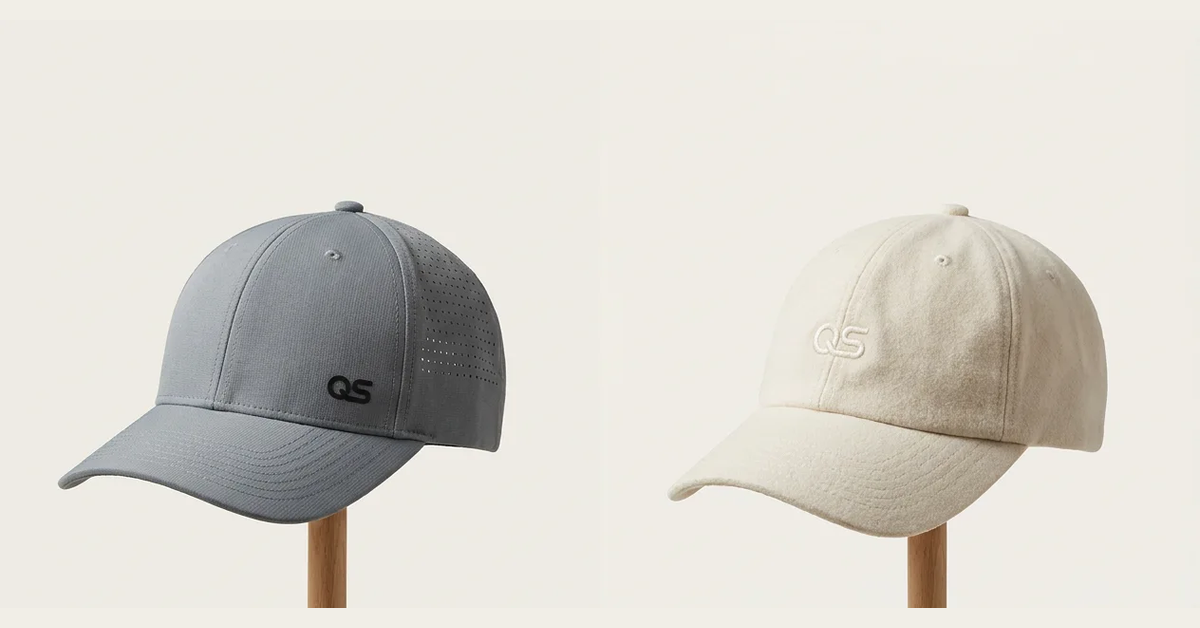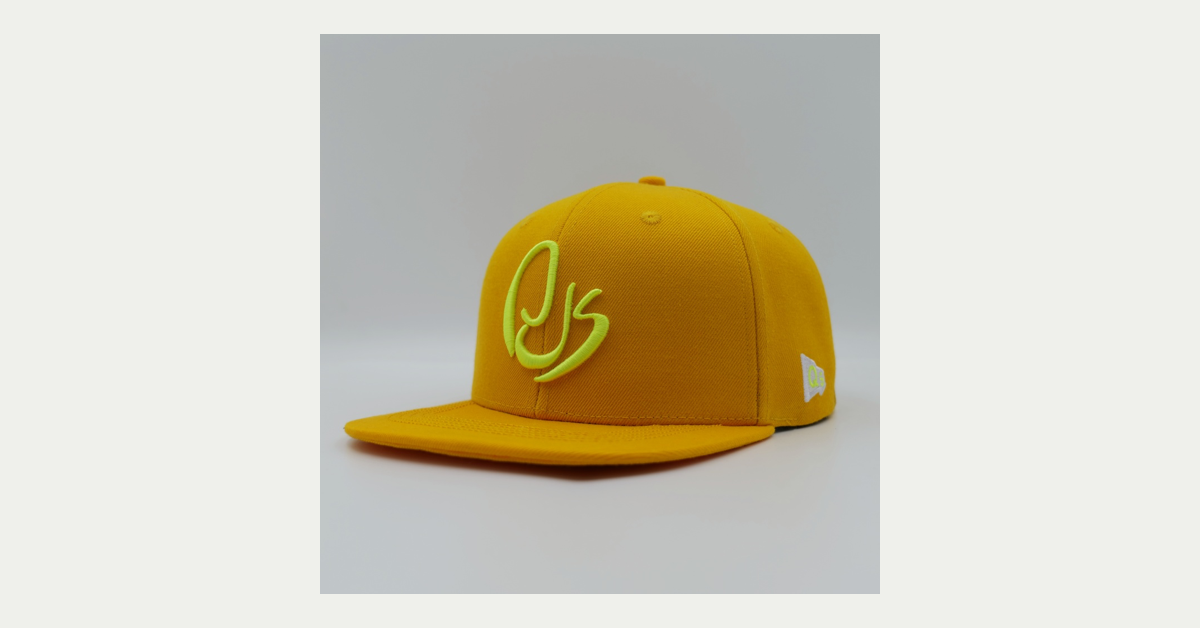


Custom unstructured caps are supposed to collapse. That is not a defect; it is the visual language. The difficulty is making a crown that falls softly when empty but settles cleanly when worn, without a hard front, a lumpy seam or a brim that pulls the whole cap out of balance.

The right place to judge this style is on a head, after an hour of ordinary movement. These notes follow the cap from first touch to the end of a wear trial.
9:05 — The Empty-Cap Trap
On the table, a good unstructured cap may look underwhelming. Without front reinforcement, the crown folds into itself. Do not ask the sample room to “fix” that appearance before testing it on the intended wearer. Adding support can erase the relaxed profile you ordered.
9:12 — Define Softness in Parts
Softness comes from fabric, interlining, seam tape, sweatband, thread tension and washing. Write each choice down. A brushed cotton crown paired with a rigid sweatband is not a soft cap in use. A very light fabric can also need local support around embroidery or the closure.
| Touchpoint | What to record | Wear consequence |
|---|---|---|
| Front crown | Fabric, support and decoration backing | Drape and forehead pressure |
| Panel seams | Allowance, tape and topstitch | Ridges visible on the head |
| Sweatband | Width, thickness and stretch | Fit, heat and recovery |
| Brim | Insert, length, curve and stitch rows | Visual balance and eye clearance |
| Closure | Type, range and hardware weight | Rear fit and cap position |
9:30 — Crown Depth Changes the Attitude
A shallow crown can sit high and casual; too shallow, it may feel insecure. A deeper crown looks easy on some heads but can cover the ears or buckle above the closure on others. Measure front, side and rear depth, then note where the sweatband sits relative to the eyebrow and ear.
10:00 — A Walk Reveals More Than a Mirror
Wear the cap outside or through normal indoor movement. Look down, turn quickly, put on glasses and remove them. If the cap shifts, note where. “Loose” might mean the closure range is wrong, but it can also mean the crown is too deep or the brim is pulling forward.
A useful wear note names the event: “rear lifts when looking down,” not simply “fit feels off.”
10:25 — Check the Inside With Your Fingertips
Run a finger along the panel joins, top button, embroidery backing, care label and closure seam. Soft crowns reveal internal bulk because the fabric follows every ridge. Trim choice matters as much as outer material when the goal is an easy, broken-in feel.
11:10 — Decoration Can Quietly Rebuild the Crown
Dense embroidery adds a reinforced island to an otherwise fluid front. That contrast can be attractive, but large coverage may make the logo stand away from the wearer. Compare flat embroidery, a small woven patch and a low-hand print on the same crown material. Approve appearance both off-head and on-head.
What Custom Unstructured Caps Need From a Brim
A soft crown does not require a soft brim. In fact, a controlled curved brim can provide the shape that the crown deliberately avoids. Test how the brim opens, whether both sides curve evenly, and whether the insert springs back after packing. The brim should support the profile without making the front feel top-heavy.
13:30 — Fit the Closure to the Crown, Not the Trend
Metal buckles, fabric straps, hook-and-loop and elastic each change rear weight and adjustment. A heavy buckle can pull on a very light crown. A long tucked strap needs a clean storage path. Record the practical head-size range and inspect the cap at both ends, not only at the middle setting.
| Observed behavior | Possible source | Next sample question |
|---|---|---|
| Diagonal front fold | Panel grain or seam tension | Does the fold repeat across samples? |
| Crown touches ears | Excess side depth | Can depth change without tightening circumference? |
| Rear opening buckles | Closure and pattern mismatch | Is the opening shape stable at every setting? |
| Logo floats forward | Large backing on soft fabric | Would smaller coverage or another method work? |
| Brim twists | Insert, stitch or assembly imbalance | Does the issue remain after conditioning? |
15:00 — Wash Effects Need a Boundary
A garment wash can make a cap feel familiar on day one. It can also shift measurements, reveal seam puckering and create shade variation. Approve the intended level of softness and the acceptable range, then set measurements on the finished, washed cap. Do not use the unwashed pattern measurement as the only control.
16:20 — Photograph the Fit From Four Views
Capture front, side, rear and three-quarter views on the same wearer. Add a top view if seam balance matters. Keep camera height and cap setting consistent. These photos help the pattern team understand whether a change concerns depth, angle, brim position or closure.
16:35 — Score Comfort After the Novelty Wears Off
A new sample receives too much attention in the first five minutes. Wear it while working, walking or commuting, then score pressure, heat, stability, ear clearance and closure comfort from one to five. Add a note only when the score needs context. This makes comments from different wearers easier to compare.
Repeat the exercise with the approved reference cap on another day. Memory is generous; side-by-side or alternating wear gives the team better evidence.
16:45 — Match Fabric Weight to Season and Drape
A very light fabric may create the relaxed summer hand you want, yet reveal seam allowances or struggle under embroidery. A heavier twill can drape beautifully after washing but feel warm. Compare at least two production-equivalent options when the collection will be sold across seasons.
For custom unstructured caps, the fabric decision should include opacity, surface, recovery, color, shrinkage and how the material behaves around the brim seam. A swatch cannot answer all of those questions.
16:55 — Set the Product-Page Expectation
Use photography and copy to show that the crown is intentionally soft. Include an on-head side view and a view of the cap packed or resting naturally. Customers who expect a rigid front may interpret normal collapse as damage if the product page only shows a carefully propped studio shape.
Align the fit name, measurements and care note with customer-service language. Clear expectations protect both conversion and return rates.
16:58 — Compare the Sample With a Known Favorite
Ask each wearer to bring a cap they already choose often. Measure both and discuss the differences in plain terms: where the band sits, how the brim frames the face, whether the crown touches the top of the head, and how the closure feels. The favorite is not automatically the new specification, but it gives subjective comments a physical anchor.
Record which feature the wearer values. One person may like softness, another the shallow depth. Those are different design inputs.
Do not average the comments too early. A minority fit issue may identify a customer group that needs a different closure range or a separate size.
17:00 — Write the Bulk Inspection Around Drape
Unstructured does not mean uncontrolled. Inspect measurements, panel symmetry, seam ridges, crown folds, brim balance, closure operation, decoration and washed appearance. Some soft folds are normal; permanent twisting, sharp puckers and asymmetric construction are not. Use the approved sample to draw that line.
A Practical Note on Labels
The FTC apparel labeling guidance explains that most textile and wool products sold in the United States require fiber content, country of origin and responsible-company information. Confirm rules for each destination and match the label to the finished material composition.
End the Trial With a Better Brief
Explore QSHeadwear product categories, review the OEM/ODM development route and read factory information. Share wearer notes, measurements, fabric, artwork, quantity and deadline through the contact page to develop custom unstructured caps with a fit record rather than a vague “soft cap” request.
Unstructured Cap Fit Clinic
Should an unstructured cap stand up when empty?
Usually not. Judge the intended crown on a wearer and compare it with the approved reference.
What makes a cap feel soft?
Fabric, support, seam tape, sweatband, backing, thread tension and washing all contribute.
How many people should wear-test a sample?
Use several people across the intended head-size range and record observations by event and location.
Can an unstructured cap use embroidery?
Yes, but logo size, density and backing should be balanced against the soft crown.
Why does the crown fold diagonally?
Grain direction, seam tension, panel geometry or uneven assembly may be involved.
Is crown depth the same as circumference?
No. Depth controls how low the cap sits, while circumference controls the band around the head.
Which closure is best?
Choose by fit range, weight, comfort, brand language and how the rear opening behaves.
Should measurements be taken before or after washing?
For a washed finished cap, approve and inspect post-wash measurements.
How should soft folds be inspected?
Use an approved sample and photographs to distinguish natural drape from permanent twist or puckering.
What should be in a reorder file?
Retain the pattern, finished measurements, material, wash, decoration, trims, fit photos and approved sample.