

Buyers running a workwear programme often ask for a "hi-vis cap" as if it were a single, well-defined product. It is not. High-visibility apparel is governed by formal standards that specify fluorescent background area, retroreflective performance and where those materials must sit on the body. Those standards were written primarily around garments such as vests, jackets and trousers, and a cap contributes very little measurable area to the calculation.
That distinction matters commercially. A supplier who promises a "certified hi-vis cap" without qualification is either overstating the claim or has not read the standard. This guide explains what the standards actually require, what a cap can genuinely contribute to worker visibility, and how to specify workwear headwear so that it survives a site audit and a procurement review.
What the Standards Actually Regulate
Two frameworks dominate. In Europe, high visibility clothing falls under EN ISO 20471, the harmonised version of the international standard. In North America, the reference is ANSI/ISEA 107. Both work on the same underlying logic: they define classes of conspicuity based on how much fluorescent background material and how much retroreflective material a garment carries, and where that material is placed.
The published scope of ISO 20471 is explicit that it sets performance requirements for colour and retroreflection, along with minimum areas and placement of those materials in protective clothing. Read that carefully: the requirement is expressed as an area of material on the garment. A cap has a small surface area and sits above the torso, so it cannot deliver the area a class rating demands.
Why a Cap Rarely Carries a Class Rating
Class ratings in these standards are assigned to a garment based on measured square metres of compliant material. Vests, jackets and coveralls have enough surface to reach Class 2 or Class 3. Headwear does not. In practice this means a cap is treated as an accessory that supplements a compliant garment rather than a substitute for one.
The correct way to describe such a product is therefore precise: a cap made in fluorescent fabric with retroreflective trim, intended to be worn alongside compliant hi-vis clothing. That sentence is accurate, defensible and still commercially attractive. "Certified Class 2 cap" is none of those things.
Site Rules Often Exceed the Standard
Standards set a floor, not a ceiling. Individual sites, contractors and clients frequently impose stricter rules, and those rules are what your customer actually has to satisfy. UK guidance from the Health and Safety Executive makes the underlying principle plain: the clothing must be suitable for the actual risk, taking into account lighting conditions, weather and the specific task. Darker conditions demand more high-visibility material.
Before quoting, ask the buyer which standard their end client references and whether headwear is named in their site policy at all. That single question prevents most compliance disputes later.
What Makes Workwear Headwear Genuinely Useful
Set the certification question aside for a moment and the functional case for a hi-vis cap is strong. A head sits at roughly driver eye level and moves independently of the torso, so a bright, reflective cap is often the first thing a vehicle operator registers when a worker turns or looks up. It is a real safety contribution even without a class rating.
Fluorescent Fabric and Retroreflective Trim
Fluorescent fabric works in daylight by converting ultraviolet light into visible light, which is why day-glo yellow and orange read as unnaturally bright. Retroreflective tape works at night by returning headlight beams to the driver. They solve different problems in different lighting conditions, which is why serious workwear specifies both rather than choosing one.
On a cap this typically means a fluorescent shell with reflective piping along the brim edge, a reflective strip across the rear panel or closure, or reflective thread within the logo itself. Reflective detailing on technical headwear is a standard option on our sports and performance caps, and the same construction transfers directly to industrial use.
Colour Choice Is Not Free
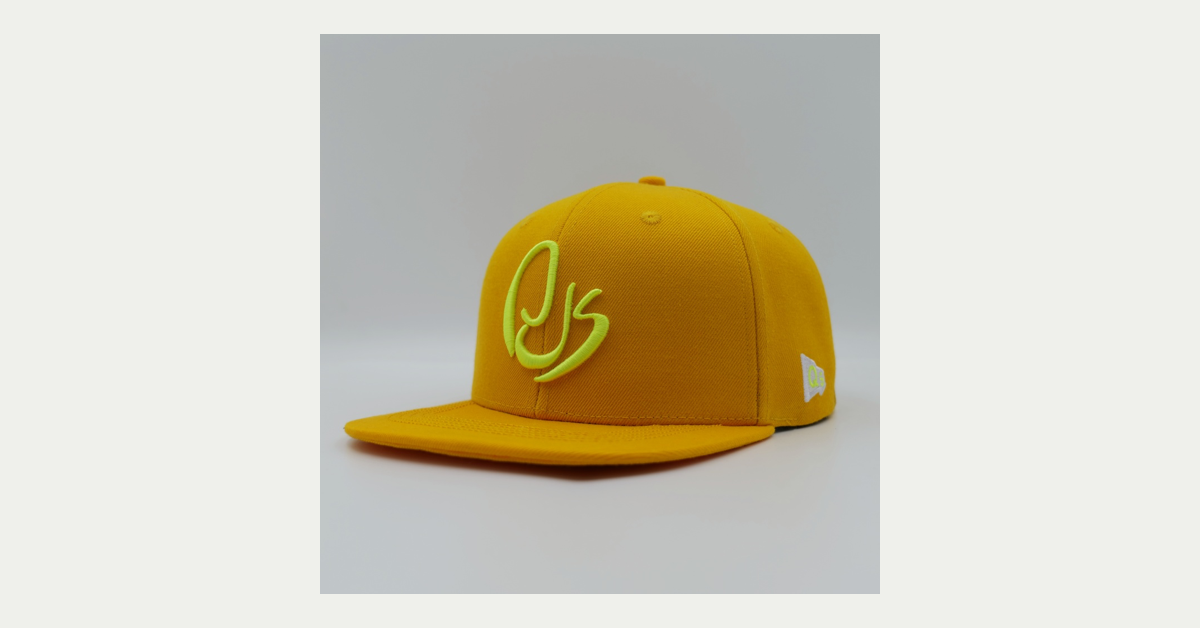
Fluorescent yellow-green and fluorescent orange-red are the colours these standards recognise, and they are recognised because they contrast strongly against most working backgrounds. A brand that insists on a custom fluorescent shade for aesthetic reasons should understand it may fall outside what site rules accept. If brand colour matters more than compliance, put the brand colour on the logo and keep the shell in a recognised fluorescent tone.
Construction Choices for Industrial Wear
Workwear headwear faces conditions that retail caps never see: full shifts outdoors, repeated industrial laundering, dust, sweat and UV exposure. Specification should follow from that reality rather than from a fashion tech pack.
Ventilation and All-Day Comfort
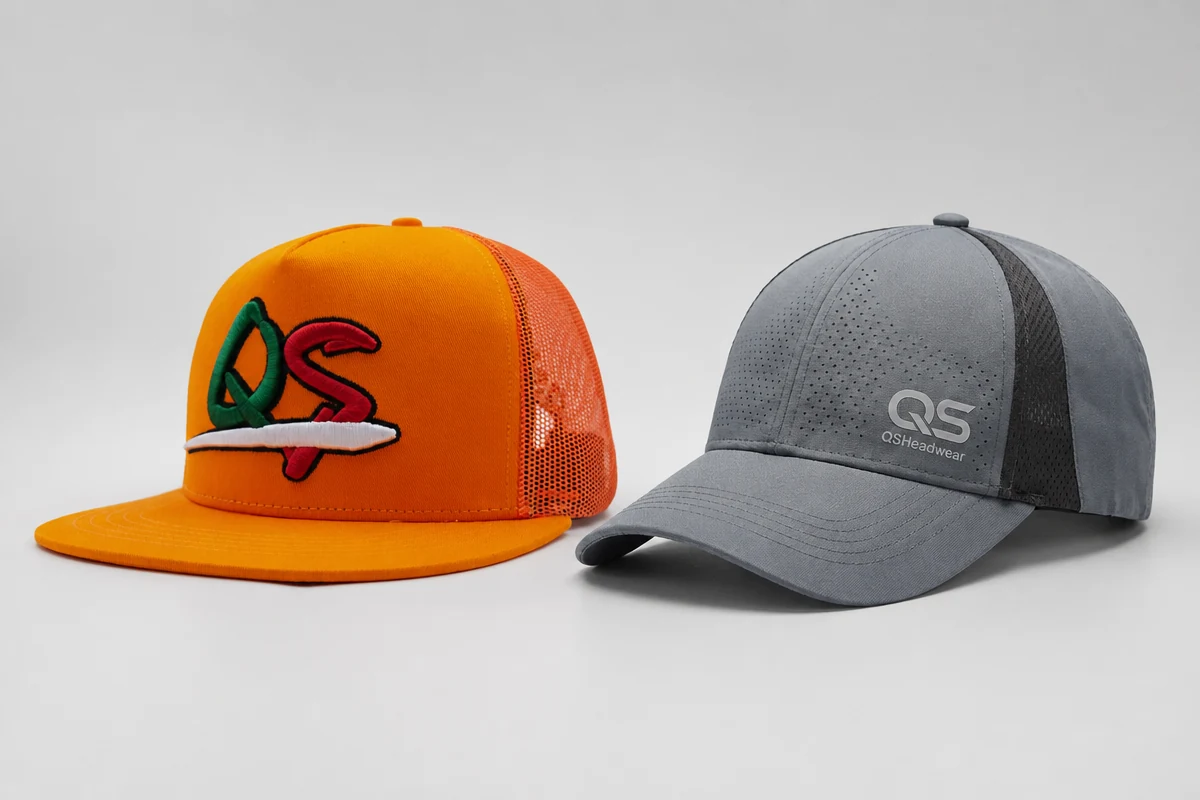
A cap that becomes uncomfortable by mid-shift gets removed, and a removed cap protects nobody. Mesh back panels or laser-perforated ventilation zones make a measurable difference over an eight-hour shift in summer. This is the practical reason mesh-backed trucker styles remain popular in construction, agriculture and landscaping despite plenty of alternatives.
Compatibility With Other PPE
Headwear rarely operates alone on an industrial site. It may need to sit under a hard hat, alongside ear defenders, or with safety glasses. HSE guidance is clear that multiple items of personal protective equipment must not interfere with each other. A low-profile unstructured crown fits under a helmet; a tall structured crown does not. Confirm the stacking requirement before choosing the silhouette.
Durability Under Industrial Laundering
Fluorescent dyes and retroreflective tape both degrade with washing and UV exposure, and they degrade faster than the fabric around them. A cap that has faded out of its colour range is no longer performing its function even though it looks intact. Ask how the fluorescent fabric behaves after repeated washing, and wash a sample before approving bulk. Building a replacement cycle into the programme is more honest than pretending the product lasts forever.
Decoration on Hi-Vis Fabric
Branding a safety cap involves a constraint that ordinary caps do not have: every square centimetre of logo covers fluorescent background material. A large embroidered logo across the front panel measurably reduces the conspicuous area.
Keep decoration proportionate and place it where it does the least damage to visibility. Reflective thread or reflective heat transfer is a smart choice here because the branding itself contributes to night-time conspicuity rather than subtracting from it. For guidance on how stitch density and backing behave across different substrates, see our embroidery capability page.
Buying for a Workwear Programme
Corporate and industrial buyers are usually purchasing for a workforce rather than a retail shelf, which changes the priorities. Sizing needs to accommodate a wide range of head sizes with a robust closure. Repeat orders need colour consistency across production runs, since a workforce receives caps in waves and mismatched fluorescent shades look like a quality failure.
Programmes of this type overlap heavily with uniform and promotional buying, and the same specification discipline applies. Our corporate and promotional caps range is built around exactly this pattern of ordering. If your programme also spans several silhouettes, our guide to choosing a cap style sets out how crown and brim decisions affect fit and branding.
Write the Specification Before Requesting Quotes
State the standard your client references, whether the cap must sit under a hard hat, the expected washing regime, the fluorescent colour, the reflective element and its placement, and the closure type. A supplier quoting against that brief is quoting against your actual requirement. A supplier quoting against "hi-vis cap" is guessing.
Sampling runs three to five working days once artwork and specifications are confirmed, so there is little reason to skip a physical sample on a safety-adjacent product. Check the sample in the lighting conditions your workers actually face, including after dark with a vehicle headlight, rather than under showroom lighting.
Frequently Asked Questions
Can a cap be certified to EN ISO 20471 or ANSI/ISEA 107?
These standards assign class ratings based on measured areas of fluorescent and retroreflective material, and a cap has too little surface area to reach a garment class on its own. Treat hi-vis headwear as a supplement to compliant clothing, and confirm the specific requirement with the end client.
Which fluorescent colour should we choose?
Fluorescent yellow-green and fluorescent orange-red are the colours these standards recognise for conspicuity. Custom brand shades may not be accepted under site rules, so it is safer to keep the shell in a recognised tone and express brand colour through the logo.
Will the reflective detail survive industrial washing?
Retroreflective materials and fluorescent dyes both degrade over time, and industrial laundering accelerates this. Ask for washing guidance at sampling, test a sample yourself, and plan a replacement cycle rather than assuming indefinite performance.
Can hi-vis caps be worn under a hard hat?
Only if the crown is low-profile and unstructured enough to sit comfortably beneath the helmet shell without disturbing its fit. Confirm this requirement before selecting a silhouette, because a structured six-panel crown generally will not work.