

A cap warranty is not a sentence added after production. It is a commercial promise that connects product design, quality evidence, customer service, replacement stock and margin. If the promise is vague, every complaint becomes a new negotiation. If it is unrealistically broad, normal wear and misuse can consume service resources. If it is too narrow, buyers may treat the brand as unwilling to stand behind the product.
The useful objective is not to promise that nothing will ever go wrong. It is to define which product failures the brand will investigate, what evidence makes a fair decision possible, which remedy fits the problem, and which conditions sit outside the promise.
This guide is operational guidance for headwear programmes, not legal advice. Consumer rights, mandatory remedies, warranty disclosure and contract rules differ by market. Have qualified local counsel review the final consumer-facing policy before launch.
Separate the consumer promise from a factory claim
Identify the relationship
A consumer contacts the brand or retailer about a purchased cap. A brand contacts its factory about a delivered production order. Those are different relationships. The existing bulk defect claim process covers buyer-to-supplier settlement. A consumer policy must first decide what the end customer receives, regardless of whether the brand later recovers cost upstream.
Do not make the customer wait for root cause
The brand may need a factory investigation, but a customer-service decision often must happen earlier. Define what the service team can approve immediately, what needs technical review and what requires the physical cap. Keep the external response separate from the internal recovery process.
Keep supplier recovery behind the promise
A replacement to the consumer should not depend on whether the factory has issued a credit. The brand can preserve photographs, lot identity and the returned unit for a later supplier discussion while still meeting its own stated consumer commitment.
Define the product state the promise begins with
Connect the promise to the sold SKU
Record style, colour, size, decoration version and sales channel. A complaint cannot be assessed fairly if the service team cannot identify which construction or production period reached the customer. Make this identity available through the order record, label, packaging or another traceable reference.
Use approved product claims
Do not promise waterproofing, colour permanence, dimensional stability or performance that the approved product evidence does not support. Marketing, product-page copy and care guidance should describe the same product that quality teams approved.
Review channel-specific presentation
A marketplace listing, retail hangtag and direct-to-consumer page can communicate the promise differently, but the underlying scope should not conflict. The private-label system is relevant because care information, responsible-party details and product identity may sit across several label elements.
Classify the failure before selecting the remedy
Manufacturing nonconformity
Examples can include an open seam, detached closure, missing component, materially incorrect decoration or construction that differs from the approved product. Define observable language and retain representative examples. Avoid using “defect” as a catch-all for every cosmetic preference.
Material or component performance
A sweatband, closure, print, patch or finish may fail in use. Review whether the condition is consistent with intended use and care. Connect recurring component problems to the same definitions used in the cap quality-control process.
Normal wear, misuse and external damage
Fading from prolonged exposure, abrasion, crushing, incorrect washing, unauthorised alteration or damage after delivery may sit outside a voluntary promise, subject to applicable law. State exclusions in understandable language and avoid hiding them in technical wording.
Appearance variation
Washed fabrics, natural fibres, hand-applied details and some decorative processes can show acceptable variation. If variation is inherent, disclose it before sale and define what crosses the approved boundary. Do not introduce “natural variation” only after a customer complains.
Decide what evidence is proportionate
Start with low-friction evidence
Order identity, overall photographs and one clear close-up may resolve a straightforward issue. Requiring many measurements or the immediate return of a low-value cap can cost more than the remedy and create avoidable customer frustration.
Escalate evidence with uncertainty
Ask for additional views, measurements, care history, packaging condition or a return only when they change the decision. Moisture, odour and storage complaints may require different evidence from stitch or closure failures; the moisture-source diagnosis explains why arrival environment and material condition should be separated.
Protect personal information
Collect only information needed to identify the purchase and evaluate the issue. Define access, retention and deletion rules for customer photographs, addresses and transaction evidence. Do not use service evidence for unrelated marketing without permission.
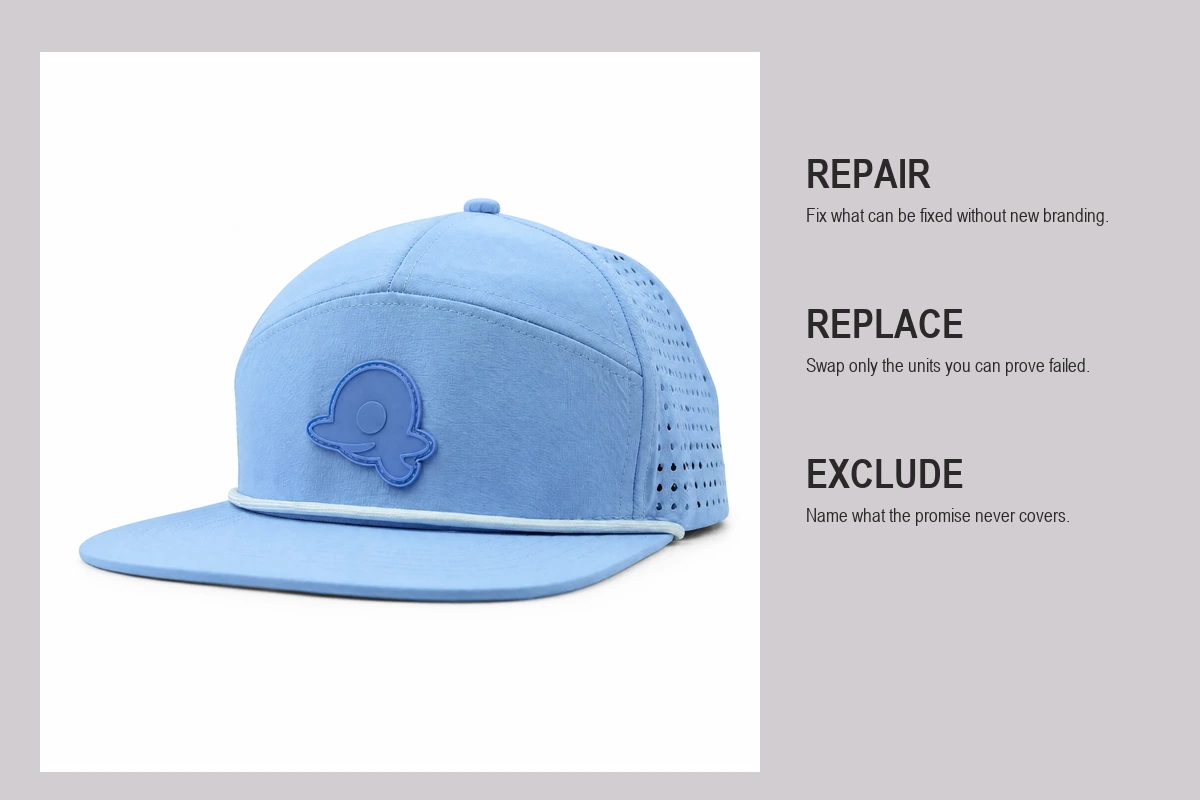
Choose the remedy that restores fair value
Repair when the result can be controlled
Repair can suit replaceable closures, minor stitching or another condition with a proven method. Confirm who performs the work, whether appearance and function remain acceptable, how shipping is handled and what happens if the repair fails.
Replace when identity and stock allow it
Replacement is straightforward only when the same SKU, colour and size are available. Define how substitutes are approved when the product is discontinued. Hold service inventory or a controlled alternative if replacement is a central promise.
Refund or price adjustment where appropriate
A refund or price reduction may be more practical when replacement stock is unavailable, repair is disproportionate or the customer can retain a usable item with reduced value. The permitted remedy and sequence depend on the market and circumstances; do not present one internal preference as a universal legal rule.
Set boundaries without creating a trust problem
Write what is covered
Name the product, covered conditions, decision evidence, remedy options, responsible contact and how the customer starts a request. Positive scope is more useful than a page built entirely from exclusions.
Write exclusions that match foreseeable use
Do not exclude a condition caused by the very use the product is sold to perform. Review care instructions, outdoor claims and decoration durability together. Packaging should also protect the cap until delivery; the retail carton and packout guide helps distinguish a product issue from avoidable distribution damage.
Avoid vague lifetime language
Words such as “lifetime,” “guaranteed” and “satisfaction” can create expectations beyond the intended scope. Define the relevant product life, covered conditions and available remedy in the markets where the promise is offered. Marketing prominence should not exceed operational capability.
Build the service cost before publishing the policy
Estimate incident pathways
Map simple photo approval, technical review, return inspection, repair, replacement and refund. Assign handling time, logistics, replacement inventory and inspection effort. Use actual programme data as it accumulates rather than inventing a generic claim rate.
Include discontinued products
Seasonal colours and limited releases can disappear before a complaint arrives. Define whether the customer receives an equivalent replacement, store credit, refund or another remedy permitted by the policy and applicable law.
Protect margin through prevention
The lowest-cost service case is a prevented failure. Feed recurring complaints into product planning, sample approval, supplier corrective action and packaging. The ecommerce product-planning process should include expected use and service implications before the SKU is launched.
Align the promise with market rules
United States written-warranty guidance
The U.S. Federal Trade Commission’s official Businessperson’s Guide to Federal Warranty Law explains that the Magnuson-Moss Act does not require a business to offer a written warranty, but once a business chooses to offer one on a consumer product it must comply with applicable requirements. The guide discusses clear warranty information, full or limited designation, disclosure and pre-sale availability. It also warns that state law varies. Use qualified counsel to translate those principles into the actual sales channel and product.
European Union conformity and remedies
The official text of Directive (EU) 2019/771 addresses conformity of goods and remedies for lack of conformity. Its remedy provisions include repair and replacement, with limits where the chosen remedy is impossible or disproportionate, and other remedies under specified circumstances. National implementation and later amendments must be checked for each target market; a voluntary brand policy cannot remove mandatory consumer rights.
Keep voluntary promises and legal rights distinct
State when the brand is offering something additional and avoid wording that appears to replace mandatory rights. Regional terms may differ, but internal service teams need a controlled source showing which version applies to each sales market.
Create one decision path for customer service
Give the first responder authority
Define which clear cases can be repaired, replaced or refunded without management escalation. Add value or evidence thresholds only when legally reviewed and operationally necessary. A long approval chain can cost more than the product.
Route technical cases to product knowledge
Some conditions require construction expertise. Provide service teams with product photos, component locations, approved variation and known failure examples. Do not ask the customer to diagnose the factory process.
Record the reason, not only the remedy
Use consistent categories for seam, closure, decoration, colour, fit, care, transit and misuse. This converts service activity into product evidence and helps the brand see whether a problem is isolated or systemic.
Connect consumer cases back to the supply chain
Link cases to production identity
Where possible, connect the claim to PO, production period, colour lot or carton group without exposing internal identifiers to the consumer. This allows quality teams to compare several cases from the same population.
Escalate patterns, not anecdotes
One complaint may require customer care. Repeated conditions across related units require containment and supplier investigation. Keep the consumer remedy moving while the brand decides whether remaining stock should be inspected or held.
Preserve branding rights in returned goods
Returned, rejected or repaired branded caps still carry artwork and labels. Define whether they are destroyed, stripped, repaired or returned to sale. The compliance evidence hierarchy helps identify which records belong to the factory, material, order and finished product when a case expands beyond one consumer unit.
Test the promise before launch
Run realistic scenarios
Test an open seam, failed closure, colour complaint, damaged delivery, incorrect care, discontinued SKU and recurring batch issue. Confirm who decides, what evidence is requested, which remedy is offered and how long each handoff takes.
Check operational capacity
A promise is only credible if replacement stock, repair capability, customer-service authority and logistics can support it. If the brand cannot execute the wording consistently, narrow or redesign the offer before publication.
Review the policy with product changes
New materials, finishes, decorations and sales markets can change failure modes and legal obligations. Review the promise when the product or channel changes, not only after complaints rise.
Promise a controlled response, not a perfect product
A strong after-sales promise tells customers what the brand will investigate, what conditions it covers, what evidence is proportionate and which remedies may restore fair value. Behind that promise, the business must classify failures consistently, cost the service path, preserve product identity and feed recurring issues back into design and production.
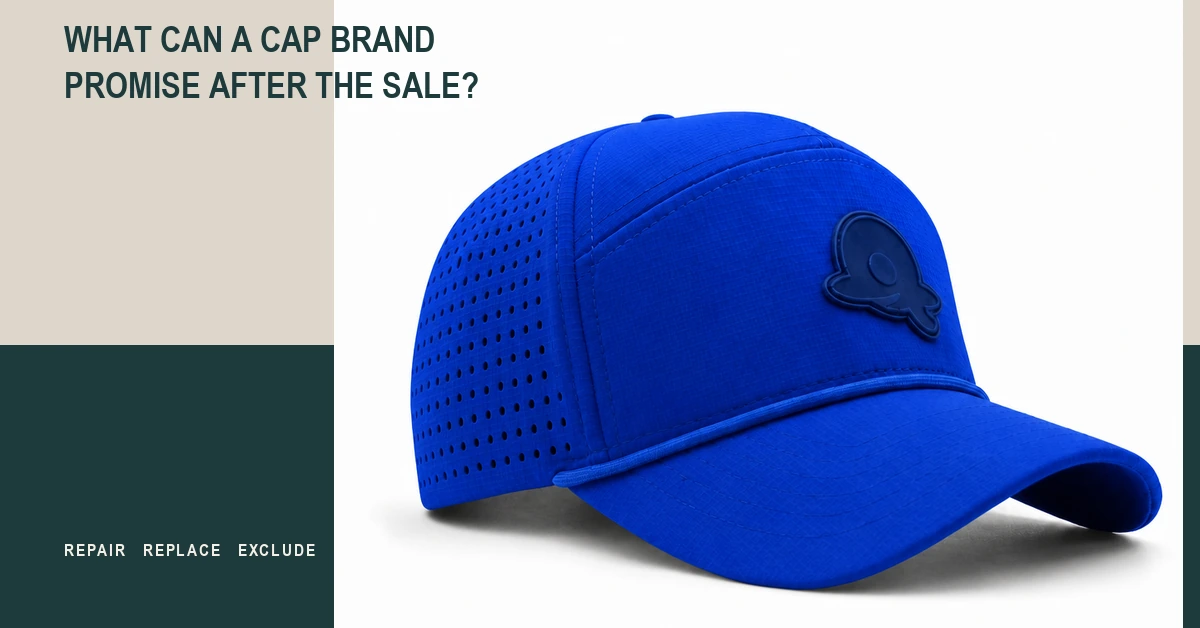
For a headwear programme, share the target markets, sales channels, product constructions, care claims, replacement-stock plan and intended service wording before bulk. QSHeadwear can help connect the physical cap specification, quality evidence and packaging decisions that support a promise the brand can actually keep. The referenced seven-panel performance cap shows why construction, care and consumer expectations must be aligned at SKU level.