

Custom hat MOQ is not one universal number. It is the lowest workable quantity for a specific combination of cap structure, fabric, color, decoration, labels, packaging and production schedule. A buyer can reduce avoidable surplus by defining those variables before asking a factory for its lowest possible order quantity.
This guide is for apparel brands, retailers, distributors, e-commerce sellers and promotional buyers comparing custom headwear products. It explains how to plan a trial run, what changes the order floor, which costs remain fixed, and what information a manufacturer needs to quote responsibly.
What Does Custom Hat MOQ Actually Mean?
MOQ means minimum order quantity. In headwear sourcing, it should be attached to a defined specification, not treated as a factory-wide promise. The same supplier may support a smaller run for a stock fabric baseball cap and require a larger quantity for a custom-dyed fabric, molded badge or special closure.
Buyers should distinguish four quantities:
- Sample quantity: the number of prototypes used to approve fit, shape, color and logo execution.
- Production MOQ: the minimum finished quantity that can move through the agreed process economically.
- Material MOQ: the supplier or dye lot minimum for fabric, yarn, trims, labels or packaging.
- Order quantity: the commercial quantity the buyer actually needs by style, color and delivery.
These numbers can differ. A fabric mill may supply more material than one production run consumes, or a label vendor may produce extra pieces. The quote should state how excess materials or components will be handled.
Seven Factors That Set a Custom Hat MOQ
1. Hat structure and panel construction
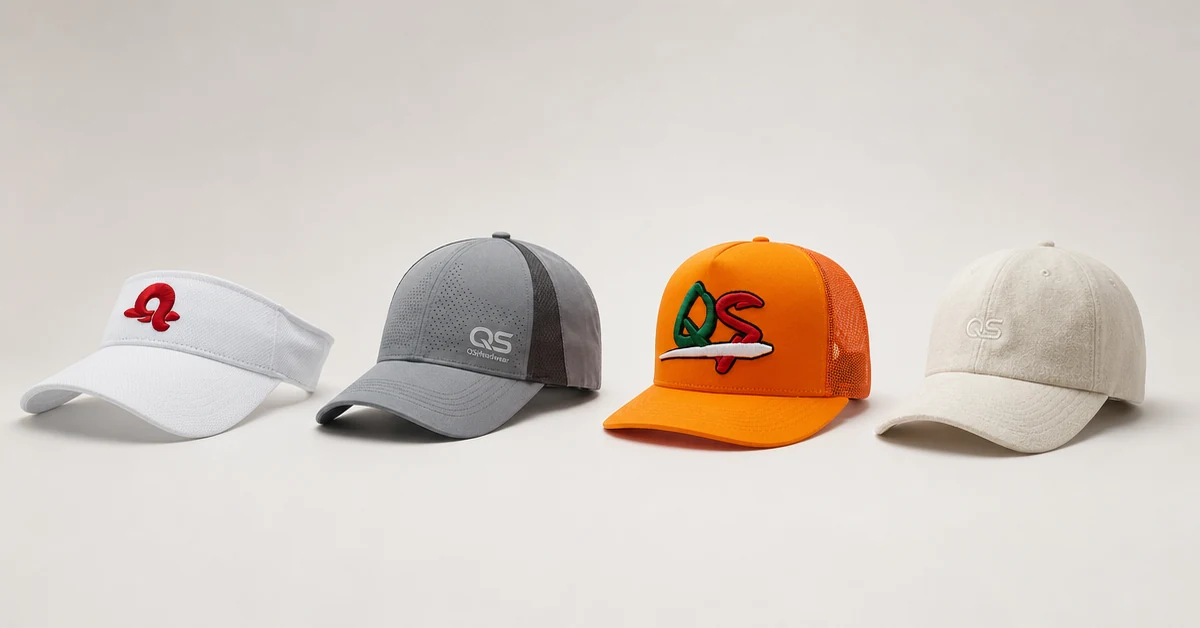
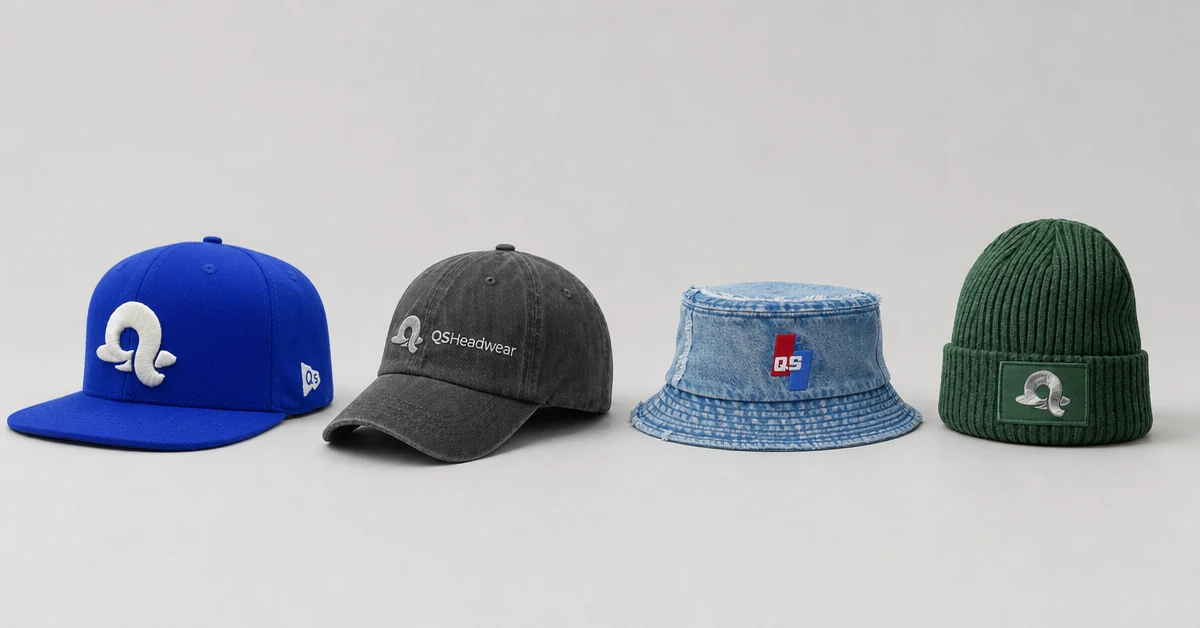
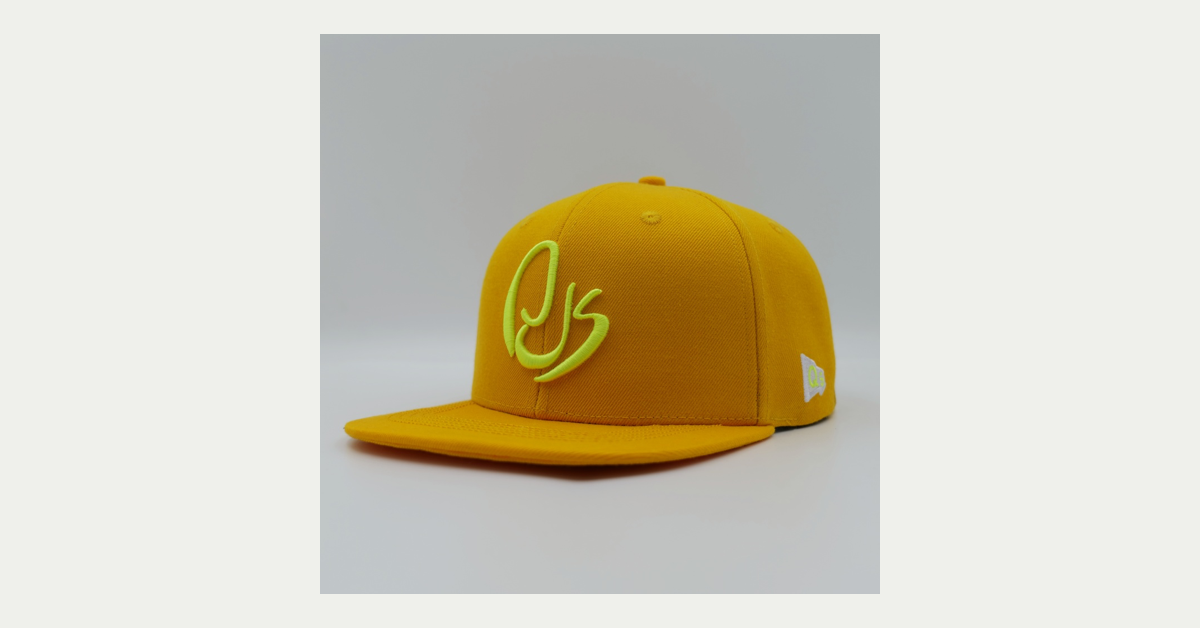
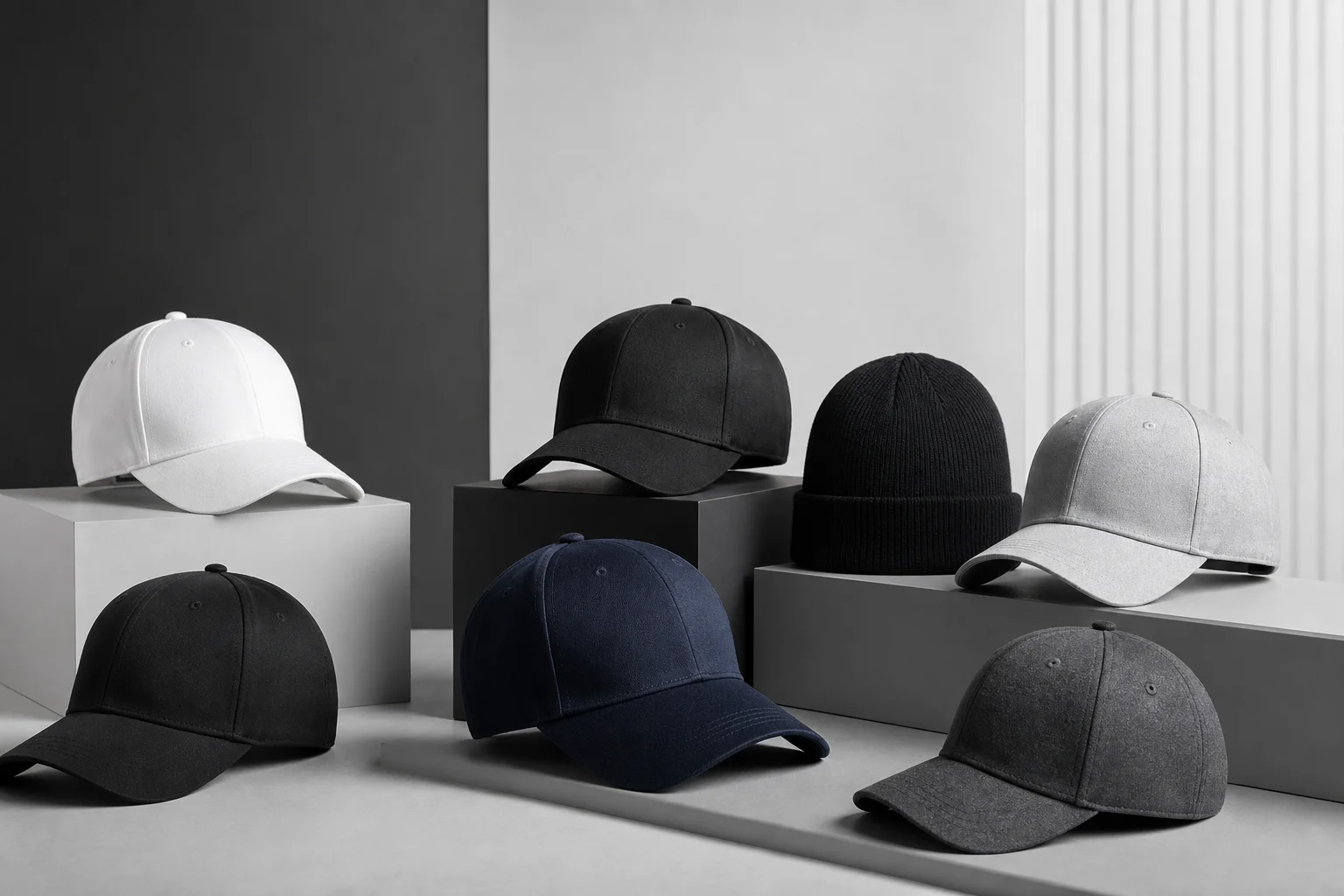
A standard six-panel cap made with available blocks and trims generally has fewer setup variables than a new crown shape. A new pattern may require pattern development, cutting tests and more sample iterations. Bucket hats, snapbacks, trucker hats, beanies and visors also use different production routes, so their order floors should not be compared as if they were interchangeable. See how these cap styles differ in structure and decoration before fixing your quantity split.
2. Fabric availability and color
In-stock cotton twill or standard polyester can support flexible planning. Custom weaving, yarn dyeing, fabric dyeing or uncommon color matching introduces mill minimums and batch variation. Buyers should ask whether a quoted color comes from stock, a standard color card or a custom lab dip.
3. Logo and decoration method
Flat embroidery and 3D embroidery require digitizing, thread selection and machine setup. Woven, PVC, leather or felt patches involve separate component production. Screen printing, heat transfer and sublimation each have their own setup logic. The right method depends on artwork detail, fabric, durability expectations and quantity, not only unit price.
4. Number of colors and size splits
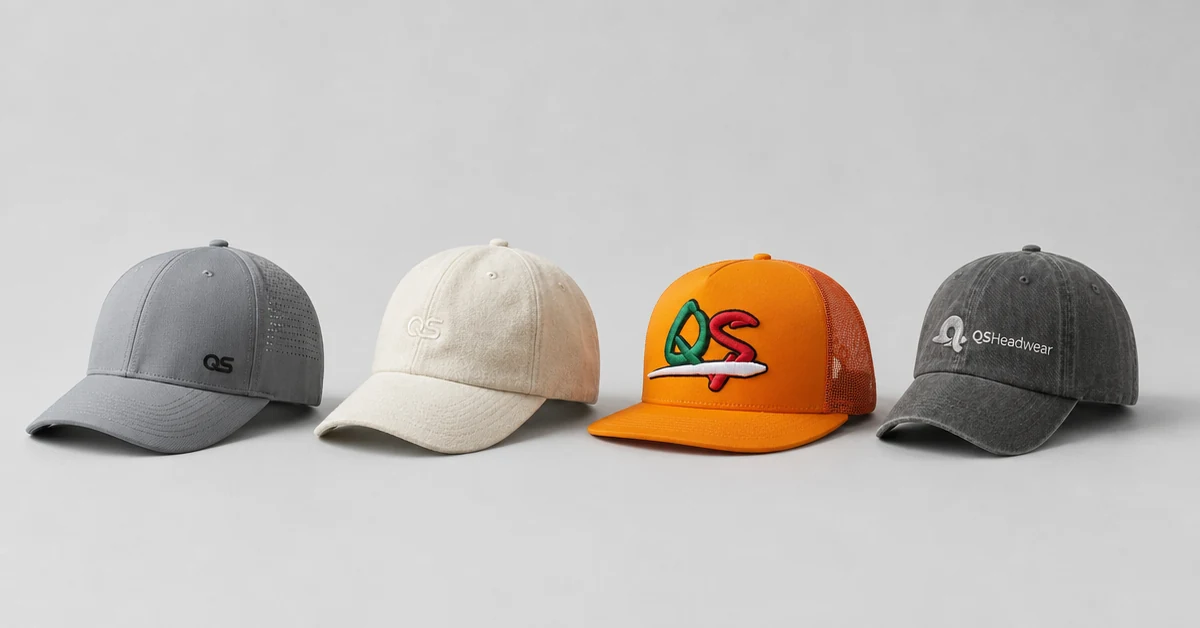
A 600-piece order in one color is operationally different from the same total divided across six colors. Every split may require separate material allocation, thread changes, labels, packing and quality records. Ask the supplier to show the MOQ per style, per color and per artwork rather than quoting only a combined total.
5. Private label components
Custom woven labels, printed care labels, branded seam tape, hangtags, stickers and cartons strengthen the brand experience, but each component can have a separate minimum. A private label headwear program should therefore include a component list with quantities and ownership of unused stock.
6. Testing and quality requirements
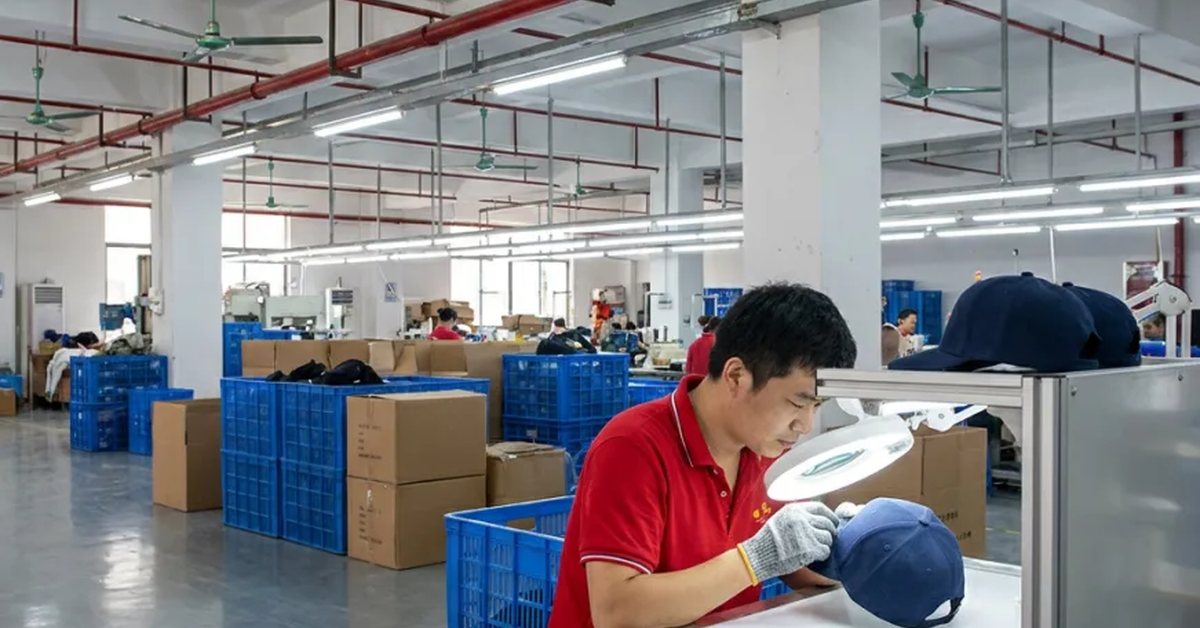
Additional material tests, inspection levels or buyer-specific documentation can affect setup and lead time. QSHeadwear describes a process covering material inspection, pre-production sample approval, in-line monitoring and a final AQL 2.5 inspection. The exact inspection plan should be confirmed for each purchase order.
7. Delivery plan
One shipment, split deliveries, DDP service, retail-ready packing and carton labeling create different handling requirements. Freight mode does not normally determine the factory minimum by itself, but it changes the landed-cost logic that determines whether a small order is commercially sensible.
Small Batch Custom Hats vs Bulk Custom Hats
| Planning point | Small-batch program | Bulk program |
|---|---|---|
| Primary goal | Validate fit, demand and branding | Supply a proven collection or campaign |
| Best specification | Available materials and controlled options | More room for custom materials and components |
| Unit-cost pressure | Higher setup cost per piece | Setup cost distributed across more units |
| Main risk | Too many variants in too few units | Inventory exposure if demand is uncertain |
| Approval focus | Market-ready sample and clear feedback | Repeatability, tolerance and delivery control |
Small batch custom hats work best when the buyer limits complexity. A trial order can test one or two hero colorways before a broader collection. Bulk custom hats make more sense after the specification, packaging and demand assumptions have been validated.
How Custom Hat Manufacturing Cost Relates to MOQ
Custom hat manufacturing cost contains both fixed and variable elements. Pattern work, embroidery digitizing, screens, molds, sampling and production setup are fixed or semi-fixed. Fabric, thread, trims, labor, inspection, packing and freight move more directly with quantity.
A low quantity can therefore have a reasonable total project cost but a higher unit cost. A larger quantity can lower the unit cost while increasing inventory risk. Buyers should compare total landed exposure, not chase the lowest ex-factory unit price.
A Better Way to Request a Low MOQ Quote
Send one structured request containing:
- Hat type, panel structure and reference images.
- Target quantity by style and color.
- Fabric preference and acceptable alternatives.
- Vector logo file and preferred decoration method.
- Label, hangtag and packaging requirements.
- Target market, delivery country and required date.
- Any testing, inspection or compliance requirements.
This brief lets a low MOQ custom hats manufacturer separate non-negotiable brand features from variables that can be simplified. It also makes alternative proposals comparable.
Sampling, Approval and Reorder Planning
QSHeadwear states that physical sample development is typically 3-5 business days after specifications are aligned, depending on materials, artwork and process. The approved sample should record crown shape, dimensions, brim, closure, logo position, embroidery density, labels and packing. Bulk timing must then be confirmed against quantity and material availability.
For reorders, keep a specification sheet, approved sample reference, color standards, component codes and packing instructions. Do not rely on a product photo alone. Repeatability improves when both buyer and factory refer to the same controlled record.
How to Compare MOQ Proposals From Different Factories
Normalize every proposal before comparing it. Put material, fabric color source, logo method, number of colorways, labels, packaging, inspection scope, sample charges, production timing and delivery terms in one table. A lower headline quantity may exclude branded components or use a different fabric, so it may not represent the same sellable product.
Ask each factory to identify assumptions, optional substitutions and costs that will change after sample approval. This turns an MOQ discussion into a controlled sourcing decision and makes later negotiation more transparent.
Common MOQ Mistakes to Avoid
- Asking for the lowest MOQ before defining the product.
- Dividing a small order across too many colors and logos.
- Ignoring separate minimums for labels, patches and packaging.
- Approving a logo image without approving placement and dimensions.
- Comparing quotes with different materials or inspection scopes.
- Ordering more only to reduce unit price without validating demand.
Why Buyers Work With QSHeadwear
Dongguan Qisheng Cap & Bag Co., Ltd. is a B2B OEM/ODM headwear manufacturer serving overseas brands, retailers and distributors. The company presents 15+ years of experience, 100+ skilled staff, a 4,000+ square meter production space and monthly capacity of 120,000-150,000 pieces. Those figures describe production capability; the workable MOQ for any project still depends on its exact specification.
Send your artwork, quantity split and delivery market through the QSHeadwear contact page. The team can review whether an available material, simplified component or phased color plan can reduce the first-order commitment without weakening the product.
FAQ About Custom Hat MOQ
1. What is the usual custom hat MOQ?
There is no universal figure. It varies by hat type, material, color, decoration, label, packaging and quantity split. Request a project-specific answer in writing.
2. Can I order one custom sample?
Prototype quantities are separate from bulk MOQ. A sample can often be developed for approval before the production order is placed.
3. Why does each color have its own minimum?
Each color can require separate material allocation, machine setup, component matching, packing and quality control.
4. Can stock fabric reduce MOQ?
Often yes, because it avoids a custom dye or mill minimum. Availability, shade and performance still need confirmation.
5. Does embroidery increase the minimum?
It may affect setup cost and production planning. Complex embroidery or separate artwork versions can create additional setup requirements.
6. Do custom labels have a separate MOQ?
They often do. Ask for the label vendor minimum, expected usage and treatment of unused labels.
7. Is the lowest MOQ always the best choice?
No. The best quantity balances unit cost, inventory risk, market validation and delivery cost.
8. How can a new brand start with fewer units?
Limit colorways, use available fabrics, choose established structures and reserve highly custom components for a validated second run.
9. How long does a custom hat sample take?
QSHeadwear states 3-5 business days in typical cases after requirements are aligned, subject to material and process complexity.
10. What should I send to receive an accurate quote?
Send style references, quantity per color, artwork, materials, decoration, labels, packaging, delivery country and required date.