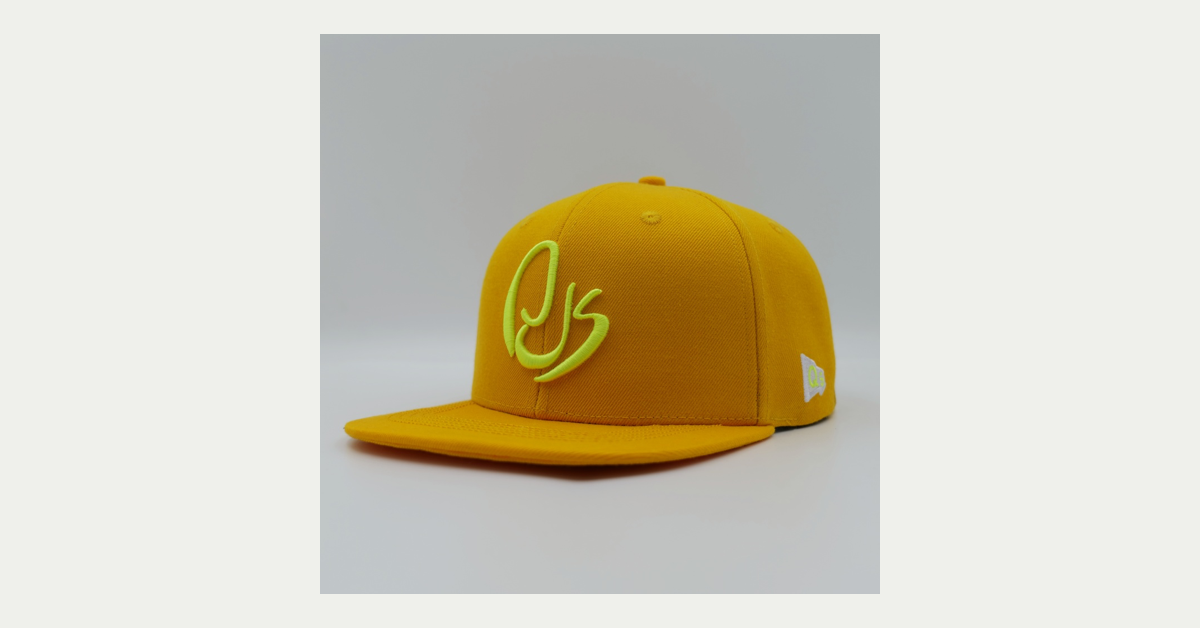


The phrase factory direct custom hats sounds reassuring, but it does not explain who makes the pattern, who runs the embroidery, or who answers when bulk production drifts from the sample. A buyer gets value from a direct relationship only when decisions move cleanly between the brand and the people controlling production.

This is an audit for buyers who have already found a supplier and need to work out what “direct” means in practice. It starts with evidence, not with the price at the bottom of a quotation.
Begin With a One-Minute Ownership Map
Ask who owns six decisions: pattern, material purchase, decoration, sewing, inspection and export paperwork. A factory may subcontract a specialist wash or patch process and still manage the order well. The important point is visibility. You should know which steps happen under one roof, which leave the building, and who remains accountable.
| Order decision | Evidence to request | Why buyers miss it |
|---|---|---|
| Pattern and fit | Pattern reference, measurement chart and sample ID | A familiar silhouette is mistaken for a controlled block |
| Material | Fabric code, composition, color reference and lot plan | A swatch is approved without a bulk identity |
| Decoration | Actual-size sample and process owner | Artwork approval is treated as production approval |
| Inspection | Defect list, sampling plan and signed report | A generic QC claim replaces product-specific checks |
| Shipping | Carton plan, incoterm and document owner | Freight is discussed only after production |
A Factory Tour Should Answer Production Questions
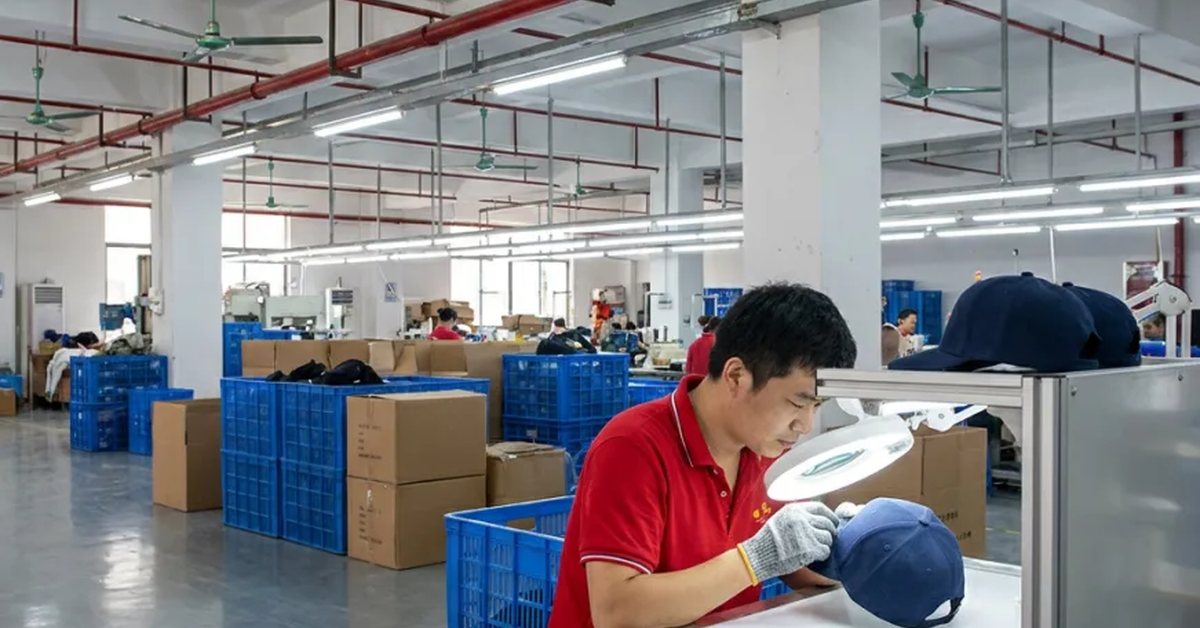
Whether the tour is physical or on video, follow one cap rather than watching a highlight reel. Start at material receiving. Move through cutting, decoration, sewing, shaping, inspection and packing. Pause where work queues form. Look for version-controlled documents at the workstation, not just machines in the room.
QSHeadwear publicly describes a Dongguan facility of more than 4,000 square meters, a team of more than 100 people and monthly output of roughly 120,000 to 150,000 pieces. Those figures provide context, but your order still needs its own capacity slot and production calendar.
Run the Quote Backwards
A low unit price can be real, or it can be incomplete. Read the quotation from the packed carton backwards: export carton, individual packing, labels, finishing, sewing, decoration, fabric, trims, testing, sampling and development. Mark every item as included, excluded or pending. This turns a price into a scope.
| Quote line | Useful question | Cost risk |
|---|---|---|
| Sample | Is one revision included? | Repeated rounds create unplanned fees |
| Logo | Which file, size, colors and technique are priced? | Bulk uses a cheaper interpretation |
| Packing | Is the quote for flat bags, supports or retail packs? | The approved shape is lost in transit |
| Inspection | Who pays for reinspection after a failed lot? | The buyer absorbs correction costs |
| Freight | Which incoterm and destination are assumed? | A cheap ex-factory price hides landed cost |
Factory Direct Custom Hats Still Need a Written Sample Gate
Direct access does not remove the need for a pre-production reference. Give each physical sample an ID. Record measurements, fabric, color, logo file, thread or print references, labels and packing. Sign off what is final and list what remains temporary. A photograph can support that record, but it cannot replace touch, fit or measurement.
Use a Communication Test Before a Production Test
Send one deliberately compact brief and see what comes back. A strong response separates confirmed details from open questions. It notices conflicts, such as a lightweight unstructured crown paired with a heavy patch. It does not simply reply “yes” to every line.
Useful signal: the supplier returns a decision list with owners and dates. Weak signal: the discussion stays in an unsearchable message thread with several file versions.
Translate AQL Into Defects a Cap Buyer Can See
ISO 2859-1:2026 defines AQL-indexed sampling schemes for lot-by-lot inspection. It does not decide what a critical, major or minor cap defect is. The buyer and supplier must define that list: wrong branding, broken closure, unsafe sharp point, severe shade mismatch, crooked decoration, open seam, measurement failure or poor packing.
QSHeadwear states that its process includes incoming checks, pre-production confirmation, in-line inspection and final AQL 2.5 inspection. Add the defects and tolerances that matter to your product rather than treating “AQL 2.5” as a complete quality plan.
Watch the Handoffs, Because Handoffs Create Drift
Cap production is a chain of small transformations. The embroidered front panel must return to the correct sewing bundle. Washed components must remain shade-compatible. Labels must match the destination. A useful factory file connects bundle numbers, artwork versions and inspection records so a problem can be traced without guessing.
Ask What Happens When Something Fails
Do not ask only how quality is controlled. Ask for the correction path. Who stops a line? Who approves rework? What happens to rejected pieces? When is the buyer told? The answer reveals more than a wall of certificates because it describes behavior under pressure.
Use a Pilot Order to Test the Relationship
A pilot should be commercially real but narrow enough to study. Limit the number of materials, colors and decoration routes. Keep one feature that matters to the future range, such as a difficult placement or private label pack. The objective is not to remove all risk; it is to learn how the factory handles the exact kind of risk your program will repeat.
Write down what the pilot must prove before placing it: communication speed, sample accuracy, bulk consistency, carton organization or delivery documentation. When the order closes, score those items separately. A single overall feeling such as “the order went well” is not useful for the next sourcing decision.
Put Commercial Dates Beside Production Dates
The production calendar should include the buyer's approval dates, not only the factory's work. Late artwork, slow color approval or a last-minute packaging change can consume the same buffer as a sewing delay. Build one shared timeline from final brief to warehouse-ready stock. Mark the last safe date for changes and the consequence of missing it.
For factory direct custom hats, this shared calendar is part of the value: there is less distance between a brand decision and the people planning material and labor. That advantage disappears when decisions remain informal.
Red Flags Are Often Small and Repeated
One slow reply is not a sourcing diagnosis. A pattern of missing file names, unexplained substitutions, changing bank details, vague production photos or dates that move without a cause deserves attention. Ask for clarification in writing and see whether the supplier can restore a clear record.
Conversely, a factory that challenges an impossible tolerance or asks to reapprove a changed material is not necessarily being difficult. Good production communication sometimes slows an order for the right reason.
Decide Whether Direct Sourcing Fits Your Team
A brand with a clear tech pack, an experienced product manager and predictable volume may benefit from direct access. A first-time buyer with an unfinished concept may need more development support, even if that support costs more. “Direct” is not automatically right for every order.
- Choose direct production when you can make timely approvals and maintain a product file.
- Choose a more managed service when you need assortment planning, local consolidation or extensive development.
- Use a hybrid model when specialist materials or processes require external expertise.
Keep the Reorder From Becoming a New Order
Retain the approved sample, pattern version, measurement chart, material and color references, decoration program, labels, packing method and inspection photos. Then list which inputs may change at reorder. A factory relationship becomes valuable when it preserves decisions, not merely when it removes an intermediary.
Open the Factory Conversation With QSHeadwear
Review QSHeadwear factory information, browse headwear product options and study the OEM/ODM workflow. Send a tech pack, reference sample, target quantity and delivery location through the contact page to discuss factory direct custom hats with a defined scope.
Questions Buyers Ask Before Going Factory Direct
Does factory direct always mean a lower price?
No. It can remove some intermediary cost, but development, testing, packaging, quality and freight still have to be funded.
Can a factory subcontract part of an order?
Yes. Ask which process is subcontracted, why it is used, how the work is approved and who remains accountable.
What should I verify on a factory tour?
Follow the actual production flow, check document control and ask where your style would be made and inspected.
Is a photo sample enough for approval?
Not when fit, hand, measurement, structure or color matters. Use a physical sample and a written approval record.
What belongs in a complete quotation?
Specify product, material, decoration, trims, labels, packing, sample scope, inspection, incoterm and validity.
What does AQL 2.5 tell me?
It is an acceptance quality limit used with a sampling plan. You still need defined defects and inspection conditions.
How can I protect artwork versions?
Use one named owner, dated files, a revision log and the approved version in the purchase order.
What should happen after a failed inspection?
The supplier should contain affected stock, identify cause, propose correction, re-inspect and document the outcome.
Is direct sourcing suitable for a first order?
It can be, provided the supplier offers development support and the buyer can make clear, timely decisions.
What should be saved for reorders?
Keep the sample, pattern, measurements, material, color, logo program, trims, labels, packing and inspection evidence.