

Hat manufacturer China is a search phrase that hides at least five different supply bases. A factory in the Pearl River Delta and a factory in inland Shandong can both call themselves a Chinese headwear manufacturer and still differ in sampling speed, decoration range, minimum order quantity and how easily your shipment reaches a port. Buyers who treat the country as one option usually end up comparing quotes that were never comparable in the first place.
This map is written for brand owners, sourcing managers, promotional distributors and e-commerce sellers buying headwear from outside China, typically between 500 and 100,000 pieces a year. It covers what each cluster is known for, what travels well from it, and the two short calls that filter a longlist faster than an audit does.
What the phrase hat manufacturer China leaves out
Headwear manufacturing sits inside a wider textile and apparel system, and that system is regional. Each cluster grew around a specific product type, a specific set of supporting trades and a specific port. A cluster that is superb at knit accessories may be unremarkable at structured caps with heavy 3D embroidery, and a cluster that excels at sportswear may not carry the trims a streetwear label wants.
So ask a prospective supplier which part of the chain they own and which part they buy in. A factory that cuts, sews and decorates under one roof carries one schedule. A trading office that buys the crown elsewhere carries two, and only one of them shows up in the quotation.
The five clusters a headwear buyer will actually meet
A search for hat manufacturer China returns five supply bases far more often than any others. Each is good at something specific, and each carries a trade-off, which the table pairs together.
| Cluster | Known for | Usually suits | The trade-off |
|---|---|---|---|
| Pearl River Delta (Guangdong) | Compressed supply chains, fast sampling, deep decoration capacity | Structured caps, flat brim and snapback programs, premium embroidery | Higher labor and energy cost than inland regions |
| Zhejiang | Breadth of accessories, trims and small-format knit goods | Beanies, simple caps, promotional volume, trim-heavy ranges | Cap structures are less specialized than in Guangdong |
| Fujian | Sportswear muscle, knit textiles, performance materials | Sport and outdoor caps, performance mesh, knit headwear | Fashion-forward shapes move more slowly |
| Jiangsu and Shanghai | Better engineering discipline, fabric sourcing, port access | Technical headwear, fabric-led programs, mixed apparel ranges | Higher minimums at specialist mills and finishers |
| Shandong and inland provinces | Cost, capacity and long production runs | Promotional volume, basic silhouettes, private label basics | Longer sample rounds and fewer decoration options in-house |
Guangdong: dense supply chains and the fastest sample turnaround
Guangdong, and specifically the Dongguan and Guangzhou belt, is where a large share of the world's structured caps come from. The advantage is not one factory but the neighborhood around it. Pattern makers, embroidery houses, brim board suppliers, eyelet and closure vendors and printing shops sit within a short drive of each other. Ask for a different brim board here and you can have an answer the same afternoon, which is roughly what a sample round looks like when nothing has to travel between provinces.
The trade-off is cost. Labor and energy are higher than inland regions, so a Guangdong quotation on a very simple promotional cap may look high next to an inland one. Where Guangdong usually wins back the difference is on anything requiring decoration depth, unusual structures or repeated sample revisions. Dongguan Qisheng Cap & Bag Co., Ltd., the company behind QSHeadwear, is one of these Guangdong factories, with 15 years focused on custom cap production.
Zhejiang: breadth, trims and small-format accessories
Zhejiang has a reputation for range rather than for any single silhouette. Yiwu's component market and Ningbo's port give a buyer access to closures, labels, patches, packaging and knit accessories from many suppliers, which makes it a natural home for promotional programs and for ranges built from many small items rather than one hero style.
One question matters more than the rest here: is the cap body made in-house or bought in? If the crown arrives from somewhere else and only the decoration happens locally, your delivery date depends on two schedules. Write that into your risk notes, because it will not appear anywhere in the quotation.
Fujian: sportswear muscle and knit textiles
Fujian, around Jinjiang in particular, grew up alongside sportswear manufacturing, and it shows in the materials on offer: performance knits, moisture-management fabrics, mesh and elastic trims. For running, cycling, training and outdoor programs this is often the most natural home, and knit headwear sits comfortably beside woven caps in the same building.
The limitation is fashion velocity. If your range depends on fast-moving streetwear shapes and surprise drops, a sportswear-oriented factory may be slower to interpret the brief and less willing to run small experimental quantities.
Jiangsu, Shandong and the inland trade-off
Jiangsu and Shanghai bring engineering discipline, strong fabric sourcing and excellent port access, which suits technical headwear and mixed apparel ranges. Shandong and the inland provinces bring cost and capacity, which suits long runs of straightforward silhouettes and private label basics.
Inland sourcing is not a downgrade, but it changes the calendar. Sample rounds are often longer, decoration may be subcontracted, and inland transport to a port adds a leg that has to be planned rather than discovered. If your program is simple and your volumes are stable, that trade can be very good value. If your range changes every season, it usually is not.
What travels well from a Chinese headwear factory
Once the cluster question is settled, the same four variables decide whether the order is comfortable. They interact, so improving one usually costs something on another.
| Variable | What good looks like | How to test it before ordering |
|---|---|---|
| Sampling speed | A measured sample in about 3 to 5 business days, with revisions tracked | Send one brief with a change request and time the response |
| Decoration range | Flat, 3D puff, patch, print and transfer available or coordinated in-house | Request a sew-out on the actual shell, not a paper proof |
| Minimum order quantity | The binding minimum named out loud: fabric, color, decoration or packaging | Ask which requirement sets your minimum and what lowers it |
| Lead time | A stated bulk window plus a stated rule for large quantities | Compare the quote to the published capacity and the season you are in |
| Export handling | Documented terms, carton marks and a named contact for documents | Ask who prepares the packing list and who books the freight |
Export terms: who owns the risk between factory and door
EXW puts almost everything on you from the factory gate. FOB moves responsibility to the port of loading, which is why it remains the most common headwear term. DDP moves the whole journey to the supplier and is convenient but hides the duty and freight inside a single number. Each term changes who books, who insures and who answers when a carton is delayed.
Pick the term that matches the team you actually have. A brand without a freight forwarder should not be buying EXW, and a buyer with a long-standing forwarder may not need DDP at all. Whichever you choose, write it into the purchase order with an incoterm, a port and a named delivery point rather than as a general note.
Two calls that filter a supplier faster than an audit
Searches for hat manufacturer China return listings that look identical from the outside, so two short conversations will teach you more than a stack of brochures. The first call is about capability, and it holds five questions: how much of production is headwear, how many embroidery heads are on the floor, how many people work in sampling, what the monthly capacity is, and which steps get subcontracted. Owning everything is not automatically better. Knowing which one you are talking to is what keeps week eight calm.
The second call is about evidence. Ask for a recent inspection report from an order similar to yours, the name of a customer reference in your category, a photo of a packed carton with the marks in place, and a written answer for what happens when a bulk order fails inspection. Vague answers here are more informative than polished answers anywhere else.
The proof pack to request before you place a purchase order
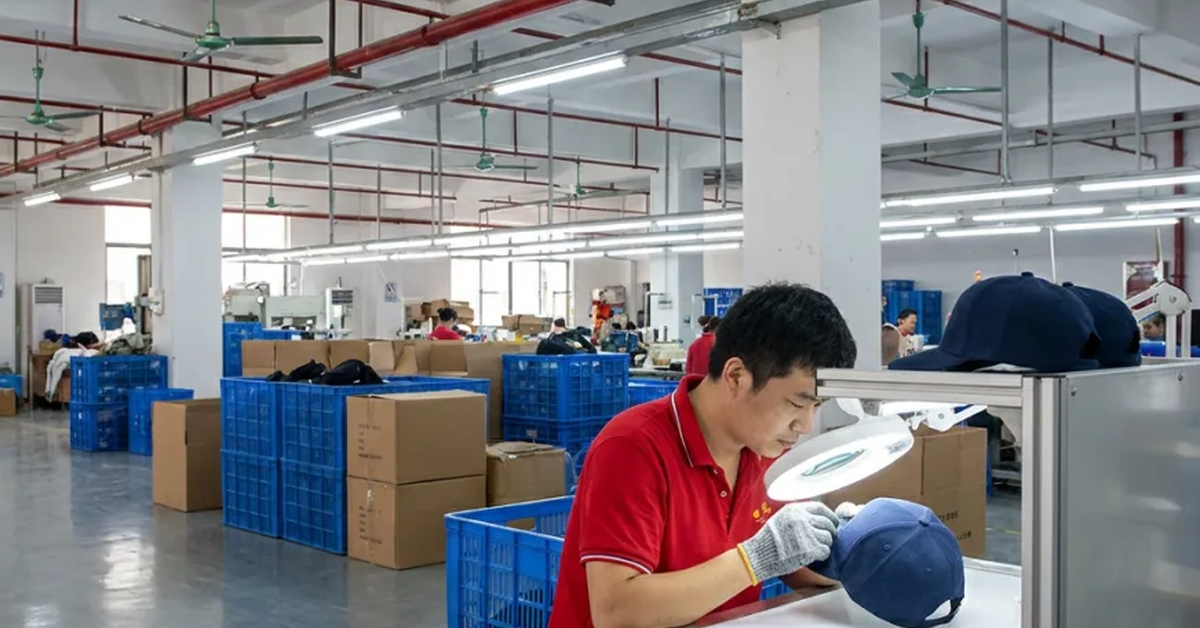
Send every candidate on your hat manufacturer China shortlist the same six requests, then compare like for like: the business license so you can see the legal entity, photographs of the workshop and the decoration floor, sampling and production lead times in writing, the inspection sequence including where defects get caught, the packing specification with carton dimensions and units per carton, and two named contacts, one for documents and one for production. That last request is the one buyers skip, and it is usually the one that matters first, because documents and production are almost never handled by the same person.
None of this replaces an audit for a large program, but it separates a real factory from a trading office quickly, and it costs two emails.
Compliance, labeling and duty for the destination market
Headwear is a low-risk category in most markets, which is exactly why it gets under-planned. Textile fiber labeling applies to caps and beanies in the European Union, and US importers should expect to declare the correct tariff classification for the material and construction. Classification errors get resolved with money. Fiber labeling errors get resolved by relabeling, which is worse, and by then the goods are already in a warehouse.
Two references worth keeping open: the US Commercial Service guide to China import tariffs for the buyer-side view of duties, and the World Customs Organization for how tariff classification systems are structured. Neither tells you what your specific cap will cost to import, but both explain why the question has to be asked before the goods ship.
Freight, port and duty basics for headwear
Headwear is light and bulky, so ocean freight is normally charged on volume and air freight is normally the last resort. Mixed cartons keep the receiving process simple but push the freight cost per unit up, because the carton volume is set by the largest item in it. Consolidating several styles into one shipment is usually cheaper than shipping them separately, provided the quantities arrive at the same time.
Build a habit of asking every hat manufacturer China candidate for packed carton dimensions and units per carton with each quotation. Buyers who compare only the unit price regularly discover that the more expensive cap per piece is the cheaper one landed.
A shortlist scorecard you can reuse
Score each hat manufacturer China finalist out of five on the lines below, then weight the lines for your own program. A promotional buyer should weight price and capacity; a brand adding a streetwear line should weight sampling and decoration.
| Criteria | What a five looks like | What a two looks like |
|---|---|---|
| Headwear focus | Caps and knit headwear are the core business | Headwear is one line in a general accessories catalog |
| Sampling | Dedicated sampling team and a stated turnaround | Samples sent to an outside workshop with no owner |
| Decoration | Flat, 3D puff, patch and print run in the same building | Every decoration outsourced separately |
| Quality system | Written inspection sequence with in-line and final checks | Final visual check only |
| Communication | Named contacts, replies within one business day | Answers arrive without an owner or a date |
| Logistics | Packing spec, carton marks and documents handled routinely | Documents produced only when pushed |
How QSHeadwear fits into this map
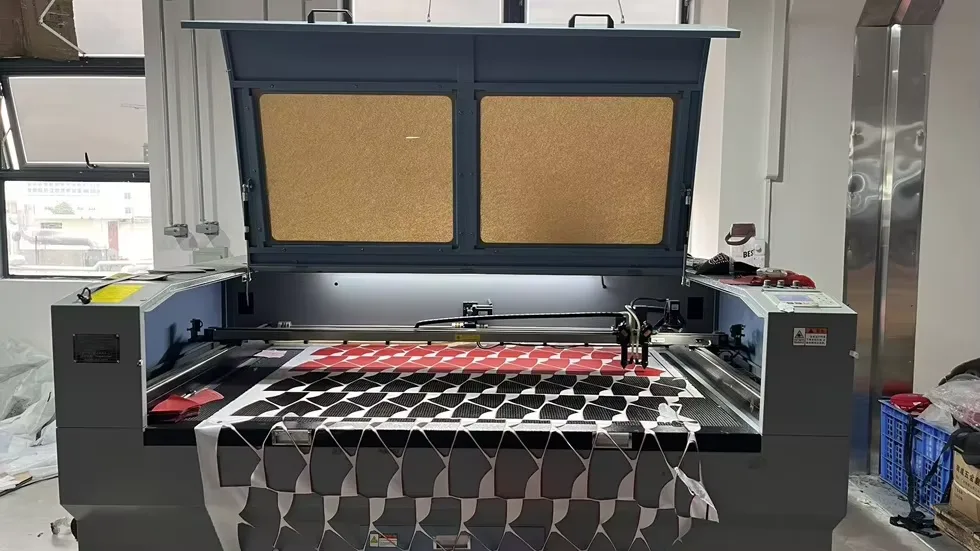
QSHeadwear is the brand of Dongguan Qisheng Cap & Bag Co., Ltd., a Guangdong headwear manufacturer serving overseas brands, retailers and distributors, and the kind of hat manufacturer China buyers shortlist when decoration depth and sampling speed matter more than the lowest quotation. The published profile lists 15 years of custom cap production, 100+ staff across sampling, embroidery, sewing and quality control, a workshop above 4,000 square metres, and 30+ embroidery machines handling flat, high-density 3D and patch decoration, with monthly capacity of 120,000 to 150,000 pieces.
The workflow is intentionally bounded so buyers can plan around it: sample development in roughly 3 to 5 business days, a bulk window of about 15 to 20 days that extends to 25 to 30 days above 5,000 pieces, materials inspected before cutting, a pre-production sample approved before the line starts, in-line monitoring, and a final AQL inspection before shipment. Development can begin from a tech pack, an AI or PDF artwork file, or a physical sample, under either an OEM or an ODM model, and goods can move by DHL, FedEx, UPS, air, sea, port delivery, or DDP into Europe and North America.
Continue with the cross-border production handoff, the manufacturer selection scorecard, the buyer due diligence checklist, and the factory-direct audit notes.
Next step: turn the map into a shortlist
Write your program on one page, name the cluster that fits it, send the same brief to three candidates, and hold two calls with each. Then use the scorecard and the proof pack to cut the list to one and a backup.
Use the QSHeadwear contact page to start that conversation, review the OEM and ODM services if your product needs development work, and browse the product center to compare silhouettes. Choosing a hat manufacturer China buyers can work with for years is a filtering exercise, not a search for the cheapest quotation.
Working with a hat manufacturer in China: common buyer questions
Which region of China is best for custom caps?
The Pearl River Delta around Dongguan and Guangzhou is the usual answer for structured caps and deep decoration, while Zhejiang suits accessories and promotional volume and Fujian suits sport and knit headwear. Fit the cluster to the product.
How do I verify that a supplier is a real factory?
Ask for the legal entity on the business license, photographs or video of the workshop and decoration floor, a recent inspection report, and two named contacts, one for documents and one for production.
What is a normal sample lead time in China?
Around 3 to 5 business days for a well-briefed cap program, longer when a yarn or fabric has to be sourced. Ask what the number excludes before you plan around it.
What is a typical bulk production lead time?
Roughly 15 to 20 days for standard quantities, extending to about 25 to 30 days above 5,000 pieces. Season, decoration complexity and packing all move that number.
Should I buy FOB or DDP?
FOB if you have a forwarder and want visibility on freight and duty. DDP if you want one landed number and do not mind the cost being folded in. Match the term to the team you have.
Why is ocean freight charged on volume for caps?
Headwear is light relative to the space it occupies, so carriers charge volumetric weight. Mixed cartons and large pack presentations raise that volume even when the scale weight barely changes.
Does a Chinese factory handle EU and US labeling?
A factory can print and attach the labels you specify, but the wording is your responsibility as the seller of record. Settle fiber composition and care text before the labels are ordered.
How do I avoid misclassifying caps for import duty?
Describe the material, construction and intended use accurately, and confirm the classification with your customs broker. The World Customs Organization explains how the classification system is organized.
What should I do if the bulk order fails inspection?
The answer should be written before the order, not after. Ask what the remedy is, who pays for rework, and what the deadline is, then put that answer in the purchase order.
How many suppliers should I keep?
Two. One primary and one qualified backup that has already seen your specification. Dual sourcing costs a little attention and protects a season.