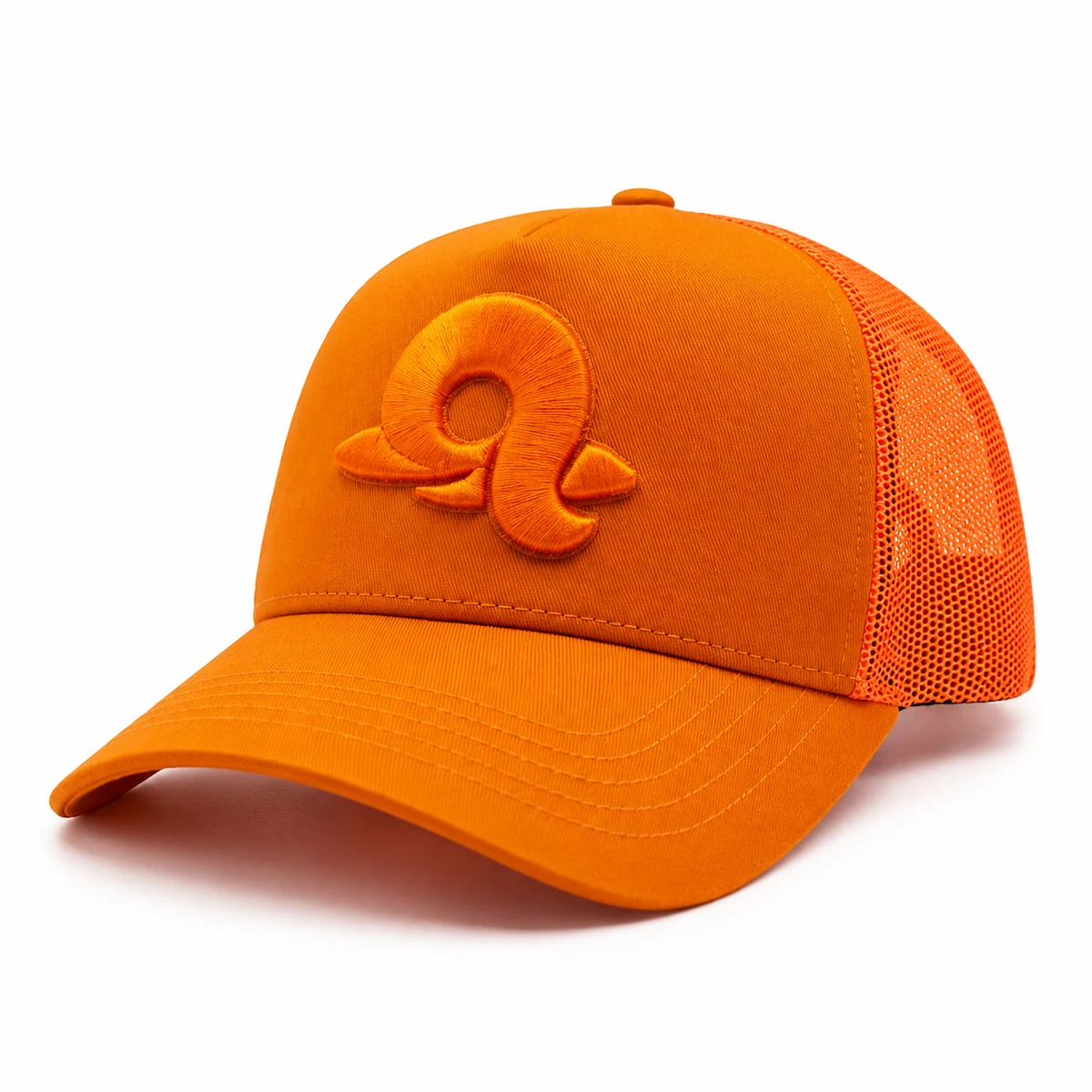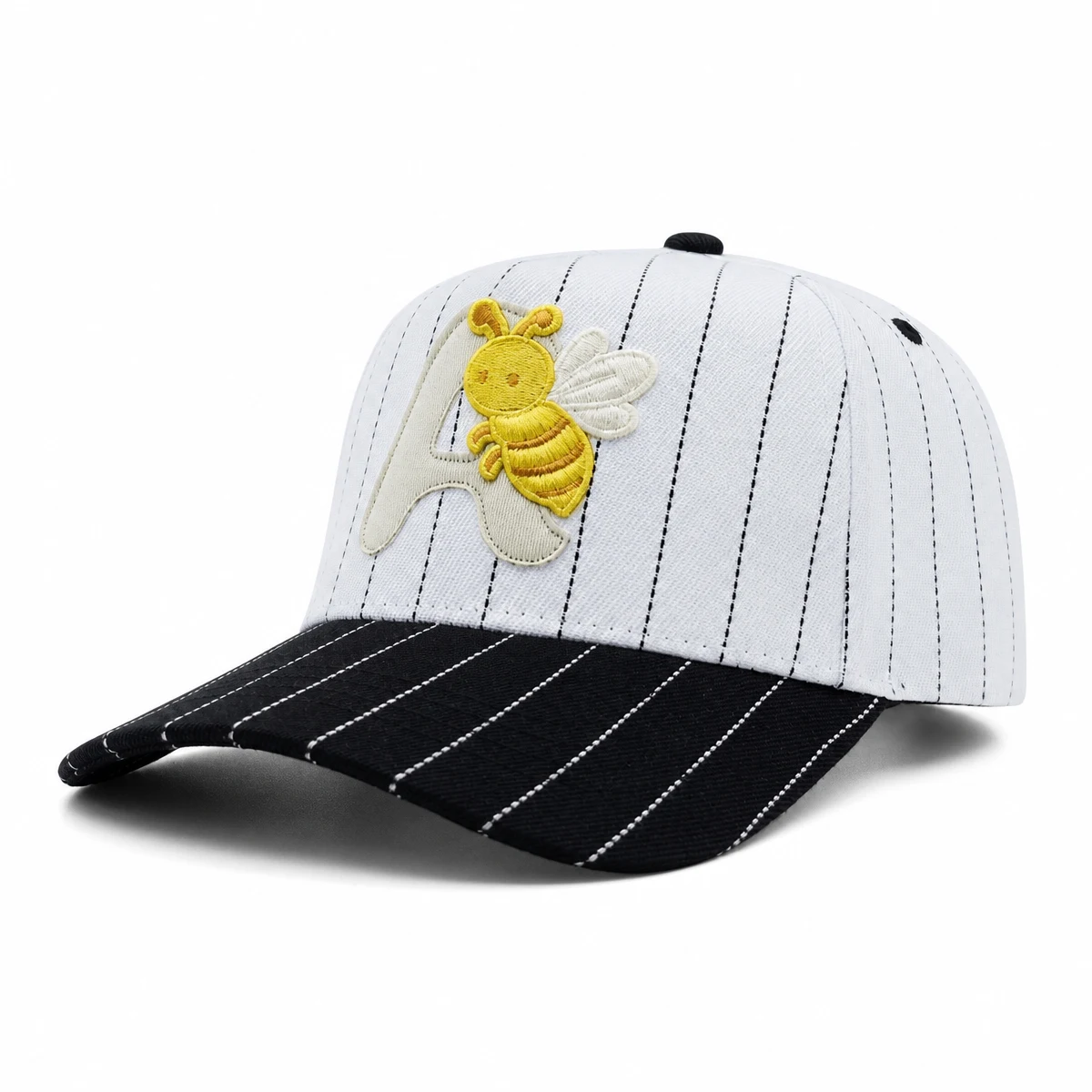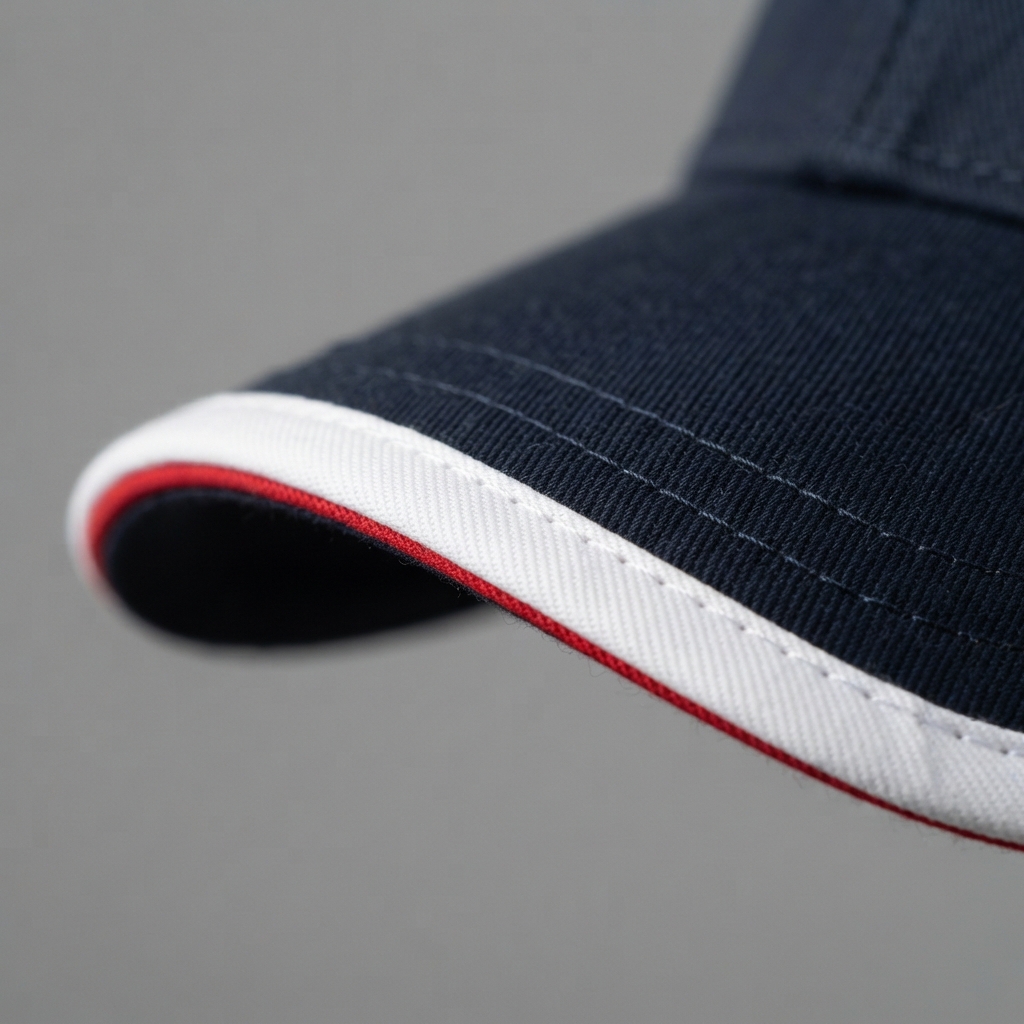


A cap with a tag in it is no longer only a cap. The moment a brand commits to RFID or NFC, the hat gains a second bill of materials — inlay, encapsulation, encoding step and a data record for every unit — plus failure modes measured in read performance rather than stitch quality. That is why tagged programs fail in ways no stitching inspection catches: the cap looks perfect and the reader at the distribution centre still misses it.
This guide covers the physical and commercial decisions behind that layer of identity. It assumes the printed label work is already understood; if you still need the number on the hangtag, the companion guide to printed GTIN label and hangtag data covers symbology and print quality, and if the driver is European regulation, start with EU Digital Product Passport preparation. What follows sits between them: an electronic identity that has to survive inside a sewn, embroidered, stacked and shipped hat.
Decide What the Tag Must Do Before Choosing It
Buyers usually arrive with a technology already chosen, because a retailer or a consultant named it. The useful starting point is the job. Four jobs pull headwear into tagging, and each sets different physical requirements.
Four jobs that pull headwear into tagging
- Inventory accuracy. A store counts a rail or carton in one sweep, without line of sight. Coverage and stacking depth matter more than any single read.
- Item-level traceability. The brand wants to know which unit came off which line, in which batch, from which material lot.
- Consumer authentication or content. A shopper taps a phone against the product to reach a warranty page or resale check. Range is deliberately short.
- Returns control. The brand confirms a returned unit is the one it sold, which pushes toward a unique identifier.
Only the second and fourth jobs need a unique identifier per hat. The first is often satisfied by a non-unique tag, and the third by a printed code. Skipping it is how brands overpay for capability they never use.
Why a tag test is not a tagged-item test
An inlay datasheet describes a tag lying flat in free air. A cap is a curved, multi-layer assembly with stitching, interfacing, sometimes metal, shipped under compression beside dozens of similar objects. GS1 addresses this directly: its Tagged-Item Performance Protocol (TIPP) verifies a tagged item rather than a tag alone. If your factory quotes read performance from an inlay datasheet, that number does not describe your hat.
Choose the Carrier: RAIN RFID, HF/NFC or a Printed Code
Two radio families and one optical family cover almost every headwear program. The decision turns on read distance, how many units must be read at once, and whether a person or a machine does the reading.
What the GS1 standards actually cover
GS1's EPC/RFID standards define the Electronic Product Code as a syntax for unique identifiers assigned to physical objects, unit loads and locations, with the EPC Tag Data Standard specifying the data format and the encodings for GS1 keys inside a tag. GS1 is explicit that its standards focus on UHF and HF passive tags, and that the most broadly implemented family in its industries is UHF passive — RAIN RFID — because unique EPCs encoded on individual RAIN tags can be captured at very high rates and at distances well in excess of 10 metres, without line of sight.
RAIN UHF counts many items quickly from a distance; high-frequency devices, including NFC, are built for deliberate close interaction, which the NFC Forum describes as devices a few centimetres apart. Neither is better; they answer different questions.
A range-based comparison for headwear programs
| Carrier | Reading behaviour | Fits a cap when | Main risk |
|---|---|---|---|
| RAIN RFID (UHF passive) | Bulk capture without line of sight, at metres | Retail or warehouse counting of units, cartons and pallets | Detuning and shadowing in dense stacks and near metal |
| HF / NFC | Deliberate tap at close range, one item at a time | Consumer authentication, warranty or resale check | Staff or shoppers must find the tap point |
| Printed 2D code | Optical, line of sight, one item at a time | Content access where tag cost is not justified | Wears, creases or hides inside a folded product |
Mixed programs are normal: a RAIN tag for the retailer, a printed code on the hangtag, one identifier linking both. Ownership must not be mixed — two carriers pointing at unrelated records becomes a reconciliation problem that grows with every order.
Where a Tag Can Live Inside a Cap
Placement is the decision most often made last and mattering most. A six-panel cap offers four credible locations, each with a different trade-off between read performance, comfort, concealment and rework. The sample below is a structured six-panel snapback of the type used for such a trial: buckram-lined crown, bound eyelets, plastic snap closure.

Crown lining and under-brim
The crown lining sits behind the front panels, making it the most concealable location and the easiest to keep clear of outer decoration. The cost is proximity to the head and to the buckram that stiffens the front. A tag under the brim is shielded from the head but sits close to the brim core, and on laminated or thick brims that sandwich is exactly where reads get lost.
Sweatband tunnel
A tunnel sewn into the sweatband keeps the tag flat, centred and consistent from unit to unit — the property that makes bulk reads predictable. It also puts the transponder against a moisture-absorbing band that is worn, cleaned and compressed. For consumer tap access this is usually the natural tap point, and the natural comfort complaint if the inlay is thick or sewn with a hard edge.
Rear closure and woven label pocket
The rear closure area is easy to reach and easy to encode late, which suits small runs and sampling. It is also the area most crowded with adjustment hardware: on a snapback the snap body and the eyelets holding the strap sit within centimetres of the tag. A woven label pocket placed slightly off-centre often beats dead centre behind the closure.
Carton and polybag level instead of the product
Not every program needs a tag in the hat. If the requirement is receiving accuracy rather than item identity, tagging the polybag or inner carton delivers most of the operational benefit with none of the comfort risk and a fraction of the cost. The trade-off is that the tag leaves with the packaging, so nothing remains on the product for returns or resale.
The Headwear Interference Map
Three physical conditions reliably degrade radio performance in a cap. None appear on a tech pack unless someone writes them down.
Metal: eyelets, snaps, buckles and foil
Bound metal eyelets, snap prongs, brass buckles on self-fabric straps, the rivet at the crown apex and metallic foil all interact with the field around a tag. The same hardware carries a separate compliance burden, covered in the guide to nickel release limits for metal trims, so hardware changed for radio reasons should be checked against that file too. The rule is distance and orientation: keep the inlay as far from metal as the design allows, and never let a tag sit directly behind a metal component on the reader's likely approach.
Density: 3D embroidery, patches and fused buckram
Dense 3D embroidery, layered patches, silicone badges and fused buckram add mass between tag and reader. They rarely stop a read outright, but they move where the read works — which is why a tag approved on a blank cap can underperform on the decorated version. Test the decorated article, not the blank.
Moisture, washing and stacking pressure
Encapsulation is what makes an inlay survive a garment: sweat, rain, cleaning and carton compression all stress the bond between inlay and carrier. Ask what the tag is encapsulated in and how it is attached — sewn into a tunnel, laminated to a label, bonded under a patch — because the attachment method, not the chip, decides survival in the field.
Design a Read Test That Mirrors the Packing Line
A test on one cap proves little about a carton of forty-eight. Build it around the configuration the retailer will face.
Write the test configuration down
TIPP is structured for exactly this discipline: a testing methodology document, a test configuration document and grade definitions, so a performance requirement can be referenced across the chain and verified independently by the end user, the supplier or a third party. You need not adopt the full grading programme to borrow the habit. You do need to record what was tested.
- Which configuration: single unit, polybag, inner carton, export carton, pallet.
- Which reader: handheld, fixed portal, or the retailer's own equipment.
- Which article: blank, decorated, or production version with all trims.
- How many units and how many attempts, so the result is a rate rather than an anecdote.
What to record per configuration
Record the article reference, the exact tag part and encapsulation, the placement and its distance from metal, the pack configuration and the observed result. Then repeat after the first bulk run and compare. A configuration that reads acceptably at sample stage and drifts after bulk is usually a placement or attachment change made on the line, and the record is what finds it in an hour instead of a week.
Encoding, Serial Numbers and Data Ownership
The physical tag is half the program. The other half is the data written to it and who controls it.
What the serial should identify
Decide whether the identifier represents a trade item, a batch, or one physical unit. Item-level identity enables returns verification and resale checks, and it makes the serial range a governed asset: unique, never reused, traceable to the order that produced it. With several carriers, they must resolve to the same record rather than parallel spreadsheets — the discipline described in the guide to one product record for the SKU.
Files the factory should hand over
- The encoded data file or serial range allocated to your order, with the allocation record.
- The tag specification: part reference, encapsulation, attachment method, placement drawing.
- The test record for the approved configuration, including the article tested.
- The commissioning record: units encoded, failures, and what happened to rejects.
Ask at sample approval, not after the container sails. A serial range nobody documented is a range that will eventually collide with someone else's.
Commercial Lines: Cost, MOQ and Lead Time
Where the money actually goes
The inlay is rarely the largest line. Encoding labour, attachment, the extra quality check, reject rate and data administration usually cost more than the tag itself, and they scale differently: the tag scales with units, while data work scales with variants and orders. A colourway added late is paid for twice — once in new records, once in rework.
Sample stage versus bulk stage
Settle the tag decision at sample stage, when placement can still move a seam and a tunnel can still be added. Sampling follows the factory's standard three to five working days after artwork confirmation, long enough to test tagged and untagged versions side by side; bulk lead time then depends on quantity, materials and the added attachment step. A tag introduced after the bulk order is placed usually lands in the cheapest location, which is rarely the best performing one.
Approval Checklist for Tagged Headwear
- The job is written down, and the carrier was chosen against it.
- The placement is drawn on the tech pack, with distance from metal noted.
- The test ran on the decorated production article, in the retail pack configuration.
- The serial scheme, allocation record and data owner are named before encoding.
- The handover file list is agreed and the rejects process is defined.
- Compliance evidence is aligned with the tag data, using the same approach as retail vendor compliance evidence.
Frequently Asked Questions
Can any cap be tagged?
Almost any cap can carry a tag somewhere. The question is whether it performs in the buyer's configuration. Heavy metal hardware and dense decoration narrow the options; a sweatband tunnel or a packaging-level tag usually restores a workable path.
Should the tag go in the hat or on the packaging?
For receiving accuracy, packaging-level tagging is cheaper and safer. For item-level identity in returns, resale or traceability, the tag has to stay with the product.
Will a metal eyelet stop the tag from reading?
Not usually on its own, but it changes the field around the tag and can create a dead angle from one direction. Treat metal as a placement constraint and test the angles that matter.
Conclusion
Tagged headwear is a design decision disguised as an IT decision. Choose the carrier from the job, place the tag where the hat lets it work, test the decorated article in the retail pack, and settle serial ownership before the first unit is encoded. The tag then becomes another specified component alongside the eyelet and the sweatband.
If you are planning a tagged program, send the target market, retailer requirement and intended article with your enquiry. Our team can review placement against the construction and quote the custom six-panel snapback, the adjustable snapback build, or any other style in our headwear product range with the attachment step included.