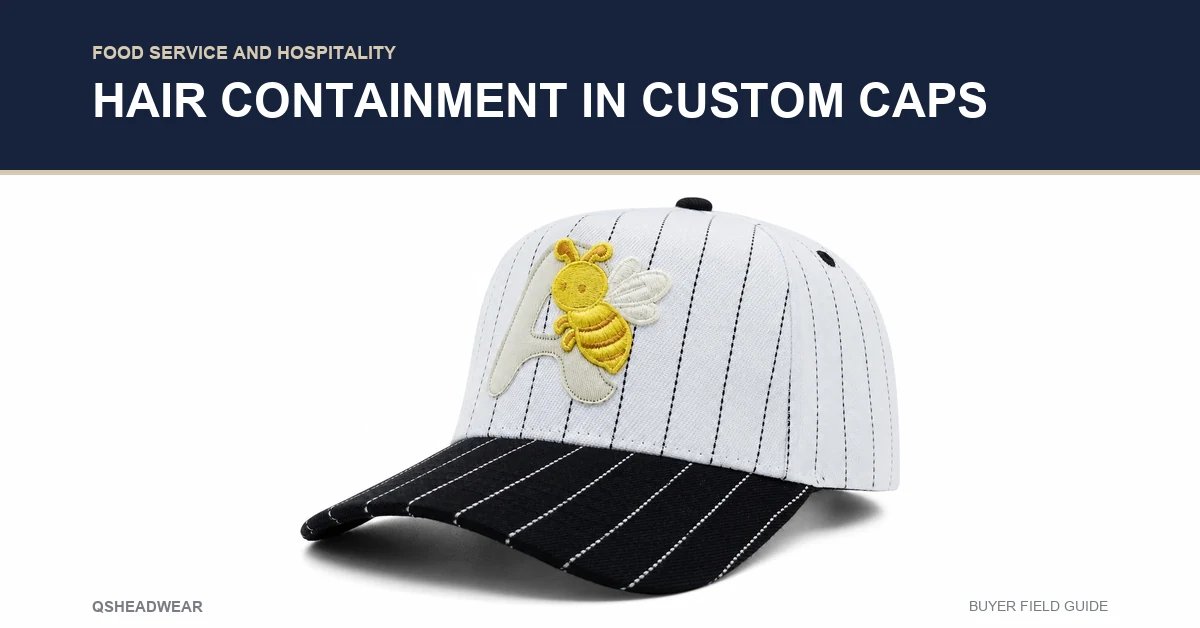


A cap that looks right on a uniform render can still fail the only test that matters in a food service operation: does it keep hair where it belongs for a full shift? Buyers usually find out late, when the caps are already in the store room with a mesh back and a wide snap opening.
What the Food Code Actually Asks a Cap to Do
The United States reference document is the FDA Food Code, a model offered for adoption by state, local, tribal and territorial jurisdictions rather than a federal statute applying everywhere on its own. The current edition is the 2022 Food Code, tenth edition, originally posted in December 2022 with the most recent version dated January 2023. Adoption is local, so operative text can differ, but the model is the language most auditors and corporate quality teams work from.
The sentence buyers quote, and the part they skip
Section 2-402.11, “Effectiveness”, is the provision that matters. It requires food employees to wear hair restraints “such as hats, hair coverings or nets, beard restraints, and clothing that covers body hair, that are designed and worn to effectively keep their hair from contacting exposed food; clean equipment, utensils, and linens; and unwrapped single-service and single-use articles.”
Two details decide the specification. Hats are one example in an open list, so the obligation attaches to the outcome of containment rather than to the purchase of an item. And “designed and worn” splits responsibility: a cap can be designed to contain and still fail because it is worn tipped back, worn over a loose bun, or issued in one size to a team with very different hair volumes.
Who the exemption covers, and who assumes it does
Paragraph (B) carves out food employees “such as counter staff who only serve beverages and wrapped or packaged foods, hostesses, and wait staff if they present a minimal risk” of contaminating exposed food, clean equipment, utensils and linens, and unwrapped single-service and single-use articles. The exemption is conditioned on minimal risk, which is an assessment rather than a job title, and the roles are examples rather than an exhaustive list.
A second provision is often missed because it sits outside the hair section. Section 2-304.11 requires food employees to wear clean outer clothing to prevent contamination. A cap is outer clothing, which is why laundry capacity and rotation stock belong in the same conversation as construction.
The European Duty Is Written Differently
Regulation (EC) No 852/2004 on the hygiene of foodstuffs sets general obligations in Annex II, Chapter VIII: every person working in a food-handling area maintains a high degree of personal cleanliness and wears “suitable, clean and, where necessary, protective clothing.” There is no named head covering in that provision. The duty sits at the level of suitable and clean protective clothing and is left to the operator’s hygiene management and to national or client standards layered on top.
What that means for a pan-regional programme
If the same cap ships to Chicago, Manchester and Rotterdam, write the specification to the tighter of the two regimes and evidence it once: named containment zone, closure type, panel construction inside that zone, and the wear conditions the cap was tested against. That file also answers vendor onboarding questions about which requirement a product satisfies and where the evidence sits. The split between evidence held at factory level and at material level trips up more programmes than the construction does, and it is worth settling early by reading how factory-level and material-level evidence differ in a headwear file.
Read Your Cap as a Containment Zone
The containment zone is the area that has to close around the head: front panels, side panels, the crown seam above them, and the back where the closure sits. Decoration, ventilation and closure choice are usually approved as separate line items; in a hygiene programme they are decisions inside one zone, and the weakest of them sets the performance.
The back closure is a designed opening
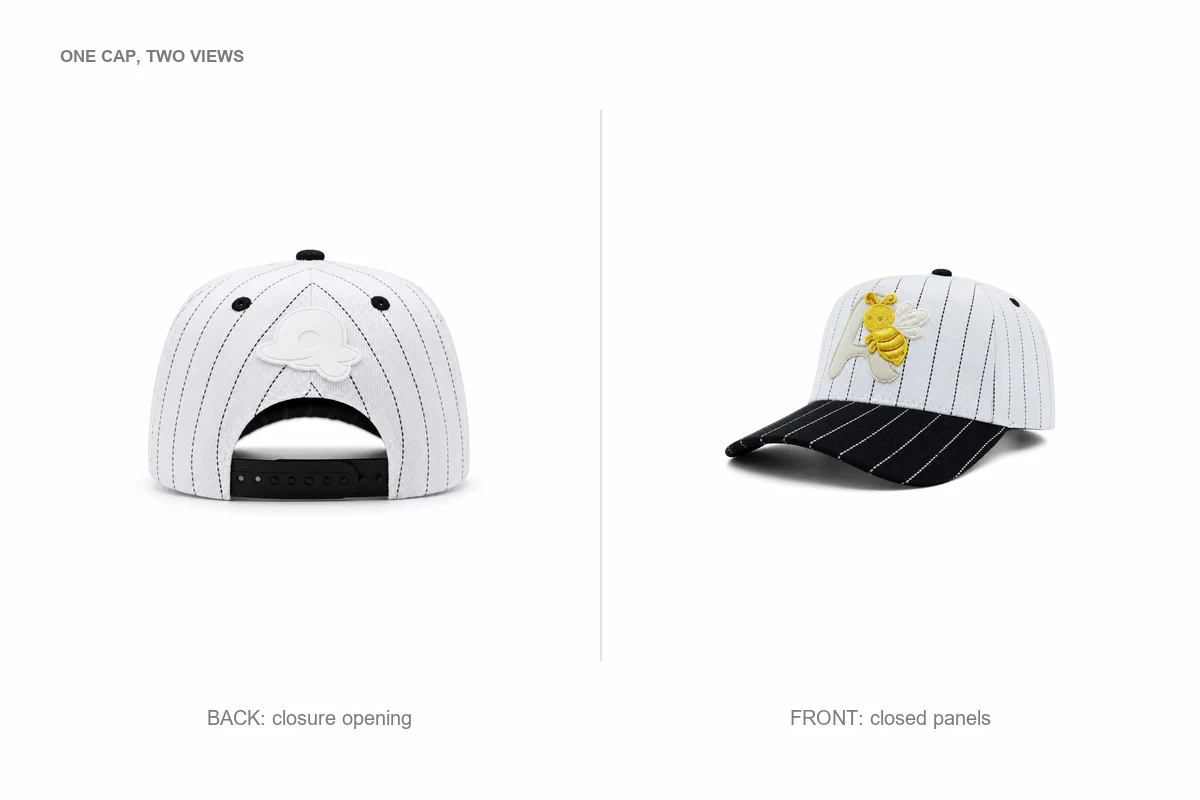
Snapback, strapback and plastic snap closures exist so one size covers many heads. That adjustability is an opening, and it sits where most hair leaves a cap. A closed adjuster with a short strap can be tightened until the opening closes against the head; a wide, long opening cannot, whatever the wearer does. Where a client wants one-size simplicity, a stretch-fit band or a properly sized fitted crown usually contains better than an adjustable closure that never quite closes.
Mesh inside the zone stays inside the zone
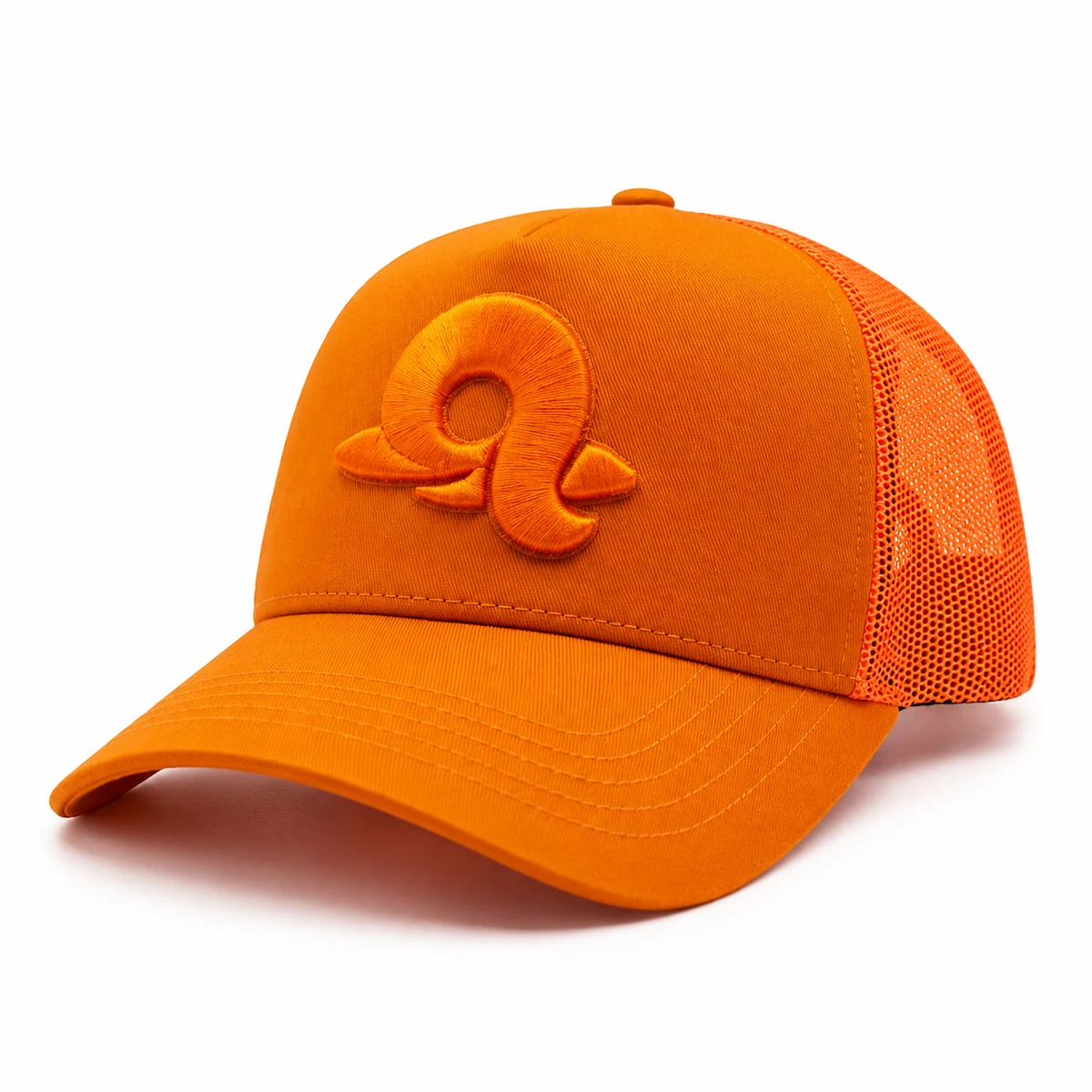
Mesh does not automatically disqualify a cap, but mesh in the containment zone is a designed path for hair. The difference is between mesh used as an airflow element in a zone that is already closed, and mesh used as the main rear panel with nothing behind it. If the client values airflow, the specification can still hold by moving the open area outside the hair path or pairing it with a closed inner layer. It pays to approach ventilation as a structure rather than a fabric claim, then check that the chosen structure is not in the hair path.
Crown depth and how hair is loaded
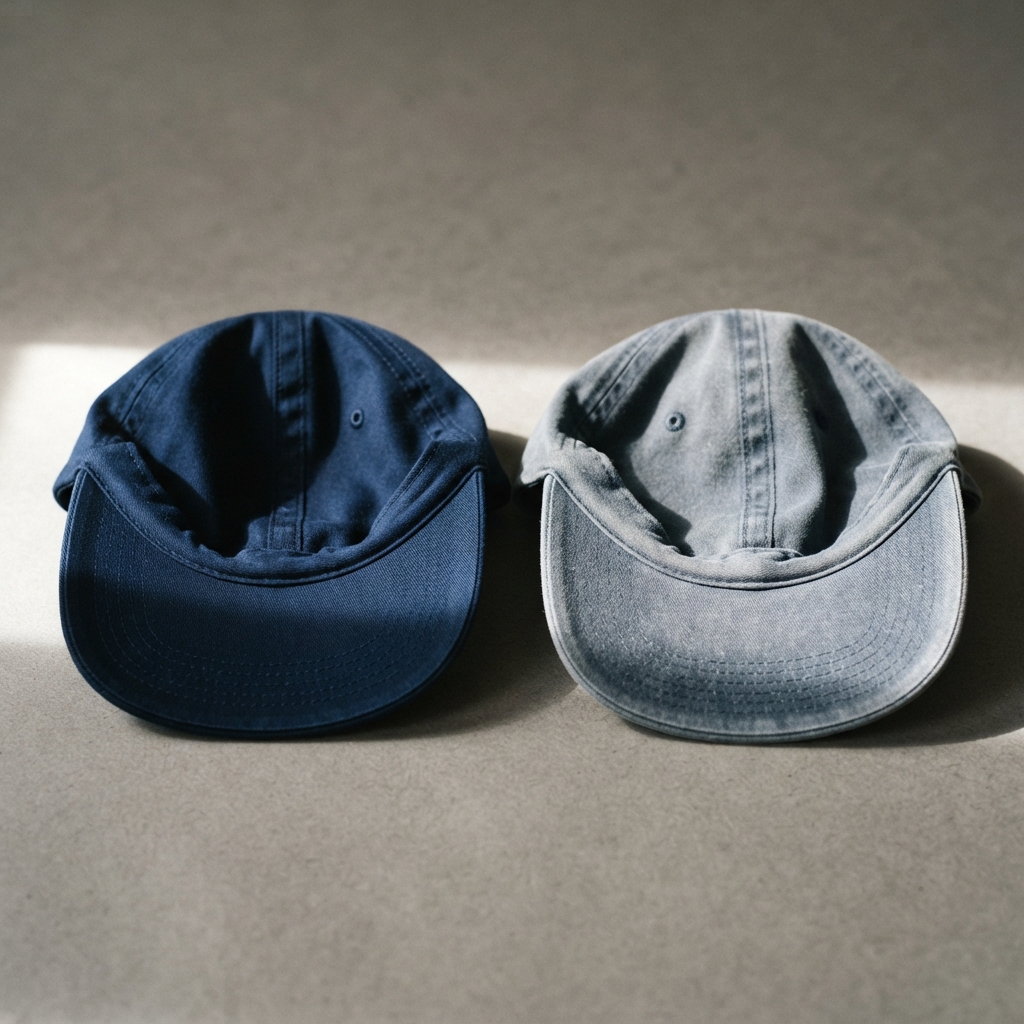
Containment is also a volume question. Hair is gathered, braided, twisted or left loose, then a crown is placed over it. A shallow crown on dense or long hair pushes the band up and forward, opening the back and lifting the front off the forehead. Deep crowns and taller bands give hair somewhere to sit inside the cap instead of under its edge, and a small size curve serves a team better than one adult size with a looser elastic. Buyers moving a fit programme onto a proper crown and band structure will recognise the same logic set out in deep crown and extended size planning.
Beard, fringe and volume
Most cap tech packs describe one head. Real teams have fringes that reach the eyes, beards of varying length, braids, locs and close crops. The Food Code names beard restraints alongside hats, which signals that intent covers facial hair. If the uniform cap is the only containment device, the specification should say how facial hair is handled: a face-fitted option, a separate beard cover, or a written client decision that it is managed by another control.
Writing Containment Into the Tech Pack
A cap that passes on one wearer and fails across a team is usually the product of an ambiguous brief. Write containment the way a measurement is written: a definition with a test attached, so the sample room and the client agree on what approval means.
Draw the zone, do not describe it
Mark the containment zone on the technical drawing: front and side panels, crown seam, and the seam line where the back opening begins. Then state the rule in one line, for example that no opening wider than a defined amount may exist inside the zone when the cap is worn, and that any mesh, eyelet or vent inside the zone must have a closed layer behind it. A marked drawing is faster to audit than three paragraphs of intent.
Match the closure to the hair profile
Ask for the hair profile of the uniform population before choosing the closure: proportions with long hair worn up, with braids, with very short hair, with head coverings. Then choose between fitted crowns, stretch bands and adjustable closures against that profile. Where an adjustable closure is kept for stock simplicity, specify a short strap, a closed adjuster and a minimum closed opening, and record it.
Decoration that does not punch through the zone
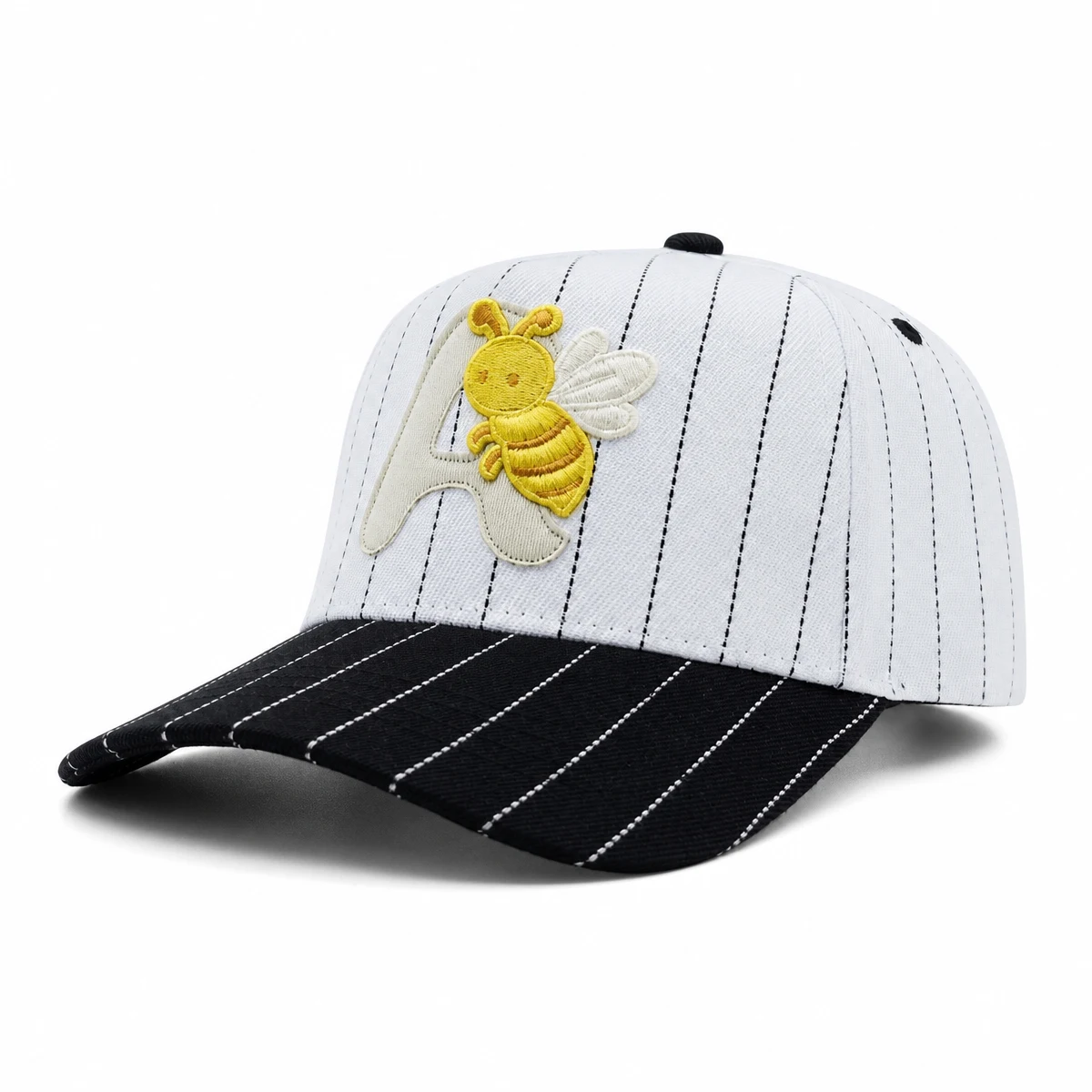
Embroidery inside the containment zone creates a field of needle perforations. On a heavy twill front panel that is usually irrelevant because no hair path exists behind it, but on a mesh or thin single-layer panel it changes the surface. Keep decorative elements forward of the zone or on panels with a closed backing, and settle stitch density and backing with the sample room. A sew-out approval that locks the stitch before production saves a re-run and documents that placement was deliberate.
Evidence You Can Show a Client or an Inspector
In hygiene programmes, documents are audited more often than products. The cap should arrive with a small, coherent evidence set a quality manager can file and an auditor can read without visiting the factory.
Run a wear trial, not a fitting
Recruit wearers who represent the real hair profiles, fit the sample, then have them work a normal shift. Record whether the back stayed closed, whether hair escaped at the sides, whether the band lifted, and whether anyone adjusted the closure. A written note covering ten wearers across three hair profiles answers “designed and worn” more directly than a photograph of one model.
Inspection criteria that name containment
Inspection plans usually cover stitching, shade and measurement. Add containment items so the release decision includes them: closure closes fully, no open mesh inside the marked zone, band height within tolerance, decoration position per the approved drawing. Where a client already runs a sampling plan, these items drop into the existing defect classes, which is the practical reason to align the cap with an AQL inspection plan that names defect classes.
What belongs in the compliance file
Keep the marked technical drawing, the approved sample reference, the wear trial note, the inspection record for the shipped lot, and a short statement of which requirement the product is intended to satisfy and under what conditions. Treat claims carefully: no cap carries a certification for hair containment, and no supplier should imply otherwise. A product can look safety-grade and still fail a compliance requirement — the same trap described in where a safety claim stops and a design decision starts.
Laundry, Rotation and Colour Coding
Hygiene caps live in a loop, not in a box. A specification that works on delivery day can fail by week six if cleaning cycle, rotation stock and storage were never part of the brief.
Reusable and single-use are different programmes
A reusable cap needs to survive repeated industrial washing without losing shape, shade or band height, and it needs enough units per employee to cover the wash cycle. A single-use option removes the laundry dependency and shifts the burden to stock control, dispensing and disposal. Ask the laundry for its cycle parameters and test the candidate construction against them rather than assuming a “washable” label covers an industrial tunnel washer.
Storage between cycles
Damp caps in a closed bag or a warm locker room start an odour problem that no construction fix will solve later. Store clean caps dry and open, separate from soiled returns, and inspect the storage point during the hygiene walk. The same moisture logic runs through why caps smell musty when a container opens, and it applies just as directly to a staff room shelf.
The Five Questions That Settle the Specification
- Which requirement applies, and who adopts it? Confirm the jurisdiction’s operative code or the client’s own standard before the cap is designed, then record the answer.
- What is the containment zone on this product? Mark it on the drawing with seam lines named, so approval and inspection share one boundary.
- What closes the back? Fitted crown, stretch band or adjustable closure, chosen against the team’s hair profile and written with a minimum closed opening.
- What is inside the zone? Panels, mesh, eyelets, decoration and linings, each either closed behind or moved outside the hair path.
- How is it cleaned and rotated? Units per employee, laundry parameters or single-use dispensing, storage conditions and the replenishment trigger.
Where Programmes Usually Fail
Three failures recur. Style is chosen before requirement, so a range comes out of a catalogue and containment surfaces at a client audit. Fit is treated as a sizing chart, so one size is issued to everyone and the adjuster absorbs the difference. Documentation stops at the invoice, with no marked drawing, wear note or inspection record covering the containment items.
None of these is expensive to prevent. A marked drawing, a closure decision tied to the hair profile, a short wear trial and an inspection line item cost a few hours at the sample stage, and they produce a specification that survives a site visit, a reorder and a change of laundry contractor. Buyers moving from promotional orders into uniform programmes will recognise the same discipline in other restricted environments, much of it transferable from a workwear cap specification built around the job. Where the programme also carries retail-facing information, settle that before sampling too, because label content and containment design are both fixed by the same approved sample — the sequence that works is the one where the label system is decided before the sample.
The working reference is the FDA Food Code 2022 itself, published on the FDA’s Food Code 2022 page, read alongside the EU hygiene obligations in Regulation (EC) No 852/2004. Reading the two side by side shows why one regime names hats and the other names clothing, and why a single specification has to cover both.