

Most headwear brands selling into Europe have filed the Digital Product Passport under "something to deal with later". That was a reasonable position a year ago. It is not any more. The European Commission brought the DPP Registry into operation in July 2026, the underlying technical standards have been published, and the delegated act that will define textile-specific requirements is scheduled for the fourth quarter of 2027.
The gap between those two dates is the window brands have to get their supply chain data in order. This guide explains what the DPP actually requires, who carries the obligation, and what a headwear brand should be asking its factory for now rather than in 2027.
What the Digital Product Passport Is
The DPP is a structured digital record attached to a physical product, reachable through a data carrier such as a QR code printed on or in the product. It is established under the Ecodesign for Sustainable Products Regulation, and its purpose is to make product information accessible and comparable across a product's whole lifecycle rather than scattered across supplier emails and internal spreadsheets.
Two design decisions matter commercially. First, product data is stored in a decentralised way, but every passport must be registered centrally. Second, the information is accessible both at the online point of sale and on the product itself, which means it becomes visible to customers, competitors and regulators simultaneously.
The Registry Is Already Live
In July 2026 the Commission launched the DPP Registry together with a testing environment, describing it as the secure infrastructure where economic operators register unique product identifiers and associated metadata. Registration works through either a secure user interface or an API, so larger operators can integrate it into existing systems.
Six of the harmonised standards underpinning the system — covering unique identifiers, interoperability, data carriers, APIs, data exchange protocols and data storage — have already been published. The practical implication is that the technical shape of the DPP is no longer speculative. Brands can look at the actual data models today.
Textiles Come Later, But Not Much Later
Textile-specific requirements will be set by a delegated act, with planned adoption in the fourth quarter of 2027. Apparel is a priority category rather than an afterthought: the Commission's own figures put EU textile apparel consumption at 4.85 billion kilograms, the largest textile subgroup, and identify textile consumption as the fourth highest source of environmental and climate impact in the EU.
Timelines in this area can move, and the Commission notes as much. But planning on the assumption that it will slip is a poor bet when the preparation work is useful regardless.
Who Actually Carries the Obligation
This is the point most often misunderstood by brands buying from Asian factories. The obligation sits with the economic operator placing the product on the EU market — the manufacturer, producer or importer. If you are a European brand importing caps, the passport is your legal responsibility, not your supplier's.
Distributors and dealers must ensure a DPP is available for the products they handle, and suppliers may be required to pass on information available to them. In practice this creates a chain: your factory holds much of the raw data, you are accountable for compiling and registering it, and your retail partners will refuse product that arrives without it.
Why This Changes Supplier Selection
A factory that cannot tell you where its fabric came from is a factory that will become a compliance liability. This is not a quality judgement — plenty of capable manufacturers have never been asked to document fibre origin, because until recently nobody required it.
The practical question to ask a supplier is not "are you DPP compliant", which nobody can meaningfully answer yet. It is whether they can trace fibre composition and material origin, whether they hold certification documentation, and whether they can supply that data in a structured form. Our guidance on evaluating a hat manufacturer covers how to assess this alongside the usual capability checks.
What Data a Headwear DPP Will Likely Contain
Exact requirements await the delegated act, but the Commission has published the expected categories, and they map onto information a well-run headwear programme should already hold.
Composition and Origin
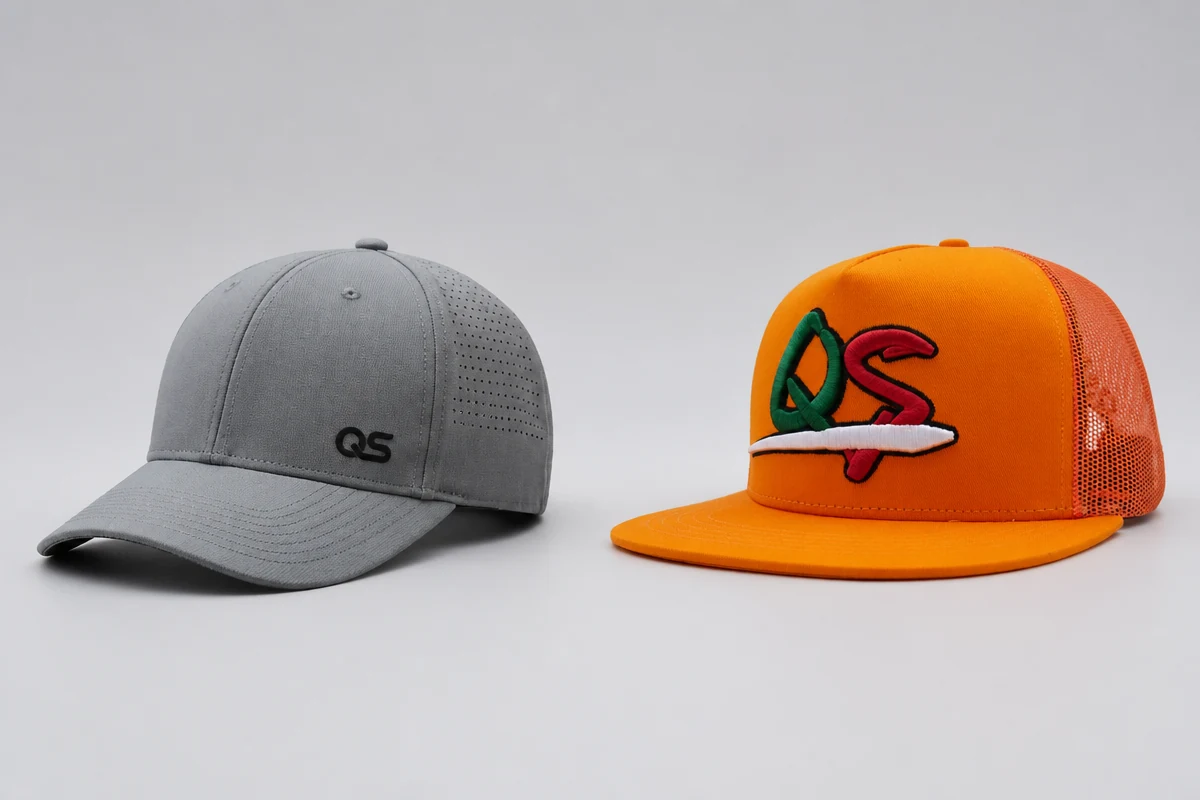
Fibre composition, as required under textile labelling rules, plus origin information. For a cap this is more involved than it sounds, because a single product may combine a cotton twill crown, a polyester mesh back, a plastic closure, a woven label and an embroidered logo — each with its own material and its own source.
Brands working with mixed-material constructions such as trucker caps should expect to document each component rather than describing the product with a single fibre percentage.
Durability, Repair and End-of-Life
Information supporting use, repair and maintenance, and information relevant to reuse, resale, disassembly, refurbishment, recycling and disposal. This is where the DPP starts to influence product design rather than just paperwork. A cap assembled so that its components can be separated is easier to describe favourably than one that cannot be taken apart.
Economic Operators and Product Identity
Product identification and characteristics, plus identification of the relevant economic operators. Each passport carries a unique identifier registered centrally, which is what makes the system auditable.
What to Do in the Next Twelve Months
The useful work is not technical. It is getting supply chain information into a state where it can be assembled quickly once the requirements are fixed.
Start Collecting Component-Level Data Now
For every style you sell into the EU, build a record of what each component is made of and where it came from. Doing this retrospectively across a legacy range is painful; doing it at the point of development for new styles costs almost nothing.
Ask for this at the sampling stage, when the factory is already documenting the specification. Sampling runs three to five business days at QSHeadwear, and adding material documentation to the sample approval checklist does not extend that.
Tighten Certification Discipline
Chemical safety and material claims will be far easier to declare if they are already certified. OEKO-TEX STANDARD 100 remains the reference most European buyers name for harmful substance testing, and recycled content claims need chain-of-custody documentation regardless of the DPP.
Brands already running certified programmes will find the DPP largely a formatting exercise. Brands making informal sustainability claims will find it a reckoning, because a passport makes vague marketing language checkable. Our eco-friendly headwear range is built around recycled polyester and organic cotton with traceability options, which is the kind of foundation that makes later declaration straightforward.
Design for Disclosure
If the composition of a product will be publicly visible via a QR code, it is worth deciding now whether you are comfortable with what that disclosure will say. A brand positioning itself as premium while using the cheapest available components is making a bet that nobody checks. The DPP removes that bet.
This argues for consolidating around fewer, better-documented materials rather than sourcing opportunistically. Our cap fabric guide compares the main options, and the documentation burden is now a legitimate factor in that choice.
Talk to Your Factory Early
Factories that hear about DPP requirements from three customers will build a data process. Factories that hear about it from none will not. Raising the question early is partly self-interested: it puts your programme at the front of the queue when your supplier does build that capability.
Ask specifically whether they can provide fibre composition by component, material origin, certification documents and processing information in a structured format. A supplier who engages seriously with that question is a supplier worth keeping.
The Broader Regulatory Direction
The DPP does not exist in isolation. It sits inside the EU's Strategy for Sustainable and Circular Textiles, alongside extended producer responsibility rules, restrictions on textile waste exports and measures against greenwashing. A ban on destroying unsold clothing and footwear already applies to large enterprises as of July 2026, extending to medium-sized enterprises in 2030.
The direction is consistent: less tolerance for undocumented claims, more accountability for what happens to product after sale. Brands that treat the DPP as an isolated compliance task will keep encountering the same underlying requirement in different forms. Those that build genuine supply chain visibility will find each successive rule easier than the last.
Frequently Asked Questions
When exactly do headwear brands need a DPP?
Textile-specific requirements will be defined by a delegated act planned for the fourth quarter of 2027, with implementation measures following. The Registry itself is already operational, and the first compliance deadline under the wider system applies to certain large batteries in February 2027.
Is the DPP our responsibility or the factory's?
It falls on the economic operator placing the product on the EU market, which for an importing brand means you. Your factory supplies the underlying data, but the passport is your obligation.
What should we ask suppliers for right now?
Fibre composition by component, material origin, certification documentation and processing information, supplied in a structured format rather than as prose in an email. Build it into sample approval so it accumulates as you develop.
Does this apply if we only sell outside the EU?
The requirement attaches to products placed on the EU market. Brands selling elsewhere are not directly bound, though similar traceability expectations are appearing in other jurisdictions and major retail customers increasingly ask for the same data regardless of geography.