

Custom denim bucket hats look simple until denim weight, grain, wash, shrinkage and brim construction start interacting. A well-specified style keeps a recognizable bucket profile after washing, decoration, packing and repeated wear. The right brief controls both the fashion character and the manufacturing variables behind it.
This guide is for clothing brands, streetwear labels, retailers and promotional teams developing denim bucket hats with a repeatable shape and clear material story.
Choose the Denim Before the Wash Story
Record fiber composition, weight, weave, stretch, color, finish and available widths. A light denim can make a soft packable hat, while heavier denim creates a stronger brim and a more structured crown. A wash cannot compensate for a base fabric that is unsuitable for the intended profile.
Map the Denim Variables
| Variable | What changes | Buyer evidence |
|---|---|---|
| Weight | Hand, crown support and brim recovery | Production-equivalent swatch |
| Grain direction | Twist, shade and seam behavior | Marked cutting direction |
| Stretch | Fit and recovery around the crown | Stretch and recovery note |
| Wash | Color, softness, abrasion and shrinkage | Washed sample and test record |
| Thread | Contrast, seam visibility and durability | Thread card plus sewn sample |
What Makes Custom Denim Bucket Hats Hold Their Shape?
“Bucket hat” does not define one crown depth or brim width. State finished circumference, crown height, brim width, brim angle, top opening, seam count and tolerance. Decide whether the hat should sit close to the head or create a relaxed halo. Use front, side and top photos to support the chart rather than replacing it.
Build the Brim as a Separate Decision
A soft denim brim folds easily and suits casual packing, but it may lose its edge on shelf. A supported brim holds a cleaner shape but adds stiffness and construction cost. Check how the brim behaves when worn, folded, washed and stacked. If the design includes contrast stitching or a raw edge, approve the formed brim from several angles.
Plan Grain and Panel Symmetry
Denim can show a visible twill direction, especially after washing. Keep panel grain consistent unless a deliberate cross-grain effect is part of the design. Mark the direction on the cutting file and inspect left-right shade balance. A small change in orientation can make two panels look like different colors.
Wash, Distress and Shrinkage Need Their Own Approval
Stone wash, enzyme wash, garment wash and localized abrasion create different surfaces. Specify the target shade, softness, whisker placement, edge wear and acceptable variation. Measure the cap before and after the planned conditioning or wash route. If the finished product is not intended to be washed, state that clearly in the care information.
| Finish route | Useful for | Risk to control |
|---|---|---|
| Clean indigo | Uniform retail programs | Shade matching between lots |
| Garment wash | Soft casual hand | Shrinkage and seam puckering |
| Localized distress | Streetwear character | Placement and repeatability |
| Raw edge | Unfinished visual language | Fraying and trim stability |
| Contrast stitch | Visible construction detail | Thread tension and alignment |
Place Logos Where Denim Can Carry Them
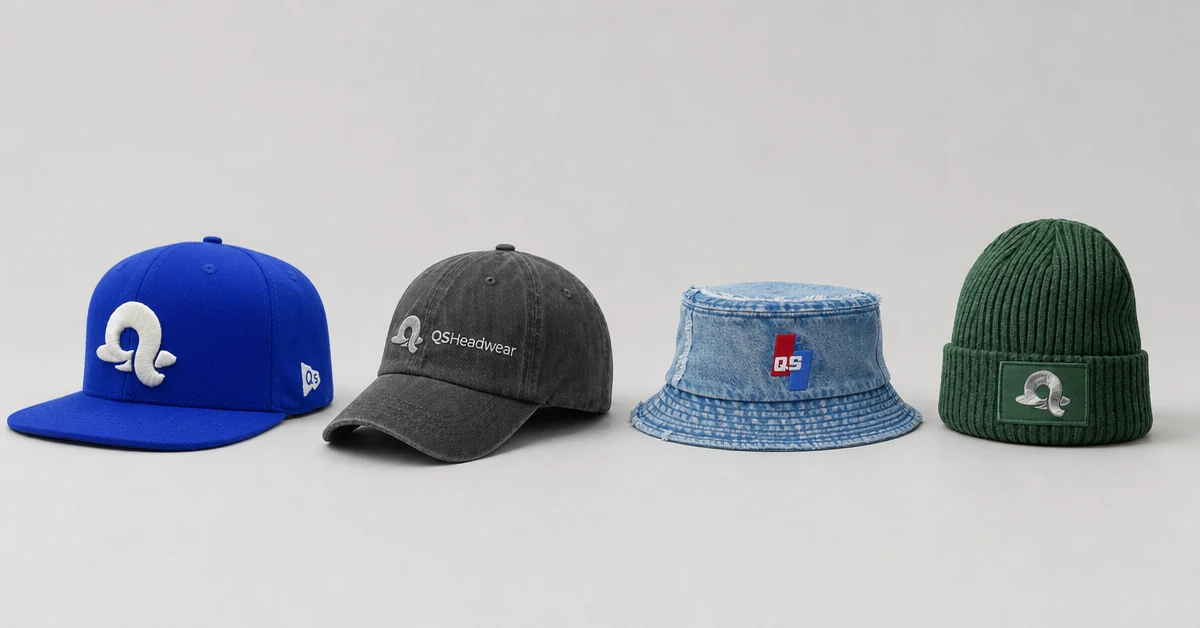
Embroidery can sit confidently on medium-weight denim, while a soft washed fabric may need backing. Woven, leather or PVC patches change the hand and add a defined edge. Screen print and transfer graphics should be tested after the intended wash or abrasion route. Keep small text away from curved seams and approve the logo at actual size.
Check the Inside for Comfort
Denim seams can feel substantial against the forehead. Review seam allowance, binding, sweatband width, top seam bulk and any backing. Test the hat on several wearers and note pressure, depth, heat and movement. A fashion-forward outer surface still needs an internal finish that supports repeat wear.
Control Hardware and Labels
Eyelets, rivets, snaps, woven labels and leather tabs should coordinate with the denim shade and wash. Confirm whether metal components are added before or after washing and whether they can scratch the fabric or alter the care instruction. Lock the label wording to the actual fiber composition and destination market.
Inspect a Denim Hat by Failure Mode
| Visible issue | Likely cause | Corrective action |
|---|---|---|
| Brim waves | Unsupported edge or uneven shrinkage | Revise support and condition the sample |
| Panels look mismatched | Grain direction or lot shade | Mark cutting direction and retain a shade standard |
| Crown feels tight | Wash shrinkage or thick sweatband | Set post-wash measurements |
| Logo sinks | Soft fabric or fine stitch scale | Adjust backing, density or artwork size |
| Raw edge frays too far | Insufficient edge control | Define seam, binding or abrasion limit |
Pack the Hat Without Flattening Its Identity
Test the approved folding or stacking method. A bucket hat may ship nested, folded or lightly supported. Inspect the brim and crown after unpacking and after a short recovery period. Document the acceptable pack-out condition so the warehouse does not create a defect by using a cheaper carton arrangement.
Keep a Denim Reorder Record
Retain denim code, weight, wash recipe or reference, grain direction, shade standard, pattern, brim support, thread, decoration files, labels, care copy, packing and approved sample. When the mill, wash or component changes, request a new approval. That record keeps custom denim bucket hats consistent across seasonal colorways.
Develop Denim Bucket Hats With QSHeadwear
Explore QSHeadwear product categories, review the OEM/ODM customization route and check factory information. Send your denim reference, wash direction, measurements, artwork, quantity and deadline via the contact page to develop custom denim bucket hats.
Denim Bucket Hat Sourcing: Buyer Questions Answered
1. What denim weight is best for a bucket hat?
It depends on the target profile, brim recovery, packability and hand; approve the actual denim on the chosen pattern.
2. Should denim be washed before sampling?
If the final product is washed, the sample should use the intended wash or a clearly labeled development substitute.
3. How can shade differences between panels be controlled?
Lock the denim lot and shade reference, mark grain direction and inspect the assembled crown.
4. Can denim bucket hats use embroidery?
Yes, but backing, stitch density and fabric stability should be tested on the washed production-equivalent denim.
5. What causes a denim brim to wave?
Uneven shrinkage, unsupported edges, seam tension or an unsuitable brim construction can create waves.
6. How should distressing be specified?
Define location, intensity, edge behavior, repeatability and acceptable variation with physical references.
7. Do metal trims affect washing?
They can affect abrasion, shade and care, so approve whether they are applied before or after the wash route.
8. How should fit be tested?
Measure post-wash circumference and crown, then wear-test on multiple head sizes.
9. What should bulk inspection cover?
Check denim identity, shade, grain, measurements, brim, seams, distressing, decoration, hardware, labels and packing.
10. What should be saved for a reorder?
Keep the denim code, wash reference, pattern, measurements, shade standard, trims, artwork, labels, packing and approval sample.