

A custom running caps manufacturer should design for the point when the runner is hot, moving and no longer thinking about the hat. A cap that looks technical on a sample table can still trap heat, hold sweat, bounce, chafe or lose shape after repeated use. Performance must be translated into testable construction decisions.
This article is for running brands, race organizers, outdoor retailers and performance-merchandise teams developing caps for training, competition or event distribution.
Start With the Run, Not the Fabric Catalog
Define distance, pace, climate, season, daylight conditions, expected sweat level and whether the cap will be packed into a pocket. A short urban race, a humid marathon and a trail event do not create the same design brief. The use case determines the tradeoff between coverage, ventilation, structure, visibility, drying and durability.
The Mile-Ten Test: Six Things the Runner Notices
| Runner signal | What may cause it | Specification to investigate |
|---|---|---|
| Forehead feels saturated | Sweatband stores moisture faster than it releases it | Sweatband material, width and drying behavior |
| Cap lifts in wind | Fit range or closure is unstable | Circumference, crown volume and closure grip |
| Heat builds at the crown | Fabric and panel design restrict airflow | Weight, mesh zones and vent layout |
| Brim blocks vision | Brim length or curvature does not suit running posture | Finished brim geometry |
| Seams rub | Internal construction sits on a pressure point | Seam placement, binding and sweatband edge |
| Cap becomes misshapen | Material or brim cannot recover after packing | Recovery test and storage method |
Choose a Performance Architecture
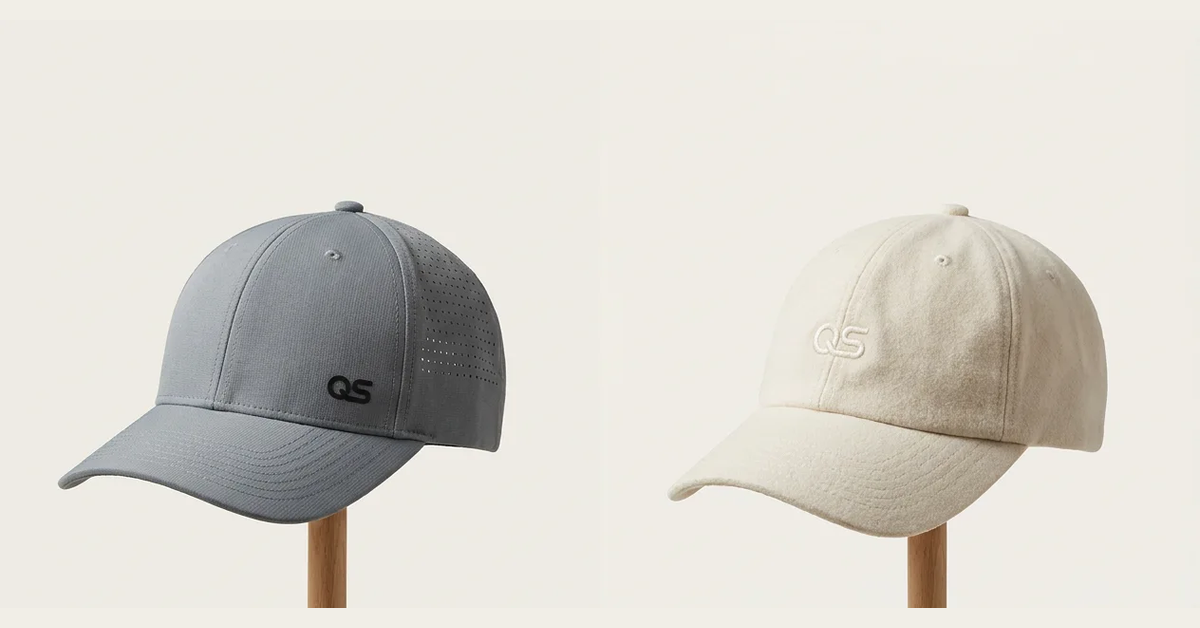
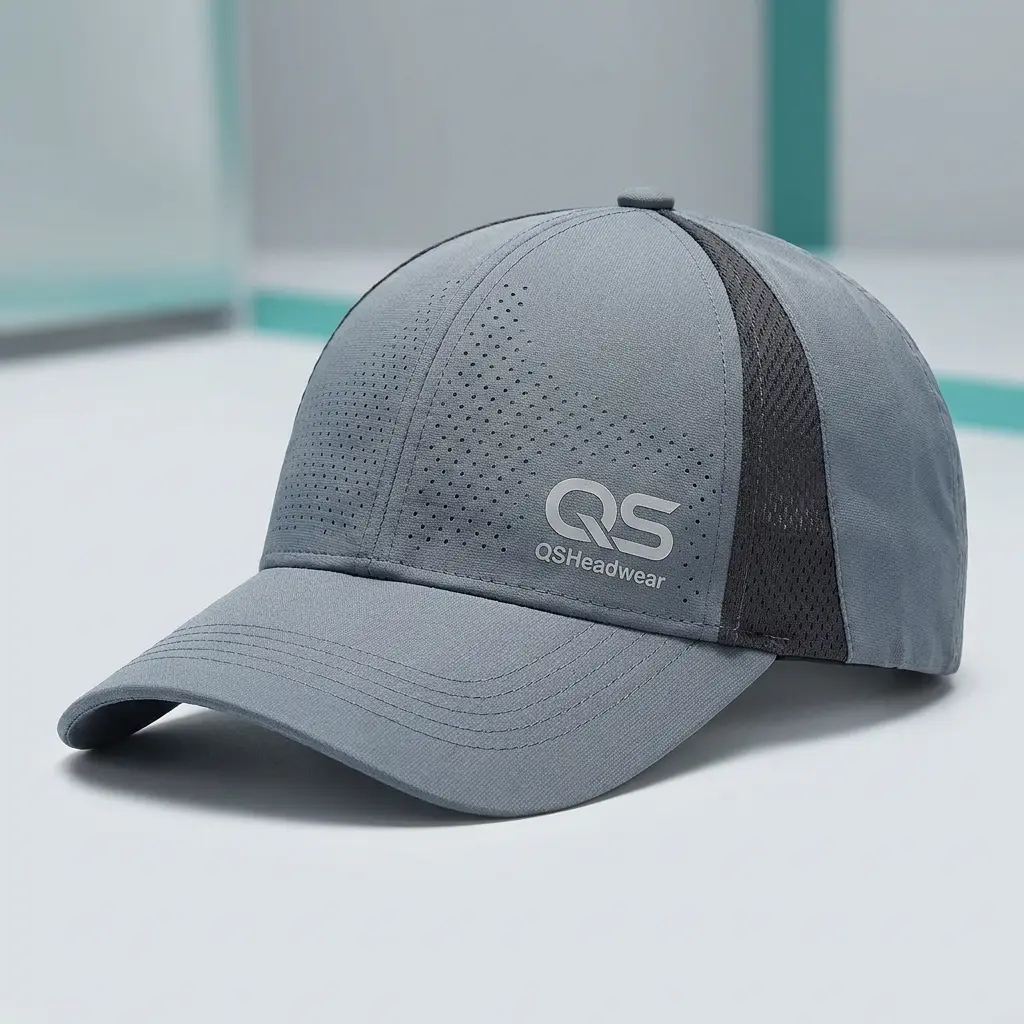
A lightweight five-panel shape can reduce seams across the front, while a six-panel cap may offer a familiar baseball profile. Soft-packable brims can suit runners who store the cap, while firmer brims provide more stable shade. Laser-cut or mesh zones can release heat, but their position and strength must be checked on the finished crown.
The correct architecture is the one that remains secure and comfortable under the intended movement—not simply the style with the most “technical” features.
How a Custom Running Caps Manufacturer Should Specify Fabric
Record composition, weight, construction, stretch direction, recovery, surface feel, color and finishing. “Quick dry” should not remain an unsupported label; agree on a comparative test or defined performance expectation. Check how dark and light colors behave when wet and whether the material shows salt marks after sweat dries.
A capable custom running caps manufacturer should explain how the crown fabric, mesh, sweatband and closure work as one system. A highly breathable panel does not solve a sweatband that stays saturated.
Fit Security Is a Motion Problem
Test the cap while walking, running, looking down, turning the head and moving into wind. Review pressure at the forehead and rear opening. If elastic is used, define stretch and recovery; if a webbing or hook-and-loop closure is used, inspect adjustment range, grip and skin contact.
Use multiple wearers across the intended head-size range. A single comfortable sample does not demonstrate a reliable fit system.
A Practical Wear-Test Protocol
- Measure and photograph the clean, dry sample.
- Wear it during the intended activity and climate where possible.
- Record heat, bounce, pressure, visibility and seam comfort at planned intervals.
- Inspect wet appearance, sweat migration and odor retention after use.
- Dry the cap according to the proposed care instruction.
- Measure shape, fit, brim and closure again.
- Repeat the cycle when the product is intended for frequent use.
Separate subjective feedback from measurable changes. “Feels hot” is useful; pairing it with the location, weather, pace and panel design makes it actionable.
Keep Branding Light Enough to Perform
Dense front embroidery can add stiffness and reduce airflow. Large rubber or PVC patches add weight and may trap moisture against the crown. Reflective details can support low-light visibility but should be positioned and described carefully rather than treated as certified safety equipment without evidence.
Consider small flat embroidery, transfer graphics, reflective accents or restrained woven labels. Approve the actual technique on the performance fabric because heat, pressure and needle density can alter the surface.
Diagnose Failures Before Bulk
| Failure | Likely investigation | Approval response |
|---|---|---|
| Sweat line remains visible | Color, finish, absorption and drying | Compare fabrics and wet/dry appearance |
| Rear closure loosens | Hardware grip or webbing slip | Run repeated adjustment and motion checks |
| Brim creases after packing | Brim material and fold path | Define packability or prohibit folding |
| Logo area puckers | Decoration density and thin fabric | Reduce density or add compatible support |
| Cap twists after drying | Panel grain, seam balance or shrinkage | Condition and remeasure the sample |
| Vent holes tear | Cut geometry or insufficient edge strength | Revise hole size, spacing or reinforcement |
Write Quality Criteria for a Used-Looking Product
Performance caps may arrive at inspection clean and dry, so the specification must cover what matters after use. Inspect measurements, crown balance, brim alignment, closure function, seam comfort, ventilation features, decoration, shade, labels and packing. Retain tested samples and photographs that show acceptable recovery.
QSHeadwear describes incoming, pre-production, in-line and final AQL 2.5 checks. Buyers should request an order-level plan that includes the product’s performance-critical features.
Plan Event Quantities and Retail Reorders Differently
Race merchandise may require a fixed delivery date, size flexibility and carton allocation by venue. Retail running caps need color-level demand tracking, margin and replenishment continuity. Clarify whether the project is a one-time event, seasonal drop or core product because the fabric reservation and reorder file should reflect that model.
Send a Run-Specific Development Brief
State the runner, distance, climate, cap architecture, target weight or feel, ventilation, brim, closure, decoration, quantity, packing and deadline. Include the wear-test method and which failures are unacceptable. That brief gives a custom running caps manufacturer enough context to recommend tradeoffs instead of presenting generic sports fabric.
Develop a Running Cap With QSHeadwear
Explore QSHeadwear headwear categories, review the custom development and sampling process and verify factory capabilities. Send your activity conditions, performance priorities, artwork, quantity and delivery plan through the contact page to discuss a custom running caps manufacturer project.
Running Cap Development: Buyer Questions Answered
1. What should a running-cap brief include?
Include distance, climate, wearer, cap structure, material expectations, ventilation, brim, closure, branding, quantity, packing and test method.
2. Which cap shape is best for running?
The best shape depends on fit, seam comfort, coverage, airflow and packability; validate the selected architecture through wear testing.
3. How should breathability be evaluated?
Compare complete caps under similar activity and climate conditions, including fabric, ventilation zones, sweatband and decoration.
4. Can running caps use embroidery?
Yes, but dense embroidery can add stiffness and reduce airflow, so actual production fabric should be sampled.
5. What closure works for performance caps?
Use a closure that provides the required adjustment range, remains secure in motion and does not create pressure or skin irritation.
6. Should a running cap be packable?
Only if the use case requires it; specify how it will be folded or stored and test brim and crown recovery.
7. How can sweat marks be reduced?
Material, color, finish, sweatband design and drying behavior all matter; compare wet and dry samples rather than relying on one fabric claim.
8. What should bulk inspection cover?
Check measurements, shape, brim, closure, seams, vents, decoration, shade, labels, cleanliness and packing against the approved sample.
9. How should event orders be packed?
Use venue or distribution allocations, clear carton marks and contingency quantities that match the event plan.
10. What should be retained for reorders?
A custom running caps manufacturer should retain patterns, measurements, material references, decoration files, tested samples, labels and packing rules.