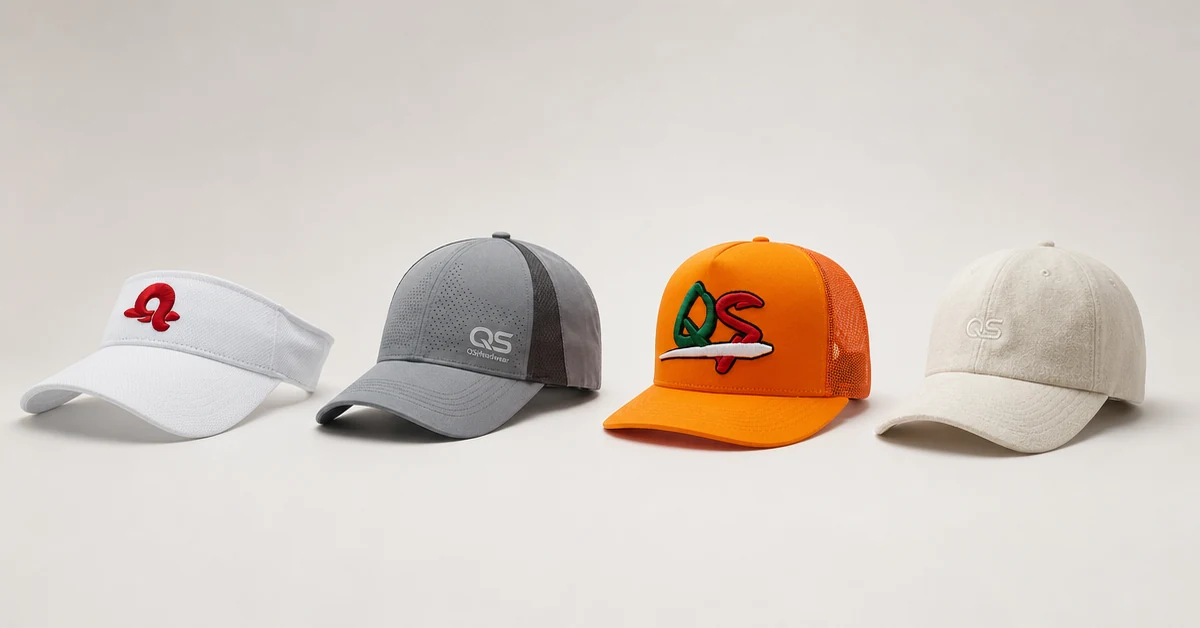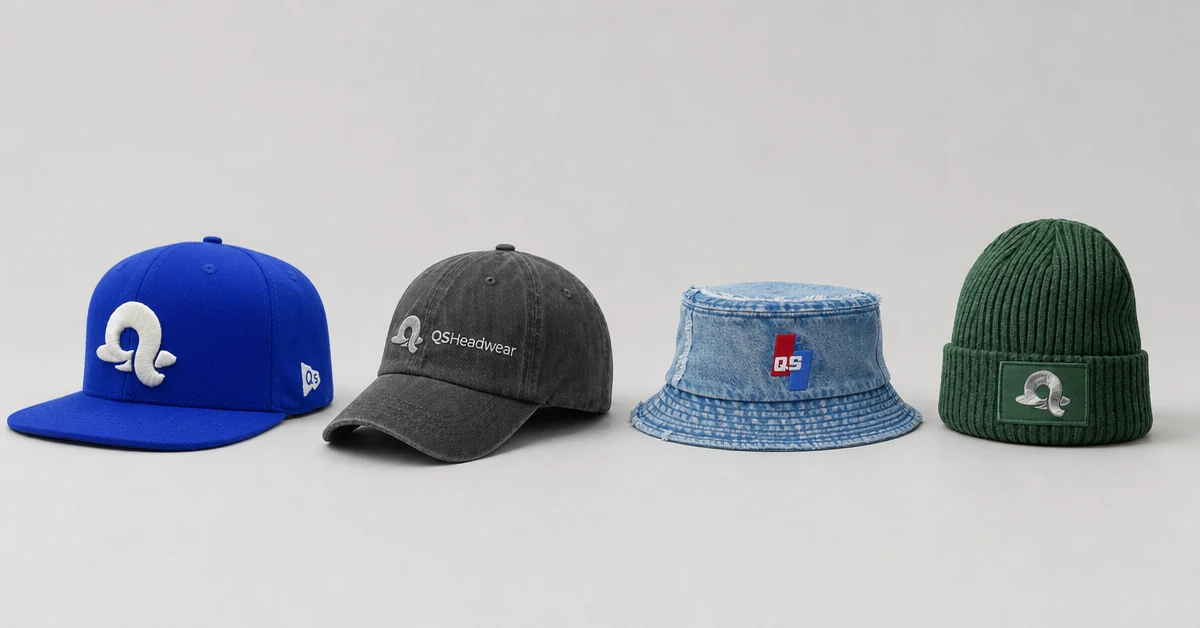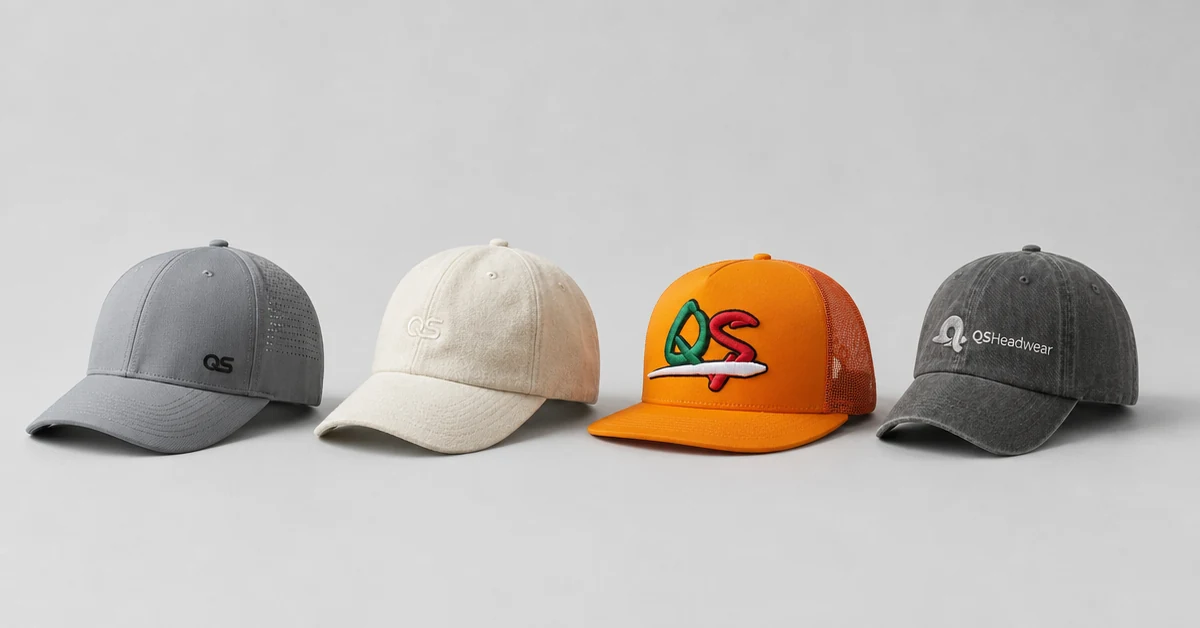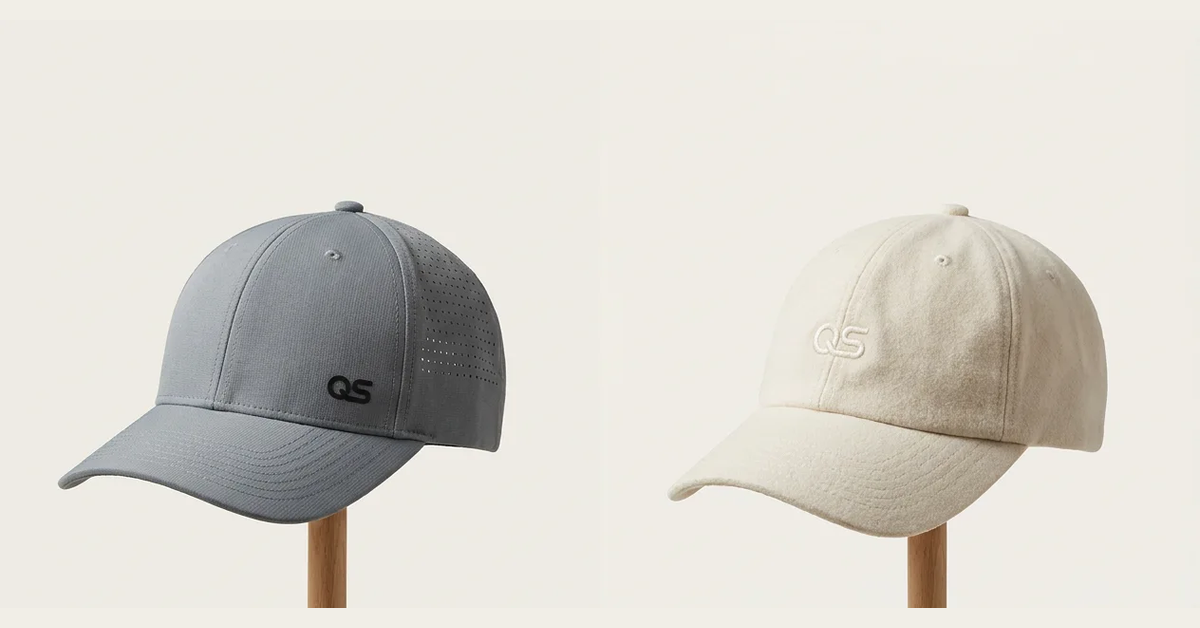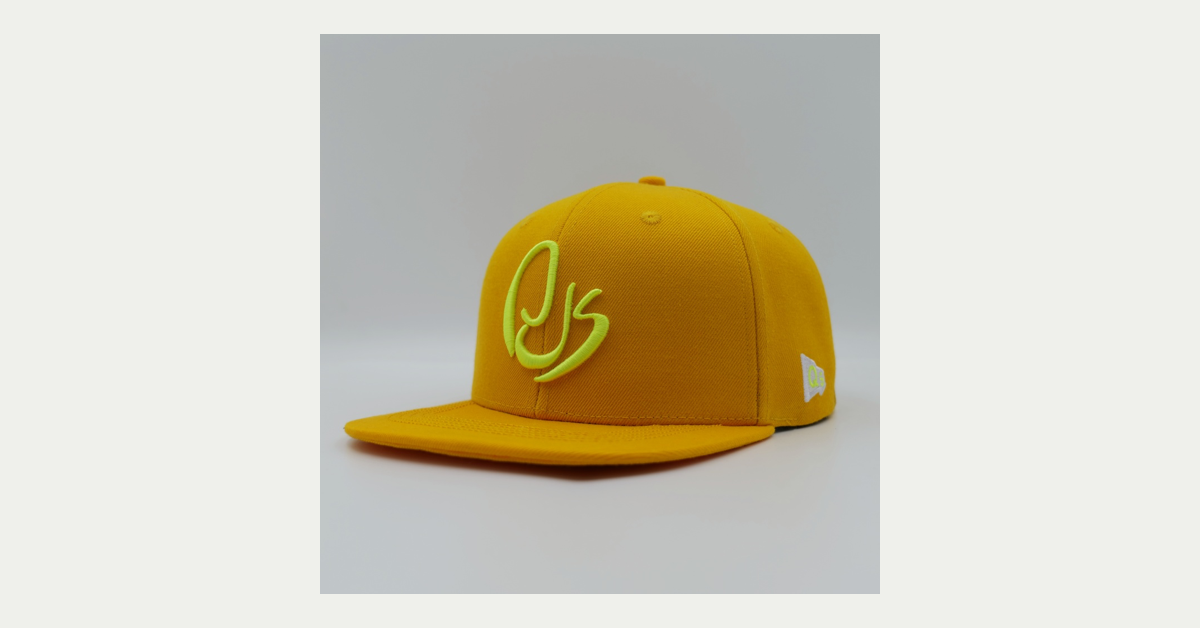


For flat embroidery hats, a sharp logo file is necessary but not sufficient. The thread must travel through fabric, turn corners and leave enough space for small openings to remain readable. If the smallest letters merge in a sew-out, increasing stitch density is not automatically the answer. Review the artwork, finished size and stitch plan together.
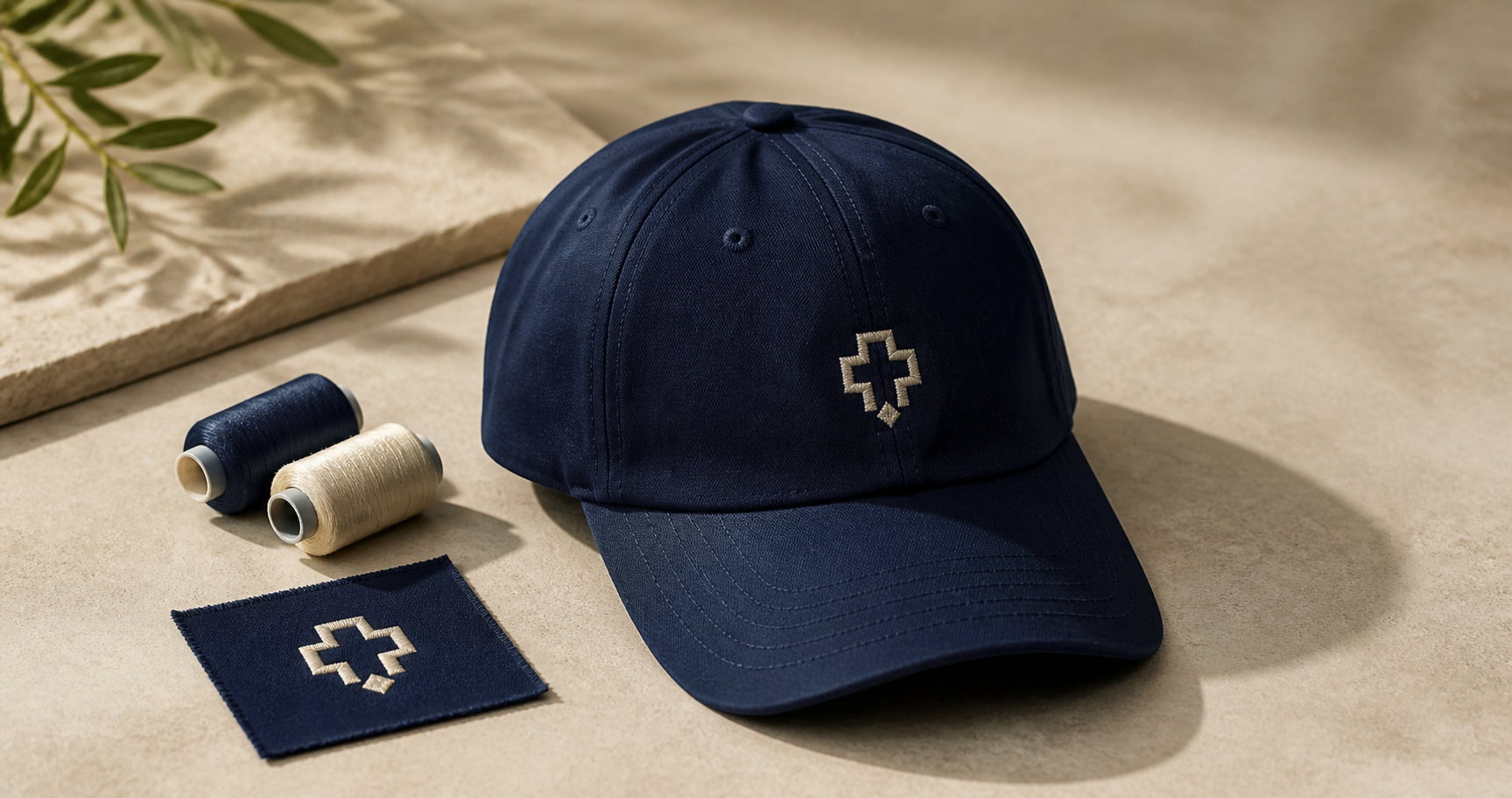
This article follows a hypothetical small wordmark through development. It is intended for brand designers, sourcing teams and promotional buyers ordering adult caps. It does not prescribe universal embroidery settings. The cap fabric, machine setup, thread, needle and digitizing approach all need to be considered by the embroidery team.
The artwork handoff: keep the original, make a production version
Retain the master brand artwork unchanged. Make a separate embroidery adaptation with a date, intended dimensions and a clear approval owner. That version might remove a hairline, open a letter counter or simplify a tiny secondary phrase. Do not quietly redraw the master logo and allow the altered file to circulate as the new brand identity.
Ask the designer which details carry recognition and which are optional at this scale. A symbol might be essential while a small tagline can move to a hangtag. The embroidery team should flag what is difficult, but the brand must approve any visible change. Keep the original and adapted files side by side in the review.
Proof one: an enlarged screen view
The screen proof helps locate missing elements and wrong proportions. It is a poor test of small-letter readability because almost anything becomes legible when enlarged. Print or display the artwork at its intended size, then assess it at a normal viewing distance. Include the cap background color, not just the logo on white.
With flat embroidery hats, buyers often approve the illustration and assume they have approved the stitching. They have not. An artwork file describes shapes. A digitized file describes how the machine will form them. Ask which file is under review and which decisions remain provisional before sending a message that simply says approved.
Proof two: the sew-out that can expose the real limitation
Request a sew-out on the proposed cap fabric with the intended backing. Check whether letter openings remain visible, whether outlines meet fills cleanly and whether fine strokes look uneven. Look at the reverse too. A tidy face with rough or bulky backing may be unsuitable for the intended position on the hat.
Do not prescribe a minimum letter size from an unrelated online chart. Ask the supplier to demonstrate the specific wordmark in the chosen thread and fabric. Two fonts of equal height may behave differently. A plain uppercase mark and a thin script with tight loops do not present the same challenge to a digitizer.
| Artwork detail | Information to send | Evidence to request |
|---|---|---|
| Finished logo size | Width and height in stated units | Actual-size sew-out beside a scale |
| Smallest text | Editable type or outlined vector and font intent | Readable letter openings on the proposed surface |
| Color | Physical reference or agreed thread code | Thread selection against the cap fabric |
| Placement | Distances from stable cap landmarks | Decorated cap in front and side views |
| Backing | Comfort and appearance requirements | Inside view of the finished decoration |
Proof three: review flat embroidery hats on the actual crown
A swatch can isolate an embroidery problem, but it cannot show every effect of a curved crown. Put the approved design on the actual cap. A center seam, a low crown or the distance above the brim can change what the viewer sees. Photograph the cap worn or on a consistent form, not only flattened on a table.
For flat embroidery hats, use the same reference position in every review photograph. A camera placed slightly higher can make a logo look lower. Mark the bottom edge relative to the brim seam and the horizontal position relative to the approved center line. The photograph then supports the measurement instead of replacing it.
Which compromise should the brand accept?
Compare deliberate alternatives rather than sending endless requests to make the original sharper. The right route depends on viewing distance, brand rules and the cap material. If fine lettering matters more than a stitched surface, a woven patch may deserve a trial. If large raised letters matter, discuss a separate dimensional embroidery sample.
| Option | What changes | Tradeoff to accept |
|---|---|---|
| Simplify the embroidery | Remove tiny strokes or secondary text | A cleaner result but a revised production logo |
| Enlarge the decoration | Increase the artwork footprint | More crown area and possible seam interaction |
| Move the secondary wording | Use a label or hangtag for the tagline | The front mark carries less information |
| Compare a woven patch | Change the decoration medium | A visible border and attachment step |
A common false fix: making everything denser
If a sew-out puckers, first ask the embroidery specialist to identify the cause. Fabric support, hooping, stitch direction and density can interact. More thread may hide one gap while adding stiffness or distortion elsewhere. The buyer's job is to describe the defect and intended result, not guess a machine setting from the appearance of the sample.
Keep the revision controlled. If fabric, backing and stitch settings all change at once, the next sample may improve without revealing why. A useful revision note says what changed, what stayed the same and what the new sew-out is intended to answer. That information is worth retaining for a reorder.
Thread color needs its own approval
A digital color value does not identify a unique physical thread appearance. Review the actual thread against the actual cap fabric in agreed lighting. Contrast matters especially for small letters: a visually subtle brand palette can become hard to read at the intended logo size. Ask for a second color proposal only when the brand is willing to approve it.
When ordering flat embroidery hats in several cap colors, approve each combination. A thread that reads well on navy may disappear on a mid-tone ground. Keep the colorway mapping with the artwork file and label every sample. A correct logo sewn in the wrong approved thread is still the wrong product.
What QSHeadwear can review before sampling
The QSHeadwear OEM/ODM page lists flat embroidery among its decoration capabilities and describes working from AI/PDF artwork and physical references. Send both your master design and any permitted simplifications. Ask the team to identify the viable size, surface, position and sample steps for your chosen cap.
Choose the base through the product collection before finalizing a sew-out. If the design later moves from a structured baseball cap to a soft dad hat, another decoration review is sensible. A stitch file associated with the first base should not automatically be treated as approved for the second.
Quote the development work and the repeated work separately
Flat embroidery hats can involve digitizing, sew-outs, revisions, thread changes and production stitching. Ask which of those items are included and which are charged separately. Confirm the order quantity by cap color and logo version. Several small runs with different artwork are not equivalent to one uninterrupted run with one decoration.
Request a delivery schedule that leaves time for a sew-out and a complete cap approval. A rush order does not remove those decisions; it compresses the opportunity to correct them. Do not approve a substitute thread or backing only to protect a date without understanding what will change in the finished product.
The production reference is a cap, a file and a record
Keep all three. The cap shows the accepted appearance, the file identifies the production version, and the record captures dimensions, colors and any allowed variation. Ask who may approve changes after production starts. If a substitution is proposed, the previous approval should remain valid only for the previous construction.
For lot inspection terminology, ISO 2859-1 provides an acceptance-sampling framework. It does not decide whether your wordmark is readable. Define cap-specific defects such as missing letters, wrong thread, misplaced artwork and unacceptable distortion, then agree the inspection and corrective-action approach.
Request a sew-out comparison for flat embroidery hats
Review the company information and send QSHeadwear your small-logo brief. Include the intended cap, artwork dimensions, color combinations, quantity and delivery target. Ask for a sample comparison when selecting flat embroidery hats so the brand can approve a visible result rather than a broad assurance.
Ten questions before releasing the embroidery file
Can a vector file go straight into production?
It still needs a suitable embroidery stitch plan and approval on the intended material and cap.
Why does tiny lettering close up?
The artwork and stitch plan may leave insufficient visible space at that size. Ask the embroidery team to examine the specific sew-out.
Should the logo always be enlarged?
No. Simplifying permitted details or moving secondary text may preserve the intended balance better.
Is a swatch enough for approval?
Use it to assess stitches, then review a complete cap for curvature, seams, position and inside finish.
Can I reuse a file on a different cap?
Request a new sew-out when the material, structure or placement changes.
What should a revision note contain?
Record the file version, changed detail, unchanged inputs and the question the next sample must answer.
Does more thread fix puckering?
Not necessarily. The embroidery specialist should examine support, hooping and the stitch plan together.
How should logo position be specified?
Use measured distances from agreed cap landmarks plus consistent approval photographs.
Who approves changes to brand lettering?
The brand-appointed artwork owner should approve adaptations, not just the sourcing contact.
What is worth keeping after delivery?
Retain the approved cap, production artwork version, thread mapping, dimensions, backing reference and inspection notes.