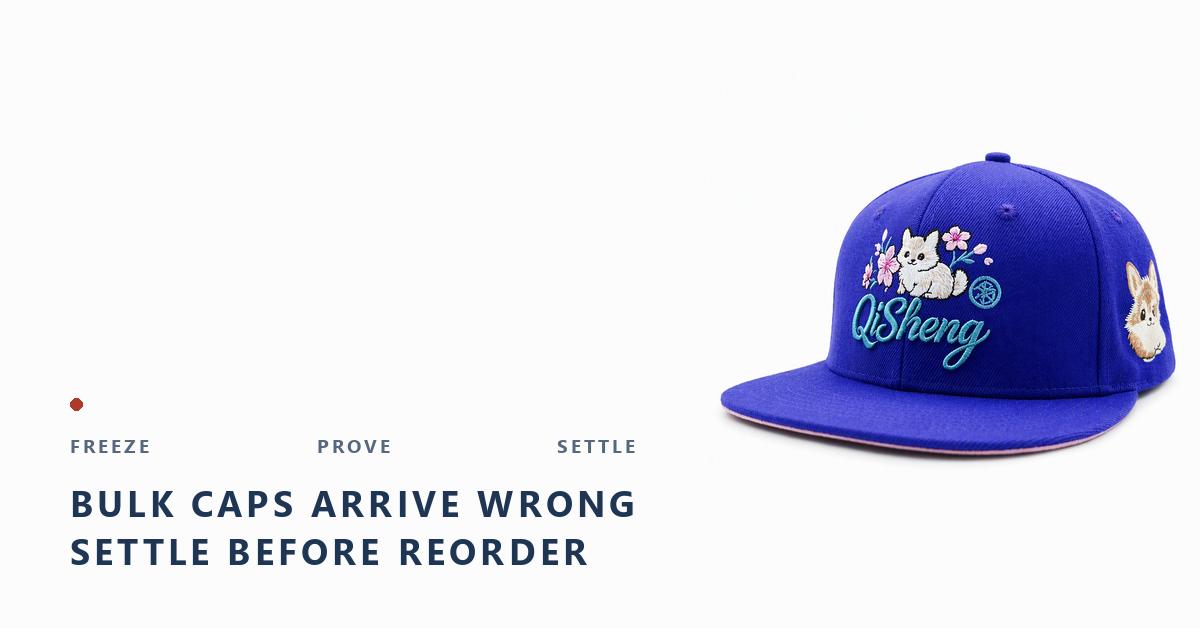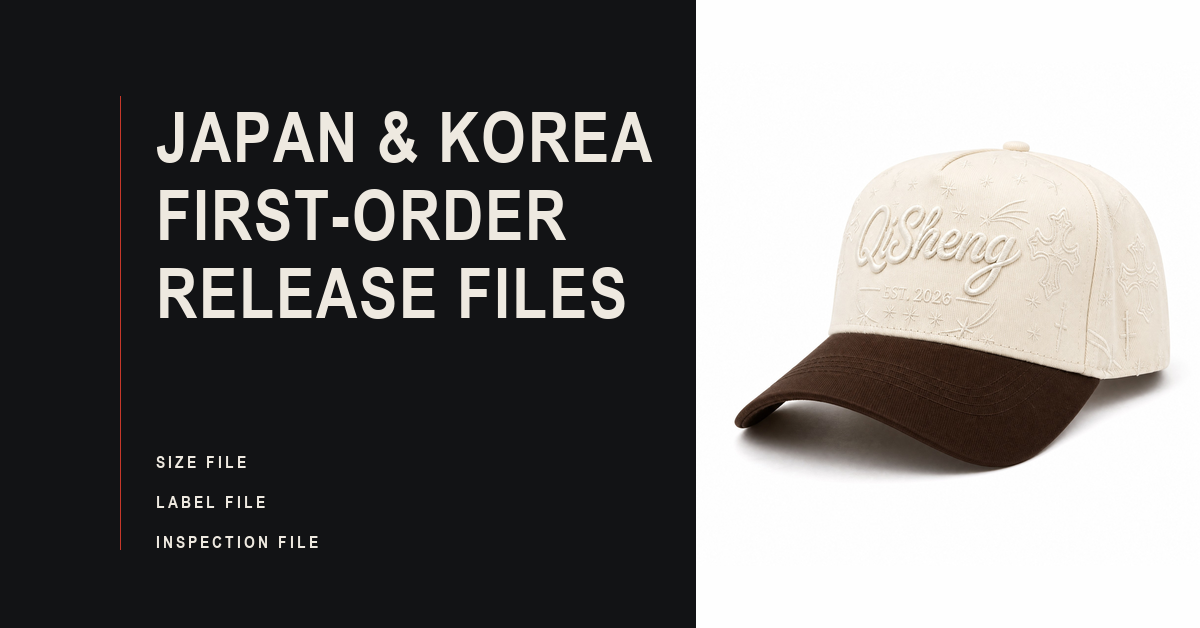


A private label cap manufacturer does more than sew a logo onto a standard cap. The buyer is building a branded product with an inside label, care information, hangtag, packaging, decoration and a repeatable fit. If those elements are left until after the cap sample, revisions become slower and leftover components become harder to control. Start with a label map that shows every place the customer will encounter the brand.

This guide is for fashion labels, retail programs, e-commerce brands and distributors launching a branded cap range. It focuses on production decisions, not legal advice about trademark registration or care-label compliance. Confirm market-specific label requirements with your own compliance team before bulk release.
A private label cap manufacturer should receive a brand map
Before asking for a sample, list the cap body and every branded component. Include the front decoration, side or back mark, inner label, sweatband, size sticker, hangtag, polybag, carton mark and insert. For each item, record the artwork owner, file type, dimensions, color reference, material, placement and approval status. This turns a vague request for “private label” into a production brief a factory can quote.
The private label cap manufacturer needs this map early because labels and packaging can have different minimums from the cap body.
Separate mandatory items from options. A first launch may need one standard polybag and a woven label, while a premium line may add a custom sweatband and printed carton. The decision should be commercial, not accidental. The QSHeadwear OEM/ODM service page describes private-label support for internal labels, hangtags and bespoke packaging, but the buyer should still specify each component and its quantity.
| Brand touchpoint | Specification to lock | Approval evidence | Reorder risk |
|---|---|---|---|
| Front or side logo | Method, size, placement and colors | Actual-size decorated sample | Artwork version drift |
| Inner label | Fold, material, wording and seam position | Sewn sample photograph | Wrong revision in finished stock |
| Sweatband | Material, width, logo and comfort | Inside construction sample | Heat or stiffness changes fit |
| Hangtag | Stock, print, string and SKU data | Printed proof and tag map | Mixed SKU or missing tag |
| Packaging | Bag, carton, marks and pack quantity | Pack-out sample and carton map | Damage or receiving errors |
Choose the cap body before you design the label
Private label buyers often begin with artwork because it feels tangible. The wearer experiences the crown depth, brim curve, closure, fabric hand and sweatband first. Decide the target fit, use case, climate and price position before finalizing the decoration. A logo that looks right on a structured six-panel cap may need a different size or backing on a soft unstructured body.
Use the QSHeadwear product center to compare available cap directions, then ask the team which construction, fabric and decoration route can support your intended range. Product-category images are a starting point; the approved sample remains the production reference.
Design the label for the actual seam and wearer
Inside labels have a physical job. A stiff fold, rough edge or misplaced seam can make a good-looking cap uncomfortable. Review the label width, fold allowance, stitch line, thread color and contact with the forehead. If the cap is washed or garment-dyed, ask how the label and care print will respond to the finish. Record the approved inside view, not only the front view.
Keep label wording separate from marketing copy. Brand name, size, country-of-origin wording, fiber information and care instructions may have different owners. Have the buyer's compliance contact approve the final version before labels are produced. A private label cap manufacturer can execute the file, but the brand remains responsible for the information it supplies.
Use a sample sequence that answers one question at a time
A sensible sequence may include a construction sample, a decorated sample and a complete brand-pack sample. The first checks fit and proportion. The second checks logo size, thread or print color, patch edge and inside comfort. The third checks labels, tags, polybag, carton marks and how the cap arrives after packing.
Consolidate comments by revision. Do not ask the factory to adjust fit, label location, artwork and packaging in one untracked message. If the brand changes the cap after labels are ordered, record whether the component remains usable, needs a new minimum or becomes buyer-owned surplus.
A responsive private label cap manufacturer should return a clear sample status for each of those questions rather than combine them into one unexplained approval.
Decoration and private-label packaging carry different risks
Decoration changes the appearance customers see. Packaging changes the cost and the condition in which the customer receives it. Embroidery can distort a light panel, while a rigid patch can change comfort. A tight carton stack can flatten a curved brim. Test both on a complete sample. If the buyer uses e-commerce fulfillment, include the warehouse handling step in the pack-out review.
Ask for a final carton map with SKU, color, destination, carton sequence and quantity. This is especially important when several private-label variants use the same cap body but different labels or logos.
Lock material claims to the product file
Private label buyers often want organic cotton, recycled polyester, wool blends or a washed finish as part of the brand story. State the exact composition, color and trim scope. Ask which document or supplier reference supports the claim and whether the claim covers the cap, the label, the packaging or only one component. Do not print a broad material message until the order file supports it.
Build quality checks around the customer view
Quality control should cover the outside and inside. Check crown symmetry, brim shape, closure operation, stitch cleanliness, logo position, label wording, sweatband comfort, tag identity, packing count and carton marks. A receiving team should be able to identify the expected version without opening every carton.
Give the private label cap manufacturer the same checklist used by the warehouse so a label or packaging error is visible before dispatch.
QSHeadwear describes material inspection, pre-production sample approval, in-line monitoring and AQL 2.5 final inspection. Ask for the product-specific checklist and exception process. ISO 2859-1 can support sampling terminology, but it does not choose your cap tolerances or define whether a label error is acceptable.
| Control gate | Buyer reviews | Record to retain |
|---|---|---|
| Brand file | Logo, label text, colors, SKU and packaging versions | Master file and revision log |
| Construction sample | Fit, brim, closure, fabric and inside comfort | Measured sample approval |
| Decorated sample | Logo effect, placement, backing and color | Actual-size photo or signed sample |
| Pack-out sample | Bag, tag, carton, stack and SKU identification | Carton map and pack photograph |
| Pre-shipment release | Count, defects, labels, cartons and exceptions | Inspection report and deviation approval |
Price the entire private-label system
Ask for a quote that separates cap body, decoration, labels, sweatbands, tags, bags, cartons, sampling, tooling, inspection and freight. A low cap price can hide a large custom-label minimum or a packaging setup fee. Compare the total landed plan at pilot, launch and reorder quantities.
Also ask who owns unused labels and packaging. If the buyer changes a logo or size after the run, the unused balance can become a real cost. A clear ownership and storage rule protects both sides.
OEM and ODM can support different private-label launches
OEM is useful when the brand already controls the fit, materials, artwork and component list. ODM can help when the team needs a base collection, trend direction or proposed materials before adding its own label system. QSHeadwear's public OEM/ODM information explains that the company works from tech packs, AI/PDF files or physical samples and also supports concept development and private-label collection planning.
Plan reorders before the first label is printed
Archive the approved cap, pattern, fabric reference, decoration file, label artwork, tag data, packaging specification and inspection record. Define which files can change between seasons and which require a new sample. A private-label program becomes more valuable when the next purchase can reuse a controlled product file rather than rebuild the brand from screenshots.
That reorder passport lets a private label cap manufacturer quote the next season against the approved version instead of guessing which detail the brand meant.
Send QSHeadwear a label-ready brief
Include the cap reference, fit target, material, decoration, label map, tag copy, packaging, quantity by SKU, destination and timing. Use the QSHeadwear contact page to ask which components need separate minimums and which sample stages they recommend.
A capable private label cap manufacturer helps connect the cap, the label and the receiving experience. When those pieces are approved together, the brand is easier to launch and easier to reorder.
Private label cap manufacturer questions
What does private label mean for a cap order?
It usually includes the cap plus brand-controlled decoration, labels, tags, packaging and product information, not only a front logo.
When should I send the label artwork?
Send it with the initial brief so the factory can check placement, minimums, material, lead time and compatibility with the selected construction.
Can I use one label system across several cap styles?
Often, but check seam width, fold, material, comfort and wording for every style before ordering a shared component.
Should the cap sample come before the packaging sample?
Review the cap construction first, then approve decoration and a complete pack-out so packaging decisions reflect the real product.
Who owns unused private-label components?
The quotation and order terms should state ownership, storage period, reuse, disposal and the cost of any revision.
How do I protect label version control?
Use one master file, revision IDs, a component map and a named approver for artwork, wording and packaging.
What should be checked inside a private-label cap?
Check label wording, fold, stitch, seam position, sweatband, rough edges, comfort and any care or origin information.
Does packaging affect cap quality?
Yes. Compression, heat, stacking and movement can change shape and decoration, so approve the actual pack-out.
Can an ODM route work for a new private-label brand?
Yes. ODM can provide a base style or design direction, while the buyer still controls the brand files and approved adaptations.
What should I send QSHeadwear?
Send the cap direction, fit, material, logo, label map, tags, packaging, SKU quantities, destination and required dates.