

Every buyer in headwear goes through the same sequence: request quotes, receive samples, pick a wholesale baseball caps supplier, place the bulk order. The first bulk order is then the real test, and by that point the season is committed. The audition order moves that test forward, into a run small enough to absorb, and turns it into something you can score instead of something you have to argue about later.
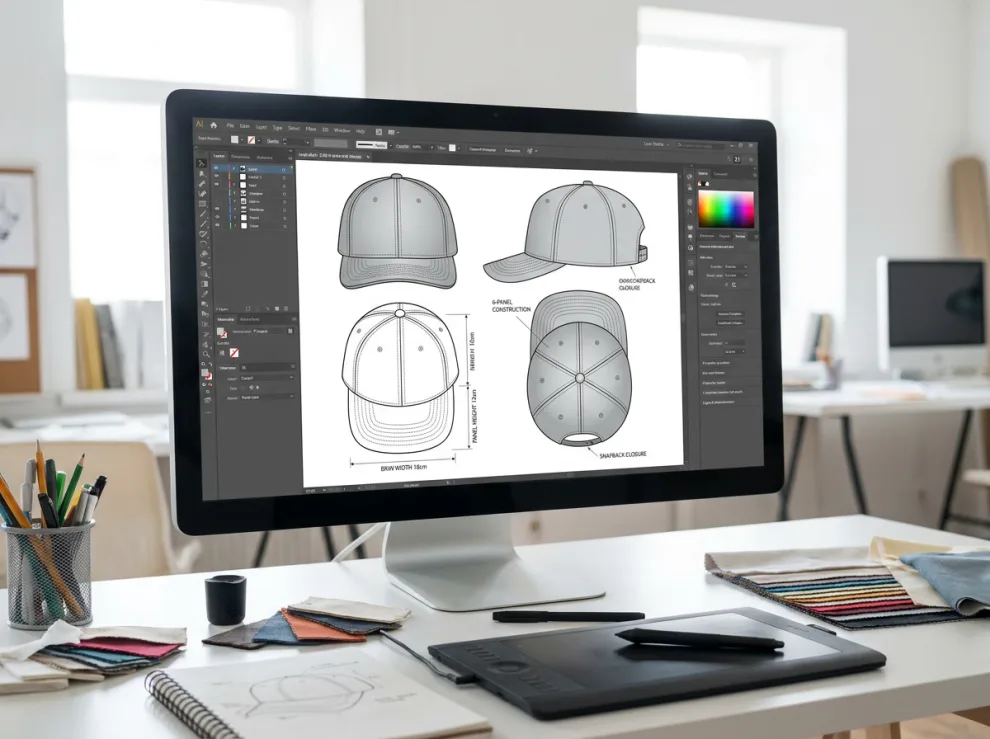
The idea is simple and slightly against instinct. Rather than asking for a free sample and then ordering 3,000 pieces, you pay for 150 or 300 pieces of a live style, at a real price, on a real date, and you judge the result against five written gates. The extra cost of that small run is trivial compared with a bulk order that arrives wrong, and it produces evidence instead of impressions.
Why a paid trial order beats a sample and a quote
A sample is made under different conditions from bulk. It is often built by the sampling room rather than the line, decorated on a machine that is not running at speed, and inspected piece by piece by the person who made it. A sample therefore proves capability, not repeatability. A quotation adds nothing to that picture, because a price tells you what a supplier hopes to sell rather than how a program will behave in a busy month.
An audition order is small enough to be affordable and real enough to be honest. It hits the cutting table, the sewing line and the embroidery machine in the same month as everyone else's orders, which is precisely when problems show up. A wholesale baseball caps supplier who cannot describe its production window in dates, only in adjectives, is not ready to carry a season.
What the audition order should contain
Design the trial so that it exercises the parts of the program you care about most. If a detail will not appear in the trial, do not expect to learn anything about it.
| Item | What to specify in the trial | What it reveals in the result |
|---|---|---|
| Quantity | One live style at 150 to 300 pieces | Whether the pattern holds past the first dozen pieces |
| Construction | The panel count, crown and closure you intend to scale | Fit and shape consistency across the run |
| Decoration | Two positions if your program uses two | Registration, backing and stitch density at speed |
| Colourways | Include one split colourway | How well the factory handles panel matching |
| Packing | The carton and labelling plan you will use at bulk | Whether the pick-and-pack instructions survive contact with the line |
| Dates | A fixed in-hand date with a three-week float | How the factory communicates when one step slips |
The five gates, and what each one measures
Score the result on gates rather than impressions. Each gate needs a measurement, a pass threshold and a fail threshold written before the goods arrive, because after they arrive everyone becomes reasonable.
| Gate | What is measured | Pass looks like | Fail looks like |
|---|---|---|---|
| Material and hand | Weight, surface and feel against the approved swatch | Within the tolerance agreed on the swatch card | A different mill lot that is close in colour and wrong in hand |
| Pattern and fit | Crown, brim, panel width and closure travel on five sampled pieces | All five inside the tolerance band | Two or more pieces drifting at the crown or sweatband sweep |
| Decoration | Placement, stitch density, backing and thread reference | Matches the sew-out and holds at both positions | Lettering filling in or placement off by more than a few millimetres |
| Packing and data | Carton counts, labels, size split and packing list accuracy | Labels match the split and the list matches the cartons | Mixed sizes in a carton or a list that does not reconcile |
| Dates and communication | Milestone updates against the agreed calendar | Proactive notice before a date moves | Silence followed by a revised date |
Gate one: material and hand at bulk
Ask for the mill lot details on the trial run and keep the swatch card that the material was approved against. The most common failure at this gate is not a wrong colour, which is visible, but a different hand, which is not. A brushed cotton that arrives shinier, a twill with a looser weave or a washed shell with a slightly different surface all pass a photograph check and fail a customer's fingers.
If the trial is your first order with a supplier, ask whether the fabric was reserved against your quantity or drawn from general stock. Both are acceptable, but the answer tells you what happens when a fabric goes short in a peak month.
Gate two: pattern and fit across the size run
Measure at least five pieces from the trial, not one. Pull them from the start, the middle and the end of the run if the factory can identify them, because drift inside a run is the failure a single sample can never reveal. Record crown height, brim length and board temper, panel width, head circumference on the size you ordered, and closure travel at both ends.
If the program uses several sizes, ask for at least one piece from each end of the size range. Grading errors concentrate at the extremes, and a wholesale baseball caps supplier that grades accurately on the middle size can still miss the smallest by a full centimetre.
Gate three: decoration
Decoration is the gate that most often separates a wholesale baseball caps supplier that samples well from one that produces well. Ask for the sew-out or print proof with the trial, then compare the trial pieces against it rather than against the digital mock-up. Check registration between positions, especially on a two-position program, and check whether the backing settles into the shell or floats.
Where the program will run across colourways, insist the trial includes at least one colour change on the same equipment. Changing thread on a multi-head machine is where the day goes in a large factory, and it is also where a supplier's real setup charge lives.
Gate four: packing, labelling and carton data
Packing is unglamorous and it is where a launch breaks. Give the trial the carton plan you intend to use at bulk, including the size split, the label content and the number of pieces per carton. Then check three things on arrival: whether the sizes in each carton match the label, whether the packing list reconciles with the physical cartons, and whether anything was folded or stacked in a way that creases the brim.
If you sell into retail, run one carton through the opening the way a warehouse would. Buyers who test packouts on a small run avoid re-labelling 40 cartons in a distribution centre later, which is a cost that lands on the buyer rather than on the wholesale baseball caps supplier who shipped it.
Gate five: dates and communication
This gate is measured during the run, not after it. Note when the factory confirmed the material, when it started cutting, when the goods left the line and when they shipped, and compare those dates against the calendar agreed at order confirmation. One slip is normal. A slip that arrives without a warning is the finding.
What the trial must prove about capacity
A 300-piece run can be produced comfortably by a factory that cannot produce your 6,000-piece season. Ask during the trial which month your bulk order would occupy, how many lines and machines it would touch, and what the factory's stated monthly capacity is. A supplier running 120,000 to 150,000 pieces a month across sampling, embroidery and sewing has room, but the answer still needs to be attached to your order rather than offered as a general reassurance.
Scoring the audition without arguing about taste
Score each gate as pass, pass with note, or fail, and write the note at the moment you open the carton. Keep the scoring to the gates you defined and resist adding new requirements once the goods are in front of you; that is how a legitimate supplier gets marked down for a decision nobody asked for. If a gate fails, photograph the failure with a tape measure or a ruler in the frame, because a photograph ends most disagreements before they start.
Reading a wholesale baseball caps supplier's first reply
Before the trial is even quoted, the first reply tells you how the program will run. A useful answer names the construction it is quoting, asks which decoration positions apply, states the quantity tier the price belongs to, and offers at least one date. A weak answer quotes a single figure and asks how many pieces you want. The difference is not politeness, it is whether the wholesale baseball caps supplier has a production plan behind the number.
Send the same brief to two or three candidates and compare the replies side by side. Replies that ask different questions are revealing, because the questions show what each factory expects to go wrong.
What to do with the result
Five passes means scale the program and use the same documentation for the bulk order. Three or four passes with one note usually means scale with an added checkpoint, most often a pre-production sample approval or an in-line photograph at a specific stage. A failed material or pattern gate means stop, because those two get worse at volume rather than better.
Two ways buyers waste the audition
The first is ordering a style nobody sells, which produces a result you cannot interpret because you have no baseline for comparison. The second is running the trial on a rush calendar with no float, which tests the factory's ability to absorb your own lateness rather than its production quality. Use a live style and a date that has room in it.
Running an audition order with QSHeadwear
Our sampling develops in about three to five business days and bulk runs in roughly fifteen to twenty days, extending to twenty-five or thirty days above 5,000 pieces. A trial run sits between those two: enough pieces to pass through cutting, sewing and decoration in production conditions, without committing your season. The inspection sequence is the same one we use at bulk, moving through material inspection, pre-production sample approval, in-line monitoring and a final AQL inspection.
Bring the carton plan and the decoration positions into the trial brief. Programs that test packing early rarely discover a labelling problem in the week the goods ship, and the reference sample from the trial becomes the baseline every later order is measured against. We would rather run a small order and be judged on the result than write a persuasive quotation as a wholesale baseball caps supplier and be judged on the invoice.
Next step: choose the style that predicts the most
Pick the construction that is hardest to make well, not the easiest. If a supplier holds tolerance on your most demanding style, the rest of the range is straightforward.
Send the trial brief through our OEM and ODM page, browse the constructions we build on the product pages, or raise the order through the contact page. Our notes on the reference sample library explain how to file the result so the next season starts from evidence, and the US International Trade Commission tariff database is the reference we use when a trial shipment raises a classification question. Where a trial shipment has to clear customs before the result can be judged, the US Customs and Border Protection guidance on entry and importer duties is the other page worth bookmarking.
Audition order questions from wholesale buyers
How large should an audition order be?
Between 150 and 300 pieces for a single style. Below that number the run does not pass through the same production conditions as bulk, and above it the trial starts to carry real inventory risk. The point is to cross the cutting table, the sewing line and the decoration machine at production speed.
Should the supplier charge full price for an audition order?
Expect a price close to the small-quantity tier rather than the bulk rate, because that is the honest cost of the run. A heavily discounted trial usually means the pieces were produced alongside another order, which removes most of what the trial was supposed to test.
Can we skip the trial and trust the sample?
You can, and programs with a long history at the same factory often do. The trial matters most when the supplier is new, the construction is new, or the previous bulk order showed drift. A sample proves capability; the trial proves repeatability under a calendar.
How many pieces should we measure?
At least five per style, drawn from the start, middle and end of the run where the factory can identify them. Measuring one piece tells you whether the sample was good. Measuring five tells you whether the run held, which is the question that matters at bulk.
What if the trial arrives late but the quality is perfect?
Treat the date as its own gate and record it separately. Quality and reliability are different capabilities, and a supplier that produces well on a soft calendar may still be a risk in a peak month. Log the slip, then decide whether the bulk order needs a reserved slot in writing.
Should the trial include our packaging?
Yes, on at least one carton. Packing specifications survive the factory floor less often than buyers expect, and a trial carton costs almost nothing to test. It is also the easiest place to catch a size split that will not work in your warehouse.
How do we compare two suppliers fairly?
Use the same style, the same carton plan, the same decoration positions and the same gate thresholds, ideally in the same month. Different trial briefs produce results you cannot compare, which is how buyers end up choosing on price by default.
What do we do with the failed pieces?
Keep a small set as evidence with the measurement record and the photograph attached, and keep one clean piece as a reference if the style moves elsewhere. Most suppliers will not ask for the rejects back, and the record protects both sides if a later conversation turns into a claim.
Does the trial replace a third-party inspection?
No, and they answer different questions. The trial tells you whether the supplier can hold tolerance across a small run. An inspection on the bulk order tells you whether the goods you are about to receive match the approved sample. Programs with a retail commitment usually want both.
How soon can an audition order ship?
With an approved construction and materials on hand, a small run can move through cutting and sewing inside a normal production window, following the same sample timing of roughly three to five business days if decoration artwork is new. Add freight time, and allow a float of at least two weeks if the trial gates will decide whether you scale.