

A factory can reproduce an artwork file perfectly and still manufacture the wrong product from a rights-control perspective. The buyer may have supplied an agency concept that was never assigned, a collaboration logo approved for one launch only, a sports graphic licensed for one country, or a marketplace image copied into a development brief without a clear owner.
For custom headwear, artwork authorization should be a production gate, not a sentence buried in a purchase order. The practical objective is to connect every visible mark to a source, an approving party, a permitted use and a finished SKU before sampling or bulk production begins. This guide provides an operating framework for buyers and factories; it is not legal advice for a particular country or dispute.
Separate Rights Approval From Artwork Quality
A clean vector, approved thread chart and successful sew-out prove that a design can be produced. They do not prove that the person who sent the file is entitled to authorize its use. Technical approval and rights approval answer different questions and need different evidence.
The embroidery sew-out approval process controls stitch translation, placement and workmanship. Keep that workflow, but do not let a signed sample substitute for a documented statement about who supplied the mark and what use was approved.
Ask Four Questions Before Development
Who created or controls the artwork? Who is authorizing this order? What products, channels, territories and period are covered? What changes, sublicensing or factory access are allowed? If the project cannot answer these questions, the factory should pause the decorated sample rather than trying to interpret an informal assurance.
Do Not Make the Factory the Rights Investigator
The brand, licensee or commissioning buyer should own the commercial rights decision. The factory can require records, identify obvious mismatches and control files, but it should not provide legal clearance or infer permission from a familiar logo, public website or previous order.
Classify the Artwork Source
Every artwork record should identify how the design entered the program. Source classification determines which evidence and approvals are relevant.
Brand-Owned Artwork
This includes marks and graphics created internally or acquired under documented terms. Record the owning entity, master-file location, brand contact and any markets or product categories that require additional review.
Customer-Supplied Artwork
A B2B buyer may send its own brand mark, an employer logo, an event identity or a client's artwork. The order file should identify the submitting company and the person giving production authorization. A file attached to an email is not, by itself, a complete approval record.
Commissioned Creative Work
Artwork from a freelance designer, agency, photographer or illustrator should be linked to the agreement or written confirmation that defines permitted commercial use. Do not assume payment for creative services automatically answers ownership, adaptation or territory questions.
Licensed or Collaboration Artwork
Sports, entertainment, artist, school, charity and co-branded projects often operate within defined limits. Record the licensor or partner, approved products, channels, territories, quantities or period where applicable, and the contact authorized to approve production files.
Reference-Only Material
Mood boards, competitor photographs, marketplace screenshots and social posts may help explain direction but should be labelled reference only. They must not drift into the production-artwork folder as if they were approved source assets.
Build an Artwork Authorization Record
Use one short record for each controlled artwork family. It should sit above embroidery files, print separations and sample photographs so a reviewer can see the commercial permission before reviewing production detail.
| Field | Question answered | Example evidence |
|---|---|---|
| Artwork ID and revision | Which visible design is controlled? | Master file name, checksum or dated preview |
| Source type | How did the design enter the program? | Brand-owned, customer-supplied, commissioned or licensed |
| Authorizing party | Who approved production use? | Named company, contact and dated confirmation |
| Permitted scope | Where and how may it be used? | Products, markets, channels, quantity or period |
| Adaptation rights | May the design be simplified or reformatted? | Written limit plus approved derivative |
| Factory access | Who may receive production files? | Approved site and named subcontractor status |
| Expiry or review trigger | When must approval be checked again? | Date, reorder, new market or design change |
The record does not need to reproduce an entire contract. It should identify the controlling document and translate the relevant operating limits into fields that development, sourcing and production teams can follow.
Understand What the Mark Is Doing
The same graphic can involve different rights and business functions. A source-identifying word or symbol may function as a trademark, while original drawings, photographs, advertisements or technical drawings may fall within copyright systems depending on the work and jurisdiction.
The USPTO trademark overview explains that a trademark can be a word, phrase, symbol, design or combination that identifies the source of goods or services. It also cautions that rights concern how a mark is used with particular goods or services, not unlimited ownership of a word or phrase in every context.
WIPO's copyright overview describes copyright as rights creators have over literary and artistic works and notes that protected works commonly include drawings, photographs, advertisements and technical drawings. Exact protection and permitted use vary, so unclear cases should go to qualified counsel rather than a factory production team.
Define Scope in Production Language
Legal documents often use broader language than a sample room needs. Convert the permission into production fields without changing its meaning.
Product Scope
State whether approval covers caps, beanies, visors, patches, packaging, point-of-sale materials or other goods. Approval for one merchandise category should not silently expand to another because the same file is technically reusable.
Territory and Channel
Record the intended countries or regions and whether use is approved for retail, e-commerce, corporate gifting, events, uniforms or promotional distribution. A collaboration planned for one market should not enter a global catalog by default.
Time and Order Scope
Permission may be ongoing, period-limited or tied to a particular purchase order, campaign or quantity. Include a review trigger even when no fixed expiry exists, such as every reorder, new market or material change.
Modification and Derivative Scope
Production often requires simplification for small embroidery, colour reduction, separation for print, stitch-file generation or a shaped patch border. State who can approve these adaptations and whether the altered file can be reused.
Link the Master Artwork to Production Files
The factory normally produces from a derivative file rather than the original brand master. The authorization record should link the master to each digitized, separated, moulded or printed production file.
Use One Revision Chain
Give the master artwork, technical adaptation, sew-out, sample and bulk ticket a common artwork ID with distinct revisions. The engineering change-log framework shows how an old state, proposed state, affected scope, validation and approval can remain traceable when a design changes.
Control Small-Scale Adaptations
Opening a counter, thickening a line or removing tiny wording may improve legibility but still change the artwork. Use the small-logo legibility guide for technical decisions, then send the adapted visual to the authorized brand owner instead of allowing the digitizer to become the final design approver.
Protect Native Files
Separate view-only previews from editable masters and machine files. Define who can download, edit and distribute each format. File access should follow the approved factory route, not a broad messaging group.
Make Authorization a Sample Gate
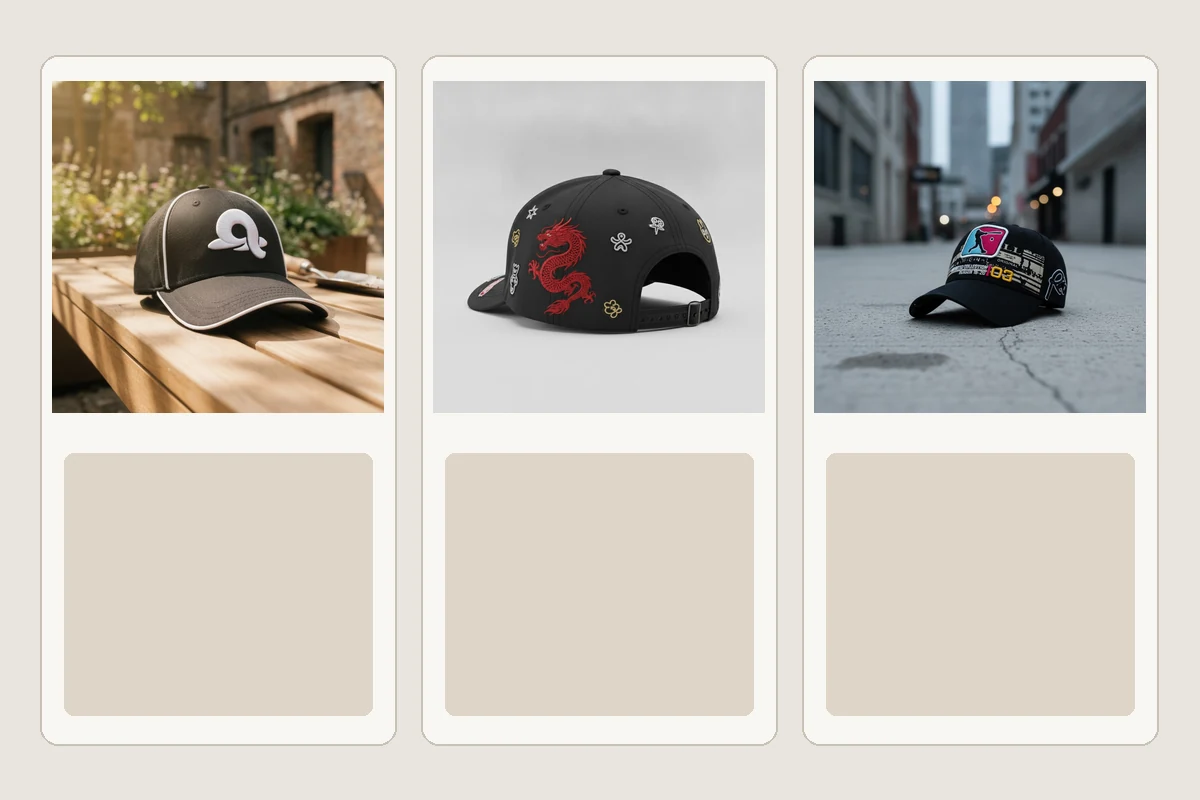
The safest point to stop an unclear design is before digitizing, screen preparation, mould cutting or decorated sampling. Add a rights-status field to the sample request: approved, conditional, reference only or blocked.
Do Not Confuse Mockup Approval With Permission
A customer may approve the appearance of a mockup while the commercial authorization remains unresolved. Keep two fields: visual approval and production authorization. Both should be complete before the relevant production work begins.
Carry the Record Into PP Release
The PP sample release docket links the physical cap to specification, materials, decoration, labels and approvers. Add the artwork authorization ID to that docket so the released cap points to both technical and rights-control evidence.
Control Licensed and Collaboration Programs
Licensed programs usually need more precise routing because the brand, licensee, retailer, agency and factory may all participate in approval.
Map the Approval Chain
Name the party that provides the master, the party that approves adaptation, the party that releases samples and the party that authorizes bulk. Do not assume one approval covers all roles.
Control Style Guides and Symbols
Keep approved colours, exclusion zones, minimum sizes, symbol treatment and product-category restrictions with the artwork record. If a registration symbol or other notation appears, do not add, remove or relocate it without instruction from the responsible owner.
Track Expiry and Sell-Off
Record the last date for ordering, production, shipment or sale when the controlling agreement provides one. Open inventory, unused labels and production files need a defined disposition when the authorization ends.
Manage Subcontractors and File Access
Embroidery, printing, moulding or patch work may occur outside the main sewing site. The buyer should know whether the approved production route includes those parties and what files they receive.
Release the Minimum Necessary File
A production partner may need a machine file and visual reference, not the complete global asset library. Limit access by role and project, and avoid distributing editable masters when a controlled derivative is sufficient.
Record Every External Recipient
Keep the recipient company, site, contact, file revision, purpose and date. If subcontracting changes, reopen both technical and authorization review before forwarding the artwork.
Close Access After the Program
The supplier closeout guide explains how to recover product data and revoke access. Apply the same discipline when a license expires, a collaboration ends or a decoration partner leaves the route.
Set Reorder and Change Triggers
A previous production run does not automatically authorize the next one. Recheck when the order, market, channel, artwork, factory site or approving party changes.
Define a Reorder Check
Before quotation or material booking, confirm that the artwork revision matches the active authorization, the scope covers the proposed SKU and destination, and no expiry or review trigger has passed.
Open a New Approval for Material Changes
A different crown colour, textured fabric, reflective thread or larger decoration can change how a mark appears. Even if commercial permission remains valid, the visible adaptation may need fresh brand approval.
Retain the Physical Baseline
Connect the authorized artwork record to the approved physical sample. The golden sample library provides a system for keeping the sample, revision, materials and production history together across seasons.
Respond to Unclear or High-Risk Artwork
The factory should use a neutral escalation process rather than accusing a buyer or quietly proceeding. Mark the artwork blocked, state which evidence is missing and ask the responsible commercial owner to resolve it.
Use Specific Hold Reasons
Examples include missing authorizing entity, unclear collaboration term, reference image supplied as production art, expired approval, unapproved derivative, or new territory outside the recorded scope. A precise reason is easier to close than “IP concern.”
Do Not Rely on Online Availability
A graphic appearing on a website, social account or marketplace listing does not establish permission for the proposed merchandise program. Treat public images as references until the buyer provides an approved production source and authorization path.
Escalate Legal Questions Appropriately
Trademark, copyright, design, publicity and contractual questions vary by jurisdiction and facts. The production record should show when expert review was requested and who made the commercial decision; it should not attempt to replace legal analysis.
Keep an Audit-Ready Artwork File
The final file should include the artwork record, controlling authorization reference, master preview, production derivatives, sample approvals, deviations, recipient log, order links and expiry or closeout evidence.
The SKU passport framework can index the active artwork authorization alongside the product's material, label and production records. This prevents a technically correct cap from becoming disconnected from the commercial permission behind its visible design.
Measure Control Quality
Useful operational measures include blocked samples resolved before development, files without named owners, expired authorizations found at reorder, external recipients without logs and products whose physical sample does not match the recorded artwork revision. These metrics improve the process without pretending to measure legal certainty.
Release the Right Design for the Right Program
Custom headwear artwork control begins before a stitch file is made. Classify the source, name the authorizing party, translate scope into production fields, link derivatives to the master, control external access and recheck authorization when the program changes.
A factory should be able to answer two questions at the same time: “Can we make this design correctly?” and “Do we have a documented production authorization for this use?” When both answers point to the same SKU, revision and order, the brand protects creative assets without turning the sample room into a legal department.