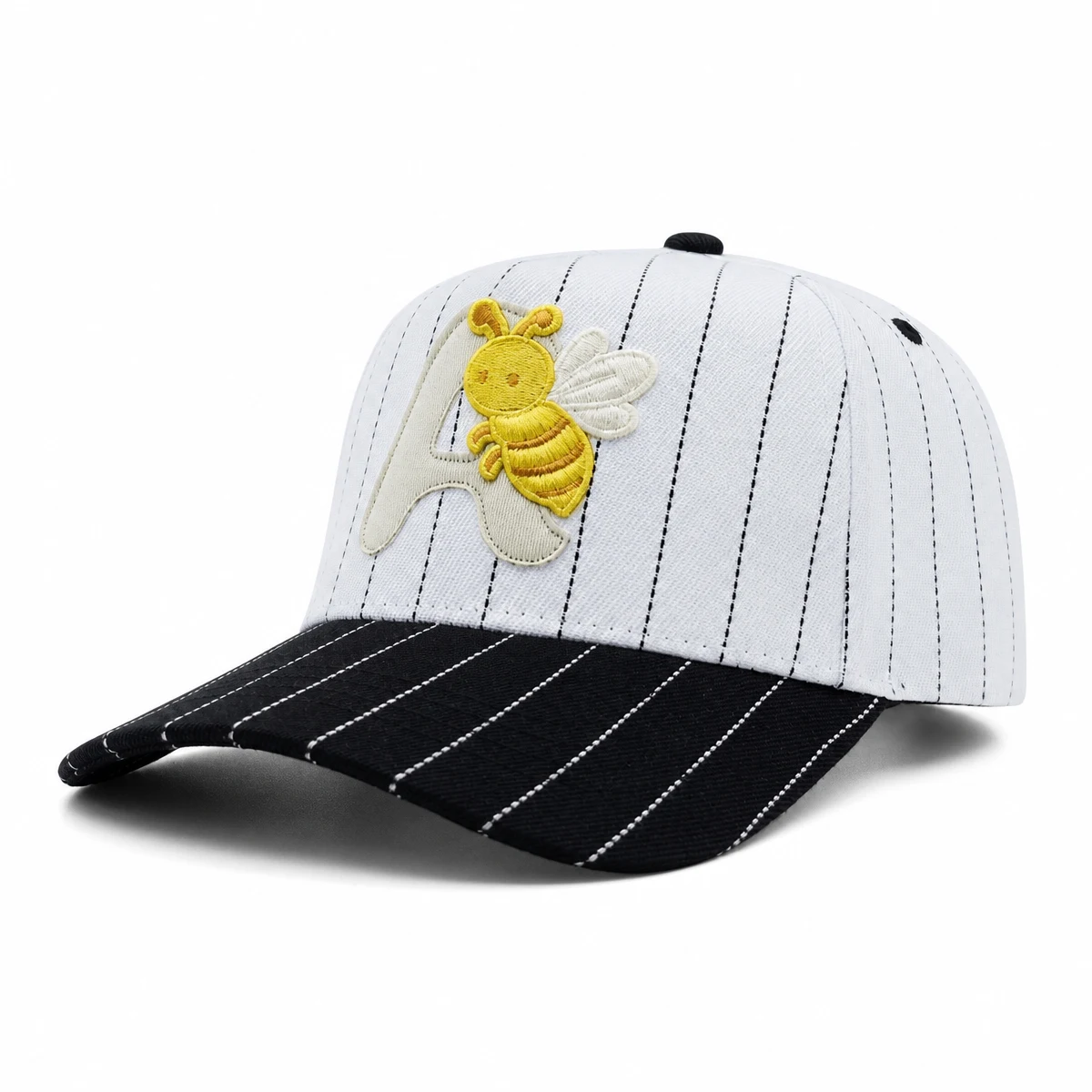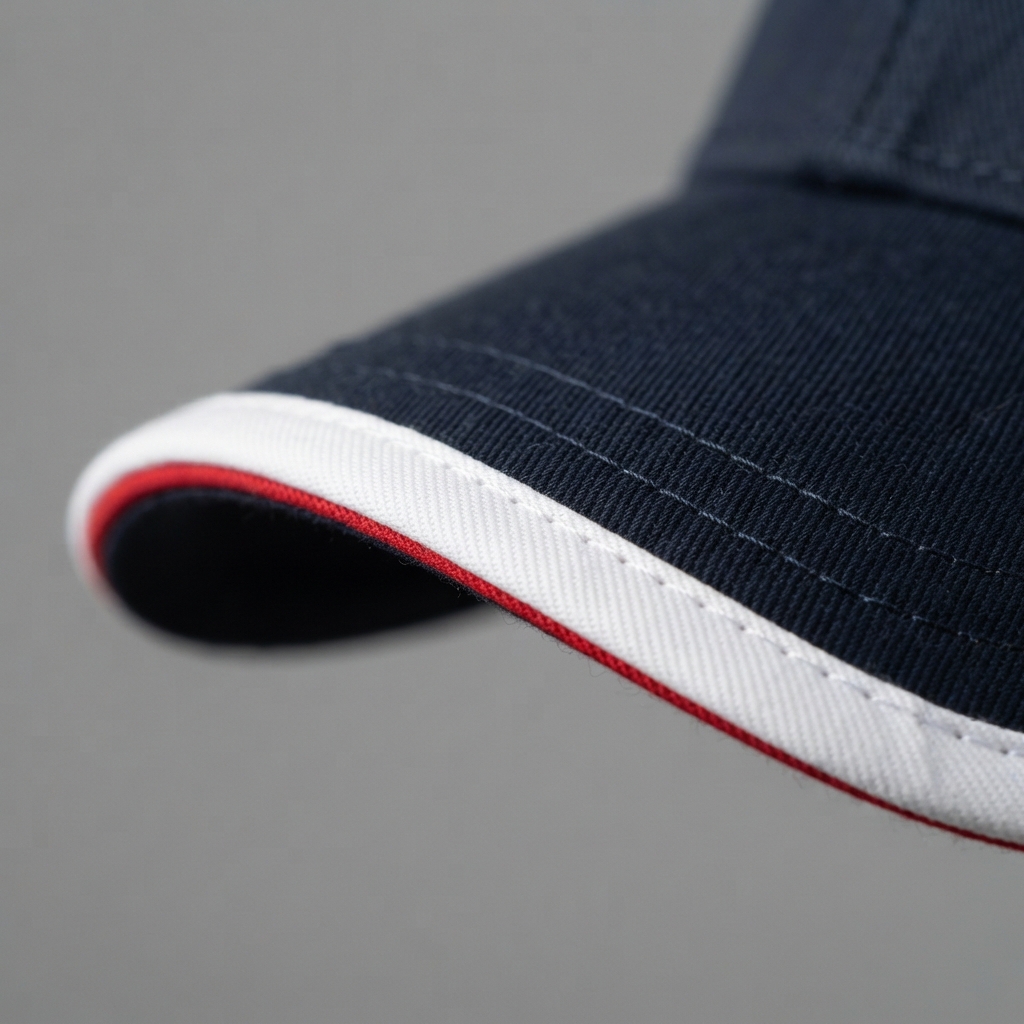


A cap can be made from lightweight fabric and still feel closed, damp or unstable. The wearer experiences the complete construction: where air can move, where sweat is absorbed, how the crown holds its shape and whether decoration blocks the intended ventilation zone.
For a buyer, “breathable” should therefore become a product-development decision rather than a loose fabric adjective. The practical question is not which single material sounds coolest. It is which combination of perforation, mesh, panel construction, sweatband and lining supports the intended wearer without weakening the cap or creating new quality problems.
This guide shows how to approve that combination through visible structures and repeatable evidence. It does not set a universal airflow value or claim that a cap prevents heat illness. Hot environments involve work rate, exposure, hydration, rest and other controls beyond headwear.
Begin with the wearer and the use condition
Describe the actual wearing period
A cap worn for a short retail promotion is different from one used through a long outdoor shift, a running session or repeated summer travel. Record the expected duration, activity, climate, styling requirement and care route. Those conditions determine whether the priority is rapid air exchange, sweat handling, shade, structure or a balance among them.
Separate comfort from safety claims
Ventilation features can support comfort, but they are not a complete heat-control program. The NIOSH training guide on reducing heat-stress incidents describes hot environments as a hazard and places exposure reduction, hydration, rest and worker assessment within a broader prevention approach. Use that context to avoid turning a perforated panel into an unsupported health promise.
Define what success should look like
Translate the use case into observable decisions. Examples include keeping the rear crown open, moving moisture away from the forehead, preserving front-panel shape or preventing decoration from covering airflow zones. The approval target should name both the intended benefit and the construction that produces it.
Treat airflow as a route through the cap
Map entry, movement and exit
Air does not move because a specification contains the word “mesh.” It needs an open route. Mark likely entry and exit zones on the crown, then check what sits behind them: seam allowance, backing, foam, lining, labels or hair-contact surfaces. A visible hole backed by a closed layer may contribute less than its appearance suggests.
Review the assembled shape
Flat material samples cannot show how panels curve, overlap and collapse during wear. Approve ventilation on a complete cap at the intended fit setting. The five-panel pattern and fit guide explains why crown geometry, brim position and front structure must be judged as one system.
Keep openings clear of hidden obstructions
Check the inside of the crown as carefully as the outside. Embroidery backing, reinforcement tape or a large care label can sit directly behind an open area. Record the inside view in the approved sample so the bulk line does not restore a conventional backing that closes the designed route.
Choose an opening method for the product
Use mesh when broad open area is acceptable
Mesh can open a large part of the rear or side crown while giving the cap an identifiable trucker or performance look. Specify mesh construction, colour, hand, recovery and attachment. Test whether the edge stretches, curls or distorts where it joins the front panel and closure.
Use laser perforation for controlled zones
Perforation can create a deliberate array in woven or synthetic panels without replacing the whole panel with mesh. Approve hole shape, spacing, orientation and distance from seams, edges and decoration. The exact layout should follow the selected material and pattern; one universal hole size or pitch should not be copied across products.
Use eyelets for local openings
Embroidered or metal eyelets create smaller local openings and can also become a visual feature. Check hole formation, edge finish, backing and alignment. A row that drifts relative to the panel centreline may be a visible defect even when every individual eyelet is intact.
Protect strength around perforated areas
Keep holes away from stressed edges
Seams, closure attachments and crown intersections carry repeated handling forces. Perforations placed too close to those zones can leave narrow bridges of material. Review the finished sample after bending and adjustment, not only while it is static on a table.
Control the cut edge
Inspect for incomplete cuts, fused residue, rough edges, scorching, colour change or distorted holes. Write defects as visible conditions rather than vague requirements such as “good laser quality.” The cap quality-control defect guide provides a method for linking each observation to an inspection stage and decision.
Reapprove when material changes
The same perforation file can behave differently on another fabric, coating or colour. A substitute may cut, stretch or recover differently. Treat material replacement as a reason to reconfirm the physical structure instead of assuming that the digital hole pattern controls the result.
Design sweat management beside airflow
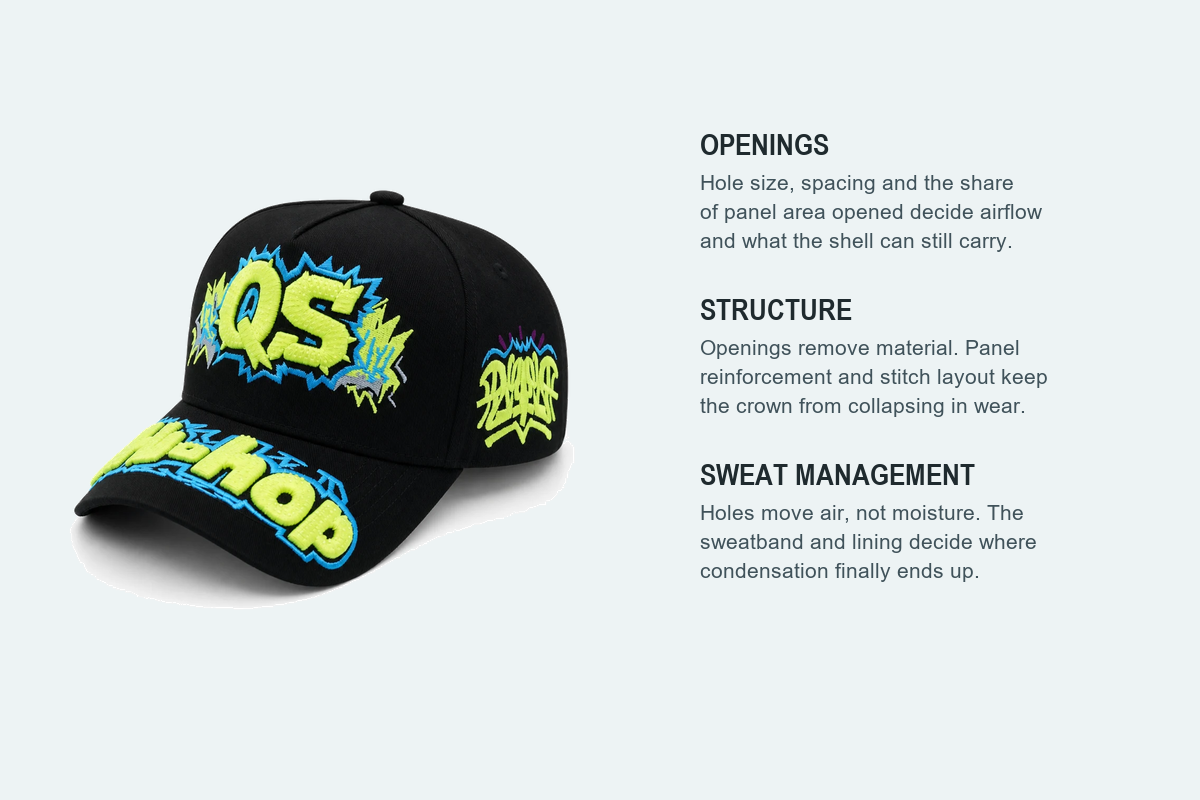
Select the sweatband for the use case
The sweatband contacts the forehead, absorbs or transfers moisture and affects fit. Specify its material, width, thickness, stretch, seam position and colour. Check whether it becomes stiff, saturated or visibly stained during the intended wear and care route.
Control lining and front support
A structured front can use foam, buckram or another support that reduces openness even when side panels are ventilated. Decide where shape is commercially important and where layers can be reduced. Avoid describing the whole cap as equally open when only the rear crown carries ventilation.
Test components at their real scope
If the program needs chemical or performance evidence, connect it to the exact shell, mesh, sweatband, backing or trim. The component-level test booking method helps prevent one material report from being presented as evidence for every part of the cap.
Reserve decoration space without blocking airflow
Draw protected ventilation zones
Mark areas where no patch, dense embroidery or transfer may be added. Give the decorator the assembled-cap view and the panel template. If decoration must cross an open area, prototype the combination and decide which function has priority.
Plan artwork for holes and seams
Small text and fine outlines can break when they cross perforations. Repeats and large graphics can also look discontinuous. Apply the same protected-zone thinking used for printed pattern continuity across cap panels: identify critical motifs, acceptable interruption and finished-view approval points.
Recheck colour on mixed surfaces
Mesh, solid shell and sweatband can reflect colour differently even when the purchase specification uses one colour name. Approve the coordinated appearance physically. For printed polyester areas, the sublimated headwear colour-control process shows why the material and assembled sample matter more than a screen mock-up.
Approve evidence at three levels
Approve the component
Keep the selected shell, mesh, sweatband, support and backing identities. Record any measured property only with its method, specimen condition and material reference. Do not compare supplier numbers that were produced with unknown or different test conditions.
Approve the assembled sample
Review front, profile, rear, top and interior views. Wear the cap at relevant closure settings and document fit, panel stability, blocked openings, sweatband position and decoration clearance. A material data sheet cannot replace this assembled-product review.
Approve the production process
Keep the perforation file or mesh specification, panel version, approved sample, defect examples and process notes together. Define who may change hole layout, backing, mesh or sweatband. This turns a comfort intention into a controlled construction.
Build bulk inspection around changed risks
Check position and completeness
Inspect hole arrays, mesh panels and eyelets against defined landmarks. Look for missing openings, blocked areas, drift, rough edges and inconsistent rows. Sample across production periods or material lots where relevant rather than selecting only adjacent units.
Check shape after handling
Operate the closure, flex the brim and crown, and observe whether perforated panels pucker or collapse. Compare with the approved sample under the same setup. Separate intended softness from unintended deformation.
Connect findings to release
The headwear inspection and release plan explains how product-specific defects should feed a lot decision. Do not invent one universal acceptance number for ventilation issues; classify defects according to function, appearance and buyer risk.
Compare structures with a physical trial
Keep variables understandable
If possible, compare prototypes that change one major variable at a time: solid versus perforated side panels, one mesh construction versus another, or one sweatband system versus another. When every component changes at once, the team cannot identify which choice produced the result.
Use consistent wear and review conditions
Record the wearer, fit setting, activity, duration and environment for any practical comparison. A short subjective trial is not a universal performance proof, but it can reveal blocked openings, unstable shape, forehead pressure or a sweatband problem before bulk approval.
Choose the commercial balance
The most open construction is not automatically the best product. Buyers may need front shape, decoration area, colour consistency, durability and target cost as well as comfort. Approve the combination that serves the actual program and state where its ventilation features are located.
Record rejected options as well as the selected one. A short note explaining that one mesh distorted, one perforation layout weakened an edge or one sweatband closed the fit can prevent those options from returning during costing or a later reorder.
Turn “breathable” into a controlled cap specification
A credible breathable-cap brief begins with use, then maps an airflow route, selects the opening method, protects structural zones and coordinates sweatband, lining and decoration. It closes with a physical sample and inspection language that production teams can repeat.
QSHeadwear can develop mesh, perforated and mixed-panel concepts against a buyer’s fit, artwork and channel requirements. Send the intended use, reference cap, target structure and claim wording so the development team can separate what should be designed, what should be measured and what must be confirmed on the finished sample.