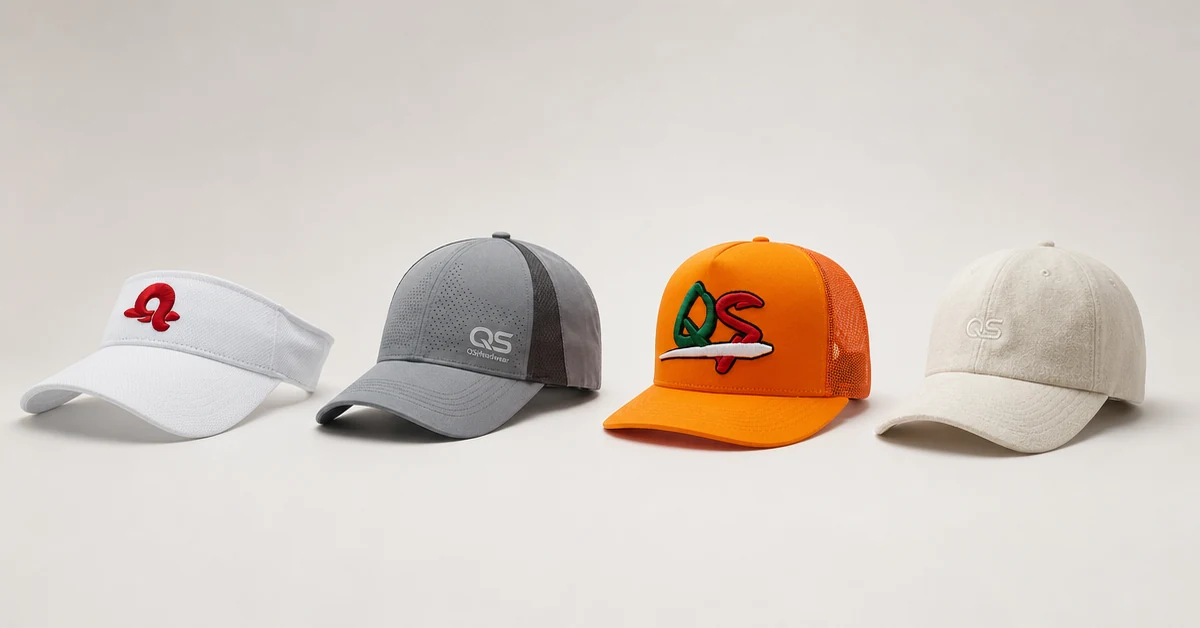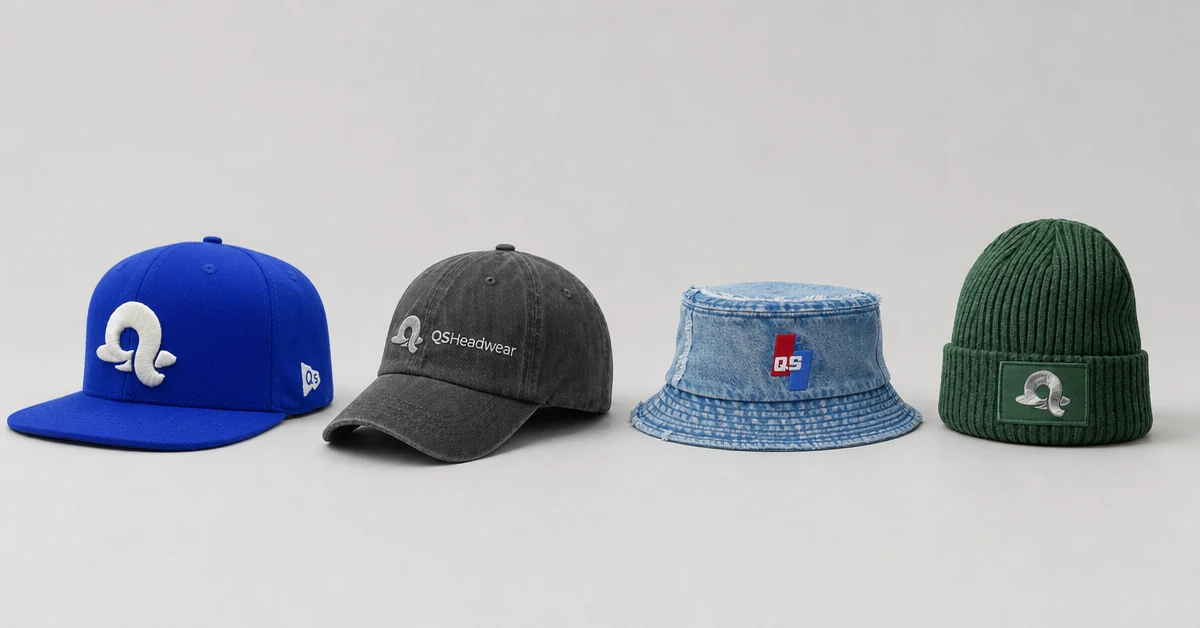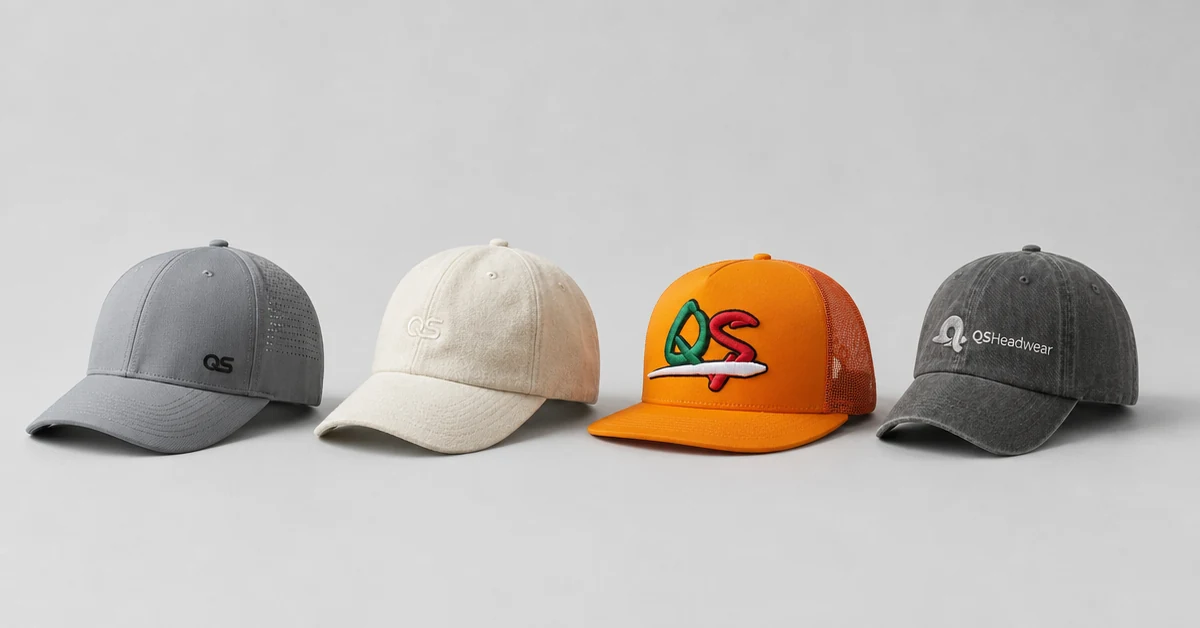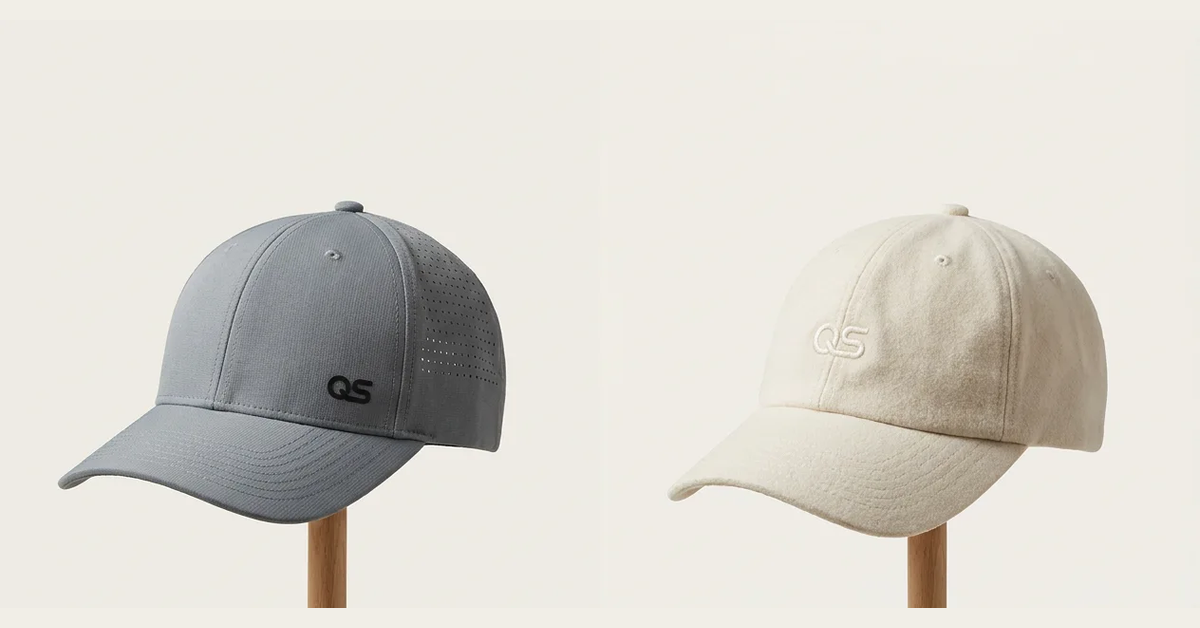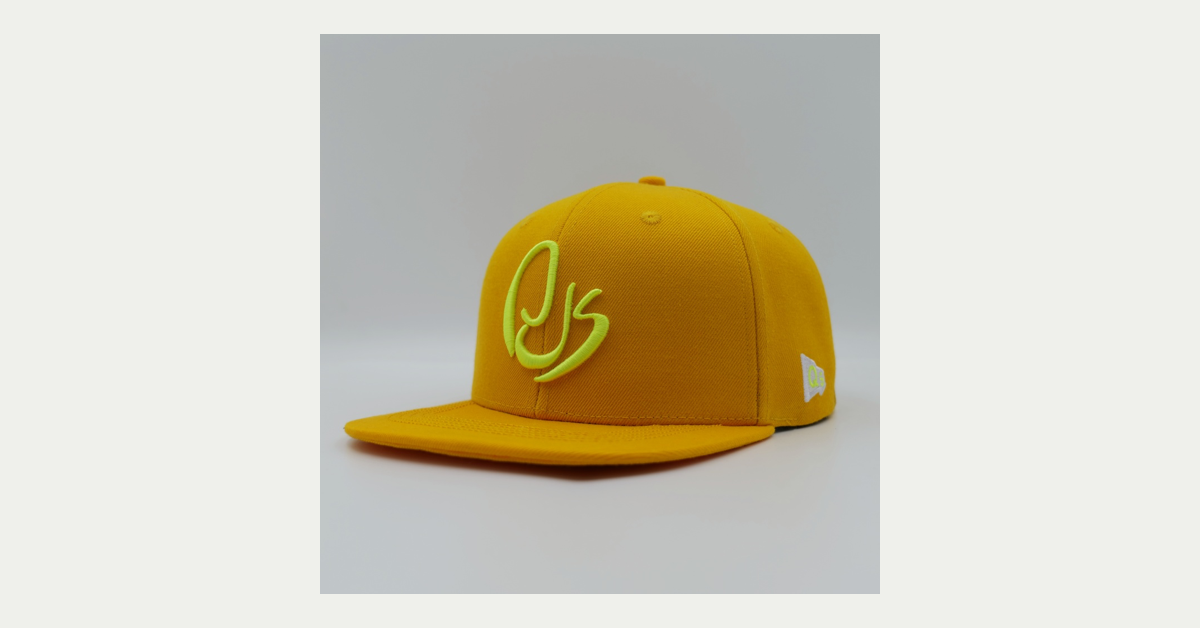


Custom hats for ecommerce brands need to work in three places at once: the product page, the customer’s head and the parcel arriving at the door. A strong assortment therefore combines a clear cap block, useful product data, honest photography, manageable inventory, protective packing and a reorder rule. The supplier’s job is not finished when the sewing line stops.
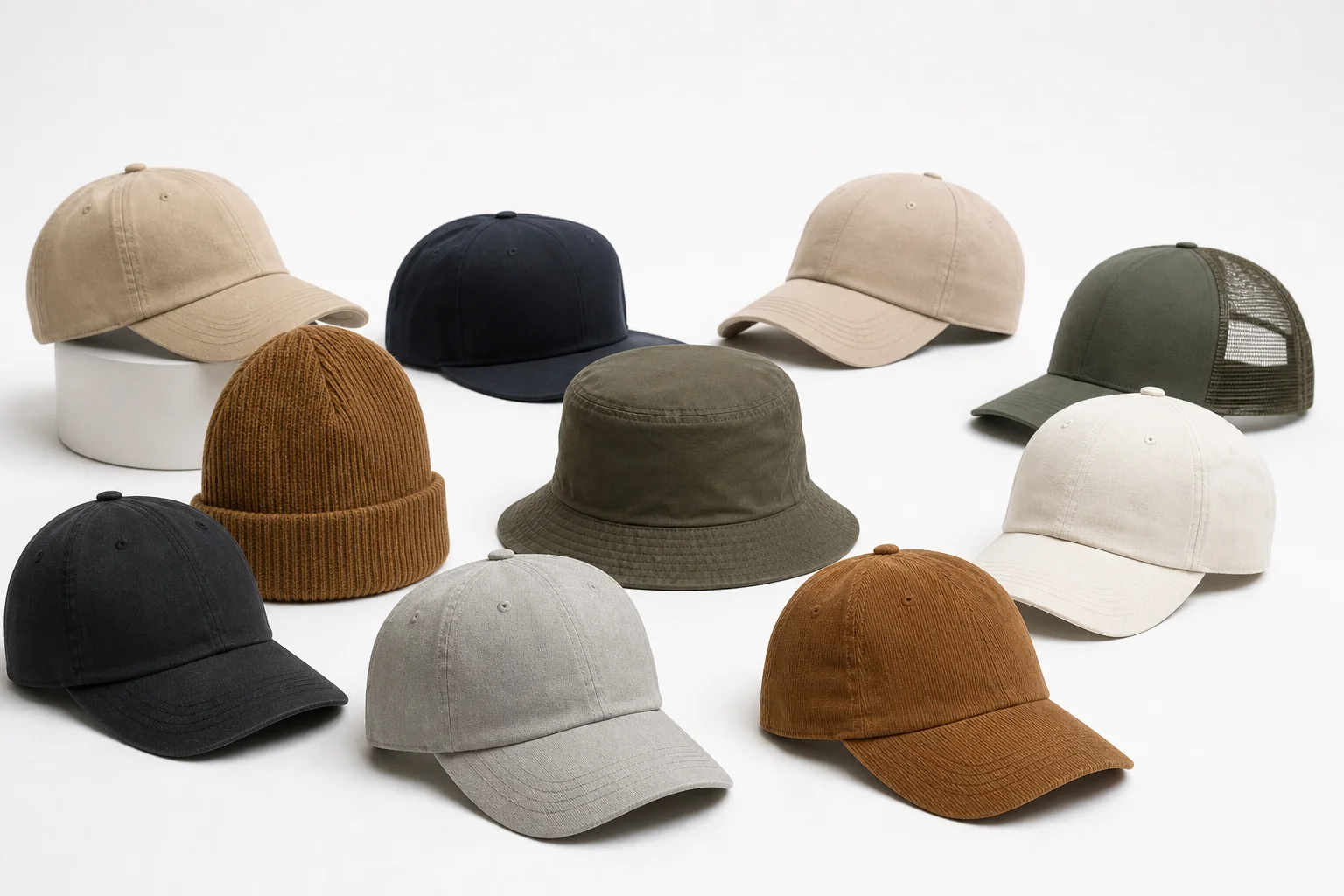
This operating guide is for direct-to-consumer labels, marketplace sellers, creator brands and apparel companies building a repeatable online headwear range.
Give Each SKU a Job
Start with assortment roles, not a random color list. A hero cap carries the brand code, a seasonal color tests demand, a price-point style widens the funnel and a limited edition creates urgency. When every SKU is treated as equally important, inventory and content teams lose the signal needed to reorder.
Build the Custom Hats for Ecommerce Brands Assortment Matrix
| SKU role | Product decision | Data to monitor |
|---|---|---|
| Hero | Most recognizable block and decoration | Conversion, reviews and repeat sales |
| Entry | Accessible price and simple construction | Traffic conversion and margin |
| Seasonal | Color or material tied to a launch | Sell-through by week |
| Limited | Small run with controlled scarcity | Waitlist and full-price demand |
| Reorder | Proven style with stable components | Weeks of cover and replenishment time |
Choose a Cap Block That Photographs Honestly
A product page needs front, side, rear, inside and on-wear views. Approve crown height, brim angle, closure, logo position and scale before photography. A cap that only looks good from one angle creates returns when the customer sees the profile or tries it on.
Turn Technical Data Into Useful Product Copy
Record finished circumference or adjustment range, crown profile, brim, fabric composition, decoration, care, labels and packing. Explain fit in plain language and state whether the style is structured, relaxed, fitted or adjustable. The data should come from the approved sample, not a generic supplier template.
Plan Photography Around the Buying Question
Show logo scale, texture, brim shape, closure, sweatband, inside label and how the cap sits on a wearer. Keep lighting and angles consistent across the collection so shoppers can compare. If a wash, nap or reflective detail is central to the product, include a close-up and a normal-distance view.
Use Packaging to Protect the Online Experience
Decide whether the cap ships flat, lightly shaped, nested or individually supported. Test cartons, tissue, polybags, hangtags, barcodes and shipping labels together. Inspect the cap after a simulated parcel journey. A beautiful product page cannot repair a brim that arrives crushed or a barcode that fails at fulfillment.
| Pack-out item | Ecommerce purpose | Approval checkpoint |
|---|---|---|
| Inner protection | Prevents dust, rubbing and shape loss | Inspect after handling and transit simulation |
| Hangtag or label | Carries product and brand data | Match SKU and care information |
| Barcode | Supports warehouse scanning | Scan the production label |
| Carton allocation | Keeps variants organized | Check quantity and carton marks |
| Unboxing detail | Protects first impression | Review appearance with the packed unit |
Build Landed Cost, Not Just Unit Cost
Calculate cap, decoration, labels, packaging, inspection, freight, duty, marketplace fees, returns and storage. A lower ex-factory price may be offset by oversized cartons, complex SKU splits or replacement costs. Ask the custom hats for ecommerce brands supplier to quote the same scope for every variant.
Keep SKU Complexity Within the Reorder Plan
List every combination of cap block, color, decoration, label, packaging and destination. Then decide which combinations deserve separate inventory. One proven block with controlled colorways is often easier to photograph, stock and reorder than a miniature collection of unrelated shapes.
Set Quality Criteria for the Customer’s View
Inspect measurements, shape, decoration, shade, seams, labels, cleanliness and packing. Add the defects a customer will notice on a product page: crooked logo, inconsistent brim curve, visible loose threads, wrong barcode, crushed crown or shade mismatch. QSHeadwear describes incoming, pre-production, in-line and final AQL 2.5 checks; connect those checks to the online promise.
Use Returns as Product Evidence
Classify returns by fit, color, shape, comfort, damage, wrong SKU and expectation. A high return rate may point to unclear copy rather than a factory defect. Feed verified findings back into the measurement chart, photography, sample brief and next production file.
Define the Reorder Trigger Before Launch
Choose a stock threshold that accounts for production and freight lead time. Track sell-through, weeks of cover, conversion, return reasons, full-price share, color performance and customer questions. Freeze the cap block and core components for a reorder; treat a fabric or fit change as a new approval project.
Build a Handoff File for Every SKU
Retain the approved sample, measurements, fabric and color standards, artwork, product copy, photography references, labels, barcode, packing, inspection criteria and reorder history. This shared file lets design, ecommerce, warehouse and the factory work from one version.
Plan Ecommerce Headwear With QSHeadwear
Browse QSHeadwear product categories, review the OEM/ODM development workflow and check factory information. Send your assortment roles, cap references, artwork, packaging, quantity and launch calendar through the contact page to develop custom hats for ecommerce brands.
Ecommerce Hat Planning: Buyer Questions Answered
1. What makes custom hats suitable for ecommerce?
They need a clear cap block, honest product data, consistent photography, protective packaging, accurate SKUs and a practical reorder plan.
2. How many styles should an ecommerce launch include?
Use the fewest styles needed to test the assortment question; too many blocks can divide inventory and weaken content quality.
3. What product data should be listed?
Include fit, circumference or adjustment range, crown profile, brim, fabric, decoration, care, labels and packing details.
4. Which photos reduce hat returns?
Show front, side, rear, inside, detail and on-wear views with consistent scale and lighting.
5. How should ecommerce hat packaging be tested?
Pack the approved unit, simulate handling or transit and inspect shape, labels, barcodes and presentation afterward.
6. What belongs in landed cost?
Include product, decoration, labels, packaging, inspection, freight, duty, fees, storage and expected returns.
7. How should SKU complexity be controlled?
List all style, color, decoration and packing combinations, then keep only variants that answer a commercial purpose.
8. What return data is most useful?
Classify fit, color, shape, comfort, damage, wrong SKU and expectation issues, then connect findings to the next brief.
9. When should an ecommerce cap be reordered?
Use sell-through, weeks of cover, lead time, margin and return evidence against a threshold agreed before launch.
10. What should be retained for each SKU?
Keep the approved sample, specifications, artwork, copy, photography, labels, barcode, packing, inspection and reorder history.