

Three decisions shape every wholesale snapback hats program, and they are made long before anyone discusses price. Brim shape, panel count and closure type each change the pattern, the decoration options and the fit range. Get them wrong and the cap that arrives is technically well made and commercially wrong, which is the most expensive outcome in headwear because there is nothing to claim against.
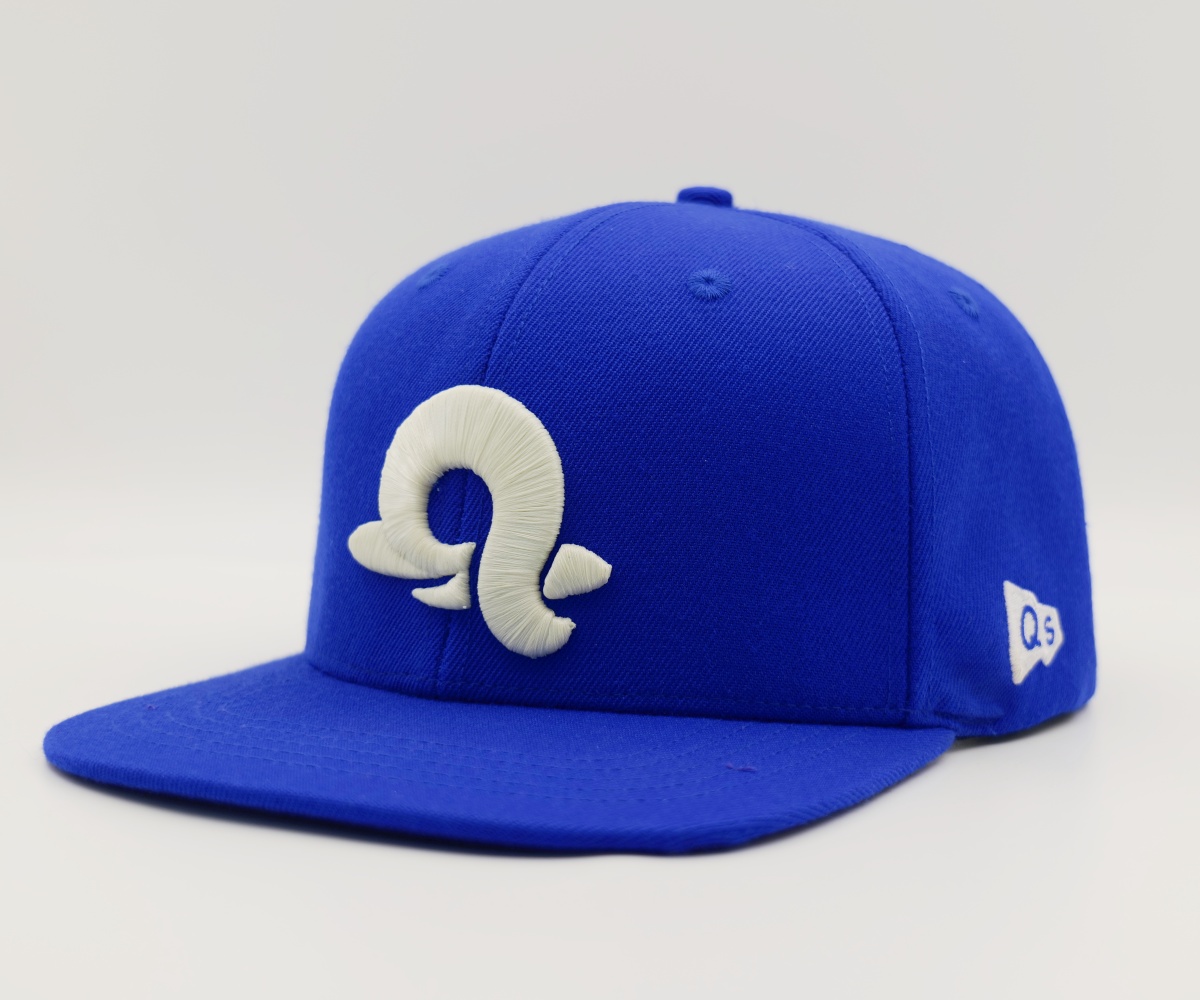
The tree below is the sequence we walk through with buyers before a snapback tech pack is written. It is deliberately ordered, because each branch constrains the next one. Choosing a closure before deciding the panel count is how programs end up with a fit range nobody planned for.
The three questions that decide the whole build
Everything else on a snapback specification is downstream of three answers. Who wears it, what logo goes on it, and how many of them do you expect to sell in the same size. Ask those three honestly and most of the tree resolves itself.
| Question | What it decides | What it rules out later |
|---|---|---|
| Who wears it, and in what setting | Brim shape and crown structure | Soft-crown builds that collapse under weighty decoration |
| What logo goes on it, and where | Panel count and front construction | Some embroidery placements on a five-panel front |
| How many sell in one size | Closure type and whether a size run is needed | A single-size assumption on a fitted build |
Branch one: flat brim or curved
The first branch is the brim, because it changes the pattern more than any other decision. A flat brim snapback carries a straighter, wider board and reads as streetwear or sport depending on the crown behind it. A curved brim sits lower over the eyes, reads closer to a classic baseball cap and photographs differently on a shelf. Wholesale snapback hats almost always start here, and the answer sets what the rest of the specification is allowed to do.
Practically, the flat brim demands a well-interlined front panel and a crown that keeps its shape, because the whole silhouette depends on structure. The curved brim tolerates a softer crown and is more forgiving across head shapes. If your range needs one snapback that sells to the widest audience, start curved. If the brand is aimed at streetwear or team sport, flat is the honest choice, and the specification has to carry the structure that makes it work.
Branch two: five panel or six panel
Panel count changes the front of the cap, which is where the logo lives. A five-panel build gives a wide, uninterrupted front panel, which suits large, bold or unbroken graphics, and it is the standard choice for a clean flat front. A six-panel build splits the front with a seam down the middle, which gives a smoother dome and suits smaller marks, wordmarks or a more traditional look.
Where a design has fine detail, the seam location becomes a specification question rather than a preference. A wordmark that straddles a centre seam on a six-panel cap will not sit flat, and a wide graphic on a five-panel front can look unsupported if the panel lacks interlining. Decide the artwork first, then the panel count, and if the answer conflicts, change the panel count rather than the artwork.
Branch three: plastic snap, metal snap or strapback
The closure is the fit system, which makes it the branch with the most commercial consequences. A plastic snap covers the widest size range at the lowest cost and is what the word snapback usually describes. A metal snap gives a more premium feel and holds its position better over time, at a small cost increase. A strapback with a buckle or slide trades the snap for a finer adjustment, which some retail programs prefer because it avoids the flat range between snap notches.
If the program sells direct to consumers, a metal snap or strapback usually reads as a better product for a modest difference. If it is a promotional or team program where one size covers everyone, the plastic snap is the right engineering choice, and buyers ordering wholesale snapback hats for that purpose should not be talked out of it.
Crown height and structure: the measurement nobody records
For wholesale snapback hats, crown height is the first number buyers skip and the first number they complain about afterwards. Record it, record the interlining, and record whether the front panel is backed with foam. Two snapbacks with identical brim, panel count and closure can wear completely differently at 9 cm and 11 cm, and the difference is what a customer feels in the first ten seconds of trying the cap on.
Ask for the crown measurement on the finished cap rather than on the block. A crown that measures 10 cm in the pattern can finish short if the interlining is thin or the panel is stretched on the machine.
Decoration has to follow the shape
Once the tree is settled, decoration is a consequence rather than a wish list. Each build carries some methods better than others, and the practical limits are worth writing into the tech pack.
| Build | Decoration that fits naturally | What to watch |
|---|---|---|
| Flat brim, five panel | Flat embroidery, large woven patches, screen print | Heavy 3D puff on a plain front can distort a thin panel |
| Flat brim, six panel | Curved wordmarks, woven or leather patches, flat embroidery | A centre seam splitting a wide mark |
| Curved brim, five panel | Woven patch, leather patch, flat embroidery | Patch weight on a soft crown pulling the front down |
| Curved brim, six panel | 3D puff embroidery, flat embroidery, printed transfers | Fine lettering filling in on a textured or washed shell |
Sizing: when the closure is the whole fit system
A snapback program usually runs one size, which sounds simple and hides two decisions. The first is the head circumference at the smallest and largest notch, and both ends should be stated so a retailer knows what will fit. The second is the sweatband, because a wide band changes how the cap sits and a narrow one makes a large head feel the plastic teeth.
Where the range genuinely has to cover two size bands, plan it as two constructions rather than one stretched closure. Stating both ranges on the sheet saves the retailer from explaining to customers why the cap does not fit at the extremes. Buyers new to wholesale snapback hats tend to discover this at the first complaint rather than at the order.
Ordering across colourways on a flat brim
Flat brim programs often run several colourways with a single decoration, and the manufacturing risk moves to panel matching. A flat brim makes panel alignment visible from the front, so colour variations between panels show up more than they do on a curved silhouette. Reserve the brim and crown from the same lot where the colourway is dark or saturated, and say so on the order, because that instruction costs nothing at booking and cannot be fixed afterwards.
Three failure points in a snapback program
The first is structure drift, where the second run uses thinner interlining and the silhouette softens. The second is brim board substitution, where a lighter board is used and the brim stops holding its curve or its flat. The third is closure hardware, where a cheaper snap has a shorter travel or a rougher moulding. All three are invisible in a photograph and obvious in a customer's hand, which is why the reference sample and the material references matter more on snapbacks than on almost any other construction.
What the tree looks like inside a purchase order
Once the branches are decided, the purchase order carries a short block of text: brim type, panel count, crown height and front structure, closure type, colourways with panel matching note, decoration method and position, and the reference sample number. Six lines, and they prevent almost every dispute that a snapback program can generate.
Working the tree with a factory
We build headwear in Dongguan as Dongguan Qisheng Cap and Bag Co., Ltd., with fifteen years of production, a workshop above 4,000 square meters and more than a hundred staff across sampling, embroidery, sewing and quality. Samples develop in roughly three to five business days, bulk runs in fifteen to twenty days and twenty-five to thirty days above 5,000 pieces, with monthly capacity between 120,000 and 150,000 pieces.
Bring the three questions rather than a picture. If you can say who wears the cap, what the logo is and how many you expect to sell in one size, the branches resolve in one conversation, and the tech pack writes itself from the answers. Where a build is genuinely undecided, we will build the sample in one configuration and show the alternative as a second sample, which is a cheaper way to make the decision than guessing twice at bulk.
Next step: draw the tree before the tech pack
Write down the three answers, then the crown height, then the decoration position. The specification follows from those five lines, and so does the price.
Send the shape you have in mind through our product pages, read how the OEM and ODM service handles a new construction, or ask the team to quote both brim options through the contact page. If you are ordering wholesale snapback hats for the first time, ask for the crown measurement and the closure travel in the same reply. Our notes on snapback fit and decoration cover the sample stage in more detail, and for programs with a performance or material claim the American Association of Textile Chemists and Colorists test methods and the Global Recycled Standard are the two references buyers cite most often.
Wholesale snapback hats: buyer questions
Is a flat brim harder to make than a curved brim?
It is less forgiving. A flat brim depends on a straighter board and a well-interlined front panel, so a lighter specification shows immediately as a soft or sagging silhouette. A curved brim tolerates a softer crown and a wider range of constructions, which is why it is the safer first snapback for a new range.
Should a snapback be five panel or six panel?
Decide it from the artwork. A five-panel front gives one wide uninterrupted panel, which suits large or unbroken graphics. A six-panel front has a centre seam, which suits smaller marks and wordmarks and gives a smoother dome. If a wide wordmark has to cross the seam, change the panel count rather than distort the logo.
Plastic snap or metal snap?
Plastic covers the widest size range at the lowest cost and is the standard for promotional and team programs. Metal reads as a more premium product, holds its position longer and costs a little more, which usually makes sense on retail or direct-to-consumer builds. Strapbacks suit programs that want finer adjustment than snap notches allow.
What crown height should we specify?
Record it rather than assuming it. Nine to eleven centimetres covers most snapback builds, and the difference is very visible in wear and in photography. Measure the finished cap rather than the block, because interlining thickness and panel stretching move the finished number.
Can we run one size across a whole range?
Usually yes with a snapback closure, provided you state the circumference at the smallest and largest notch so retailers know what will fit. If the range genuinely has to cover two size bands, plan two constructions instead of stretching one closure across both ends.
Which decoration works best on a flat front?
Flat embroidery, woven patches, leather patches and screen print all sit well. Heavy 3D puff on a thin front panel is the method to watch, because the density can pull the panel and distort the silhouette. Ask for a sew-out on the actual shell before committing.
Why do colourways cause more problems on a flat brim?
Because panel alignment is visible from the front, so variations between panels read as a fault rather than a texture. On dark or saturated colourways, reserve the brim and crown from the same fabric lot whenever possible and note the requirement on the order.
What goes wrong between a sample and bulk on snapbacks?
Structure drift is the usual culprit: thinner interlining in the front panel, a lighter brim board, or a substituted closure with a shorter travel. All three look acceptable in a photograph and are obvious in the hand, which is why a sealed reference sample from the first run is worth keeping.
How should a snapback purchase order be written?
Six lines cover it: brim type, panel count, crown height with front structure, closure type, colourways with a panel matching note, and decoration method with position, plus the reference sample number. Programs that include those lines rarely argue about the delivered product.
How long does a snapback sample and bulk run take?
Sampling usually runs about three to five business days once the tech pack or reference cap is agreed. Bulk production runs fifteen to twenty days on an approved construction with materials booked, extending to twenty-five or thirty days above 5,000 pieces, with freight time on top.