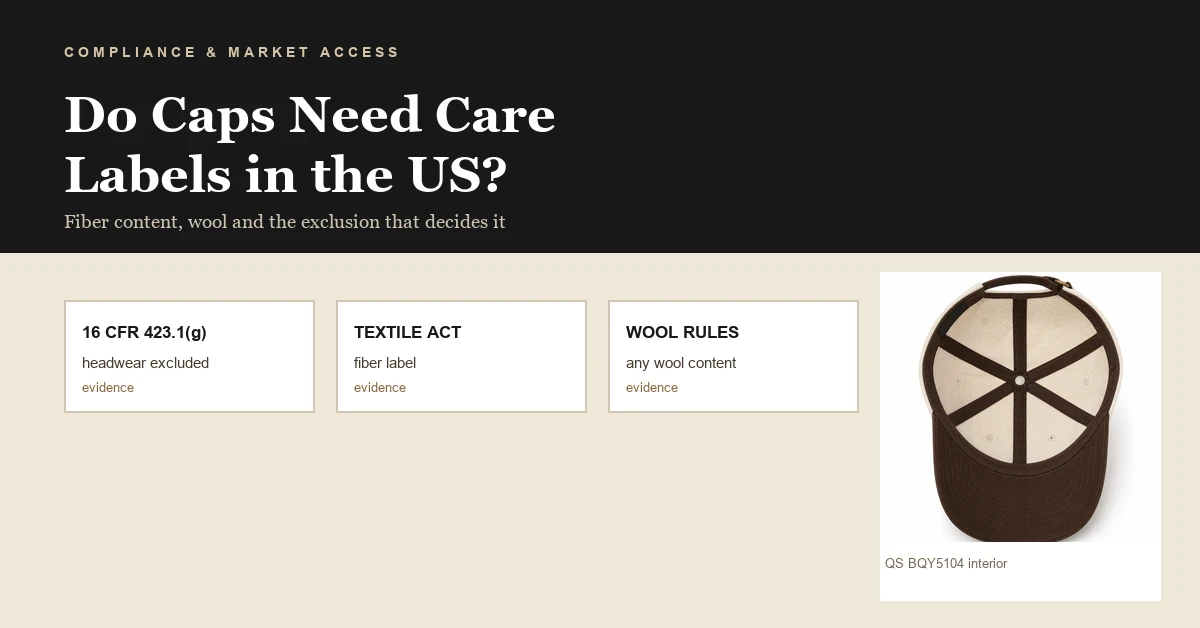


A cap sold in the United States sits outside both federal textile labeling regimes that buying teams assume apply to it. FTC guidance on the Textile Fiber Products Identification Act lists "Headwear, including hats, caps or anything worn exclusively on the head" among products the textile fiber-content rules do not cover. The Care Labeling Rule reaches the same place: 16 CFR 423.1(g) excludes "hats or other articles used exclusively to cover or protect the head or hands."
So for a cotton, polyester or acrylic cap shipped to a US consumer, no federally mandated fiber-content label and no federally mandated care label applies. That answer has one narrow boundary: wool. The FTC states that products exempt from the Textile Act and Rules, "like hats", are covered by the Wool Act and Rules if they contain any wool. One wool-blend panel moves the cap into a disclosure regime with four mandatory statements. The question is therefore not "caps need a label" or "caps do not" — it is a per-SKU decision driven by fiber composition and destination.
This is written for teams placing custom cap orders into the US market, and is not legal advice.
What the two US labeling regimes actually cover
Two different rules get collapsed into the phrase "apparel labeling", and caps fall outside both.
The Textile Fiber Products Identification Act and its rules at 16 CFR Part 303 govern fiber content, country of origin and the identity of the business responsible for the product, as set out in the FTC's textile and wool labeling guidance. Its coverage list is explicit: clothing is covered except for hats and shoes, and headwear appears again on the excluded list.
The Care Labeling Rule at 16 CFR Part 423 governs regular care instructions. Its definition section removes hats from the scope of textile wearing apparel. Because the exemption sits in the definition, it removes the cap from the obligation to attach a care label at all, not merely from how a label would be worded.
- The cap does not need a sewn-in label stating fiber percentages.
- The cap does not need a sewn-in or attached care instruction.
Neither statement means the cap is unregulated; other obligations still apply.
The one input that changes the answer: any wool content
The Wool Products Labeling Act is not closed by the headwear exclusion in the Textile Act. The FTC's guidance is unambiguous: products exempt from the Textile Act and Rules, "like hats and slippers", are covered by the Wool Act and Rules if they contain any wool. A cap built like an excluded cotton cap but containing wool in the shell, the lining or the knit is a wool product.
That reclassification matters: the Wool Rules carry a disclosure threshold stricter than the general textile rules. Under the textile rules, fibers below 5% of fiber weight are normally aggregated as "other fiber". Wool and recycled wool are the exception: they must be disclosed by name and percentage weight even below 5%. A 3% wool addition is a disclosure event.
What a wool cap label has to carry
Four elements, taken from the rule text and the FTC guidance:
- Fiber content by generic name, with percentages by weight in descending order of predominance. "All wool" or "100% wool" is acceptable where a single fiber is used.
- Wool and recycled wool named with their percentage, without the 5% aggregation shortcut.
- Country of origin — the country where the product was processed or manufactured, determined the way Customs determines origin. The FTC amended 16 CFR 300.25(d) and (f) specifically to align this.
- The identity of the manufacturer, importer or other business responsible for marketing or handling the item.
Fiber disclosure does not reach non-fibrous parts: plastic snaps, metal eyelets, leather patches and printed designs are not fiber and are not in the percentage.
The real risk sits in the material brief, not the label print. If a designer specifies wool-touch acrylic to hit a price and the product page then says "wool", the label and the marketing copy disagree with the goods. The questions to put to a wool cap source cover how to establish whether a material is wool, a wool blend or a wool-look fabric before a label is printed.
Care instructions when no rule requires them
Exemption from the Care Labeling Rule is not permission to guess. Two forces still push care information onto a cap.
Retailer and marketplace requirements
A retail vendor manual can require care content as a condition of the purchase order, whether or not a federal rule applies. The requirement is then contractual and the buyer's compliance owner owns the wording. Vendor manuals also govern routing, carton labeling and delivery windows, the subject of the retail vendor compliance file.
The cost of a wrong instruction
Care text printed on a cap is a claim. If it cannot be supported and the cap is damaged by following it, the brand absorbs the returns regardless of the statute. The Care Labeling Rule builds the same principle into its text: 16 CFR 423.5(a)(5) makes it a violation to lack a reasonable basis, before sale, for the care information disclosed. That provision binds covered apparel rather than caps, but it is a sensible benchmark for voluntary care text. Note too that 16 CFR 423.2(b) lets symbols accompany required terms, and 423.8(g) allows a conditional symbol-only route; on a cap, symbols are a design choice rather than a compliance route.
What a US-bound cap still has to satisfy
Removing two labeling obligations does not remove every obligation. Four adjacent requirements typically apply, and each has a different owner.
| Requirement | What it asks | Where the buyer should look |
|---|---|---|
| Flammability coverage | Whether the cap sits inside the 16 CFR 1610 hat exception, based on how much of the head, neck and face it covers | The coverage-line decision, not a generic "hats are exempt" assumption |
| Chemical restriction by destination | Which restricted substances apply to shell, trim, print and dye, and which report proves each one | A component-by-component test map |
| Retailer set-up | Whether the vendor manual adds label or care content as a PO condition | The retailer's own compliance document |
| Barcode and GTIN data | How the SKU is identified and scanned, which is separate from consumer disclosure | The retail label and data file |
The first row is most often misfiled as "hats are exempt", but exemption from textile labeling says nothing about flammability. The coverage-line analysis sets out how neck, face and shoulder coverage move a cap in or out of that exception.
The second row is where label and test decisions get confused: a fiber label states what the product is made of, not that its materials are permitted in the destination market. The component-level chemical test map keeps those as separate evidence streams. The fourth row catches a similar error: a hangtag carrying a GTIN is a retail data carrier, not a consumer disclosure, which is what the GTIN and GS1 readiness file covers.
Other markets do not follow the US exclusion
A programme built on the US position will mis-fire the moment the same SKU ships elsewhere. The exemption belongs to two US statutes, and other regimes handle caps differently, particularly on care content and local-language information. Where one design sells into the US and into an Asian market, the label set usually splits per destination. The Japan and Korea release file shows what a per-market label, size and inspection package looks like when it must be approved before bulk.
Build one label decision row per SKU
Record it as one row per SKU, agreed before the sample is sewn.
| SKU input | Question to answer | Where the answer lands |
|---|---|---|
| Fiber composition | Exact percentages by fiber for shell, lining and knit | Material spec and order file |
| Wool flag | Any wool, including recycled wool, at any percentage? | Determines whether Wool Rules apply |
| Destination | Which country, and does it have its own care or language rule? | Label set per market |
| Channel | Sold through a retailer with a vendor manual? | Contractual label content |
| Decoration coverage | How much surface does the decoration occupy? | Whether sectional or "exclusive of decoration" wording is needed |
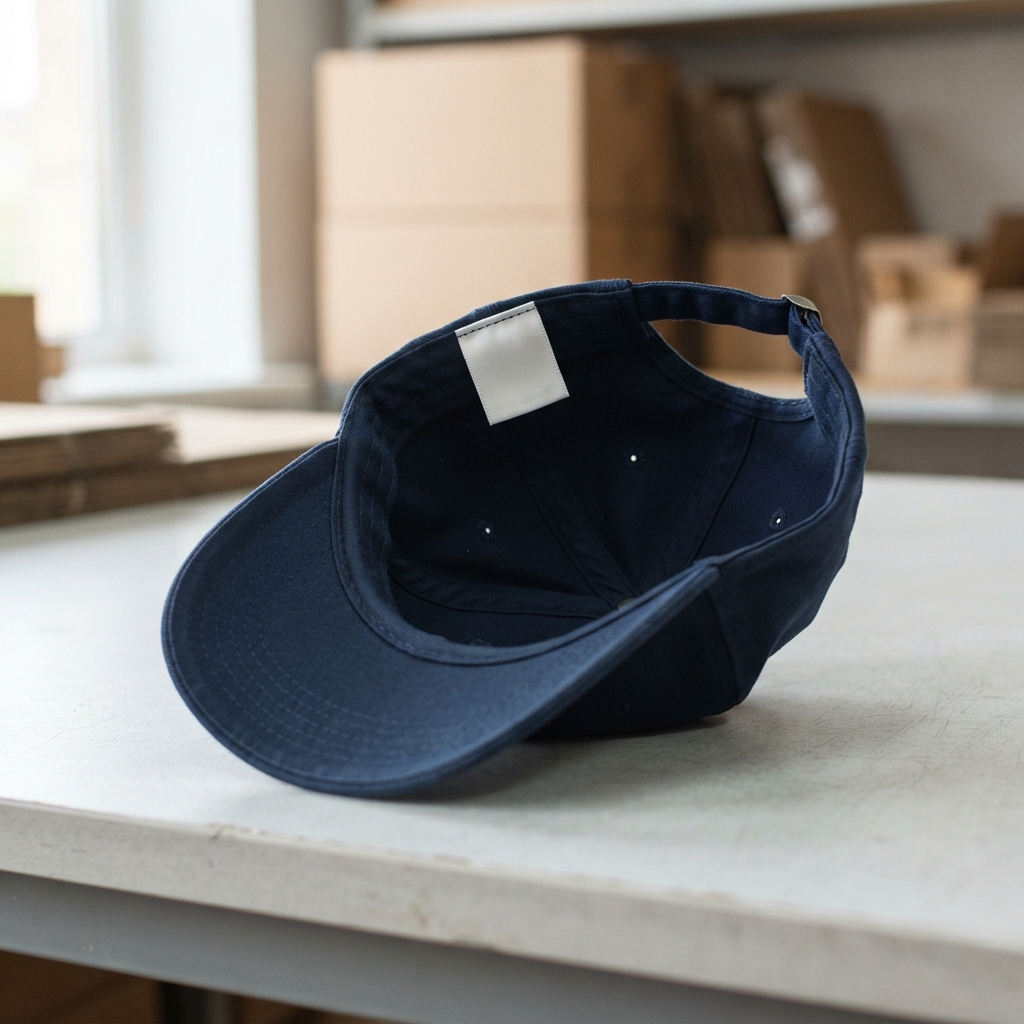
| Attachment method | Sewn-in, heat-sealed, or printed in the sweatband? | Sample approval photograph |
| Care claim | Printed or not, and if printed, on what basis? | Approved wording plus conditioning record |
| Data carrier | Is a GTIN hangtag or polybag label also required? | Pack-out sample |
The wool flag is the row that fails most often, answered from memory rather than from the material spec. Decoration coverage is the row that gets skipped, even though the FTC's guidance treats trim and ornamentation thresholds and sectional disclosure at length; those thresholds differ by rule, so have the buyer's compliance owner confirm them for the specific wool cap.
Prove the label before the bulk run
A label error costs little to correct on paper and a great deal once 20,000 caps are sewn. QSHeadwear publishes a standard sample lead time of 3–5 working days after artwork confirmation, which is enough room to approve label text alongside construction.
- Get the exact fiber composition from the mill record for every fabric and knit, not from the product description.
- Apply the wool flag: any wool or recycled wool at any percentage triggers the Wool Rules.
- Draft label text against the four required elements, in the destination's required language.
- Have the buyer's compliance owner approve the wording in writing, with a named approver and a version ID.
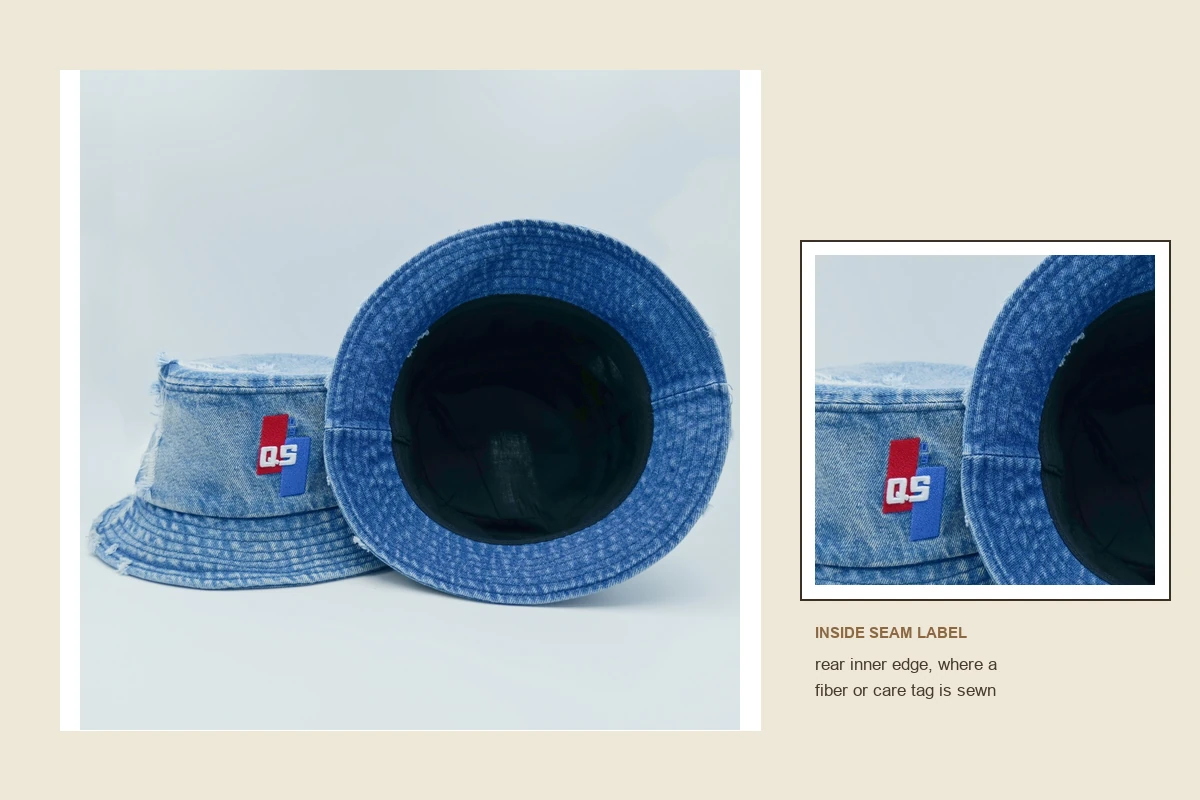
- Sew the label into the construction sample and photograph the inside view at the seam, not the front.
- If care text is printed, condition a sample using that instruction and re-measure circumference, crown height and brim shape afterwards.
- Retain approved text, photograph and conditioning record with the order file.
- On reorder, re-open the wool flag — a fiber substitution made for cost is exactly the change that flips the requirement.
Step eight catches established programmes: a cap that shipped for three seasons without a fiber label acquires one the moment a mill substitution introduces wool, and nobody notices because the artwork was approved years earlier. Fiber content is a per-lot fact.
Where this decision sits in the compliance cluster
Label applicability is a decision node other compliance work depends on, not a standalone topic. The cluster runs: the flammability exception; the chemical test map; the consumer disclosures the destination requires — this article; the retail data carrier; and the vendor manual. Only the label decision depends on fiber composition, which is why it belongs in the material brief, not the packaging file.
For private-label programmes, the same row should hang off the component map that governs inside labels, hangtags and packaging. The label system built before sampling is its natural home: brand label, size, origin and care text are all components with minimums, owners and approval states, and treating regulatory content as a separate conversation is how it gets approved late.
Frequently asked questions
Do custom caps need a care label in the US?
No. 16 CFR 423.1(g) defines textile wearing apparel to exclude hats and other articles used exclusively to cover or protect the head, and the Textile Act's fiber-content rules list headwear as not covered. The exception is any cap containing wool, which falls under the Wool Rules.
Does a wool-blend cap need a fiber-content label?
Yes. The FTC states that products exempt from the Textile Act, like hats, are covered by the Wool Act and Rules if they contain any wool. Wool and recycled wool must be named with their percentage even below the 5% threshold that otherwise allows aggregation as "other fiber".
Can we print care instructions even though no rule requires them?
Yes, and many retailers ask for them. Treat the printed instruction as a claim: confirm the cap survives the stated wash, dry and bleach conditions, and keep the conditioning record on file.
Does this US position apply in other markets?
No. The exclusion is specific to two US statutes. Japan, Korea and the EU impose their own language, content and care requirements, so a cap sold into several regions normally needs a split label set.
Get the label decision into the brief
Settle the label question in the material specification, before a sample is cut. A cotton order can proceed without a fiber label; a wool order cannot, and a sentence in the brief decides it rather than a document produced at packing. If composition is still open, start from the cap range and settle fiber intent first.
Send QSHeadwear the target composition, destination market, channel and decoration coverage, and ask which label elements the order file must carry. Where wool is possible, say so in that first message, so the label set and the sample are approved together rather than sequentially.