

Golf and racquet sports look like adjacent categories to a headwear supplier. Both are outdoor, both are warm-weather, both involve a lot of standing around in the sun. In sourcing terms they are not adjacent at all: a golf round lasts four hours at walking pace, a tennis match is intermittent sprinting, and the two produce completely different demands on ventilation, fit stability and finish.
Brands that treat these as one category end up with a product that underperforms in both. This guide covers what each sport actually requires, why the visor holds such a strong position here, and how to specify headwear that survives a season of tournament use.
Start With Exposure Time, Not Sport Name
The defining variable in this category is not the sport. It is duration of continuous sun exposure combined with intensity of movement, and those two factors point in different directions.
A golfer is outdoors for four to five hours, usually walking, usually during peak UV hours. A tennis player may be on court for ninety minutes with far higher heat generation but shorter total exposure. The golfer's product problem is sustained protection and comfort; the player's is heat dissipation and grip during rapid movement.
The Sun Protection Case Is Genuine
This is one of the few headwear categories where the health argument is real rather than marketing. The World Health Organization advises limiting midday sun between 10 a.m. and 4 p.m. when the UV index is high, and recommends wearing a brimmed hat that provides protection for the head, face and neck when exposure cannot be avoided.
Read that against a typical tee time. A morning round starting at nine finishes inside that window; an afternoon round sits entirely within it. Brim geometry stops being a styling choice and becomes the functional core of the product.
Brim Length Is a Specification, Not a Look
A longer brim shades more face but catches more wind and can intrude on peripheral vision during a swing or a serve. A shorter brim stays out of the way but protects less. There is no universally right answer, which is exactly why it belongs in the tech pack as a measurement rather than as a style reference.
Specify brim length and curvature numerically, and check the sample outdoors with the wearer looking down at address position or up at a ball toss. A brim that works standing still in a showroom can obstruct at exactly the moment the wearer needs to see.
Why the Visor Owns This Category
The visor is a niche product in most markets and a mainstream one here, and the reason is thermodynamic. An open crown lets heat escape directly upward, which is the single most effective ventilation design available. For a player generating sustained heat over hours, that matters more than the coverage a full crown provides.
It also solves a problem specific to these sports: hair. Players with long hair frequently prefer an open top, and the visor accommodates a ponytail in a way no full-crown cap does. That is not a minor demographic consideration in tennis and golf.
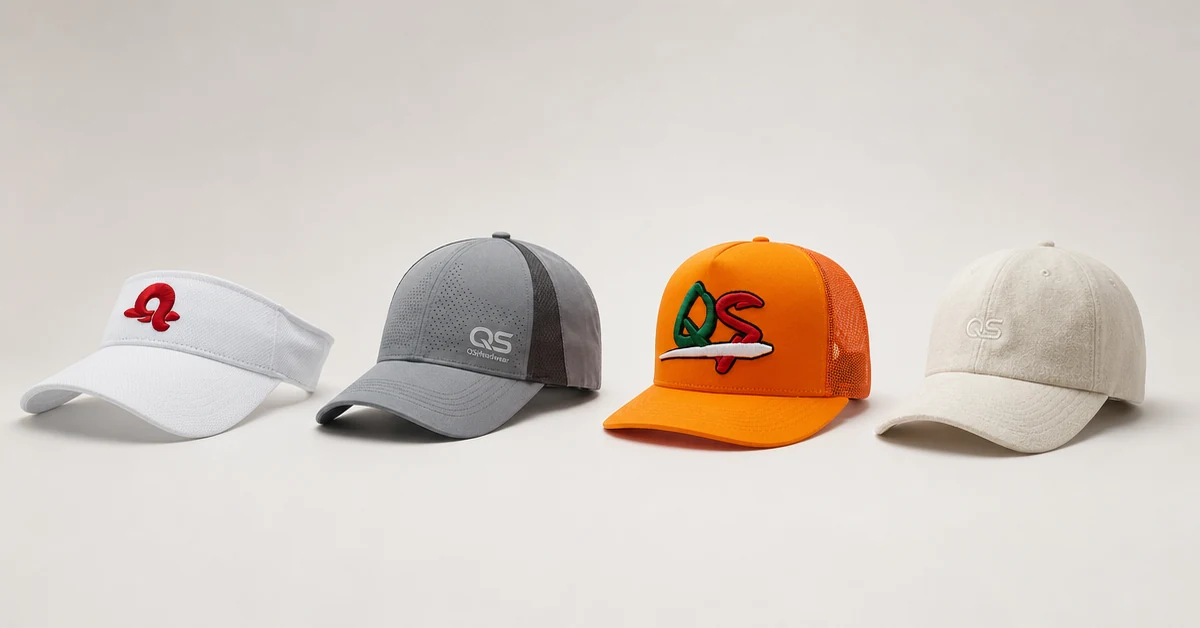
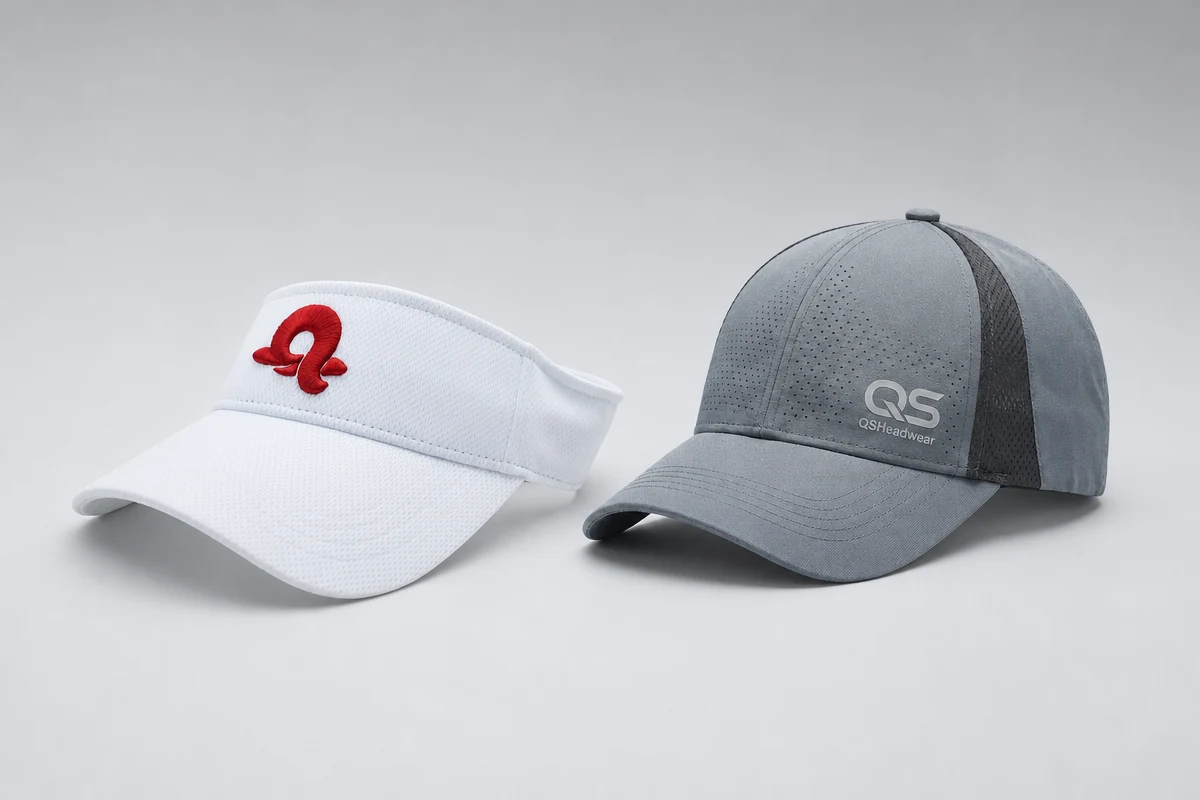
Our custom visor caps are built around this use case — an open-top design for maximum breathability, a structured curved brim for sun protection, and an adjustable strap system, with the front panel providing a strong branding surface for embroidery or woven patches.
When a Full Crown Still Wins
Visors protect the face and leave the scalp exposed, which is a real limitation for players with thinning hair or for tournaments at high altitude. Full-crown performance caps remain the correct choice where scalp coverage matters, and a complete category range usually carries both rather than choosing.
Offering the same graphic on both a visor and a cap is also a straightforward way to widen a team or tournament programme without doubling development work, since the front-panel artwork transfers directly.
Fit Stability Under Movement
Golf and racquet sports both involve rapid head rotation, and a cap that shifts mid-shot is a cap the player stops wearing. Fit stability outranks silhouette in this category.
Elastic and stretch-fit systems hold best because they maintain even tension without a hard adjustment point. Adjustable straps work, but the hardware sits at the back of the head where it can press uncomfortably during extended wear. If you specify a strap, specify a low-profile buckle rather than a bulky one.
The Sweatband Does the Real Work
In this category the sweatband is not a comfort feature, it is the primary functional component. It manages moisture before it reaches the eyes, and it provides much of the grip that keeps the product in place. A cheap sweatband turns a good cap into an unusable one within a single round.
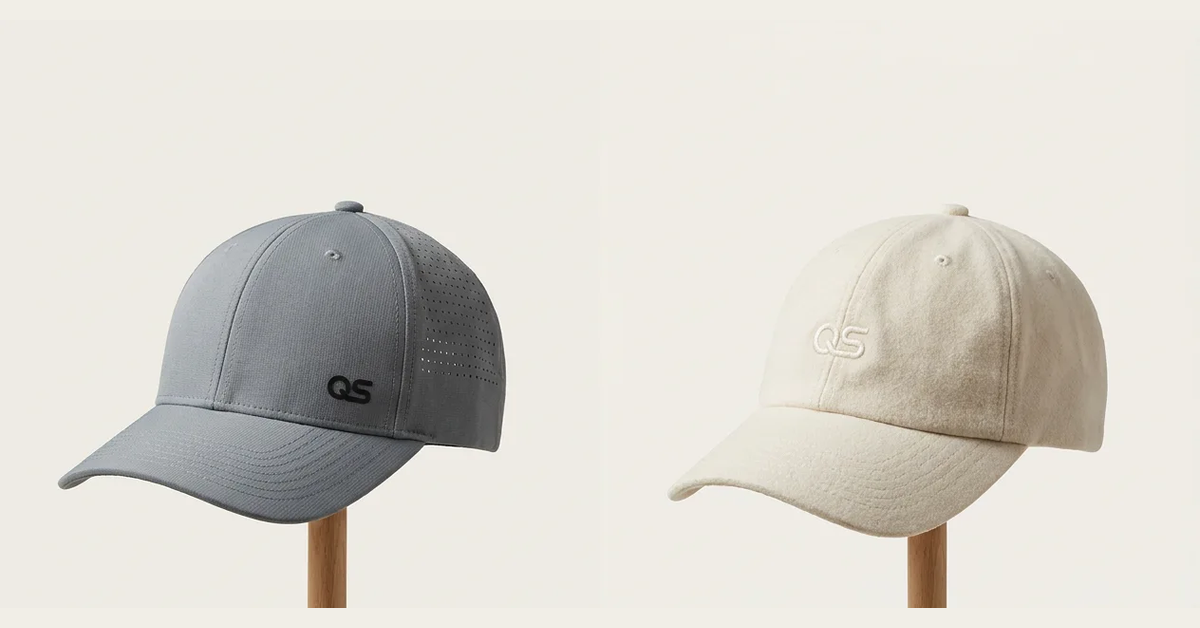
Specify the sweatband material explicitly rather than assuming a supplier's standard. A moisture-wicking sweatband is standard on our sports and performance caps, alongside laser-perforated ventilation panels and lightweight technical fabric — the same construction logic transfers directly to golf and racquet product.
Fabric and Colour Choices
Technical synthetics dominate for the reasons covered in our cap fabric guide: they move moisture rather than absorbing it, they dry between sessions, and they hold colour through repeated washing and UV exposure.
Cotton has a legitimate place in golf specifically, where the aesthetic tradition is more conservative and a cotton twill cap reads as appropriate in a clubhouse in a way a technical fabric does not. If you go that route, understand you are trading performance for cultural fit, and be honest with the customer about it.
White Is Not a Neutral Choice
Light colours reflect heat and dominate both sports for that reason, but white shows sweat salt staining faster than any other colour. Salt rings around the sweatband are the most common complaint in this category and they are not a manufacturing defect — they are a consequence of the colour choice interacting with heavy perspiration.
Either accept it, specify a slightly off-white or light grey that hides it better, or use a darker sweatband against a light crown. Deciding this at development is far easier than explaining it after launch.
Branding and Tournament Requirements
These sports carry more sponsor logos per square centimetre than almost any other category, which creates a specification problem: multiple marks at small sizes on a curved, often perforated, panel.
Small embroidered text on technical fabric is the most common failure point. Fine detail puckers on lightweight synthetics and cannot cross a perforated zone at all. For small sponsor marks, heat transfer or a small woven patch usually reproduces better than embroidery. Our embroidery capability page covers how stitch density interacts with different substrates.
Confirm the Governing Body's Rules
Tournament and club-level competition frequently restricts logo size, placement and count, and those rules differ between organising bodies and between amateur and professional levels. Confirm the applicable rules with the event or federation before finalising artwork rather than assuming the sponsor's preferred layout is permitted.
This is worth writing into the brief. A programme that has to be reprinted because a chest-height sponsor mark was oversized is an expensive lesson in a category with fixed event dates.
Planning a Golf and Racquet Programme
Demand here is event-driven and seasonal, which changes the planning calendar. Club championships, corporate golf days and tournament seasons all have immovable dates, and the product has to exist before them rather than shortly after.
Work backwards from the event date through shipping, bulk production and sample approval. Sampling runs three to five business days once artwork and specifications are confirmed, but the approval conversation around a multi-sponsor layout usually takes longer than the sample itself. Build that in.
Corporate Golf Days Are a Distinct Buyer
A significant share of this category is not sold to players at all. It is bought by companies running client golf days, where the cap is a gift rather than equipment and the priorities shift toward perceived value and branding quality. That buyer behaves like a procurement buyer, and our corporate and promotional cap guide covers how they evaluate a quote.
Documentation for Club and Federation Buyers
Institutional buyers in sport increasingly request material documentation, particularly where product is issued to juniors. OEKO-TEX STANDARD 100 tests every component of a textile article against a list of harmful substances and is the certification most commonly named. Ask about it before a tender asks you.
If you are still deciding which silhouettes belong in the range at all, our cap style guide compares how each construction reads to different markets, and the sizing and fit systems guide covers closure choice in more depth.
Frequently Asked Questions
Should a golf range include visors and caps, or just one?
Most complete ranges carry both. Visors ventilate better and suit players who prefer an open top, while full-crown caps provide scalp coverage. The same front-panel artwork transfers between them, so the additional development cost is modest.
What is the most common product failure in this category?
Sweatband performance. A sweatband that does not manage moisture makes the product unusable within a single round regardless of how well the rest of the cap is made. Specify the material rather than accepting a supplier default.
Is cotton acceptable for golf headwear?
It has a genuine place where clubhouse aesthetics matter more than performance, and the golf market is more conservative than most. Be clear that you are trading moisture management for that traditional look.
How should sponsor logos be handled on technical fabric?
Small marks reproduce poorly as embroidery on lightweight synthetics and cannot cross perforated panels. Heat transfer or small woven patches usually work better. Confirm size and placement rules with the governing body before finalising artwork.