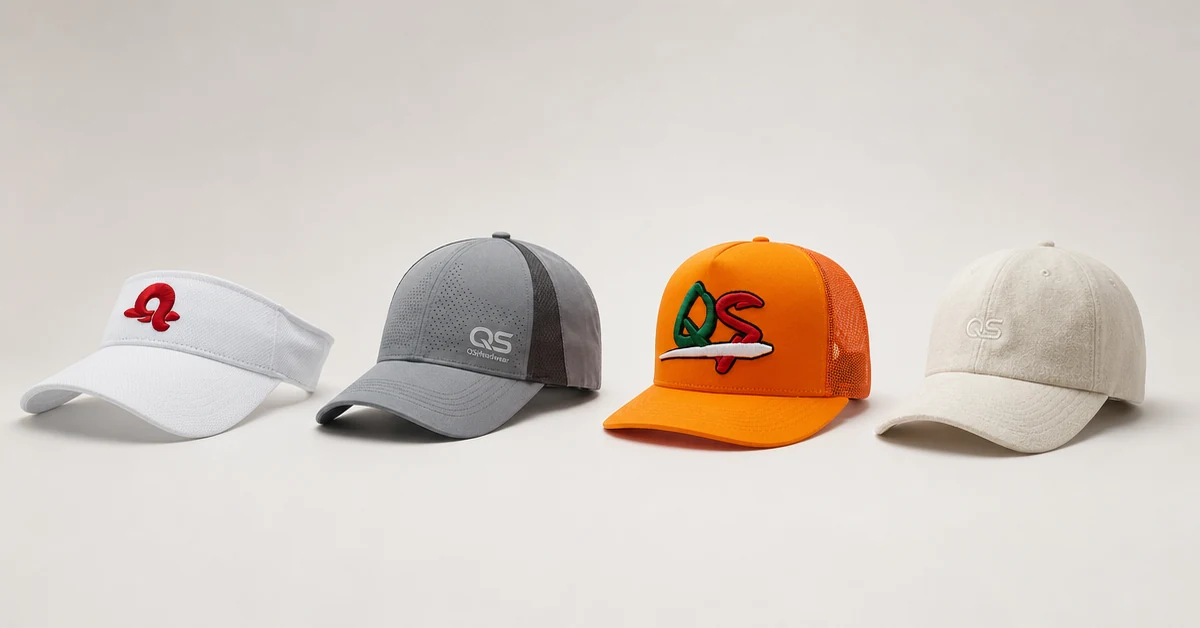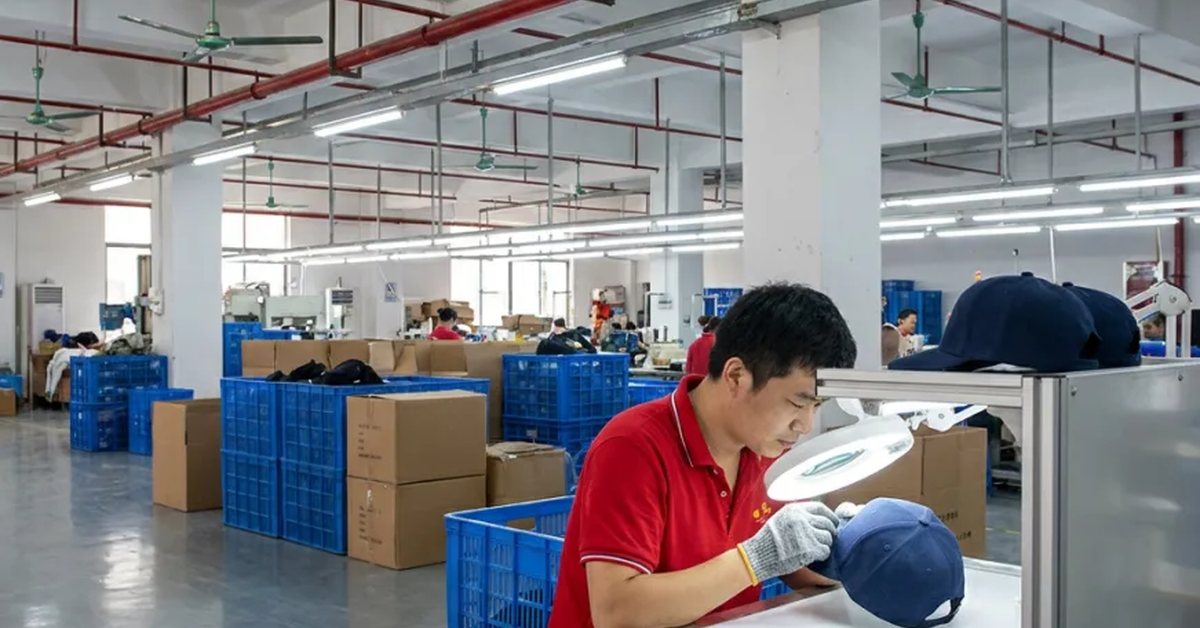


Streetwear headwear operates on rules that most apparel categories do not. A cap can sell out in ninety seconds, trade above retail for years, or sit unsold at 60% off — and the difference between those outcomes has less to do with manufacturing cost than with scarcity, narrative and timing. Brands entering this space with a conventional wholesale mindset usually misprice the product in both directions.
This guide looks at what actually creates resale value in headwear, how drop mechanics work, and which production decisions support or undermine a premium streetwear position. It is written for brands building the product, not for collectors chasing it.
Why Resale Value Matters to a Brand That Never Sells Resale
A brand earns nothing directly when a customer flips its cap on a secondary marketplace. The value is indirect and substantial: a healthy resale price is public proof that demand exceeded supply, and that proof drives the next drop.
The secondary market has also stopped being a niche. The US Bureau of Labor Statistics began pricing secondhand apparel within the Consumer Price Index in early 2025, having concluded that resale had become a durable part of how consumers buy clothing rather than a temporary shift. When a national statistics agency starts tracking a market to measure inflation, that market is structural.
Resale Price Is a Demand Signal You Can Read
Secondary market pricing is the most honest feedback a streetwear brand receives. Retail sell-through tells you the product cleared at your price. Resale tells you by how much you underpriced or overproduced. A style trading at 150% of retail says the drop was too small or the price too low; a style trading below retail says the opposite, regardless of how quickly it sold.
Track this deliberately across drops rather than anecdotally. Over three or four releases it becomes a usable planning input for quantity and price.
What Actually Drives Resale Value
Four factors do most of the work. None of them is fabric quality, which surprises brands that assume better construction commands a premium. Construction quality prevents value from collapsing; it does not create the premium in the first place.
Genuine Scarcity
Scarcity only functions if it is real and visibly enforced. A limited edition quietly restocked twice teaches the audience to wait, and waiting is the behaviour that kills a drop model. Once customers learn that patience is rewarded, the urgency that made the model work disappears and does not easily come back.
This means accepting lost marginal sales as the cost of the position. If a drop sells out in minutes, the correct response is usually to keep the next drop tight rather than to double it.
Cultural Association
A cap carries whatever meaning the brand has earned. Association with a subculture, an artist, a moment or a place is what converts a piece of cotton twill into an object people want. This cannot be manufactured in a factory, but it can be destroyed by product decisions — most commonly by putting the same logo on a cheap blank and calling it a collaboration.
The snapback remains the canonical streetwear silhouette because of exactly this history: flat brim, structured crown, bold front panel, tied to music, skateboarding and hip-hop culture rather than to sport.
Visual Distinctiveness
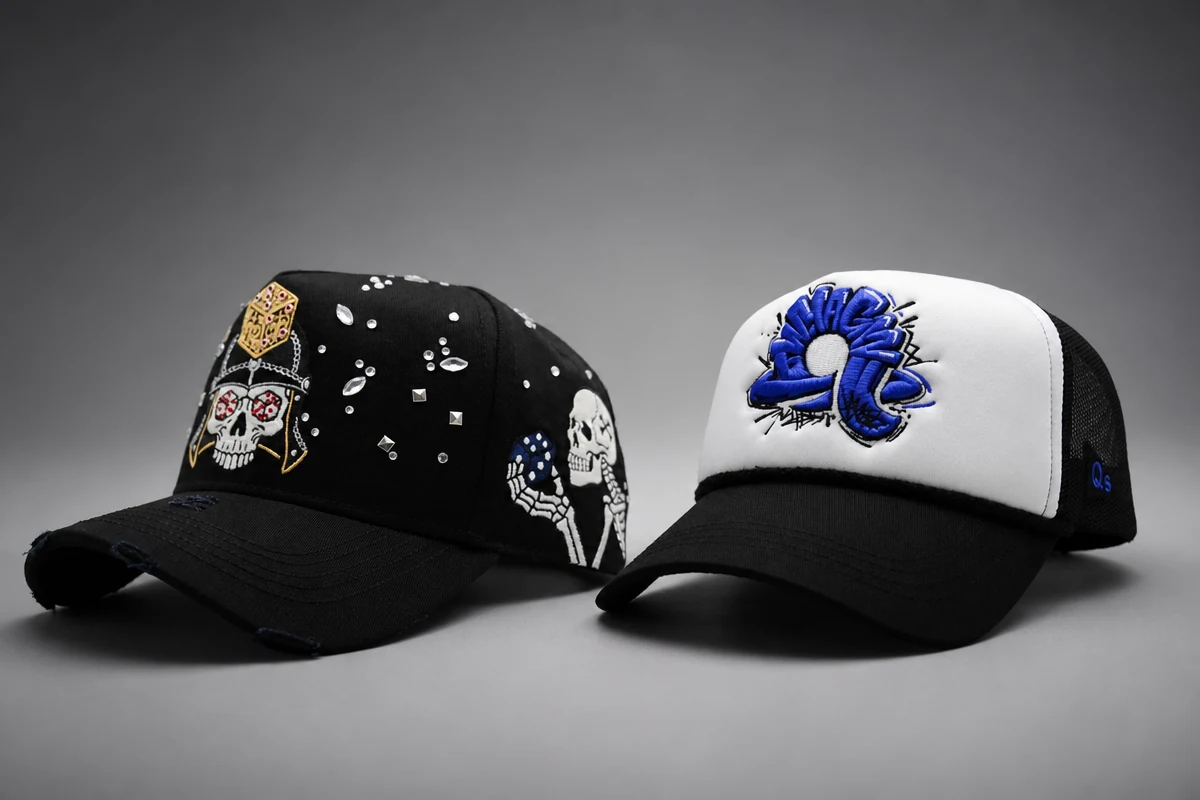
Resale rewards recognisability. A cap that reads as a specific product from across a room holds value better than one that reads as a generic cap with a logo. This is a design brief as much as a manufacturing one, and it usually comes down to a decision to commit: a colourway that is genuinely bold, a decoration technique with physical presence, a construction detail nobody else in your price band is using.
Raised 3D puff embroidery is the most common route to presence because it is visible in photographs and in person, which matters when most discovery happens on a phone screen. Our embroidery capability page covers how puff height, stitch density and metallic thread change the physical read of a logo.
Condition and Longevity
Secondary markets price condition explicitly, and a cap that deforms, fades unevenly or loses its brim shape after light wear will be discounted regardless of brand heat. This is where construction quality earns its place: not as a selling point, but as the floor under long-term value.
How Drop Mechanics Work in Practice
A drop is a deliberately constrained release, and the constraint is the product feature. Executing one well is mostly a supply chain problem disguised as a marketing problem.
Quantity Discipline Is the Hard Part
The instinct when a style performs is to make more. Drop models require the opposite discipline. Set the quantity before you see the demand signal, and hold it. Brands that expand a successful drop mid-cycle convert a scarce object into an available one and lose the position they just built.
This has a manufacturing implication worth planning for. Small, frequent runs cost more per unit than one large run, because setup costs — digitising, patch moulds, screens — are fixed per design. A brand running twelve small drops a year is paying twelve setups. Budget for that rather than discovering it in the third quarter.
Cadence Beats Volume
A predictable rhythm of releases builds an audience that returns on schedule. Irregular drops make the brand easy to forget. The practical constraint is production lead time: to release monthly, development has to run continuously several months ahead, with samples approved while the previous drop is still selling.
Sampling at QSHeadwear runs three to five business days once artwork is confirmed, which makes an overlapping development cycle feasible. Our production lead time guide sets out how the stages fit together when releases overlap.
Collaboration Is Borrowed Credibility
Collaborations work by borrowing an audience and a set of associations. They fail when the borrowing is transparent — when two logos appear on a product that neither party would have made alone. The collaborations that hold resale value tend to involve a genuine product decision: a construction, material or graphic approach that belongs to the pairing rather than to either brand's standard range.
Production Decisions That Support a Premium Position
Streetwear buyers inspect product closely and discuss it publicly. Details that pass unnoticed in a promotional cap become talking points here.
Finishes That Cannot Be Faked
Washed and distressed finishes carry visual history, and done properly each piece varies slightly. That variation is the point — it reads as authentic rather than printed. It also demands real process control, because uncontrolled variation is just inconsistency.
QSHeadwear's vintage and washed caps line uses stone and enzyme washing, hand-distressed abrasion, frayed brim edges and colour fading calibration for batch uniformity — the combination that lets each cap look individual while the batch stays sellable. Our cap fabric guide covers how different base materials respond to these treatments.
Labels, Packaging and the Unboxing Layer
In a category where customers photograph what they buy, packaging is part of the product. Woven labels, hangtags, tissue and box printing are cheap relative to their effect on perceived value, and they persist in resale listings years later. A cap that arrives in a polybag and a cap that arrives in considered packaging occupy different mental price brackets before either is worn.
Traceability Is Becoming Part of Premium
Younger buyers in this category increasingly ask what a product is made of and where. Certification such as OEKO-TEX STANDARD 100 is straightforward to obtain through a factory that already runs it, and it converts a vague sustainability claim into a checkable one. Given the direction of EU regulation, brands selling into Europe will need this documentation regardless — our note on the EU Digital Product Passport covers what is coming.
Common Mistakes
The most frequent error is manufacturing scarcity without demand. Limiting a drop to two hundred pieces does nothing if two hundred people do not want it; the result is simply a small quantity of unsold stock and a public failure. Scarcity amplifies demand, it does not create it.
The second is inconsistent quality across drops. A brand that ships one excellent release and one mediocre one has taught its audience to inspect before buying, which is fatal to a model that depends on buying immediately.
The third is copying rather than building. Producing a close approximation of whatever is currently trading high is a strategy with a permanent ceiling, because the audience for that product already has a preferred version of it. If you need help positioning a range around your own point of view, our cap style guide compares how each silhouette reads to different markets.
Frequently Asked Questions
How small should a streetwear drop be?
Small enough that selling out is likely, which depends on your audience size rather than on a universal number. The signal to watch is sell-through speed across successive drops; consistent instant sell-outs suggest room to grow, while a slow drop means the quantity was ahead of the demand.
Does higher manufacturing quality increase resale value?
Not directly. Quality prevents value from collapsing through poor condition, but the premium itself comes from scarcity, cultural association and distinctiveness. Build well because it protects the position, not because it creates it.
Should we restock a style that sold out immediately?
Generally no, if the drop model is central to your positioning. Restocking teaches customers that waiting works, which removes the urgency the model depends on. A new colourway or an evolved version usually serves better than a straight restock.
How far ahead should drop production be planned?
Far enough that development overlaps with selling. For a monthly cadence this means having samples approved and bulk in production while the previous release is still live, which requires committing to designs several months before they reach the customer.