

Wholesale trucker caps are sold to at least five kinds of buyer, and each one judges a different thing. A promotional distributor looks at the price band and the number of print colors. A streetwear label looks at mesh grade and drop timing. A running brand looks at weight and sweat management. A retailer looks at pack-out and the hangtag. An event buyer looks at the date. Order one build for all five and four of them will not reorder.
This article is written for buyers who order trucker caps repeatedly rather than once: distributors running catalogs, fashion and skate labels, sport and outdoor brands, retail private-label teams, and hospitality or event organizers ordering between 200 and 50,000 pieces. It maps the buyer profiles to the build each one needs, then covers the material and decoration decisions underneath.
Why one trucker build cannot serve five buyers
Wholesale trucker caps share a stable silhouette, which is exactly why the differences are easy to miss. Front panel fabric, mesh grade, crown height, closure type and decoration method can all change without changing the outline, and those are the variables that decide whether the cap reads cheap or premium, whether it survives a summer or a season, and whether the buyer comes back.
The fastest way to build a program is to decide which profile you are serving first, then choose a build for that profile and let the others follow from a shared base.
The five buyer profiles and the build each one orders
Use the table as a starting specification. Each row pairs a buyer with what they actually judge, the build that satisfies them, and the mistake that loses the reorder.
| Buyer profile | What they judge first | Build that works | What loses the reorder |
|---|---|---|---|
| Promotional distributor | Price band and print color count | Stock shell, foam mesh, plastic snap, one or two print colors | A premium mesh that pushes the unit price out of the catalog band |
| Streetwear or skate label | Mesh grade, fit and drop timing | Heavier twill front, firm crown, premium or performance mesh, small run first | Slow sampling that misses the drop window |
| Running and outdoor brand | Weight, sweat management and logo weight | Light performance mesh, moisture-management sweatband, minimal embroidery | A heavy foam mesh and a dense logo that traps heat |
| Retail private label | Pack-out, hangtag and size run | Consistent shade across colorways, retail-ready pack, labeled cartons | Shade variation between colorways of the same style |
| Event and hospitality buyer | Date, quantity and distribution | Stock build with a dated print, pre-packed by location | A customization that adds weeks to the schedule |
The promotional distributor: price band and one-color discipline
Promotional programs built on wholesale trucker caps are won and lost on the price band. The buyer has a catalog price to hit, and every upgrade to mesh or fabric has to be paid for somewhere. The working build is a stock twill or canvas front, a standard foam mesh back, a plastic snap and a single-color print or a light embroidery mark.
Discipline is what makes this profitable. Keep the shell and the trim in stocked colors, keep the mark to one or two positions, and reuse the same artwork across as many styles as possible so the setup spreads. A distributor who specs a different mesh for every client ends up paying premium prices for a promotional product.
The streetwear and skate label: mesh grade and drop timing
This buyer is paying for attitude and detail, and they will notice the mesh before they notice anything else. A stiffer, heavier mesh reads more expensive; a soft, open foam mesh reads more casual and more accessible. The front panel matters too: a heavier twill or a washed canvas gives a different hand than a light poly twill, and the crown structure decides whether the cap holds a shape on a shelf.
Timing is the real constraint. This profile buys wholesale trucker caps in drops, which means small first runs followed by fast repeats. A factory that needs six weeks to produce a sample cannot serve a drop calendar. Ask specifically about small-run sampling and repeat speed, and build the relationship around a base block you can decorate differently for each drop.
The running, outdoor and trail brand: weight and sweat management
Performance buyers judge wholesale trucker caps with their hands. Weight, mesh openness and how the sweatband handles moisture are the criteria, and the decoration has to stay light so the panel does not stiffen. A cap that looks right but traps heat will not reorder.
The build that works here uses a performance mesh or an open knit back, a lighter front panel, a moisture-management sweatband and a minimal mark, often a heat transfer or a light embroidery. Reflective or high-visibility trim can be added for specific channels, but it belongs in the brief rather than in the default specification.
The retailer private label: shade control and pack-out
Retail is a documentation business wearing a product, and wholesale trucker caps are no exception. The retailer cares that every colorway matches its own approved reference, that the hangtag is attached the same way on every unit, and that the carton marks let the receiving team process the shipment without opening boxes.
Two habits protect this program. Approve all colorways together under one light source rather than one at a time, and pre-pack to the door where the retailer takes mixed shipments. It costs a little at the factory and removes an entire category of receiving disputes.
The event and hospitality buyer: dates, quantities and distribution
Event buyers order wholesale trucker caps against immovable dates. Quantities are usually fixed and the goods often have to arrive pre-sorted by location or by team rather than as a single bulk carton. The build should therefore be as stock as possible: standard shell, standard mesh, one decoration, a clear carton mark plan.
The failure mode is a customization added late, such as a numbered patch or a specific ink color. Each addition has a lead time, and the event date does not move. Freeze the artwork early and keep the option to print rather than embroider, because printing usually shortens the schedule.
Mesh grades compared: foam, performance and open weave
Mesh is the defining material of wholesale trucker caps and the least discussed part of them. The grade controls weight, breathability, structure and price.
| Mesh type | Weight and feel | Best for | Limits |
|---|---|---|---|
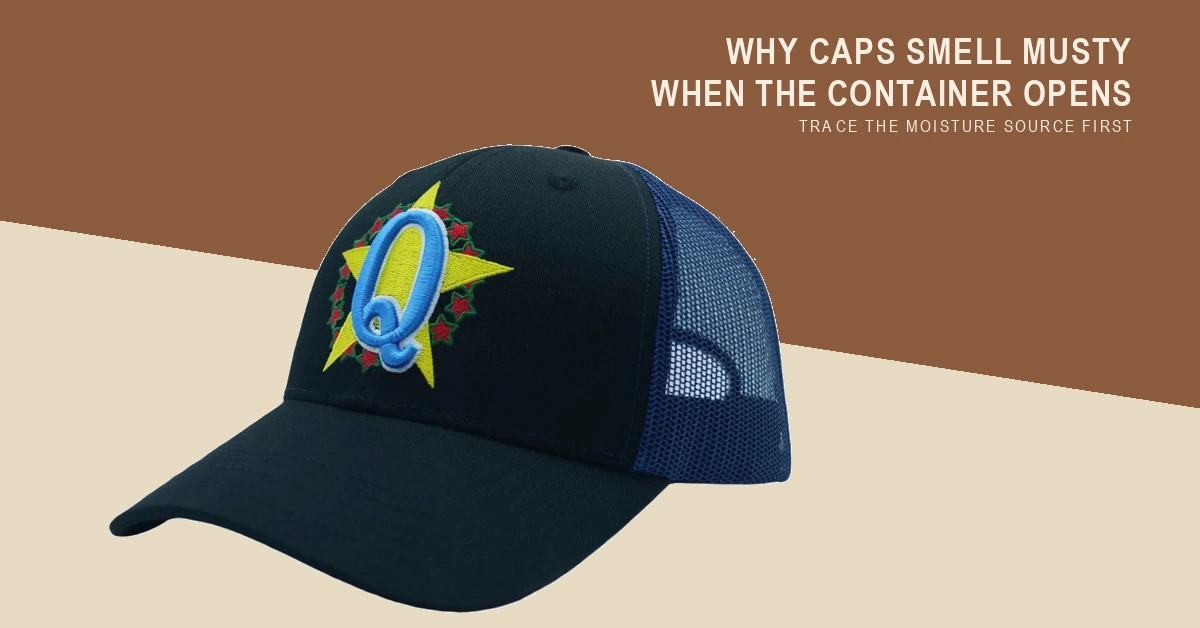
| Foam mesh | Light, springy, keeps a rounded shape | Promotional and streetwear volume, retro look | Can look inexpensive; heat builds up on long wear |
| Performance mesh | Light with controlled stretch and better airflow | Running, cycling and outdoor programs | Higher cost, and the open structure limits embroidery |
| Nylon or polyester mesh | Fine hand, crisp look, holds print well | Fashion and retail programs | Less structure than foam, so the crown needs support |
| Structured cord mesh | Heavier, textured, premium feel | Streetwear and premium retail | Adds weight and carton volume |
| Open knit back | Soft, breathable, sits closer to the head | Lifestyle and casual ranges | Shows logo stitches and seam imperfections |
Front panel substrate and how it takes a logo
The front panel is the billboard, and the fabric under it decides which decoration methods are realistic. Cotton twill takes a crisp embroidered edge and softens with wear. Poly twill holds print and heat transfer well and resists fading. Canvas and duck give texture and a heavier hand, which suits a premium streetwear build. Washed or garment-dyed panels add depth of color but introduce shade variation that has to be approved deliberately rather than discovered.
Whatever the substrate, approve the mark on the actual panel. A patch proof on paper tells you nothing about how a stitch line sits on a textured canvas, and a heat transfer that looks flat on a swatch can ghost on a washed surface.
Closure choice: how the back of the cap sets your price
The closure is where a program of wholesale trucker caps either stays simple or multiplies. A plastic snap with an adjustable strap covers a wide head range in one SKU and keeps inventory lean. A metal slider adjusts more finely and reads more premium, with a higher component cost and one more source of finish variation. An elastic or fixed band pushes the program toward a fitted size run.
For wholesale programs, a plastic snap with a branded rear strap is the usual answer. It supports volume, covers the size range and gives the rear of the cap a second branded surface at almost no extra cost.
Decoration across a range: sharing artwork to cut setup
The cheapest decoration in a range of wholesale trucker caps is the one you already paid for. Reusing a single digitized embroidery file or one set of screens across every colorway and every related style spreads the setup across the whole program rather than across a single SKU.
A practical structure: one main front mark used on every colorway, one small rear or side mark reused across styles, and one seasonal accent that changes. It keeps the range visually coherent, which is what a distributor catalog needs, and it keeps the setup cost predictable, which is what your margin needs.
Color, trim and shade control on multi-color programs
Trucker programs are usually sold in ranges, which makes shade control the most likely source of complaint. Fix an approved reference for each part of the cap: front panel, mesh, brim, twill tape, closure and any patch. Then approve them as a group, because a mesh that looks correct alone can look wrong beside a lighter front panel.
Trim is where variation shows first. A snap in a slightly different tone is invisible in a product photo and obvious in a hand. Ask for the closure finish to be specified by color reference rather than by name, especially for black, which varies more than buyers expect.
Quality control: the seams and parts that fail first
Trucker caps fail in predictable places. Knowing them lets you write an inspection plan that catches problems at the point where they are cheap to fix.
| Failure point | How it shows up | Where to catch it |
|---|---|---|
| Panel to mesh seam | Puckering, skipped stitches, uneven seam allowance | First pieces off the line, not at final audit |
| Front panel stiffness | Buckram edge visible through the twill or a hard ridge | Pre-production sample pressed by hand |
| Brim shape | Brim takes a set or curls after packing | Packed sample opened after several days |
| Mesh distortion | Embroidery pulls the mesh out of shape around the mark | Sew-out on the actual mesh before the run |
| Closure function | Snap too stiff, strap too short, slider catches | Test both adjustment ends on every colorway |
| Shade variation | Mesh and panel disagree within one cap | Compare against approved references under one light source |
QSHeadwear inspects materials before cutting, approves a pre-production sample, monitors in-line and runs a final AQL inspection before shipment. That sequence is worth copying even with a different supplier, because it places a check at each stage where a defect is still cheap to correct.
Packing and carton claims for mesh-backed caps
Mesh-backed caps are lighter than most headwear but hold their shape, so they stack efficiently when packed well. Decide whether the caps ship flat, nested or in a retail-ready presentation, because that choice changes units per carton and therefore the volumetric freight cost.
Write the carton marks and the mixed-size rules into the order. If a carton holds two colorways, the label has to say so, or the receiving team will open every box to find out.
Material claims worth verifying early
If the cap carries a material claim, the paperwork should exist before the goods do. OEKO-TEX Standard 100 is the reference most buyers cite for tested restricted substances in textiles, and the Global Recycled Standard covers recycled content claims and the chain of custody behind them. Neither is a product quality guarantee, and neither replaces your own inspection. Both decide whether a claim you print on a hangtag can be defended.
Building a trucker program with QSHeadwear
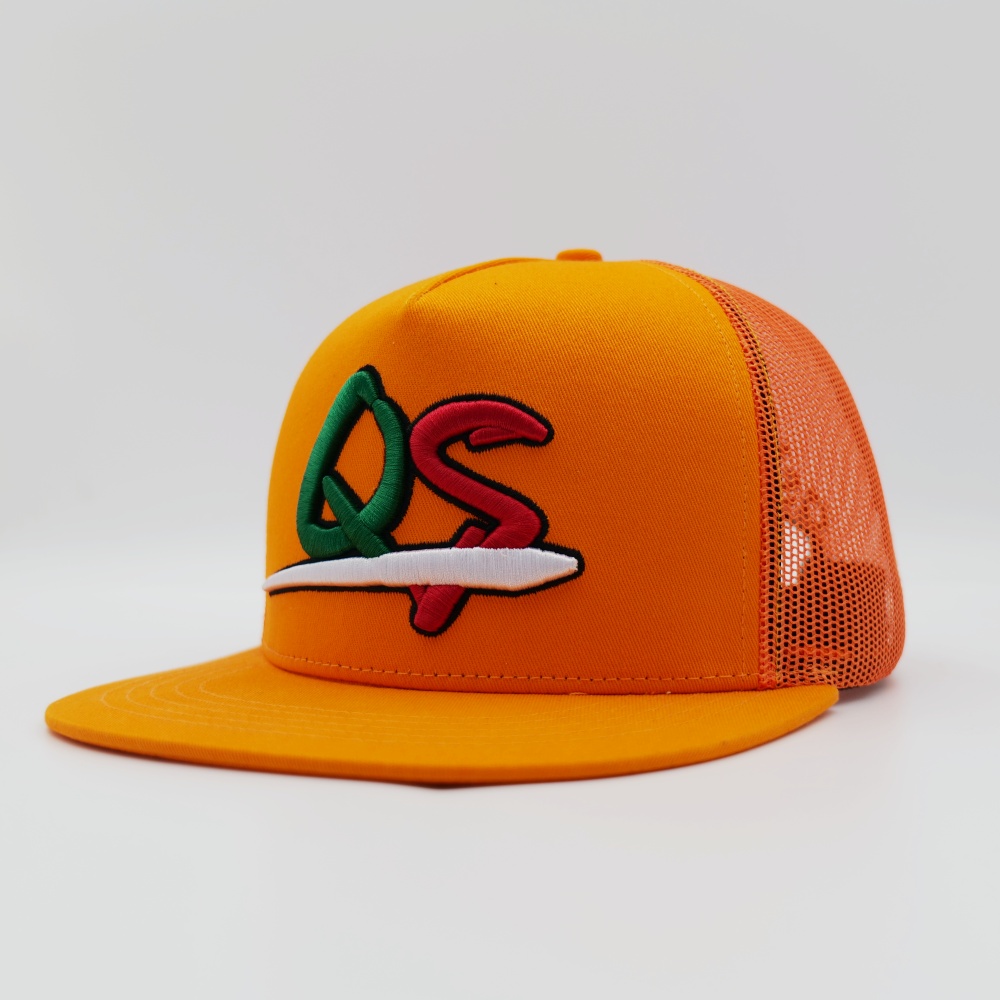
QSHeadwear is the brand of Dongguan Qisheng Cap & Bag Co., Ltd., a Guangdong headwear manufacturer producing for overseas brands, retailers and distributors. The published profile covers 15 years focused on custom caps, 100+ staff working across sampling, embroidery, sewing and quality control, more than 4,000 square metres of workshop, 30+ embroidery machines supporting flat, high-density 3D and patch work, and monthly capacity of 120,000 to 150,000 pieces.
For planning: sample development is quoted at roughly 3 to 5 business days, standard bulk runs take about 15 to 20 days and extend to 25 to 30 days above 5,000 pieces. Production can start from a tech pack, AI or PDF artwork, or a physical sample under OEM or ODM terms, and shipping can be arranged by DHL, FedEx, UPS, air, sea, port delivery or DDP into Europe and North America. Confirm every figure against your own specification.
Continue with the trucker cap buyer guide, the foam mesh construction notes, the merch drop planning guide, and the logo legibility guide.
Write the brief for the buyer, not for the catalog
Name the profile first, then the front panel, mesh grade, crown, closure, colorways and decoration, quantities per colorway, packing, destination and date. A brief written for a real buyer produces a quotation you can compare; a brief written to look impressive produces three prices for three different caps.
Use the QSHeadwear contact page for an order-specific quote, review the OEM and ODM services if the block needs development, and browse the product center to compare silhouettes. Ordering wholesale trucker caps well comes down to matching one build to one buyer and repeating it precisely.
Wholesale trucker caps: questions buyers raise most often
What is the difference between foam and performance mesh?
Foam mesh is lighter and holds a rounded shape, which suits promotional and streetwear volume. Performance mesh breathes better with less stretch, which suits running and outdoor programs at a higher cost.
Which build suits a promotional catalog?
A stock twill front, standard foam mesh, plastic snap and one or two print colors. Keep shell and trim in stocked colors so the price band holds.
Can trucker caps be embroidered on the mesh?
It is possible but risky, because stitches can pull the mesh out of shape. Approve a sew-out on the actual mesh first, or move the mark to the front panel or rear strap.
How many colors can I run in one order?
Four to five colorways are comfortable at 1,000 pieces each. Below that, each extra color behaves like its own small order because of trim and dye lot minimums.
What closure should a wholesale program use?
A plastic snap with an adjustable strap covers the adult size range in one SKU and adds a branded rear surface at low cost. Sliders read more premium; elastic pushes you toward fitted sizes.
Are trucker caps lighter to ship than other caps?
Usually yes on scale weight, but freight is charged on volume for headwear, so pack presentation and units per carton matter more than the weight saving.
How do I stop shade variation between colorways?
Fix a reference for each part of the cap, approve all colorways together under one light source, and specify closure finish by color reference rather than by name.
What sample should I approve before a trucker run?
A pre-production sample that locks the panel, mesh, crown, closure and decoration position, plus a packed-sample check to confirm the brim shape survives transit.
How long does sampling and production take?
QSHeadwear quotes roughly 3 to 5 business days for sample development, with bulk usually running 15 to 20 days and about 25 to 30 days above 5,000 pieces.
How do I verify a recycled mesh claim?
Ask for documentation covering the recycled content and the chain of custody. The Global Recycled Standard is the reference most buyers use, and the claim has to be supported before it appears on a hangtag.