

Australia and New Zealand are not simply warm-weather extensions of the Northern Hemisphere headwear market. Their buying calendars run in the opposite direction, ultraviolet exposure can remain significant when the air feels cool, and a standard baseball cap does not provide the coverage that many institutional or outdoor programmes expect from a sun-protective hat.
For an overseas brand, the commercial opportunity is real: outdoor sport, tourism, schools, workwear and corporate programmes all use headwear. The risk is treating every brimmed product as equivalent. This guide separates coverage, material performance, verified claims, retail information and seasonal planning so buyers can develop an assortment that fits the actual market.
Start With the Intended Level of Sun Protection
The first decision is not colour or logo placement. It is what the product is expected to protect and what the brand intends to say about that protection.
The Australian Radiation Protection and Nuclear Safety Agency states that broad-brimmed hats, bucket hats with wide brims and legionnaire-style hats are effective methods of protecting the head, ears, face and neck when used with other protective measures. Its official guidance on sun-protection hats also distinguishes those designs from baseball caps.
Do Not Oversell a Baseball Cap
ARPANSA says baseball caps provide reasonable protection to the scalp, forehead and nose but almost none to the neck and ears. That does not make the baseball cap unsuitable; it makes its role specific. It can serve sport, uniform, event and lifestyle programmes where partial shade, fit and branding are the priorities.
Describe the construction accurately. Do not market a curved-brim cap as if it provides the coverage of a wide-brim bucket or legionnaire hat. Our performance cap guide explains how ventilation, moisture management and stability differ from broad-coverage sun design.
Use Broad Coverage Where the Programme Requires It
ARPANSA gives an adult broad-brim example of 7.5 centimetres or more and shows that hat shape changes protection across the forehead, cheeks, nose, ears and neck. For school, outdoor work or long-exposure programmes, specify actual brim and neck-coverage dimensions rather than requesting a “sun hat.”
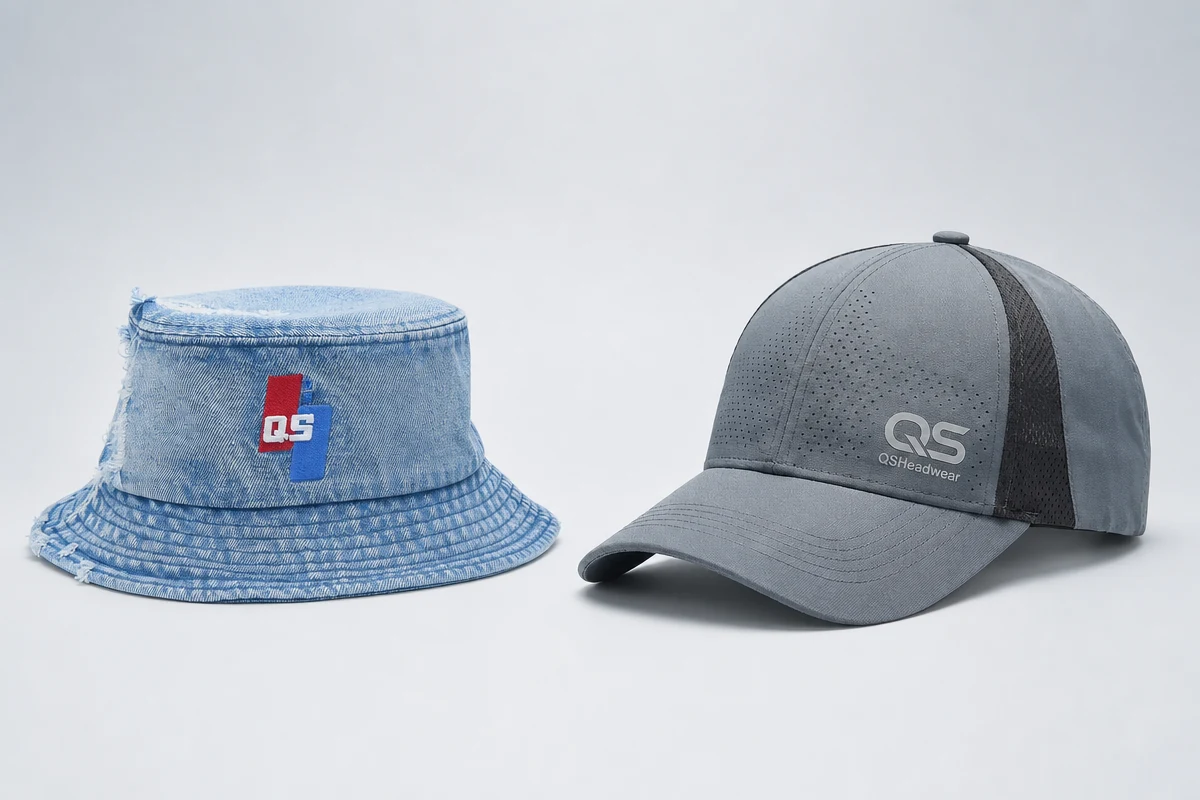
A bucket hat remains a practical retail and programme format, but brim width, downward angle, stiffness and crown depth must be controlled. The bucket hat sourcing guide covers the construction details needed for repeatability.
Use UV Conditions Rather Than Temperature
Ultraviolet radiation cannot be judged by how hot the day feels. SunSmart New Zealand states that cool or cloudy weather does not necessarily mean lower UV, and that skin and eyes still require protection when UV levels are elevated.
SunSmart New Zealand's UV guidance recommends all five SunSmart behaviours when the UV Index is 3 or above. It also notes that, in Aotearoa New Zealand, UV commonly requires protection from September to April, especially between 10 a.m. and 4 p.m., and throughout the year in mountains, on water, or near snow and ice.
Translate Exposure Into a Product Brief
Record where the cap will be worn, for how long, at what activity level and with what other protection. A marine-tourism visor, a school bucket hat and a trail-running cap should not inherit one generic UV brief.
For golf and racquet programmes, the sports headwear guide shows how sustained exposure, movement, brim geometry and sponsor marks change the product.
Treat Reflection and Altitude as Separate Risks
SunSmart identifies altitude, water, snow and ice as factors affecting UV exposure. A mountain or marine retailer therefore needs an exposure discussion even when the weather is cool.
Do not let a winter colour palette or cool air imply that UV protection is irrelevant. Match coverage and customer messaging to the location and use.
Separate Coverage From Fabric Performance
Hat shape controls which areas are shaded. Fabric construction controls comfort, durability and how much radiation reaches the covered area. Both matter, but they are not the same claim.
Control Open Weaves and Perforation
ARPANSA notes that many hat materials naturally block or absorb UV, while straw constructions can contain spaces between fibres and may benefit from a fabric lining. The same practical concern applies to mesh and large perforations: they improve airflow but reduce continuous material coverage.
If the programme depends on a formal protection claim, use the applicable testing and labelling route for the final material, colour and construction. Do not infer a rating from thickness, darkness or fabric name.
Balance Airflow and Durability
Technical polyester and nylon blends can dry quickly and support controlled perforation. Cotton offers familiar hand and retail appeal but holds moisture for longer. Mesh moves air efficiently but creates a different aesthetic and coverage pattern.
The cap fabric guide compares cotton twill, washed materials, technical synthetics and recycled options by weight, decoration behaviour and use.
Test the Finished, Decorated Product
Embroidery, patches, seam tape, labels and lining can change flexibility, heat and airflow. Test the actual decorated sample after wear, sweat and washing. Check brim recovery, colour, drying, elastic, label readability and whether the decoration puckers the fabric.
Build a Compact Australia and New Zealand Assortment
A strong range uses a small number of clear product roles instead of presenting every silhouette as a sun product.
Coverage-Led Core Style
Use a wide-brim bucket, broad-brim or legionnaire construction where shade to the ears and neck is central. Specify crown depth, brim dimensions, lining, ventilation, adjustment and wind retention.
Performance Style
Use a lightweight full-crown cap with a curved brim, moisture-wicking sweatband and controlled ventilation for running, cycling, golf and active teams. Market its actual functions rather than broad-coverage claims.
Visor Style
A visor maximises heat release and provides a strong branding surface for golf, tennis and hospitality. It leaves the scalp exposed, so the product page and programme brief should make the trade-off clear.
Lifestyle Style
Washed cotton, denim or textured fabrics can serve fashion and tourism channels. The silhouette may offer some shade while its primary purchase driver remains style.
Cold-Weather Extension
New Zealand and southern Australian markets can support beanies and heavier materials through colder seasons. The year-round assortment guide explains how to balance warm-weather caps with knitwear and how to work backward from local selling seasons.
Plan the Opposite Seasonal Calendar
A Northern Hemisphere calendar can place product into Australia and New Zealand after the main spring and summer demand window. Start from the local launch, school term, tourism season or outdoor event, then subtract fulfilment, customs, freight, inspection, production and sample approval.
Develop Before Northern Autumn
Spring and summer ranges for Australia and New Zealand may need to be developed while Northern Hemisphere teams are focused on autumn and winter. Put the local date on the calendar instead of using a global season name.
Reserve Bottleneck Processes
Custom fabric, wide brims, technical lining, complex embroidery and market-specific packaging may compete for peak capacity. Confirm the material and process route early rather than asking only for total monthly factory output.
Prepare Retail Information for Each Country
Australia and New Zealand are separate legal and retail markets. Confirm origin, fibre, care, product-safety, claim, consumer-information and language requirements for the exact product and channel with local advisers.
Control Formal Protection Claims
Keep the test report, product revision, material, colour and construction behind any formal sun-protection or UPF claim. A fabric report should not be expanded into a finished-product claim without confirming its scope.
Give Customers Fit and Coverage Evidence
List head-size range, closure, crown depth and brim measurements. Show front, side, back and underside views so the buyer can see neck and ear coverage, ventilation and adjustment.
The fit systems guide explains how fitted, snapback, strapback and elastic systems affect stability, returns and SKU count.
Use Product-Page Returns as Evidence
Track why customers return the product: crown too shallow, brim too soft, colour different, fit range inaccurate, fabric too warm or coverage misunderstood. Feed that evidence into the next sample.
The e-commerce product-planning guide explains how imagery, measurements and return classifications support better online assortments.
Prepare Institutional and Corporate Programmes
Schools, employers, clubs, tourism operators and corporate buyers may apply specifications that go beyond consumer retail. Request the buyer's policy and tender documents rather than assuming one retail cap will qualify.
Control Recipient Fit
Where sizes are unknown, use an adjustable system with a measured range or a controlled size split. “One size” should be supported by minimum and maximum usable circumference.
Protect Function During Branding
Large embroidery can stiffen lightweight fabric, close ventilation holes or distort a soft brim. Put logos where the structure supports them and approve the final decorated sample.
The corporate cap procurement guide covers logo coordinates, physical colour references, packaging and volume-order acceptance.
Qualify the Supplier Against the Final Programme
A factory that can sew an attractive cap is not automatically ready to support formal claims, institutional requirements or multi-country retail records. Test the actual documentation and production route.
Audit Materials and Subcontracting
Confirm which operations are in-house, how material lots are controlled and which testing or certification belongs to the component versus the finished article. Document approved substitutions and reopen the relevant review when anything changes.
Use a Commercial Pilot
A sample proves development capability. A pilot tests repeatability, packing, documentation and receiving. Select a style containing the programme's real risk: a wide brim, technical lining, market-specific label, detailed logo or formal claim.
Frequently Asked Questions
Is a baseball cap a sun-protective hat?
It provides shade to parts of the scalp and face, but ARPANSA states that it provides almost no protection to the neck and ears. Describe the coverage accurately and combine it with other protective measures.
Which styles provide more coverage?
Broad-brimmed, wide-brim bucket and legionnaire styles provide more shade to the head, ears, face and neck than a standard baseball cap.
Does cool or cloudy weather mean low UV in New Zealand?
No. SunSmart New Zealand states that cool or cloudy conditions do not necessarily mean lower UV. Use the UV Index and local alert.
Can a standard cap be marketed with a UPF rating?
Use a formal rating only when evidence matches the relevant material, colour and final construction under the applicable testing and labelling route.
When should an Australian spring range be developed?
Work backward from the local spring on-shelf date through freight, inspection, production, material approval and sampling. Do not rely on a Northern Hemisphere season name.