

North America is often treated as one headwear market because the United States and Canada share retail groups, logistics routes and familiar silhouettes. They do not share one labelling system, one customs schedule or one customer expectation. A cap that is ready for a US launch may still need different records, language treatment or dealer information before it can be sold in Canada.
This guide helps overseas brands and importers connect product development with North American retail reality. It covers assortment, fit, country-of-origin marking, textile information, duty planning, packaging and the evidence needed before a purchase order becomes inventory.
Define the Sales Channel Before the Product
A direct-to-consumer website, specialty retailer, team programme, promotional distributor and national chain do not evaluate the same cap in the same way. The channel decides which product data, packaging, price structure and replenishment capability matter most.
Direct-to-Consumer
DTC brands carry product-page accuracy, customer acquisition cost and returns. Adjustable fits reduce size-related returns, while strong photography and clear material descriptions help the customer understand why one cap costs more than another.
The e-commerce headwear guide covers how to build a product page around silhouette, material, fit, decoration and delivery rather than relying on front-view imagery alone.
Wholesale and Retail
Retail buyers need margin, shelf logic and reliable replenishment. They also need consistent barcode, SKU, colour and carton information so the product can enter their system without manual repair.
A wholesale range should show an entry, core and premium ladder instead of many unrelated styles. The retail assortment and reorder guide explains how shelf role, carton configuration and reorder readiness affect supplier choice.
Corporate and Promotional
Promotional buyers often distribute one adjustable size to a mixed group and work toward a fixed event date. Logo consistency, recipient-friendly fit, carton accuracy and split delivery can matter more than seasonal fashion detail.
Our corporate cap procurement guide provides a complete specification checklist for branding, quality acceptance and programme delivery.
Build the Assortment Around Proven North American Silhouettes
Baseball caps, snapbacks, truckers, dad hats and beanies all have established positions, but they serve different buyers. The objective is not to stock every silhouette. It is to choose a small set whose fit, material and price roles are easy to explain.
Baseball Caps as the Core
The curved-brim baseball cap remains the broadest commercial option for teams, workwear, college-inspired merchandise, corporate programmes and everyday retail. Structured and unstructured versions should be treated as separate products because they present the logo and fit differently.
The custom baseball cap buyer guide outlines the panel, brim, ventilation and decoration decisions behind a repeatable programme.
Snapbacks and Truckers for Clearer Positioning
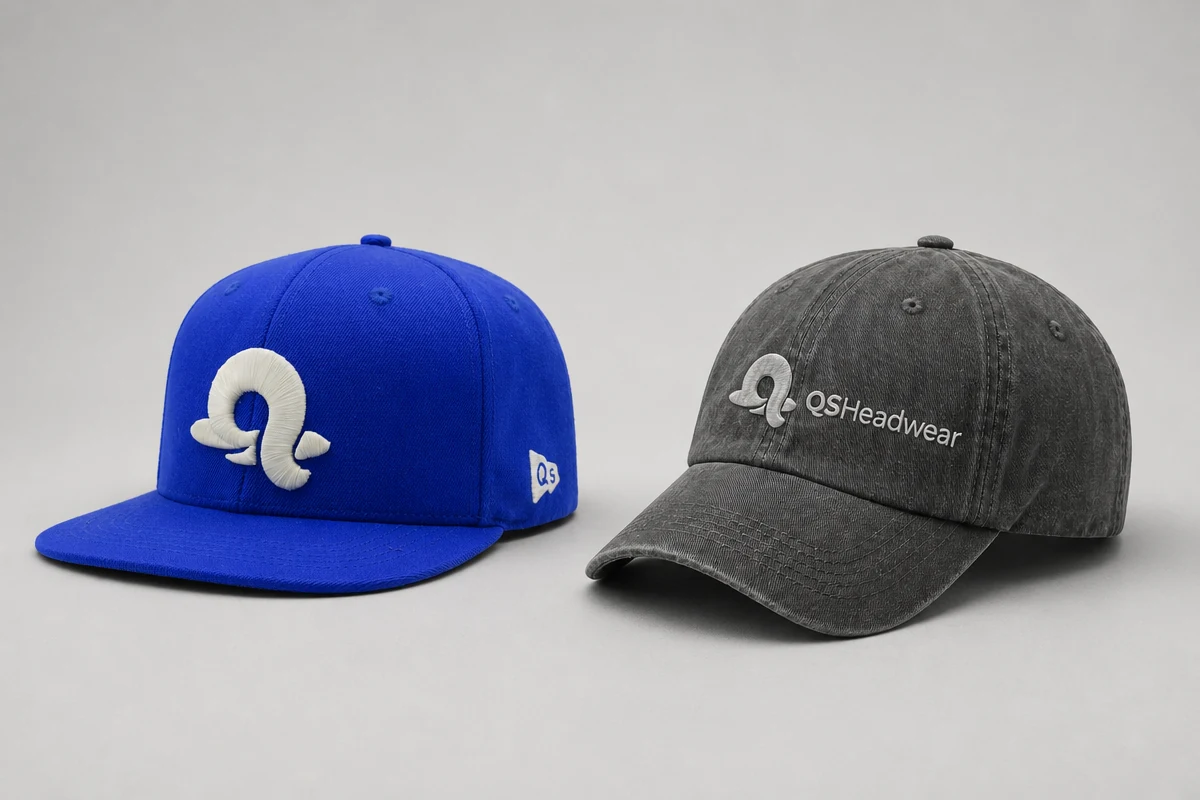
A flat-brim snapback carries streetwear associations and offers a large structured front surface. A trucker cap adds an open mesh back and a stronger outdoor, workwear or promotional signal. They may share an adjustable plastic closure while appealing to different customers.
Do not combine them into one generic product title. Use the silhouette, crown height and material system as merchandising information and as production controls.
Beanies for Cold-Weather Revenue
Beanies extend the selling calendar in northern markets and work well in gifting and team programmes. They require separate development because yarn, gauge, rib structure and cuff depth replace the panel and brim decisions used for woven caps.
The year-round assortment guide explains how cold-weather knitwear balances a cap-heavy range and why development must begin before the selling season.
Plan Fit for Returns and Inventory
Fit affects conversion, returns and SKU count. Fitted caps provide a clean silhouette and precise fit for the correct wearer, but every size becomes separate inventory. Adjustable systems cover a wider range with fewer SKUs.
Snapbacks offer stepped adjustment, strapbacks offer continuous adjustment and elastic systems provide clean appearance and movement stability. Select by channel and use rather than by hardware preference.
The cap sizing and fit guide covers circumference ranges, crown depth, adjustment limits and the inventory implications of each system.
Control US Country-of-Origin Marking
US Customs and Border Protection states that every article of foreign origin entering the United States must be legibly marked with the English name of the country of origin unless a legal exception applies. The purpose is to inform the ultimate purchaser where the article was made.
The CBP country-of-origin marking guidance also states that marking should be conspicuous and as indelible and permanent as the nature of the product permits. When tags are used, they must remain attached until deliberate removal.
Do Not Let Repacking Hide the Mark
Packaging, barcode labels or later attachments must not conceal the origin mark. If goods will be repacked after customs release, the importer must preserve the marking or properly mark the new container as required.
Put the origin location and method into the tech pack and packaging approval. Check it on the complete packed sample, not only on an isolated label artwork.
Confirm Origin From the Actual Production Route
Origin can be more complex when materials come from several countries and manufacturing occurs elsewhere. CBP advises that complicated origin questions may require a binding ruling. Do not decide origin from the fabric source alone or copy another brand's label.
Treat US Textile and Care Rules by Product Type
Do not assume that every requirement applying to clothing applies identically to every hat. The US Federal Trade Commission's published textile guidance notes product-specific coverage and exemptions, and wool products can follow different rules from ordinary textile products.
For that reason, classify the actual headwear construction before finalising fibre, business-identity and care labelling. A cotton cap, a wool-blend cap and a straw hat should not inherit one generic label without review.
Keep Claims Accurate Even Where a Particular Label Rule Does Not Apply
An exemption from a specific labelling rule is not permission to make a false material or origin claim. Product pages, hangtags and packaging should match the verified bill of materials and production route.
The cap fabric guide helps buyers distinguish cotton twill, washed materials, wool blends, synthetics and recycled options before customer-facing copy is prepared.
Build Canada as a Separate Label Workflow
The Canadian Competition Bureau states that consumer textile articles covered by the Textile Labelling Act must carry compliant labels and that dealers involved in manufacturing, processing, importing or selling are responsible for accuracy.
The Canadian textile labelling requirements specify fibre content information and dealer name and place of business or a CA identification number. They also explain that the label must be factual, legible and accessible to the prospective consumer at the time of purchase.
Check the Exact Headwear Category
The Canadian guidance lists specific exempt items, including straw or felt headwear, while other textile headwear may remain subject to the Act. Determine the product's actual material and category rather than treating all hats as exempt or all hats as covered.
Prepare Bilingual Content Where Required
The Canadian guidance links to detailed bilingual requirements, and Quebec can add French-language obligations. Build the label and packaging language plan before production, then have market-qualified reviewers approve customer-facing copy.
Do not ask the factory to improvise a translation. Give it controlled, final artwork with language ownership identified.
Understand Canada's Care-Labelling Position
The Competition Bureau states that care labelling is voluntary in Canada, but any care information provided must be accurate and not misleading. This differs from simply copying a care symbol set from another market.
If one SKU will serve both the US and Canada, design the information architecture to satisfy each confirmed requirement without letting one country's assumption overwrite the other.
Calculate Duty From the Final Construction
Headwear classification depends on material and construction. A cotton woven cap, a knitted beanie, a man-made-fibre performance cap and a visor can fall into different tariff lines. Confirm the code using the final product specification and destination schedule.
The headwear pricing guide explains how fabric and classification affect landed cost and why duty should be modelled before approving the product rather than added after shipment.
Separate US and Canadian Calculations
Use the US Harmonized Tariff Schedule for US imports and the Canadian Customs Tariff for Canadian imports. Do not copy a duty rate across the border because the classification description looks similar.
Include customs brokerage, origin documents, freight, destination charges and any relabelling risk in the landed-cost model. The unit price alone is not a North American cost.
Design Packaging for Fulfilment and Retail
North American channels may require barcode placement, size and colour identifiers, carton labels, inner packs and fulfilment-compatible dimensions. Confirm these rules with the actual retailer, marketplace or warehouse.
The custom hat packaging guide explains how individual bags, paper bands, boxes, supports and carton planning affect protection, receiving and freight.
Test Shape Protection With Real Hats
Structured crowns and flat brims can be damaged by packaging that looks efficient on a spreadsheet. Run a complete pack-out trial, close the carton for a realistic period and inspect units from the top, middle and bottom.
Keep the approved pack sequence, carton count and marks in the reorder file so later orders do not reconstruct them from memory.
Build One North American Release File With Two Market Sections
The master product file should contain one current tech pack and approved sample, then separate US and Canadian sections for origin marking, textile information, dealer or company identity, language, tariff classification and channel-specific packaging.
This prevents the factory from receiving two conflicting product specifications while allowing the brand to release market-specific labels and listings.
Review the File Before Every Reorder
Confirm that materials, factory route, origin, labels, identifiers, packaging and tariff assumptions remain current. A repeat order can become non-compliant when one component changes while the old label is reused.
Frequently Asked Questions
Can one cap label work for both the United States and Canada?
It may be possible, but only after the exact product and both countries' requirements are reviewed. Build one controlled label architecture rather than assuming the stricter-looking label is automatically valid in both.
Do all hats need US fibre-content labels?
No single answer applies to every headwear construction. FTC guidance identifies product-specific coverage and exemptions, while wool products can be treated differently. Confirm the actual product category before printing.
Is country-of-origin marking required in the United States?
CBP states that foreign-origin articles must be marked with the English country name unless an exception applies, and the marking must be legible and conspicuous.
Does Canada require care instructions?
The Competition Bureau describes care labelling as voluntary, but any care information included must be accurate and not misleading.
What should be confirmed before ordering?
Final construction, material composition, fit system, origin, tariff classification, required label content, language, identifiers, channel packaging, inspection criteria and the approved sample for each market.