

A custom cap buyer can receive three prices labelled FOB, CIF and DDP and assume they represent a simple ladder from factory to port to door. That interpretation is dangerous. A trade term allocates delivery tasks, costs and risk, but it does not by itself settle product ownership, payment timing, quality acceptance, arrival date or every cargo claim procedure.
The commercial decision is therefore not “Which acronym is cheapest?” It is “At which named place does delivery occur, when does risk move, who arranges each transport leg, who obtains insurance, who completes customs work, and who has the evidence to act when goods are damaged?” Those questions matter for headwear because a low-value unit can become an expensive shipment when thousands of caps, branded packaging and a fixed launch date travel together.
This article is an operational framework, not legal, tax, customs, insurance or freight advice. Parties should use the current official rules, state the exact named place and version in their contract, and obtain qualified advice for their route and jurisdiction.
Begin with what Incoterms rules actually allocate
Separate delivery from arrival
The International Chamber of Commerce says its Incoterms rules clarify the tasks, costs and risks involved in delivering goods from seller to buyer. The official ICC overview of Incoterms rules describes them as standards used in domestic and international contracts for delivery. A buyer must still distinguish the contractual delivery point from the physical destination printed on a booking or warehouse instruction.
Do not treat risk as title
Risk transfer answers who bears an accidental loss at a particular stage. Ownership or title is a separate contractual issue. Payment, title and risk can move at different moments. Link the selected term to the separate payment and milestone structure rather than assuming payment automatically proves delivery or ownership.
Write the named place precisely
“FOB China” or “DDP warehouse” leaves too much room for argument. State the port, terminal, airport, address or other relevant place precisely, together with the agreed rule and version. Operational teams should be able to point to the exact handoff location without interpreting sales shorthand after a delay.
Keep cost and risk on separate lines
Build two parallel paths
Draw one path for who pays each leg and another for who bears risk at each stage. They do not always change at the same location. This prevents the familiar mistake of assuming that the party paying main freight also carries every transit risk until destination.
Define what the quote includes
List export packing, inland pickup, terminal handling, main carriage, destination handling, customs brokerage, duty, tax, local delivery and unloading. Avoid hiding these items inside one “shipping included” line. The existing headwear landed-cost framework can hold duties and destination charges separately from the factory price.
Protect the unit economics
Carton dimensions and compression affect freight exposure even when the trade term stays unchanged. Use the carton-load planning method to verify units per carton and freight per cap before comparing terms. A seller-arranged freight quote is not automatically cheaper once destination charges and carton efficiency are normalized.
Use FOB only when its delivery point fits the route
Match the term to the transport operation
ICC Academy notes that FOB links risk to goods being loaded on board the vessel and warns that this may correlate poorly with containerized cargo delivered to a terminal earlier. Its article on FOB, CFR and common Incoterms mistakes discusses FCA as a potentially better fit when risk should move at an earlier carrier or terminal handoff. Buyers should not switch terms from a blog alone; they should compare the official rule text with the actual route.
Confirm who controls the booking
If the buyer books the main carriage, confirm the forwarder contact, cargo cut-off, documentation deadline, terminal instruction and consequences of a missed booking. If the supplier must deliver to a named point, define what evidence proves delivery and who pays waiting, amendment or rollover costs caused by each party.
Do not use a port label as a complete shipment plan
A port name does not specify factory pickup, container loading, consolidation or terminal handling. For a mixed-SKU cap order, map the actual movement from packed cartons to the agreed delivery point and make sure the purchase order, forwarder instruction and commercial invoice use consistent wording.
Read CIF as freight and insurance allocation, not destination risk
Test the common assumption
CIF can require the seller to arrange freight and insurance to the named destination port, but that does not mean risk necessarily remains with the seller until the goods arrive there. The ICC Academy article specifically warns against conflating seller-arranged freight with destination risk. The buyer should identify the risk point from the applicable official rule and contract.
Inspect the insurance evidence
Ask who is insured, what voyage and goods are covered, what exclusions and deductible apply, how the insured value is set, which documents are required and who may file a claim. A line saying “insurance included” does not prove that the buyer can recover a practical loss.
Connect evidence to the shipment
The invoice, packing list, transport document, insurance evidence and inspection records should identify the same order and carton population. Preserve photographs and handoff records before cargo moves. If a later defect or damage claim arises, the bulk defect claim framework helps separate manufacturing nonconformity from handling or transit damage.
Treat DDP as a high-coordination promise
Verify that the seller can perform the destination obligations
DDP may appear convenient because the seller carries broad delivery responsibilities, but the parties must confirm that the proposed arrangement is workable under destination customs, tax and importer requirements. The ICC notes that Incoterms rules allocate responsibilities but do not change tariff rates or customs procedures. Do not promise regulatory performance that the selected supplier or service chain cannot legally or operationally provide.
Demand a transparent price boundary
Ask which destination costs are included, which events can create extras, who acts as importer where applicable, and how duty or tax changes are treated. ICC guidance on tariff volatility makes the important distinction that the rules allocate responsibility but do not determine tariff rates.
Retain order-level visibility
A door-delivered price should not erase the transport route. Keep forwarder references, customs status, carton count and delivery appointment visible. Retail programs should align the handoff with the vendor routing and ASN requirements so a commercially delivered order does not fail a channel-compliance appointment.
Assign the insurance and claim path before dispatch
Name the party that will act first
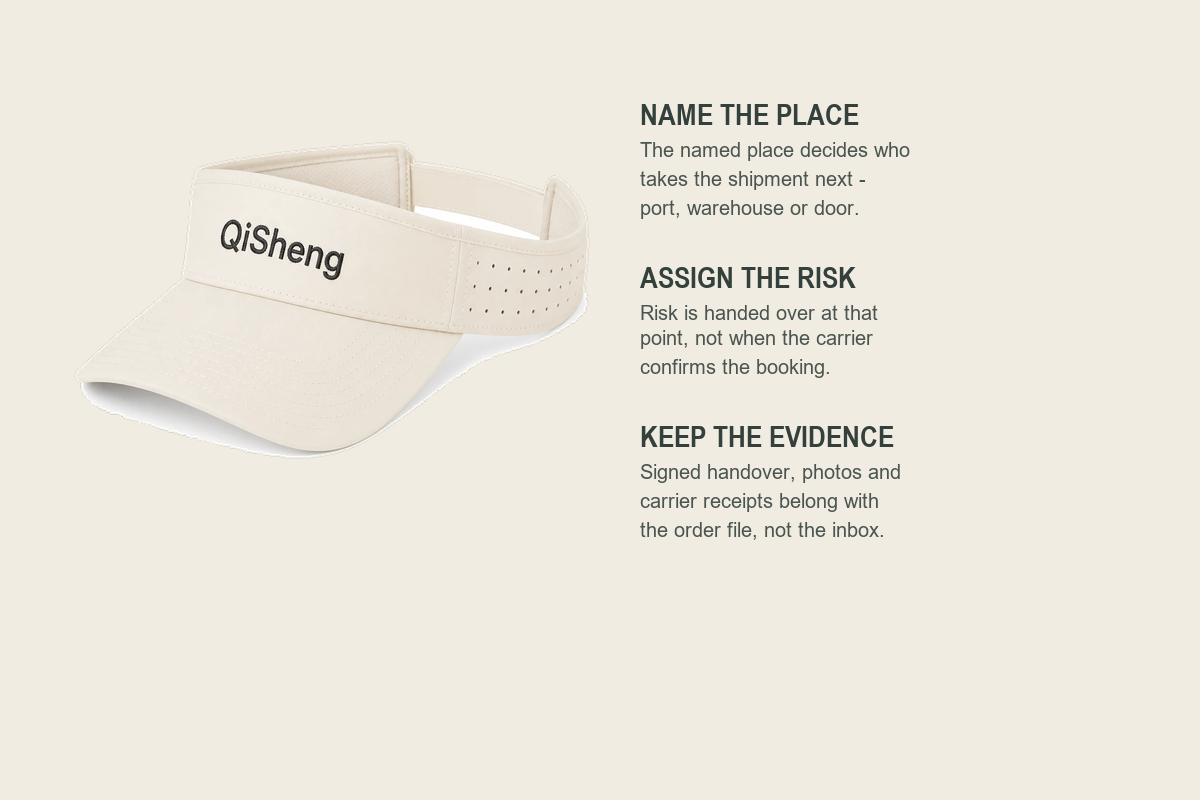
When cartons are wet, crushed, short or missing, someone must notify the carrier or insurer within the applicable timeframe. Write who inspects at receipt, who records exceptions, who preserves packaging and who sends the first notice. Do not wait until the buyer and supplier debate manufacturing responsibility.
Preserve condition evidence at each handoff
Record carton count, seal or consignment identity, visible condition, weight where relevant and photographs at pickup, consolidation, loading and receipt according to the agreed process. Evidence should be proportionate and linked to the order. It is not a substitute for carrier or insurer procedures.
Separate cargo claims from product remedies
Transit damage, concealed manufacturing defects, packing failure and destination handling can coexist. Assign a preliminary classification without closing the investigation too early. The supplier, buyer, forwarder, carrier, insurer and warehouse may each hold different evidence and contractual duties.
Keep the forwarder role visible
Know who appointed each provider
Record which party selected the origin forwarder, main carrier, destination broker and final-mile provider. This helps explain who can instruct them, obtain documents and pursue corrections. It does not automatically decide legal liability, which remains subject to the relevant contracts and law.
Prevent conflicting instructions
The purchase order, booking request, shipping marks and warehouse routing guide should identify the same buyer, consignee, destination and order references. When a trade term changes, issue a controlled revision rather than relying on a chat message that leaves old instructions active.
Coordinate multiple production sites
When sewing, decoration or packing occurs across approved facilities, the transport handoff begins before the export shipment. The production-site disclosure framework helps preserve responsibility while goods move between sites. The commercial trade term should not hide an unknown upstream route.
Write a purchase-order clause people can operate
Use the rule, named place and version
Record the chosen three-letter rule, the precise named place or port and the applicable version. Add operational contacts and document requirements outside the rule where needed. Avoid inventing hybrid labels that mix commercial shorthand with inconsistent obligations.
State what the term does not decide
Deal separately with title, payment, inspection, product acceptance, delivery date, force majeure, dispute resolution and applicable law. ICC Academy explicitly notes that Incoterms rules are not substitutes for a sales contract, do not form the carriage contract and do not determine title or dispute law.
Align the clause with the purchase ladder
A pilot, repeat order and seasonal launch may justify different transport control. The MOQ purchase ladder can help stage quantity while the selected trade term decides the logistics handoff. Do not let a low trial quantity conceal an unworkable customs or destination model.
Compare quotations on an equivalent basis
Normalize scope before price
Create comparable columns for product price, packing, origin transport, export formalities, main freight, insurance, destination handling, import charges, local delivery and unloading. Mark every unknown. Only then compare the total cash requirement and risk position.
Compare control as well as cost
A buyer-arranged route may provide visibility but require logistics capability. A seller-arranged route may reduce coordination but provide less direct control. The right answer depends on the buyer's staff, destination knowledge, shipment frequency, loss tolerance and channel deadline.
Test one route before scaling
Use an initial order to test booking communication, document accuracy, carton receipt, claim contacts and destination charges. A supplier that coordinates several operations should also pass the vendor-consolidation audit so one-stop service remains accountable rather than opaque.
Review the handoff before every shipment
Confirm the agreed facts
Before dispatch, reconfirm the rule and named place, booking owner, freight payer, insurance evidence, export and import responsibilities, document set, inspection release, consignee, delivery appointment and claim contacts. Resolve inconsistencies before cartons leave the controlled location.
Ask the downside questions
What happens if the vessel rolls, cartons are damaged before loading, insurance documents are late, customs rejects an entry, destination charges appear or the warehouse records a shortage? The answer should identify an owner, evidence source and escalation route without pretending every event has one universal remedy.
Update the decision when the route changes
A different port, transport mode, consignee or importer arrangement can change the practical fit of the selected term. Reapprove the handoff rather than copying the previous purchase order. Keep the factory, buyer, forwarder, broker and warehouse on the same current instruction.
Make the risk handoff visible before the caps move
FOB, CIF and DDP are not service-level labels and should not be ranked simply as port, insured port and delivered door. Begin with the exact delivery point, then separate risk from cost, confirm insurance and customs capability, and keep title, payment, inspection and dispute terms in the wider contract.
For a custom cap order, the practical result is a shipment in which every party can explain who performs each task, who pays each charge, who bears risk at each stage and who holds the evidence if something goes wrong. QSHeadwear can coordinate product, packing and shipment information for an agreed route, while the buyer should confirm the final trade term and legal obligations with qualified logistics, customs, insurance and legal professionals.