

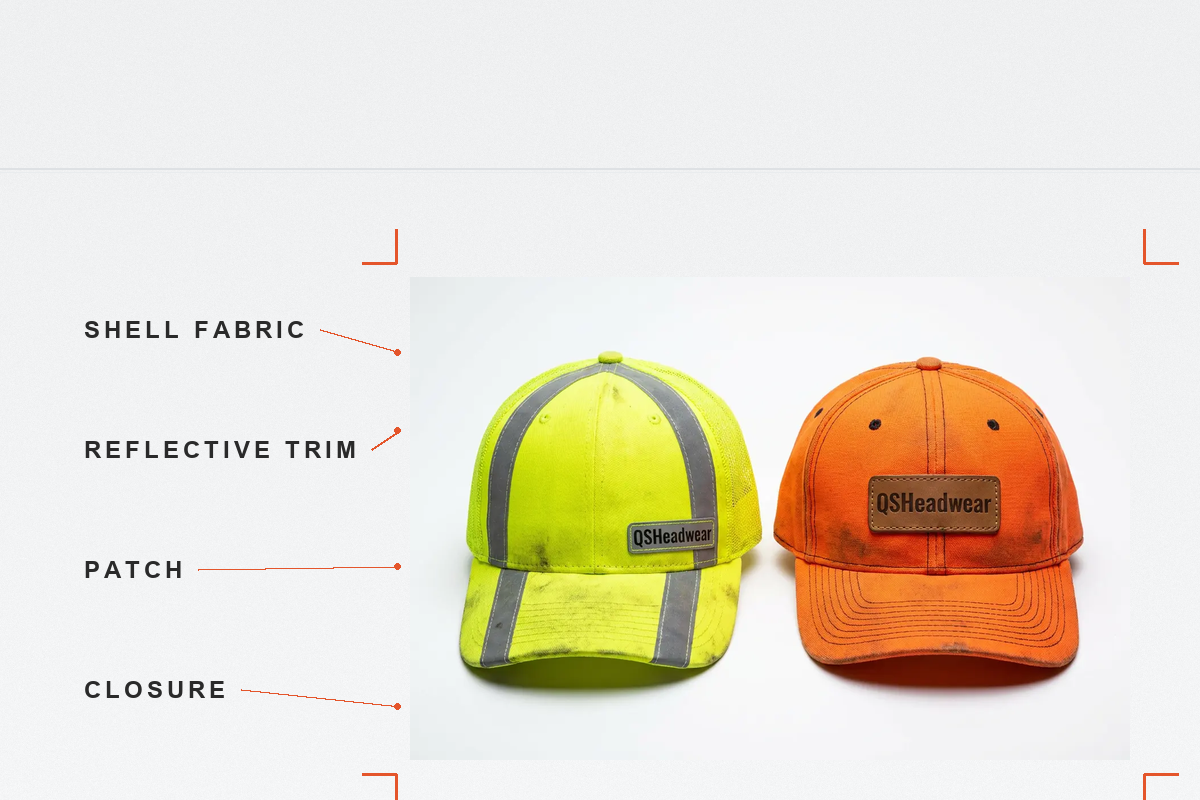
A request to “test the cap for chemicals” sounds precise, but it is not a workable laboratory brief. A cap is an assembly of shell fabric, mesh, sweatband, thread, patch, print, adhesive, closure, eyelets, labels and packaging. Those components do not share one material identity, exposure route or evidence history. Sending one finished sample with a generic instruction can therefore produce an expensive report that still leaves the buyer unsure what was covered.
A better approach is a headwear chemical test map: requirement by requirement, identify the component in scope, the market and use case, the laboratory method selected by a qualified party, the sample that represents production and the person who owns the release decision. This article shows how to build that booking map without inventing a universal test list or treating one report as proof for every colour, trim and destination.
This is operational sourcing guidance, not legal advice. Applicable restrictions, methods and limits change with the product, market, material and date. The importer or brand should confirm the current requirement with competent legal and laboratory partners before testing or market release.
Begin with the destination and finished SKU
Chemical testing should start after the buyer can identify the product being placed on the market. Define the destination countries, wearer, intended use, sales channel and exact SKU construction. An adult fashion cap, a promotional giveaway and protective equipment are not interchangeable compliance objects.
Freeze the bill of materials used for the decision
List every material and applied process: crown panels, visor fabric, brim insert, mesh, sweatband, seam tape, thread, embroidery, patch face and backing, print, adhesive, metal hardware, plastic closure, labels and packaging. Use supplier material codes and colour references rather than descriptions such as “standard black fabric.” The existing cap fabric guide explains why cotton, washed denim, wool blends and technical synthetics need different specifications and evidence paths.
Separate legal scope from buyer specifications
A legal restriction and a retailer restricted-substances list can both affect the booking, but they are not the same authority. Record the source, market, product scope, effective date and responsible reviewer for each requirement. Do not merge several lists into an unexplained “global standard.”
Use current official text
The official EUR-Lex page for Regulation (EC) No 1907/2006 identifies REACH as the EU framework for registration, evaluation, authorisation and restriction of chemicals and links to its current consolidated version. That source should be checked at the time of review; an old laboratory menu or prior order is not a substitute for the current applicable text.
Map requirements to components, not product names
“Baseball cap” is a commercial product name, not a homogeneous material. The useful booking question is: which component could contain the substance or create the exposure addressed by the requirement, and does the selected sample represent that component in the final SKU?
Textile shell, mesh and sweatband
Fibre type, colour, dyeing, finishing and washing can change the risk and evidence. A report for undyed fabric may not support a heavily washed black shell. Mesh and sweatband should not be assumed covered because they are sewn into the same cap. Group materials only when a competent laboratory confirms that the grouping is defensible.
Patches, prints and adhesives
A patch can combine a face material, pigment, backing, adhesive and sewing thread. A heat transfer or screen print introduces another formulation and curing route. Identify each applied decoration and ask whether the test portion must be separated, combined or tested as part of a finished article. The component substitution watchlist shows why an approved sample loses relevance when fabric, wash, hardware or applied trim changes before bulk.
Metal trims and skin contact
Buckles, eyelets, sliders and decorative metal can require a different review from textiles. Contact conditions matter. An official EU communication on standards referenced for nickel release distinguishes articles intended for direct and prolonged skin contact and names the published reference methods. The buyer should not convert that publication into a blanket claim for every metal part; a qualified reviewer must determine whether the component and contact pattern fall within the applicable restriction.
Turn the map into a laboratory booking matrix
The booking matrix should make the reasoning visible before samples leave the factory. It is not another certificate folder. It is a routing tool that connects one requirement to one component, one representative sample and one decision owner.
| Booking field | What to record | Why it matters |
|---|---|---|
| Market and requirement | Destination, source and current scope | Prevents an old or unrelated rule from driving the test |
| Component | Material code, colour, supplier and product location | Defines what the result can represent |
| Risk trigger | Dye, finish, print, adhesive, metal contact or other rationale | Explains why the test is booked |
| Method | Laboratory-confirmed method and sample preparation | Avoids choosing a test by name alone |
| Sample identity | SKU revision, lot or development stage | Connects the report to the actual order |
| Evidence owner | Person who reviews scope and authorises release | Separates data generation from market decision |
Write the reason for every row
Do not book a long panel because “the customer always asks for it.” State the component and trigger. The rationale makes duplication visible, helps the laboratory challenge an unsuitable method and gives the buyer a basis for deciding whether existing evidence is reusable.
Keep non-applicable rows visible
If a reviewed requirement is not applicable, record the reviewer and reason rather than deleting the row. That protects the decision from being reopened later without context. “Not tested” and “reviewed as not applicable” are different states.
Choose representative samples deliberately
The laboratory can test only what it receives. Sample identity therefore controls how far the result may travel. A clean chain from bill of materials to submitted sample is more useful than a large report with an ambiguous specimen description.
Use the highest-risk defensible variant
Colour, print chemistry, wash recipe, coating and metal finish can matter. A buyer may select a risk-based representative colour or require separate samples, but that choice should come from a qualified review, not convenience. Record why one variant represents another.
Photograph and seal the submitted set
Keep overview and component photographs, labels, sample codes, quantity, packing and dispatch details. Where the laboratory separates materials, ensure the report identifies the tested portions. The pre-production sample release docket provides the adjacent control: it links the physical cap to the approved construction and production files before bulk.
Do not substitute a development sample silently
If bulk uses a new dye lot, adhesive, patch backing or closure, an earlier sample may no longer represent production. Reopen the map and decide whether supplier evidence, additional testing or a new finished sample is needed.
Separate screening, compliance evidence and troubleshooting
Not every laboratory activity answers the same question. Screening can help prioritize risk. A test against an applicable requirement can support a defined compliance decision. Root-cause analysis investigates an observed failure. Their outputs should not be relabelled as if they were interchangeable.
Use screening to target, not to overclaim
A broad screen can reveal where further investigation is needed, but the result must be interpreted against its method, detection capability and sample preparation. “No issue found in screening” is not automatically a legal conformity statement.
Define the conformity statement before booking
Ask what the final report must say, which requirement it will cite, how results will be reported and who will compare them with the applicable limit. This avoids receiving raw data when the buyer expected a pass statement, or a pass statement with no clear scope.
Keep investigation samples separate
If a failed or unusual result is being investigated, label retained, counter and production samples clearly. Use the technical escalation process described in the headwear technical-support workflow so observations, sample identity, cause analysis and corrective action remain connected.
Read the report before accepting the word “pass”
A report is useful only inside its stated scope. Review the applicant, laboratory, report number, sample description, photographs, dates, methods, result units, limits, deviations and every page. Confirm the laboratory activity and method are within the relevant competence or accreditation scope where required.
Match the report back to the booking row
Each booking row should point to the report and page where the result appears. If the laboratory renamed or combined samples, reconcile that change. Do not let a filename become the only connection between the order and the evidence.
Distinguish component and finished-product evidence
A main-fabric result does not automatically cover mesh, sweatband, patch, print, closure or packaging. The headwear evidence hierarchy explains the boundary between factory, material, order and finished-product records. Use the chemical test map to route evidence within those layers rather than stretching one layer across the whole cap.
Control claims made from results
Do not translate a limited test into “chemical free,” “non-toxic” or “fully compliant.” State the tested sample, requirement, method and outcome accurately, and keep marketing claims within the reviewed evidence.
Handle textile restrictions without copying a static list
Regulatory annexes can be amended, product scope can contain exceptions and different homogeneous materials can carry different considerations. For that reason, this article does not publish a fixed universal panel or numerical limits.
Confirm whether the article and component are in scope
The official text of Commission Regulation (EU) 2018/1513 describes restrictions for certain CMR substances in consumer clothing, related accessories, other skin-contact textiles and footwear, while also describing exclusions and material-specific boundaries. For a headwear order, a competent reviewer must connect that scope to the actual shell, sweatband, patch, fastener or decorative attachment.
Let the current requirement select the method
Do not choose a method because it was used on last season’s product. Give the laboratory the current legal or buyer requirement, component description and intended market, then require confirmation that the proposed preparation and method answer that requirement.
Retain the dated regulatory basis
Save the official source and review date with the booking matrix. When a restriction, method reference or buyer list changes, the team can identify which open developments and reorders need renewed review.
Control supplier and material changes after testing
Chemical evidence is connected to a defined supply route. If that route changes, the old result does not automatically follow the appearance of the product.
Set change triggers in the purchase workflow
Require notification before changing material supplier, dye house, wash recipe, coating, ink, adhesive, patch construction, metal finish or recycled feedstock. The engineering change log should record the reason, affected SKUs, timing and evidence needed before approval.
Decide whether evidence can transfer
Review material identity, formulation, process, colour, source and report scope. The answer may be no action, supplier documentation, targeted component testing or a new finished-product submission. Record the decision rather than attaching the old report automatically.
Block unapproved substitution from shipment
Testing is ineffective if purchasing and production can replace a component afterward. Connect the approved material codes to incoming control, sample approval and final inspection so the tested route remains the shipped route.
Assign evidence ownership across the programme
The factory, material supplier, laboratory, buyer and importer contribute different information. None should silently inherit the others’ responsibility.
Factory responsibilities
The factory should maintain the current bill of materials, identify sources and changes, prepare traceable samples, provide available supplier documents and keep production aligned with the approved route.
Buyer or importer responsibilities
The buyer or importer defines markets and claims, confirms the applicable requirement with competent advisers, approves the test strategy and makes the market-release decision. This role should not be outsourced to a report title.
Laboratory responsibilities
The laboratory confirms sample needs, method suitability, preparation, reporting and limitations within the agreed service. Ask questions before dispatch; do not expect the laboratory to reconstruct an incomplete product brief after testing.
Use a pre-booking review
Before sending samples, hold a short review with product, compliance, sourcing and factory contacts. Walk through the matrix row by row and resolve gaps while components can still be traced.
- Is the destination market and intended use confirmed?
- Does the bill of materials include every textile, print, patch, adhesive, metal and closure?
- Is each requirement linked to its current official or buyer source?
- Does each booking row name one component and one rationale?
- Has the laboratory confirmed the method and sample preparation?
- Does the submitted sample match the approved SKU revision?
- Are representative colours and variants justified?
- Is the report reviewer and release authority named?
- Will supplier or material changes reopen the decision?
Once the report returns, review it against the same matrix. The output should show covered rows, unresolved rows, accepted evidence and blocked decisions. That makes chemical testing part of product development instead of a late document chase.
Book fewer assumptions, not merely more tests
A strong testing programme is not the longest laboratory menu. It is the smallest defensible set of activities that answers the applicable requirements for the actual product and supply route. More testing cannot repair an unclear bill of materials, an unrepresentative sample or an uncontrolled substitution.
Map the finished SKU first, let current requirements drive the component review, confirm methods with qualified partners and keep evidence tied to the sample and order. That process gives buyers a clearer release decision—and gives the factory a precise brief it can execute without pretending that one generic “cap test” covers everything.