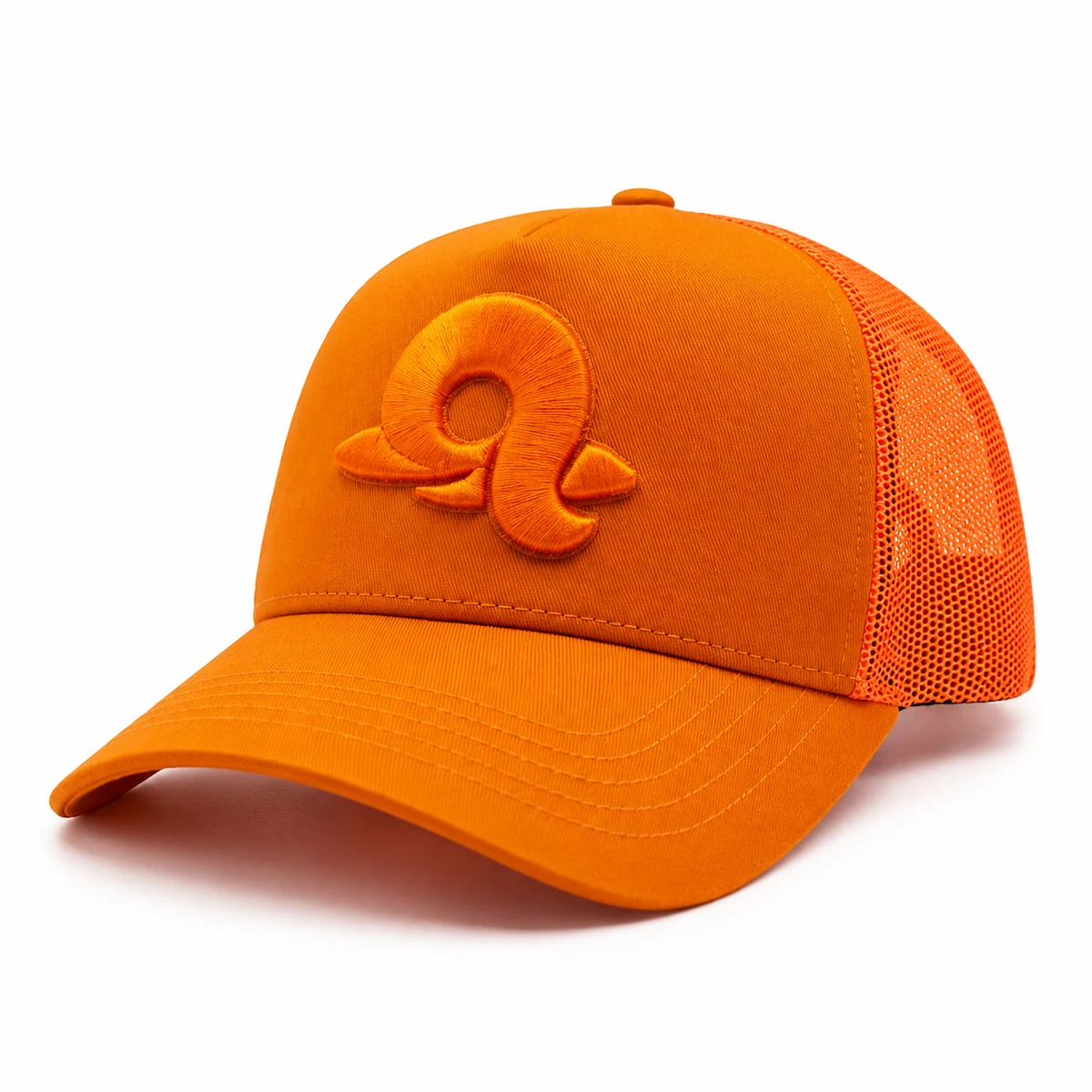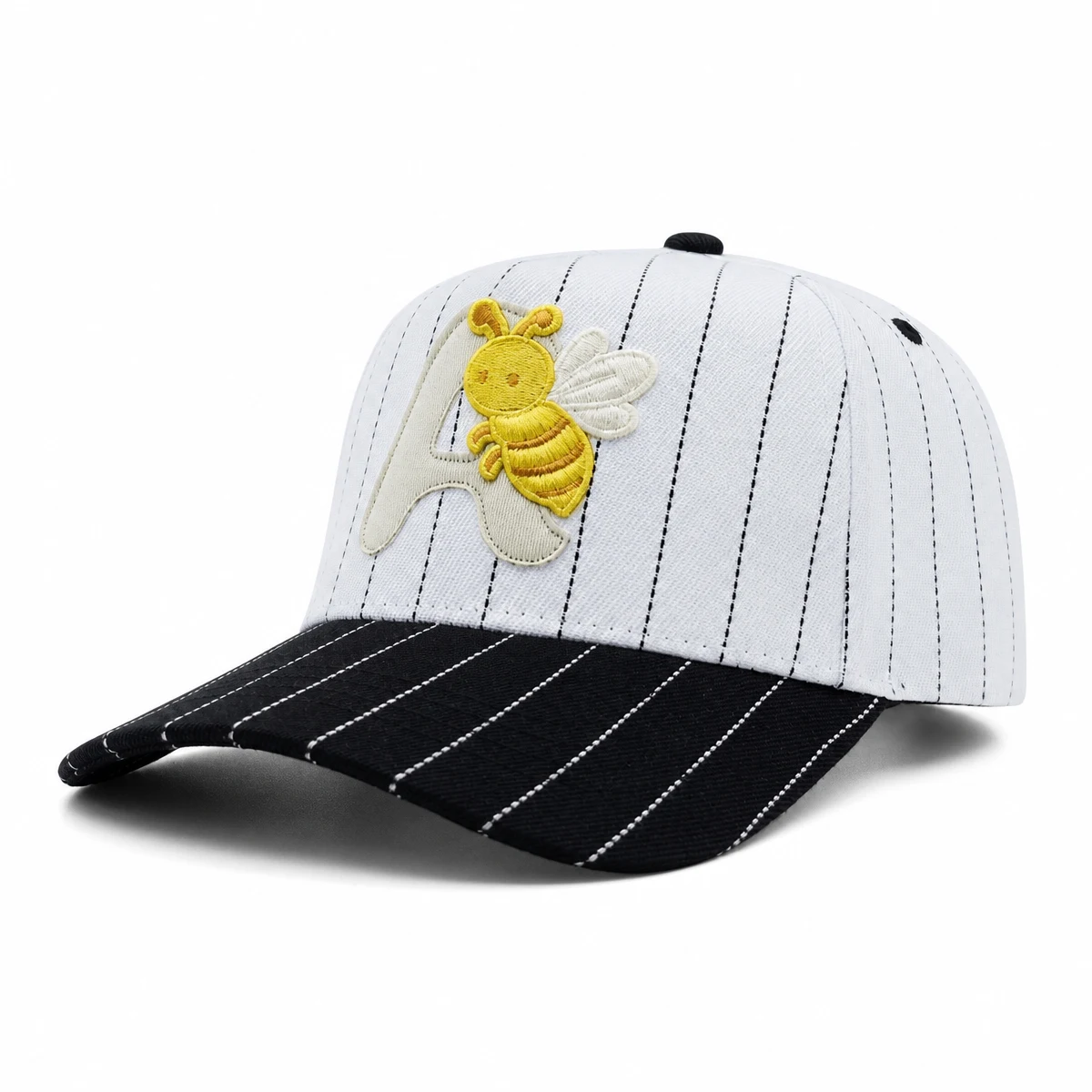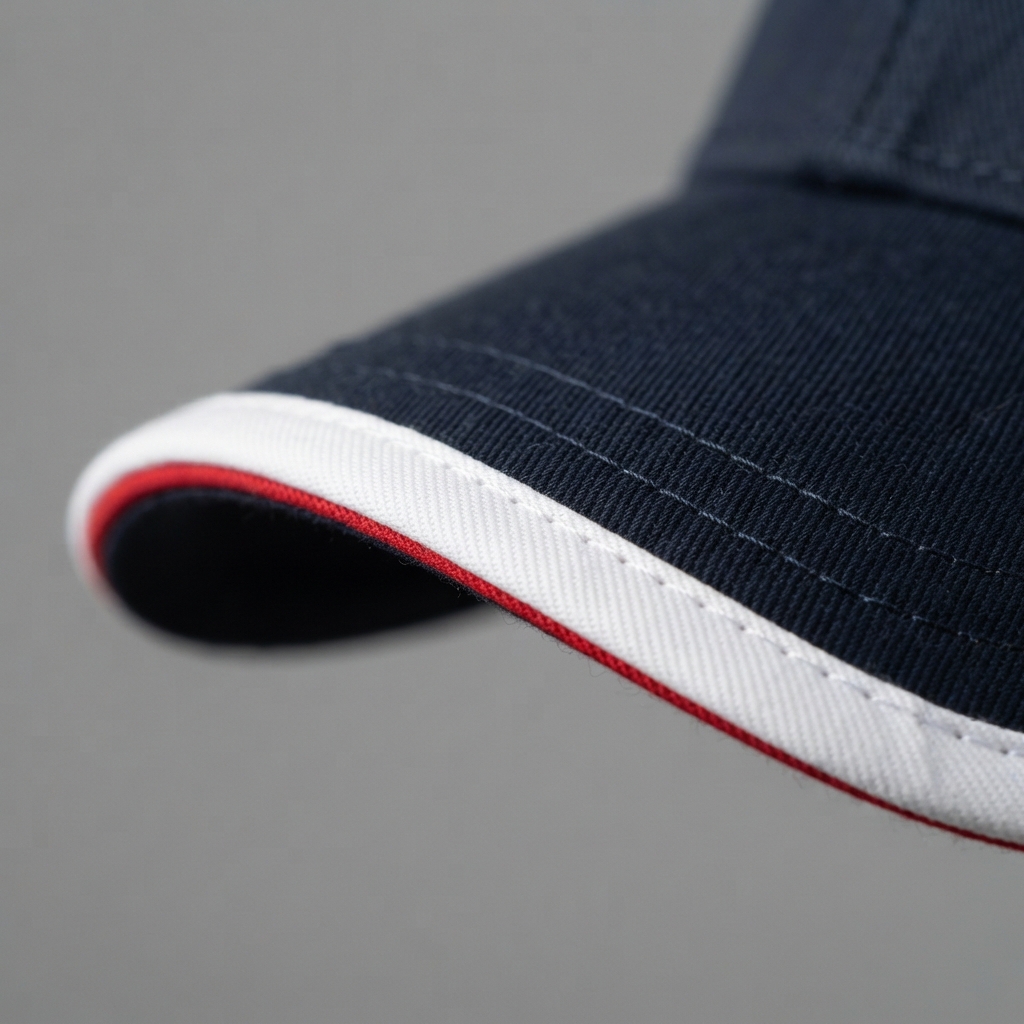


An adult cap cannot become a youth SKU through one percentage reduction. A smaller head circumference changes more than the crown. It can alter brim position, vision, closure range, decoration scale, attachment behaviour and the way labels or packaging communicate the intended wearer.
The first commercial decision is therefore not “How much smaller?” It is “Which functions, components and claims must be approved again for the new wearer?” That question prevents a brand from carrying an adult sample approval into a materially different product.
This guide is a product-development framework, not universal legal advice. Requirements depend on market, age positioning, construction and claims. The official US rules cited below illustrate why scope must be read precisely: an exemption in one rule does not prove that every other requirement is irrelevant.
Define the youth SKU before changing the pattern
State the intended wearer
“Youth,” “junior” and “kids” are not interchangeable technical specifications. Define the intended age range, selling market and distribution channel before approving dimensions or packaging. A promotional item, school-uniform cap and fashion retail SKU may need different evidence and communication.
Separate marketing language from product evidence
A product page can call a cap adjustable, lightweight or suitable for active use, but the technical file must show what those words mean. Record the closure range, material, ventilation features and approved sample identity. The existing retail vendor compliance guide explains why channel information and physical delivery evidence must agree.
Choose whether the product is a derivative or a new platform
A simple colour change can remain within an adult platform. A youth version with a new block, shorter brim, different closure and changed decoration should be treated as a new approval route. Naming it early prevents teams from assuming the adult specification controls everything.
Assign one owner to the conversion
Give one person responsibility for connecting design, compliance, sourcing, packaging and inspection decisions. Without a named owner, each team may approve only its own fragment while assuming another team has checked the changed wearer, closure or label. The owner should maintain a decision log showing which adult evidence was retained, which items were reapproved and which questions were escalated for qualified market advice. This record also stops later colour or reorder discussions from silently reverting to the adult specification.
Reapprove fit as a system
Head opening and closure range
Measure the finished internal circumference at defined closure positions. Do not approve only the nominal “one size” label. Confirm the useful adjustment range, whether the loose end is controlled and whether the smallest setting creates bunching or pressure.
Crown depth and balance
Reducing circumference without changing depth can make the cap sit over the ears or obscure the wearer’s view. Reducing depth alone can distort panel angles and decoration placement. Approve circumference, front height, side depth and rear opening together.
Brim length, width and curvature
A shorter wearer-facing geometry can change vision and facial clearance. Review the brim from front and profile views on the intended fit form. The five-panel pattern and fit guide shows why crown shape, brim and decoration area form one system.
Review every cord, strap and loose end
Map the functional parts
List chin cords, toggles, elastic loops, rear straps and free ends. Record whether each part is fixed, adjustable, removable or purely decorative. Do not let a detail migrate from an adult outdoor cap into a youth version without a fresh review.
Evaluate snag and entanglement exposure
Look at where a cord or strap sits during normal wear and foreseeable handling. Consider length, loop formation, breakaway behaviour and interaction with the neck or face. Rules written for another garment category should not be copied automatically to hats; use them only to identify questions for a qualified market review.
Approve alternatives where risk or use is unclear
Shorter fixed tabs, enclosed adjusters or alternative closures may achieve the same fit objective with fewer exposed elements. The design decision should be documented before the sample is released, not improvised during bulk production.
Do not confuse an exemption with approval
Read the flammability scope precisely
The current US text at 16 CFR 1610.1 excludes hats from that clothing-textile standard when they do not form part of a covering for the neck, face or shoulders. That scope language matters: a conventional cap and a design with extended protective coverage may not present the same question.
Read small-parts scope precisely
The current text at 16 CFR 1501.3 lists children’s clothing and accessories among the exemptions from that small-parts regulation. A brand should not reverse the meaning and claim every youth-cap attachment is automatically prohibited under that section.
Maintain an internal attachment review anyway
Regulatory scope and product-quality control are different questions. A loose button, trim or patch can still create customer complaints, product damage or a channel rejection. Define pull, stitch, edge and visual requirements based on the actual component and intended use, then have the compliance owner confirm market applicability.
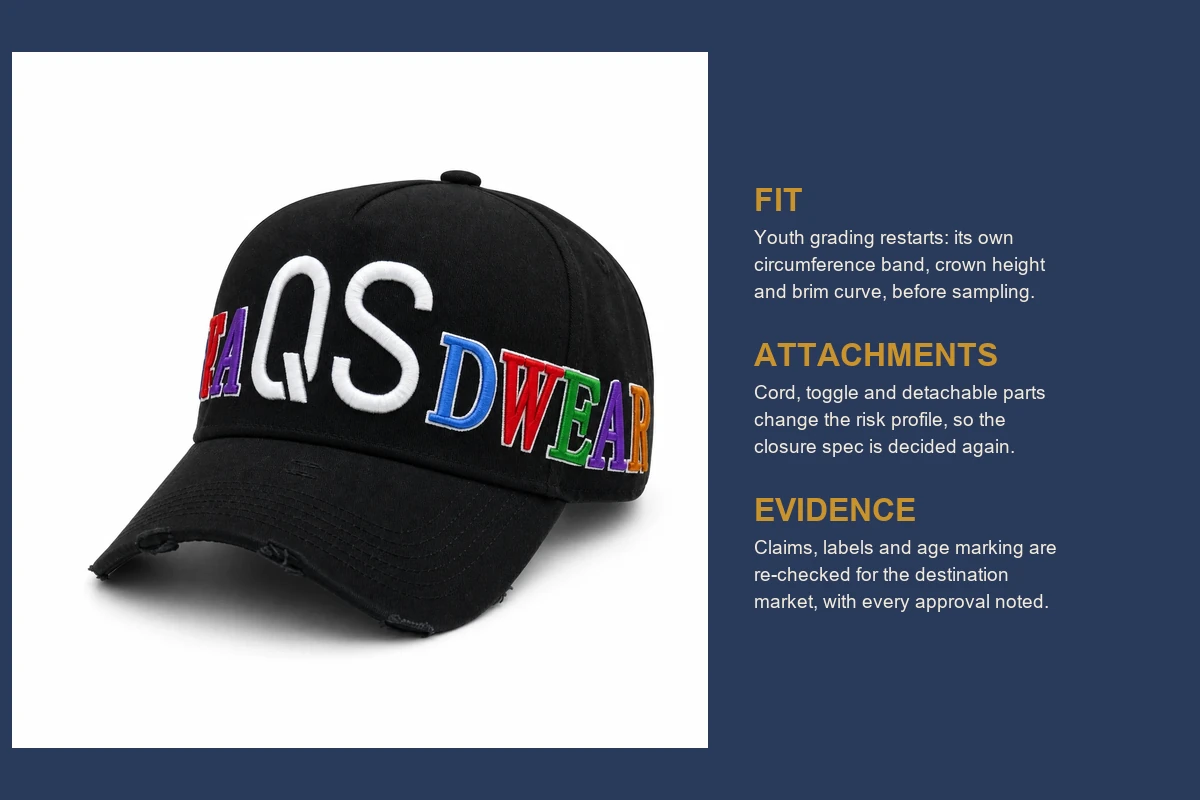
Rescale decoration deliberately
Protect facial and viewing zones
A large patch that worked on an adult front panel can dominate a shorter youth crown or push into seam and brim areas. Reapprove size, vertical position and edge clearance on the finished sample.
Check raised and rigid elements
Three-dimensional embroidery, rubber patches, studs and thick appliqués change surface hardness and weight. Review attachment, edge finish and deformation after handling. Use the cap quality-control defect guide to write observable workmanship language rather than subjective comments.
Confirm artwork rights for the new SKU
A smaller or youth-labelled version may still use licensed characters, club marks or campaign artwork. Confirm that the authorization covers the product, market, quantity and age-positioned use. The artwork authorization guide provides the commercial handoff logic.
Revisit material and finish claims
Separate construction facts from performance claims
Mesh panels, washed cotton and perforated fabric can be described factually. Claims such as protective, cooling, antibacterial or suitable for a defined activity need support appropriate to the market and wording. Do not transfer an adult product claim merely because the fabric name is unchanged.
Check washed and distressed boundaries
Abrasions, frayed edges and pigment variation may be intentional, but a youth version can use a smaller panel or different seam position. Reapprove the allowed range through the distressed-cap damage-boundary method.
Retain component identities
Record shell, sweatband, closure, patch, thread and any metal or plastic trim. If a component changes, determine whether the previous evidence still represents the youth SKU. Component-level thinking also supports the headwear inspection and release plan.
Rewrite labels and packaging for the actual product
Use the intended wearer consistently
The product title, size label, hangtag, carton mark and retailer data should use the same age or size positioning. Conflicting labels can create a channel problem even when the cap itself is well made.
Keep warnings specific
Do not add generic warning text to appear cautious. Warnings should address a real product feature and the applicable market requirement. Unsupported warnings can confuse buyers and mask the design decision that should have been made earlier.
Control mixed adult and youth cartons
Where both versions share colours or artwork, use unambiguous SKU identifiers and carton segregation. Confirm scan data, unit labels and packing counts before shipment so a youth order is not fulfilled with the adult version.
Approve a physical youth sample set
Review more than one closure setting
Photograph and measure the sample at minimum, middle and maximum useful settings. Record where excess strap or elastic sits. A sample approved only at the photographer’s preferred setting can hide the real range.
Review front, profile, rear and interior
Capture brim clearance, crown depth, closure construction, sweatband, seam finishes and attachment backs. The image set should prove the changed product, not just support marketing.
Keep the adult reference beside it
A side-by-side review helps the team see which changes are intentional and which are unintended. Record both identities and prevent the adult sample from becoming the release standard for the youth batch.
Build inspection around changed risks
Classify fit and component defects
Define critical commercial failures such as the wrong size label, adult pattern used for youth units, incorrect closure range or an unapproved attachment. Separate these from minor cosmetic variation.
Sample across production inputs
Take units across cartons, colour lots or production periods where relevant. Measure the agreed fit points and inspect the changed attachments. Do not invent one universal sample quantity; link the plan to lot structure and buyer risk.
Retain release evidence
Keep approved samples, measurements, component records and inspection results together. The goal is to show that the shipped SKU matches the youth approval, not merely that a generic cap passed visual inspection.
Decide what can stay from the adult SKU
Potentially reusable
Artwork files, material suppliers and colour standards may remain useful if the physical specification and authorization still apply. Reuse should be a documented decision, not an assumption.
Usually reapproved
Pattern dimensions, closure range, brim geometry, decoration scale, size label, packaging identity and fit evidence normally need a new review because they directly define the youth product.
Escalate when the product category changes
Extended neck coverage, face coverage, detachable accessories or new performance claims can change the regulatory and testing question. Stop the derivative workflow and obtain qualified market guidance before releasing bulk.
Turn the conversion into a controlled product decision
A youth cap should be approved as a product for a defined wearer, not as a reduced adult image. Start with the intended age and market, then rebuild fit, exposed elements, decoration, claims, labels and inspection evidence around that use.
QSHeadwear can translate an adult reference into a youth development brief, physical sample set and bulk inspection language. The buyer should still confirm final market requirements with a qualified compliance professional, especially when the design adds coverage, detachable elements or regulated performance claims.